Nitrous Oxide vs IV Sedation: Which Is Right for You?
10 min read
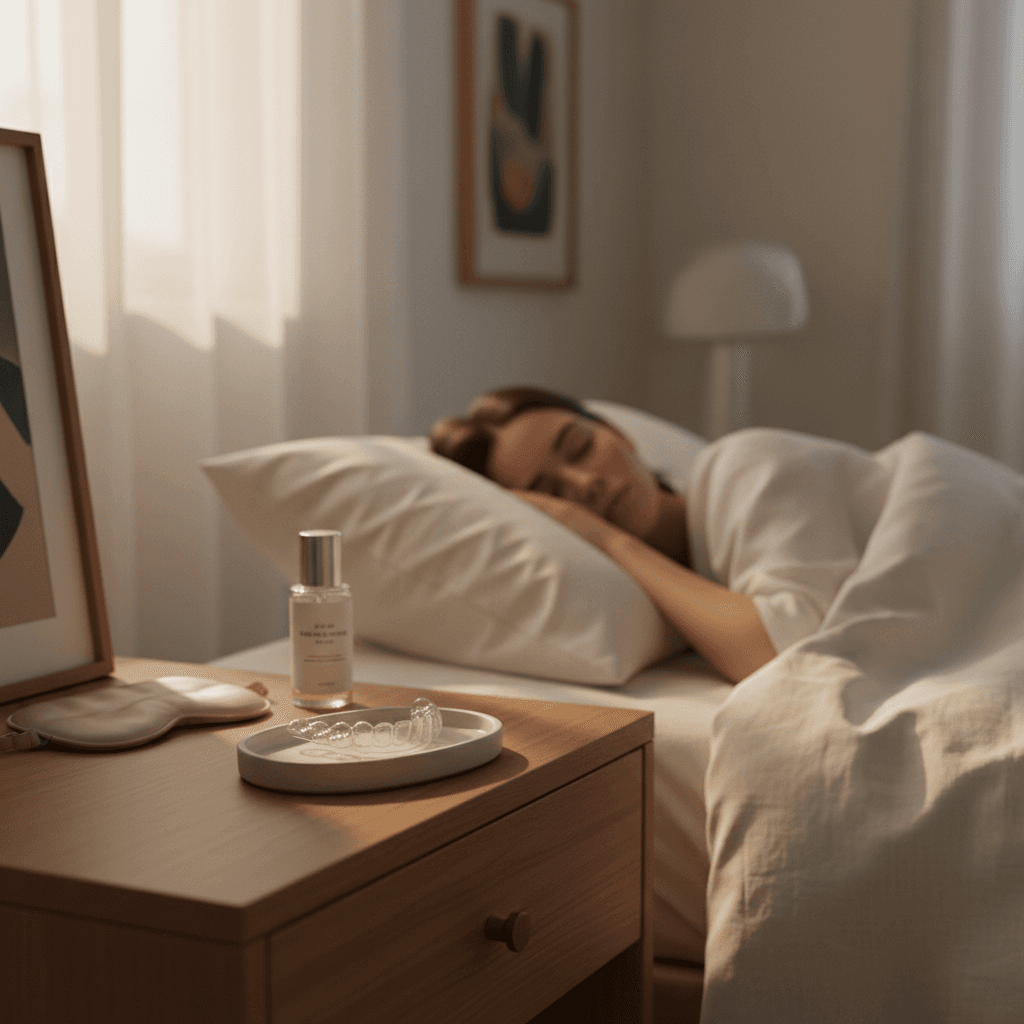
If you've been diagnosed with obstructive sleep apnea and your CPAP machine is collecting dust on the nightstand, you're not alone. Research published in the Journal of Clinical Sleep Medicine shows that roughly 50% of patients prescribed CPAP stop using it consistently within the first year. The mask, the noise, the dry air, the feeling of being tethered to a machine. For many people, the treatment feels worse than the condition. An oral appliance for sleep apnea offers a different path.
At Willow Family Dentistry in Wylie, TX, Dr. Esther Jeong works with patients who have a confirmed sleep apnea diagnosis and need an alternative to CPAP. This guide covers how oral appliances work, what the effectiveness data actually says, and how to find out if you're a candidate.
An oral appliance for sleep apnea is a custom-fitted device that looks similar to an orthodontic retainer and repositions your lower jaw slightly forward during sleep to keep the airway open. The clinical name is a mandibular advancement device (MAD), and both the ADA and the American Academy of Sleep Medicine recognize it as a first-line treatment for mild-to-moderate obstructive sleep apnea.
This isn't a boil-and-bite guard from the drugstore. Those generic devices aren't FDA-cleared for sleep apnea treatment, they can't be precisely calibrated, and they often cause more jaw problems than they solve. A prescription oral appliance is fabricated in a dental lab from impressions or digital scans of your teeth, and it's adjustable in millimeter increments so Dr. Jeong can dial in exactly how far your jaw needs to advance.
It's also not the same as a night guard for teeth grinding. A bruxism guard protects tooth surfaces from clenching forces but doesn't change your jaw position. An oral appliance for sleep apnea specifically moves the mandible forward to open the airway. Some patients need both, and the two devices serve completely different functions.
The device advances your lower jaw forward by 6-10 millimeters while you sleep, which pulls the base of your tongue away from the back of the throat and tightens the soft tissue around the airway. That forward positioning prevents the collapse that causes apnea events and the vibration that causes snoring.
Here's the anatomy behind it. When you fall asleep, your muscles relax, including the muscles that keep your airway open. In patients with obstructive sleep apnea, the tongue falls backward and the soft palate drops, partially or completely blocking airflow. The brain detects the drop in oxygen, triggers a micro-arousal to reopen the airway, and the cycle repeats. Dozens or hundreds of times per night.
The oral appliance breaks that cycle mechanically. By holding the mandible in a protruded position, it physically prevents the tongue from collapsing into the airway. The soft tissue around the pharynx stays tighter because the muscles attached to the jaw are stretched slightly. The result is a wider, more stable airway throughout the night.
This works for obstructive sleep apnea specifically. It doesn't address central sleep apnea, which is a neurological condition where the brain fails to signal the breathing muscles. If your sleep study shows a significant central component, CPAP or adaptive servo-ventilation is typically the right approach. Dr. Jeong reviews your sleep study results to confirm which type you have before recommending any treatment.
Related: How does a dentist screen for sleep apnea in the first place? → Could Your Snoring Be Sleep Apnea? Ask Your Dentist
For mild-to-moderate obstructive sleep apnea, oral appliances reduce the apnea-hypopnea index (AHI) by 50% or more in most patients, according to guidelines from the American Academy of Sleep Medicine. CPAP is more effective at eliminating apnea events entirely, but that advantage only matters if you actually wear it.
This is where the compliance argument changes the math. CPAP reduces AHI to near zero when worn correctly, but roughly half of patients abandon it. An oral appliance that reduces AHI by 60% and gets worn every night delivers better real-world outcomes than a CPAP that reduces AHI by 95% but sits in a drawer five nights a week. Sleep medicine calls this "effective effectiveness," and it's the reason the AASM endorses oral appliances as a primary option for patients who can't tolerate CPAP.
| Feature | CPAP | Oral Appliance (MAD) |
|---|---|---|
| AHI Reduction | Near 100% when worn | 50-70% for mild-moderate OSA |
| 1-Year Compliance | ~50% consistent use | ~75-80% consistent use |
| Best For | All severities, especially severe OSA | Mild-to-moderate OSA (AHI 5-30) |
| Portability | Bulky, requires power outlet | Fits in a pocket, no power needed |
| Noise | Audible motor and airflow | Silent |
| Common Complaints | Mask discomfort, dry air, claustrophobia | Jaw soreness (temporary), excess saliva |
The bottom line: if you have severe OSA (AHI above 30), CPAP is still the gold standard. If you have mild-to-moderate OSA or you've tried CPAP and can't tolerate it, an oral appliance is a clinically validated alternative with strong compliance data behind it.
Struggling With Your CPAP?
Dr. Jeong can evaluate whether an oral appliance is the right alternative for your diagnosis. Bring your sleep study results to the consultation.
Request an Appointment →The ideal candidate has a confirmed diagnosis of mild-to-moderate obstructive sleep apnea (AHI between 5 and 30 events per hour), enough healthy teeth to anchor the device, and either a preference against CPAP or documented CPAP intolerance. You need a sleep study on file before any dentist can prescribe an oral appliance. This isn't a device you can get without a diagnosis.
CPAP-intolerant patients are the most common group Dr. Jeong sees for this treatment. These are people who've tried the mask, given it an honest effort for weeks or months, and still can't sleep with it. Maybe the mask leaks. Maybe the pressure triggers claustrophobia. Maybe they travel frequently and the machine is impractical. Whatever the reason, an unused CPAP helps nobody.
Patients with primary snoring (loud snoring without apnea events) can also benefit. While snoring alone isn't a medical diagnosis, it affects sleep quality for both the patient and their partner. An oral appliance can reduce or eliminate snoring by the same mechanism it treats apnea: advancing the jaw and opening the airway.
Not everyone qualifies. Patients with severe OSA (AHI above 30) generally need CPAP as the primary treatment, though some use an oral appliance as a backup for travel or naps. Patients with significant central sleep apnea won't benefit because the device only addresses airway obstruction, not signaling problems in the brain. Patients with fewer than 8-10 healthy teeth may not have enough anchorage for the device. And patients with active TMJ disorders or severe jaw joint problems need careful evaluation, because advancing the mandible nightly could aggravate an existing condition.
Dr. Jeong screens for all of these factors during the initial consultation. She reviews your sleep study, examines your teeth and jaw, and checks your TMJ function before recommending treatment. If an oral appliance isn't the right fit, she'll tell you directly and help you explore other options.
Related: Anxious about dental visits in general? Sedation can help. → Sedation Dentistry Wylie TX: Your Options Explained
Getting an oral appliance for sleep apnea involves a clear sequence of appointments, starting with your diagnosis and ending with a verified, calibrated device. The process typically takes 4-6 weeks from first visit to final adjustment. Here's how it works.
You need a sleep study before anything else. If you haven't had one, Dr. Jeong can refer you to a board-certified sleep physician who will order either a home sleep test or an in-lab polysomnography. The sleep study provides your AHI score and confirms whether your apnea is obstructive, central, or mixed. Without that data, no responsible dentist will fabricate an appliance.
Once your diagnosis is confirmed, Dr. Jeong examines your teeth, gums, and jaw joints. She checks for adequate dentition to anchor the device, evaluates your TMJ range of motion, and identifies any dental work that needs to happen first (loose crowns, active decay, gum disease). Then she takes detailed impressions or digital scans of your upper and lower teeth and a bite registration that captures your jaw position. These records go to the dental lab.
Two to three weeks later, the device arrives from the lab. Dr. Jeong fits it, confirms it seats properly on your teeth, and sets the initial jaw advancement position. This starting point is conservative, usually 50-60% of your maximum protrusion. Over the next several weeks, you'll return for titration appointments where she advances the device in small increments until your symptoms improve and your bed partner reports that the snoring has stopped or reduced significantly.
After titration is complete, your sleep physician orders a follow-up sleep test with the appliance in place. This confirms that your AHI has dropped to an acceptable level. If it hasn't, Dr. Jeong can advance the device further, or the sleep physician may recommend a combination approach (oral appliance plus positional therapy, or oral appliance plus supplemental CPAP at a lower pressure).
Ready to Explore a CPAP Alternative?
Bring your sleep study results to Willow Family Dentistry. Dr. Jeong will evaluate your jaw, teeth, and diagnosis and tell you if an oral appliance is the right fit.
Request an Appointment →Oral appliances have real side effects, and you should know about them before committing. Most are mild, temporary, and manageable. A few require long-term monitoring. Dr. Jeong discusses all of these during your consultation so you can make an informed decision.
The most common early side effect is jaw soreness. Your muscles aren't used to holding the mandible in a protruded position for 7-8 hours. Most patients feel stiffness or tenderness in the jaw joints and muscles for the first one to two weeks. It typically fades as the muscles adapt. Morning jaw exercises (opening and closing, side-to-side movements) for a few minutes after removing the device speed up the adjustment.
Excess saliva is the second most common complaint according to Healthline, especially in the first week. Your mouth interprets the device as something to chew on and increases saliva production accordingly. This settles down quickly. Some patients experience minor tooth tenderness or a feeling that their bite is slightly different for the first 30-60 minutes after removing the appliance in the morning. That's the teeth resettling into their natural position after being held in the protruded alignment all night.
Over years of nightly use, some patients experience gradual changes in their bite alignment. Studies cited by the ADA report that minor bite shifts occur in roughly 30-40% of long-term oral appliance users. These changes are usually small and may actually reduce overbite, which some patients consider an improvement. But they're worth monitoring. Dr. Jeong checks your bite at every follow-up visit and tracks any changes over time.
Annual follow-ups are essential. Dr. Jeong evaluates the fit of the device, checks for wear on the appliance itself, monitors your TMJ health, and confirms that the device is still controlling your symptoms effectively. She'll also coordinate with your sleep physician if a repeat sleep study is warranted. An oral appliance for sleep apnea isn't a "set it and forget it" solution. It's a managed treatment that works best with consistent follow-up.
Related: Staying on top of dental visits matters for more than just your teeth. → How Often Should You Go to the Dentist?
An oral appliance for sleep apnea works because it solves the compliance problem that makes CPAP ineffective for so many patients. It's quiet, portable, requires no power source, and most people adapt to it within a couple of weeks. The effectiveness data supports it for mild-to-moderate OSA, and for CPAP-intolerant patients at any severity level, it offers a treatment that actually gets worn.
If your CPAP is sitting unused, or if you've just been diagnosed and want to explore your options, schedule a consultation at Willow Family Dentistry. Dr. Jeong will review your sleep study, examine your jaw and teeth, and give you a clear recommendation. The worst outcome is finding out you have options you didn't know about.
Sleep Better Without the Mask
Schedule a consultation with Dr. Jeong to find out if an oral appliance is the right alternative for your sleep apnea diagnosis.
Request an Appointment →Have questions about the process?
Call (972) 881-0715 →Dr. Esther B. Jeong, DDS
Owner & Lead Dentist
Was this article helpful?
Schedule a consultation and get personalized answers from Dr. Jeong.
Call us
(972) 881-0715
Hours
Mon – Thu: 9am – 5pm
Fri: By Appointment
Location
1125 W FM 544, Wylie
Emergency? Same-day appointments available.