How Long Do Dental Implants Last? The Honest Answer
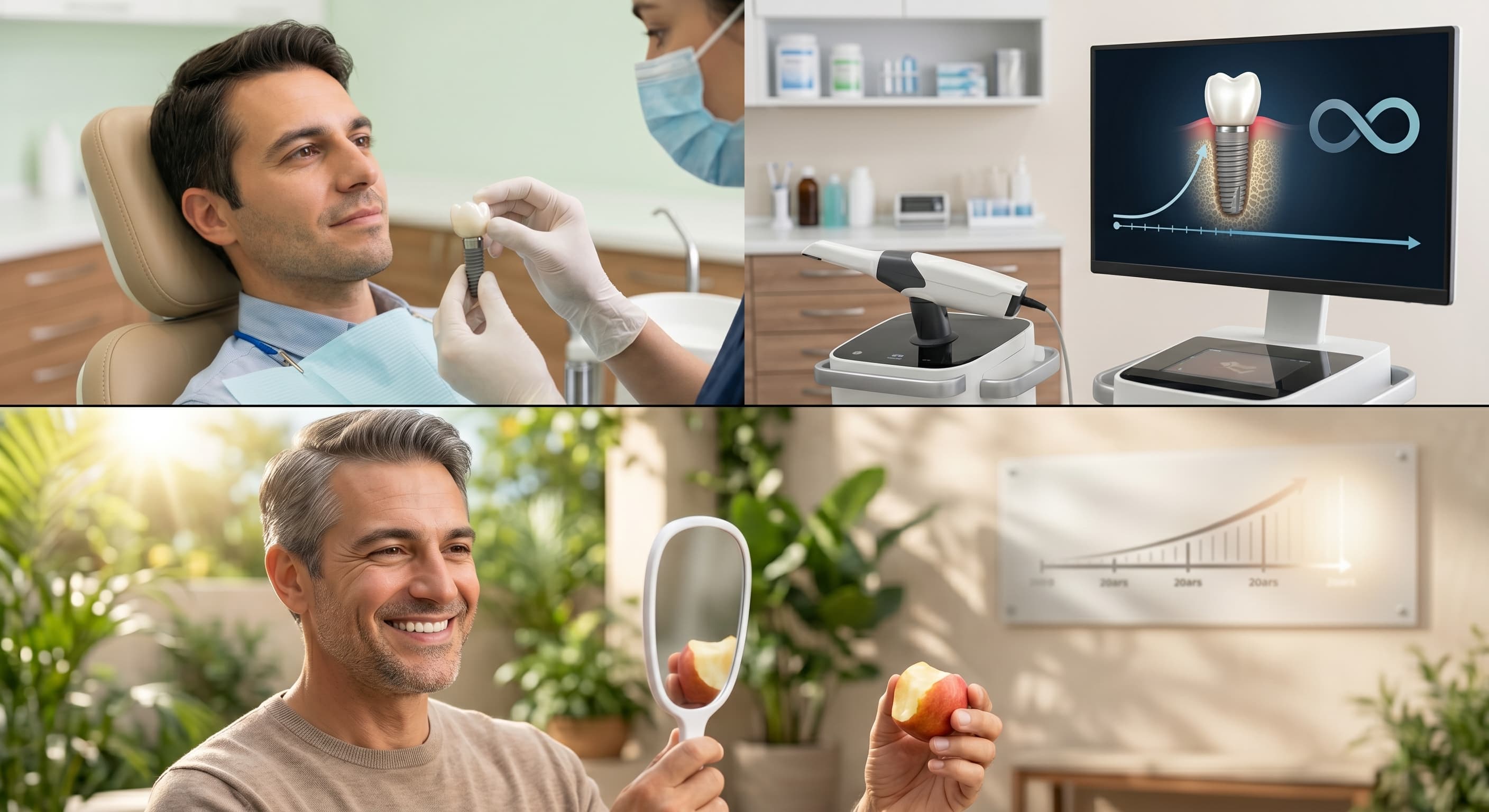
How long do dental implants last? It's the first question most patients ask before committing to the procedure, and it deserves a straight answer. The titanium post that sits in your jawbone can last a lifetime with proper care. The crown on top of it typically lasts 10-20 years before it needs replacing. Those are two very different timelines, and understanding both is key to knowing what you're really investing in.
The American College of Prosthodontists estimates that 120 million Americans are missing at least one tooth. Many of them want implants but hesitate because they're not sure the investment holds up. This article gives you the full picture, including what the research says, what can go wrong, and what you can do to get the most years out of your implant at Willow Family Dentistry in Wylie, TX.
How Long Do Dental Implants Actually Last?
Dental implants have a documented success rate of 95-98% over ten years, according to studies published in the Journal of Oral and Maxillofacial Surgery. That means for every 100 implants placed, 95-98 are still functioning a decade later. Many last far longer. Studies tracking implants over 20-30 years show survival rates above 90%.
But "how long do dental implants last" requires separating the two parts of the implant. The post is a small titanium screw that fuses with your jawbone through a process called osseointegration. Titanium is biocompatible, meaning your body doesn't reject it, and it doesn't corrode. Once that post integrates with healthy bone, there's no biological mechanism that wears it out. It can stay in your jaw for the rest of your life.
The crown is a different story. It's the visible part, the porcelain or zirconia tooth that sits above the gumline. Crowns take the full force of chewing, grinding, and daily wear. Even high-quality porcelain crowns eventually chip, crack, or wear down. Most implant crowns last 10-15 years, and some stretch to 20 with careful maintenance. Replacing just the crown is straightforward and doesn't require touching the post at all.
Here's what "success" means in clinical terms. An implant is considered successful if the post is stable in the bone, the surrounding tissue is healthy, there's no ongoing infection, and the patient can chew and function normally. Failure means the implant has become mobile, infected, or needs to be removed. By that standard, implants are the most durable tooth replacement option available today.
What Makes Some Implants Last Longer Than Others?
Not every implant has the same lifespan, and the differences come down to a handful of factors that are mostly within your control or your dentist's control. Bone quality, placement accuracy, oral hygiene, and overall health all play a role in whether your implant lasts 15 years or 40.
Bone Density and Placement Precision
The foundation matters. An implant placed into dense, healthy bone integrates faster and holds stronger than one placed into compromised bone. That's why Dr. Esther Jeong uses the iCAT 3D imaging system before every implant procedure. The 3D scan maps your jawbone in detail, measuring density at the exact implant site and identifying the ideal angle and depth for placement. Guesswork shortens implant life. Precision extends it.
Smoking
Smoking is the single biggest controllable risk factor for implant failure. Research cited by the ADA shows that smokers have implant failure rates two to three times higher than non-smokers. Nicotine restricts blood flow to the gums and bone, which slows healing after placement and weakens the long-term bond between the post and the jawbone. If you smoke and you're considering implants, quitting before the procedure significantly improves your odds.
Systemic Health Conditions
Uncontrolled diabetes, osteoporosis, and autoimmune conditions can all affect how well your body maintains bone density and fights infection around the implant. That doesn't mean these conditions disqualify you. It means Dr. Jeong needs to know about them so she can plan accordingly. A patient with well-managed Type 2 diabetes can absolutely have a successful implant. A patient with uncontrolled blood sugar has a harder road.
Oral Hygiene
This is the factor most patients underestimate. An implant can't get a cavity, but the gum tissue and bone around it are still vulnerable to bacterial infection. Poor brushing and flossing habits let plaque accumulate around the implant, which can lead to peri-implantitis, the implant equivalent of gum disease. More on that in the next section.
Related: Want the full walkthrough of how implants are placed? → Dental Implants in Wylie, TX: Your Step-by-Step Guide
Can a Dental Implant Fail, and What Does That Look Like?
Yes, implants can fail, though it's uncommon. Failure falls into two categories: early failure (within the first 3-6 months, before the bone fully integrates) and late failure (years after placement, usually from infection or mechanical overload). Knowing the warning signs means you can catch problems before they become irreversible.
Early Failure
Early failure happens when the bone doesn't fuse properly with the titanium post. Causes include insufficient bone density that wasn't identified during planning, infection at the surgical site, excessive movement of the implant during the healing period, or the body simply not integrating the post. It's rare with modern 3D-guided placement, but it does happen. If an implant fails early, Dr. Jeong can often re-place it after the site heals, sometimes with bone grafting to strengthen the area first.
Late Failure
Late failure is almost always caused by peri-implantitis, a bacterial infection that destroys the bone and gum tissue around the implant. Think of it as gum disease targeting the implant site specifically. The American Academy of Periodontology reports that peri-implantitis affects roughly 20% of implant patients to some degree within 5-10 years. Mild cases are treatable. Advanced cases can require implant removal.
Warning signs to watch for: the implant feels loose or shifts when you bite, persistent tenderness or swelling around the implant site, gum recession exposing the metal post, bleeding when you brush around the implant, or a bad taste that won't go away. If you notice any of these, call the office. Don't wait for your next scheduled visit.
Something Feel Off With Your Implant?
Catching implant problems early makes them much easier to treat. Dr. Jeong can evaluate the implant, check bone levels, and recommend a treatment plan.
Request an Appointment →How Does the Implant Crown Wear Out Before the Post?
The crown wears out first because it absorbs every bite force your jaw produces, which can exceed 200 pounds of pressure on your back teeth. Over 10-20 years of daily use, even the strongest porcelain or zirconia eventually chips, cracks, or wears thin at the contact points.
The good news? Replacing an implant crown is a completely different experience than the original placement surgery. There's no incision, no bone work, no healing period. Dr. Jeong removes the old crown from the abutment, takes a new impression, and has a replacement fabricated at the lab. Two appointments, a couple of weeks apart, and you're done. The post stays exactly where it is.
Several things accelerate crown wear. Bruxism (nighttime grinding) is the biggest one. Patients who clench or grind can wear through a crown years ahead of schedule. That's why Dr. Jeong often recommends a custom night guard for implant patients who show any signs of grinding. Chewing ice, biting hard candy, or using your teeth to open packaging also chips crowns faster. It's the same advice that applies to natural teeth, but it matters even more when you're protecting a $3,000-$5,000 investment.
The type of crown material also matters. Porcelain-fused-to-metal crowns are strong but can chip at the porcelain layer. Full zirconia crowns are the most durable option for back teeth and resist chipping better than traditional porcelain. Dr. Jeong matches the material to the location, your bite force, and your aesthetic goals.
Related: How do you know when any crown needs replacing? → 5 Signs You Need Dental Crowns Wylie TX
What Can You Do to Make Your Implant Last as Long as Possible?
The patients whose implants last the longest aren't doing anything extraordinary. They're consistent with the basics: regular dental visits, good home care, and a few implant-specific habits that take almost no extra effort. Here's what that looks like in practice.
Keep your regular dental checkup schedule. Dr. Jeong monitors your implant at every visit, checking for bone loss, gum recession, and early signs of peri-implantitis. Catching problems early is the difference between a simple treatment and losing the implant. Most implant patients should come in every six months, though some may benefit from visits every 3-4 months if they have a history of gum disease.
At home, brush twice a day and floss daily. Use a soft-bristled toothbrush and pay extra attention to where the crown meets the gum tissue. A water flosser is a good addition for implant patients because it flushes bacteria from the pocket around the implant without the risk of snagging floss on the abutment. Interdental brushes also work well for cleaning the sides of the implant crown.
If you grind your teeth, wear a night guard. This is non-negotiable. Bruxism puts lateral forces on the implant that the bone wasn't designed to handle, and it wears down the crown years ahead of schedule. A custom night guard from Dr. Jeong distributes those forces and protects both your implant and your natural teeth.
Avoid using your implant tooth as a tool. Don't chew ice, bite your nails, tear open packaging, or crack nut shells. These habits chip crowns on natural teeth too, but the repair bill on an implant crown is higher.
Protect Your Implant Investment
Regular checkups are the best way to keep your implant healthy for decades. Dr. Jeong monitors bone levels, gum health, and crown condition at every visit.
Request an Appointment →Are Dental Implants Worth the Long-Term Investment?
When you compare implants to the alternatives on a cost-per-year basis, they're typically the most economical option over time. A dental bridge lasts 7-15 years and requires shaving down the two adjacent teeth for support. A removable partial denture lasts 5-8 years and often needs relines, repairs, and eventual replacement. Implants outlast both by a wide margin.
| Option | Average Lifespan | Estimated 30-Year Cost | Chewing Power Restored |
|---|---|---|---|
| Dental Implant | Post: lifetime; Crown: 10-20 years | $4,500-$7,500 | Up to 90% |
| Dental Bridge | 7-15 years | $4,000-$10,000 | ~60-80% |
| Removable Partial Denture | 5-8 years | $4,000-$8,000+ | ~25-50% |
Here's a rough comparison. A single implant costs $3,000-$5,500 and the post can last a lifetime. Even if you replace the crown once at the 15-year mark, your total 30-year cost is around $4,500-$7,500. A bridge at $2,000-$5,000 replaced twice in 30 years costs $4,000-$10,000, and you've compromised two healthy teeth in the process. A partial denture replaced three or four times over that same period adds up fast too, plus the ongoing cost of adhesives, cleanings, and adjustments.
Then there's the functional side. The American Academy of Implant Dentistry reports that implant-supported teeth restore up to 90% of natural chewing power. Dentures restore about 25-50%. Bridges are better than dentures but still don't match an implant. If you're comparing options, the implant gives you the closest thing to a real tooth, and it lasts the longest.
The answer to how long do dental implants last comes down to two things: who placed them and how well you take care of them. With precise, 3D-guided placement and consistent follow-up care, your implant has every chance of lasting decades. That's not a marketing claim. It's what the data supports.
Related: Weighing your options between an implant and a bridge? → Dental Implants vs Bridges: Honest Pros and Cons
If you're considering a dental implant, or if you already have one and want to make sure it's on track, Dr. Jeong and the team at Willow Family Dentistry can help. Whether it's a new consultation or a routine implant check, you'll get an honest assessment of where things stand and a clear plan for what comes next.
Thinking About Dental Implants?
Schedule a consultation with Dr. Jeong. She'll evaluate your bone, walk you through the process, and give you an honest timeline for your specific situation.
Request an Appointment →Have questions about an existing implant?
Call (972) 881-0715 →Dr. Esther B. Jeong, DDS
DDS · Willow Family Dentistry
Wylie family dentist with 15+ years of experience providing gentle, judgment-free dental care.
Frequently Asked Questions
Was this article helpful?
You may also like

Have a dental question?
Schedule a consultation and get personalized answers from Dr. Jeong.
Call us
(972) 881-0715
Hours
Mon – Thu: 9am – 5pm
Fri: By Appointment
Location
1125 W FM 544, Wylie
Emergency? Same-day appointments available.