Inlay vs Onlay vs Crown: Which Restoration Do You Need?
Most patients have heard of fillings and crowns. Very few have heard of inlays or onlays, even though these restorations fill a critical gap between the two and can save you from getting a crown you don't actually need. An inlay vs onlay vs crown decision matters because each one removes a different amount of healthy tooth structure, and once that structure is gone, it doesn't grow back. The most conservative option that still solves the problem is almost always the best choice.
At Willow Family Dentistry in Wylie, TX, Dr. Esther Jeong recommends the least invasive restoration that will hold up long-term. That means not every damaged tooth gets a crown. Some get inlays. Some get onlays. This guide explains the difference so you know what to ask about at your next visit.
What's the Difference Between an Inlay, an Onlay, and a Crown?
All three are indirect restorations, meaning they're fabricated outside the mouth (in a dental lab or with CAD/CAM technology) and then bonded or cemented to the tooth. The difference is how much of the tooth each one covers.
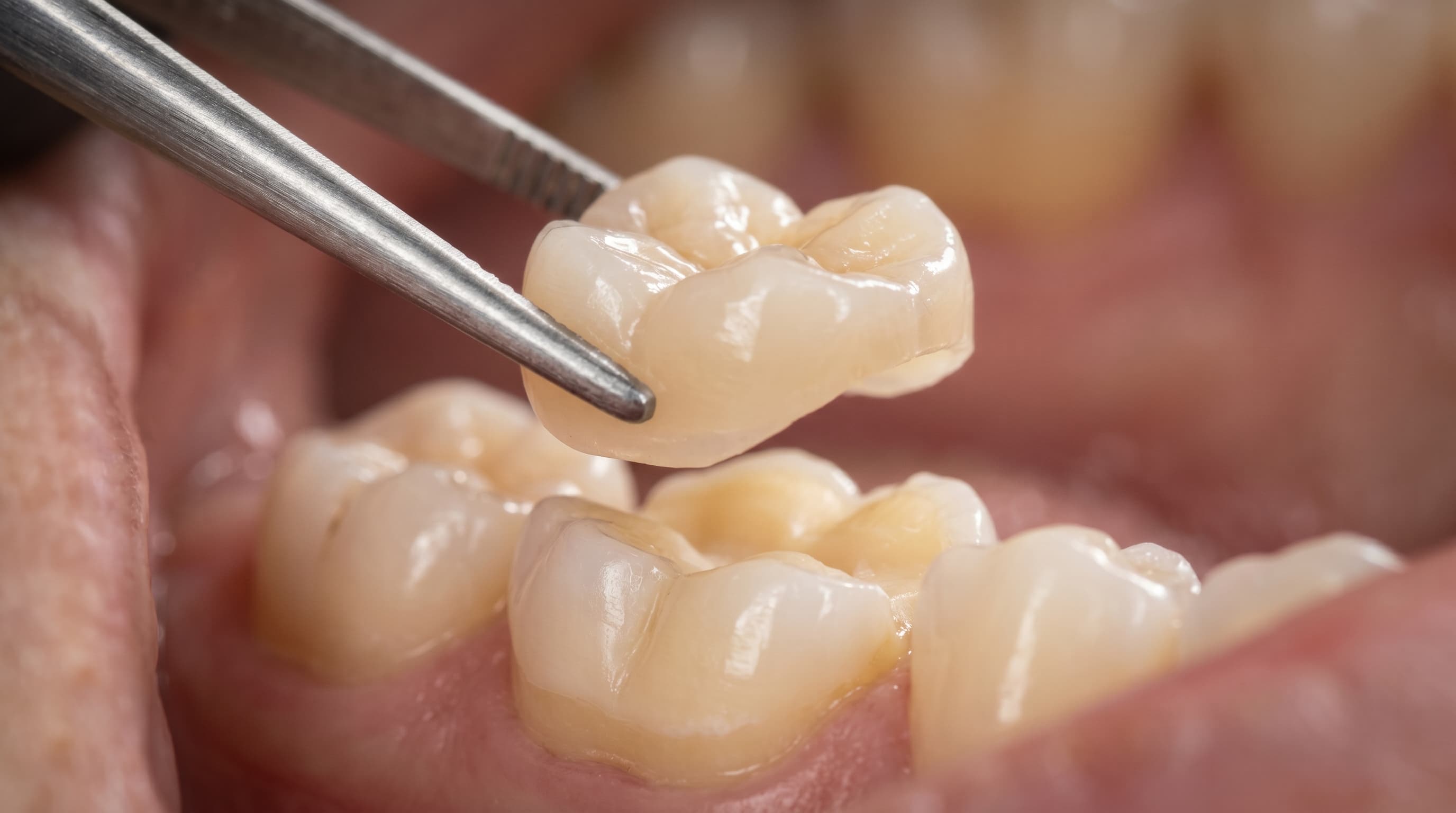
An inlay fits inside the cusps of a back tooth, filling the grooved area between the bumps on top. Think of it as a custom-made filling that's fabricated from porcelain or gold instead of being built up with composite resin in the chair. It replaces damaged or decayed tooth structure within the walls of the tooth without touching the cusps themselves.
An onlay covers one or more of the cusps in addition to the area between them. It's sometimes called a "partial crown" because it wraps over the weakened parts of the tooth while leaving the healthy portions untouched. An onlay restores a tooth that's too damaged for a filling or inlay but not damaged enough to justify grinding the entire tooth down for a full crown.
A crown covers the entire visible surface of the tooth, all the way down to the gumline. The tooth is reduced by 1.5-2mm on all sides to create room for the crown to sit over it like a cap. It's the strongest option but also the most invasive because it requires removing the most healthy tooth structure.
The ADA recommends that dentists use the most conservative restoration appropriate for the clinical situation. That principle is why inlays and onlays exist: they fill the gap where a filling is too small to hold and a crown is more than necessary.
How Do They Compare on Cost?
Cost follows a predictable pattern: inlays and onlays sit between fillings and crowns because the fabrication is similar but the amount of material and preparation differs.
| Restoration | Cost Range (Texas) | Tooth Structure Removed | Avg Lifespan |
|---|---|---|---|
| Composite Filling | $150-$400 | Minimal (decay only) | 7-15 years |
| Inlay | $650-$1,200 | Moderate (between cusps) | 10-20 years |
| Onlay | $800-$1,500 | Moderate (cusps + center) | 10-20 years |
| Full Crown | $800-$2,500 | Significant (entire surface) | 10-15 years |
Insurance typically covers inlays and onlays the same way it covers crowns: as a major restorative service at 50% after your deductible, capped by your annual maximum. Some plans classify them identically to crowns. Others classify them as a "major filling" with different coverage. Dr. Jeong's team verifies your specific plan before treatment so you know your out-of-pocket number upfront.
The cost-per-year comparison favors inlays and onlays. A $1,000 onlay lasting 15 years costs $67/year. A $1,500 crown lasting 12 years costs $125/year. You pay less upfront, the restoration lasts as long or longer, and you keep more of your natural tooth. For the right clinical situation, it's a better deal on every axis.
Related: Full crown pricing breakdown by material. → Dental Crown Cost Texas 2026: Guide With and Without Insurance
When Is an Inlay the Right Choice?
An inlay is appropriate when the damage is contained within the cusps of a back tooth, the cavity or fracture is too large for a direct composite filling to hold reliably, and the cusps themselves are still intact and strong.
The typical scenario: a patient has a medium-to-large cavity on a molar, or an old amalgam filling that's cracked and needs replacing. A composite filling could work, but the cavity is big enough that a direct filling might not hold up under the chewing forces a molar handles daily. A crown would work too, but the cusps are healthy and grinding them down would sacrifice tooth structure unnecessarily. The inlay threads the needle: it's stronger than a filling because it's fabricated as a solid piece and bonded into place, but it preserves the healthy cusps that a crown would remove.
According to a review in the Journal of Dental Research, ceramic inlays show survival rates of 91-95% at 10 years, comparable to full-coverage crowns for the same indications. The key advantage isn't longevity (both last about the same). It's preservation. An inlay keeps your tooth stronger for whatever comes next, whether that's another inlay in 15 years or a crown if the tooth eventually needs one.
When Does an Onlay Make More Sense?
An onlay enters the picture when one or more cusps are compromised but the rest of the tooth is sound. This is the gray zone that generates the most debate in restorative dentistry, and it's where a conservative-minded dentist like Dr. Jeong can save you from an unnecessary crown.
The typical scenario: a molar has a large filling that's been there for 15 years, and one of the cusps next to it has cracked. The cusp needs coverage for protection, but the other three cusps are intact. A crown would cover everything, including the three healthy cusps that don't need it. An onlay covers the cracked cusp and the filled area while leaving the healthy cusps alone.
The clinical evidence supports this approach. The ADA recognizes onlays as a valid conservative alternative to full crowns when the clinical situation permits. Porcelain and zirconia onlays bonded with modern adhesive cements distribute chewing forces effectively while preserving 40-60% more tooth structure than a full crown on the same tooth.
Why does preserving tooth structure matter so much? Because teeth are finite. Every time a restoration is replaced, a small amount of additional tooth structure is lost. A tooth that starts with an onlay has more natural structure remaining for the next restoration 15 years later. A tooth that starts with a crown has less margin for the next crown. Over a lifetime, the conservative approach keeps the tooth viable longer.
Not Sure If You Need a Crown or Something Less?
Dr. Jeong evaluates each tooth individually and recommends the most conservative restoration that will hold up long-term. If an onlay saves your tooth structure, that's what she'll suggest.
Request an Appointment →When Is a Full Crown Actually Necessary?
Crowns aren't over-treatment when the clinical situation genuinely calls for full coverage. The situations where a crown is the right choice include a tooth with damage on multiple surfaces where most cusps are compromised. A tooth that has had a root canal and needs protection from fracture (root-canal-treated teeth become more brittle over time). A tooth with a large existing crown that needs replacing. Significant structural loss where less than 50% of the original tooth remains above the gumline. And teeth that serve as abutments for a dental bridge, which require full coverage for the bridge to attach.
The American Academy of Endodontists reports that more than 15 million root canals are performed annually in the US. Most of those teeth need crowns to prevent post-treatment fracture. That's a legitimate, well-supported indication for a full crown, and no onlay can substitute.
The problem isn't crowns themselves. It's crowns prescribed when a less invasive option would work just as well. A patient with a single cracked cusp on an otherwise healthy molar doesn't need a full crown. A patient with three cracked cusps and a deep filling probably does. Dr. Jeong's approach is to match the restoration to the actual damage, not to default to the option that covers everything regardless of what's needed.
Related: How do you know when it's time for a crown? → 5 Signs You Need Dental Crowns Wylie TX
What Materials Are Used for Inlays and Onlays?
Inlays and onlays are fabricated from the same high-quality materials used for crowns. The choice depends on location, bite force, and aesthetic demands.
Porcelain (lithium disilicate/e.max) is the most common choice for visible premolars and molars where aesthetics matter. It matches tooth color well, bonds strongly with modern adhesive cements, and handles normal chewing forces. Zirconia is used for high-force areas where maximum strength is needed. It's the strongest ceramic available and resists fracture better than porcelain, though it's slightly less translucent. Gold remains an option for patients who prioritize longevity over aesthetics. Gold inlays and onlays can last 20-30 years because the material is gentle on opposing teeth and doesn't fracture. According to the ADA, gold restorations have the longest clinical track record of any dental material.
Composite resin inlays exist but are less common because direct composite fillings are simpler and less expensive for the same material. The advantage of a lab-fabricated composite inlay over a direct filling is better marginal adaptation and strength for larger restorations, but porcelain has largely replaced composite for lab-made inlays due to superior wear resistance and aesthetics.
Dr. Jeong selects the material based on the same factors she uses for crown material decisions: where the restoration sits in your mouth, how much force it needs to handle, what the adjacent teeth look like, and your budget. The material conversation happens at your consultation alongside the restoration type decision.
Conservative Care That Preserves Your Teeth
Dr. Jeong recommends the least invasive restoration that will hold up for your specific tooth. Not every damaged tooth needs a crown, and she'll tell you honestly which option fits your situation.
Request an Appointment →Related: Wondering if an old filling is ready for replacement? → When to Replace Old Filling: 5 Warning Signs
The inlay vs onlay vs crown decision isn't about which restoration is "best." It's about which one matches the damage on your specific tooth without removing structure that doesn't need removing. Inlays protect the inside. Onlays protect the inside plus compromised cusps. Crowns protect everything when everything needs protecting. The conservative choice, the one that preserves the most of your natural tooth, gives you the strongest foundation for whatever comes next.
If you've been told you need a crown, it might be worth asking whether an onlay could do the same job. If you're at Willow Family Dentistry, Dr. Jeong is already evaluating that question for every tooth she treats. It's how she practices.
Get the Right Restoration, Not the Biggest One
Dr. Jeong evaluates each tooth individually and recommends the most conservative option that solves the problem. Schedule your evaluation today.
Request an Appointment →Questions about your restoration options?
Call (972) 881-0715 →Dr. Esther B. Jeong, DDS
DDS · Willow Family Dentistry
Wylie family dentist with 15+ years of experience providing gentle, judgment-free dental care.
Frequently Asked Questions
Was this article helpful?
You may also like

Have a dental question?
Schedule a consultation and get personalized answers from Dr. Jeong.
Call us
(972) 881-0715
Hours
Mon – Thu: 9am – 5pm
Fri: By Appointment
Location
1125 W FM 544, Wylie
Emergency? Same-day appointments available.