Invisalign vs SmileDirectClub: Why In-Office Aligners Win
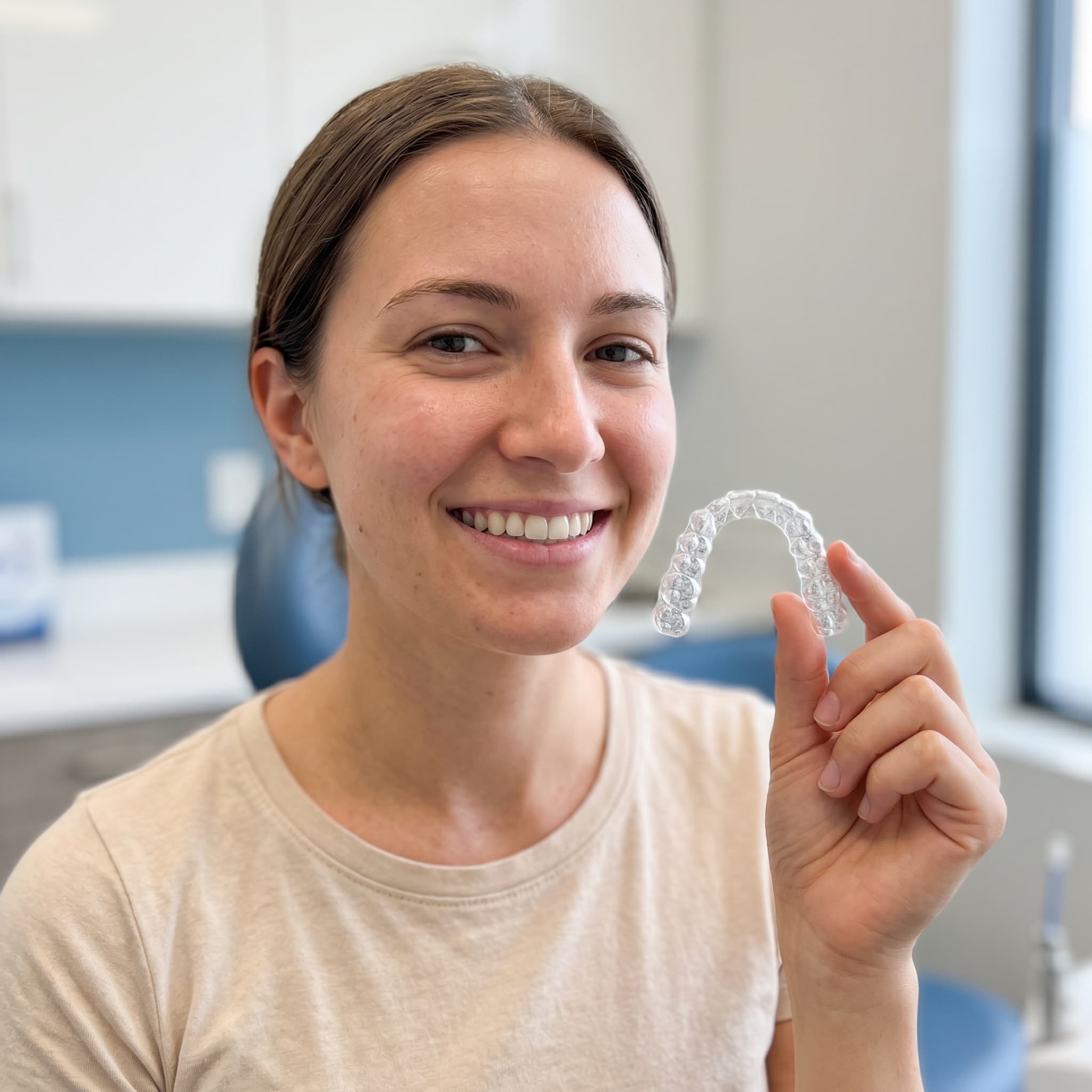
If you're searching Invisalign vs SmileDirectClub, you've likely heard that SmileDirectClub shut down. The company filed for Chapter 7 bankruptcy in December 2023 after years of regulatory complaints, lawsuits from state dental boards, and a business model that prioritized speed and affordability over clinical oversight. Thousands of patients were left mid-treatment with no provider, no refunds, and trays that no longer fit because nobody was monitoring their progress.
This isn't a victory-lap article. Plenty of people chose SmileDirectClub because professional orthodontic care felt financially out of reach, and that's a real problem the dental industry needs to address. But the SDC story is also a case study in what happens when you remove the dentist from a medical treatment. This guide explains why in-office clear aligners like Invisalign produce safer, more predictable results, what went wrong with the direct-to-consumer model, and what to do if you're a former SDC patient with unfinished treatment.
What Happened to SmileDirectClub?
SmileDirectClub launched in 2014 with a compelling pitch: clear aligners at a fraction of the cost, shipped to your door, no dental office visits required. Patients took impressions at home or visited a "SmileShop" staffed by technicians (not dentists), and a remote dentist or orthodontist they never met in person approved a treatment plan based on photos and a scan. The trays arrived by mail. There were no X-rays, no in-person exams, and no mid-treatment adjustments.
In-office supervision is the real difference. Our clear aligners in Wylie page explains how treatment is monitored here.
The price was attractive: a fraction of the cost compared to Invisalign. But the model had structural problems that compounded over time. Multiple state dental boards filed complaints alleging that SDC was practicing dentistry without proper oversight. The ADA raised concerns about the lack of in-person examination before treatment. Patient complaints about poor outcomes, inability to reach their assigned provider, and difficulty getting refunds grew steadily. A peer-reviewed survey published in the Journal of the American Dental Association found that while 87.5% of DTC patients reported satisfaction, 6.6% had to visit a dentist to address adverse effects severe enough to require in-person care.
By 2023, the company was losing hundreds of millions of dollars annually. It filed for Chapter 7 liquidation in December 2023, ceasing all operations. According to Healthline, patients with active treatment plans were left without a provider, and the company's remote monitoring platform went offline. Former SDC patients now need to find a local dentist or orthodontist to evaluate where their teeth are and determine whether additional treatment is needed.
Why Did the Direct-to-Consumer Model Fail Clinically?
The Invisalign vs SmileDirectClub debate was never really about the trays themselves. Both used thermoplastic aligners to move teeth. The difference was what happened (or didn't happen) around the trays. The clinical failures of the DTC model came down to four specific gaps.
No X-Rays Before Treatment
SmileDirectClub started treatment based on surface scans and photos without X-rays. That means they were moving teeth without knowing the condition of the roots, the bone levels, or whether there was active decay or infection underneath the gums. According to the American Association of Orthodontists, a comprehensive orthodontic evaluation requires radiographic imaging to assess root length, bone support, and pathology before any tooth movement begins. Moving teeth into weakened bone or over an infected root tip can cause irreversible damage.
No In-Person Examination
A scan shows tooth position. It doesn't show gum disease, cavities, cracked teeth, or bite issues that affect how teeth should be moved. A dentist doing an in-person exam catches these factors before treatment starts and adjusts the plan accordingly. SDC's remote model skipped this step entirely for the majority of patients.
No Mid-Treatment Monitoring
When teeth don't track with the trays (the tray lifts away instead of fitting snugly), the treatment plan drifts off course. In supervised treatment, Dr. Jeong catches tracking failures at 6-8 week checkups and corrects them immediately: adding attachments, extending wear time on a tray, or ordering a mid-course correction. SDC relied on patients to self-report issues through an app. Most patients can't tell the difference between normal tightness and a tracking failure. By the time problems became obvious, weeks or months of incorrect movement had already occurred.
Limited Case Selection
SDC accepted many cases that were too complex for unsupervised aligner treatment. Moderate crowding, bite corrections, and rotations that require attachments and elastics were treated with trays alone, without the biomechanical tools that make those movements reliable. The ADA emphasizes that clear aligner treatment should be supervised by a licensed dentist who can evaluate case complexity and intervene when needed.
Related: What can aligners realistically fix? → Invisalign Before and After: What Real Results Look Like
How Does In-Office Invisalign Treatment Differ?
The Invisalign vs SmileDirectClub comparison becomes clearest when you walk through what supervised treatment actually includes that DTC treatment didn't.
Before treatment starts, Dr. Jeong takes X-rays (including iCAT 3D imaging for complex cases) to evaluate roots, bone, and pathology. She performs a full clinical exam checking for cavities, gum disease, and bite issues that need addressing before orthodontic movement begins. She uses ClinCheck software to design your specific treatment plan, adjusting staging, attachments, and movement sequences based on clinical judgment, not a default algorithm.
During treatment, you visit the office every 6-8 weeks. Dr. Jeong verifies tracking, replaces lost attachments, adjusts the plan if teeth aren't responding as projected, and catches issues before they compound. If a tooth needs a mid-course correction, she orders new trays based on a fresh scan of where your teeth actually are. This iterative monitoring is the difference between a treatment that finishes predictably and one that drifts off course.
After treatment, she prescribes retainers and monitors retention to prevent relapse. The Mayo Clinic notes that retention is a critical phase of any orthodontic treatment, and unsupervised programs typically provide minimal guidance on long-term retention.
| Feature | In-Office Invisalign | SmileDirectClub (Defunct) |
|---|---|---|
| X-Rays Before Treatment | Yes (standard + 3D when indicated) | No |
| In-Person Exam | Yes (comprehensive) | No (scan + photos only) |
| Mid-Treatment Monitoring | Every 6-8 weeks in-person | Remote app-based self-reporting |
| Attachments Available | Yes (SmartForce, custom shapes) | No |
| Mid-Course Corrections | Yes (new trays from fresh scan) | Limited (mail-in impression) |
| Avg Cost | Mid-range to premium investment | Lower cost (no longer available) |
| Provider Accountability | Local dentist you see in person | Remote provider you never met |
What Should Former SmileDirectClub Patients Do Now?
If you started treatment with SmileDirectClub and your case was interrupted by the shutdown, or if you finished treatment but aren't sure whether the result is stable, the right next step is an evaluation with a local dentist who offers clear aligners.
Bring whatever records you have: your original SDC scan, any photos from your treatment, and your most recent set of trays. Dr. Jeong can assess where your teeth are now, compare them to where they should be, and determine whether additional treatment is needed. Some former SDC patients are close enough to their goal that retainers alone will hold the result. Others have tracking failures that need correction before the bite settles into a problematic position.
The evaluation isn't about judging your choice to try SDC. It's about figuring out where your teeth are right now and making sure they're in a healthy, stable position going forward. If additional aligner treatment is needed, Dr. Jeong can pick up where SDC left off using Invisalign or ClearCorrect with proper monitoring. If retainers are all that's needed, that's a simpler and less expensive visit.
Former SDC Patient? Let's See Where Things Stand.
Dr. Jeong can evaluate your current alignment, check for any issues SDC may have missed, and recommend next steps. No judgment. Just a clear assessment.
Request an Evaluation →Is the Cost Difference Worth the Risk?
The price gap between SDC and Invisalign was substantial and was the primary reason patients chose the DTC route. That gap was real, and for patients without dental insurance or with limited budgets, it was the deciding factor. Dismissing that reality isn't fair.
But the cost comparison was never apples to apples. SDC's price didn't include X-rays (because they weren't taken), in-person exams (because they didn't happen), attachments (because they weren't placed), mid-course corrections (because they were rarely done), or comprehensive retention planning. It included trays and an algorithm. Everything that makes orthodontic treatment safe and predictable was excluded.
Patients who experienced poor outcomes from SDC, including bite changes that caused TMJ symptoms, root resorption from unmonitored movement, and teeth that moved into worse positions than they started, often ended up paying for corrective treatment with a dentist or orthodontist. The total cost exceeded what supervised Invisalign would have cost from the start.
At Willow Family Dentistry, Dr. Jeong offers flexible payment plans and works with dental insurance orthodontic benefits to reduce the out-of-pocket cost of supervised treatment. The goal is making safe, monitored aligner treatment financially accessible, not just cheaper.
Related: Full pricing breakdown for supervised aligners. → Clear Aligner Cost Texas: Real Numbers for 2026
Are Any Other Direct-to-Consumer Aligners Still Operating?
Yes. Companies like Byte (acquired by Dentsply Sirona) and NewSmile still offer mail-order aligners. They've adopted some safeguards that SDC lacked, including requiring dental records or X-rays from a local provider before starting. But the fundamental limitation remains: no in-person mid-treatment monitoring, no attachments, and limited ability to course-correct when teeth don't respond as planned.
The AAO's position hasn't changed: orthodontic treatment should include an in-person clinical examination, proper diagnostic records (including radiographs), a treatment plan created by a licensed provider, and regular in-person monitoring throughout treatment. Any DTC model that skips one or more of these steps introduces risk that supervised treatment doesn't.
Dr. Jeong's advice for patients considering any DTC aligner: get a comprehensive exam first. Know what's happening with your roots, your bone, and your gums before anyone starts moving your teeth. If a company tells you treatment can begin without X-rays and an in-person exam, that's a shortcut with consequences.
Get Aligners With Proper Supervision
Dr. Jeong provides dentist-supervised aligner treatment with X-rays, in-person monitoring, attachments, and mid-course corrections included. Safe treatment at transparent pricing.
Request a Consultation →Related: How long does supervised Invisalign treatment take? → How Long Does Invisalign Take? Timeline by Case Type
The Invisalign vs SmileDirectClub story ended the way most dental professionals predicted it would. Removing supervision from a medical treatment doesn't make it more accessible. It makes it less safe. SDC's shutdown left thousands of patients stranded, and the broader DTC aligner market continues to operate in the gap between what's affordable and what's clinically appropriate.
If you want straighter teeth and the cost of Invisalign has been the barrier, talk to Dr. Jeong at Willow Family Dentistry about payment options before settling for an unsupervised alternative. Supervised treatment with flexible financing is almost always a better deal than cheap treatment with expensive consequences.
Results may vary. Please consult with Dr. Jeong for personalized treatment recommendations.
Straighter Teeth With a Dentist Who's Watching
Dr. Jeong provides supervised clear aligner treatment with X-rays, monitoring, and mid-course corrections. Schedule your consultation today.
Request a Consultation →Former SDC patient or considering DTC aligners?
Call (972) 881-0715 →Dr. Esther B. Jeong, DDS
DDS · Willow Family Dentistry
Wylie family dentist with 15+ years of experience providing gentle, judgment-free dental care.
Frequently Asked Questions
Was this article helpful?



Have a dental question?
Schedule a consultation and get personalized answers from Dr. Jeong.
Call us
(972) 881-0715
Hours
Mon – Thu: 9am – 5pm
Fri: By Appointment
Location
1125 W FM 544, Wylie
Emergency? Same-day appointments available.