Receding Gums at 20: Why It Starts Early and What to Do

Receding gums at 20 feels like a problem that belongs to someone else's grandparents. Yet more and more people in their 20s and 30s notice that a tooth looks longer, a notch has appeared near the gumline, or cold water suddenly stings.
This guide explains why gum recession can start early, which habits and conditions are most often involved, and what you can do about it. It also covers when a simple exam is the smartest next step. Our periodontal care in Wylie starts with a gentle, judgment-free look.
This article is general education, and it isn't a substitute for an exam with your dentist.
Noticing changes in your gums?
Dr. Jeong checks the cause of recession and explains your options clearly, with no pressure and no judgment.
Meet Dr. Jeong →Why Do Receding Gums at 20 Happen?
Gum recession in your 20s and 30s is usually caused by brushing too hard, early gum disease, grinding or clenching, crooked teeth, tobacco use, or naturally thin gum tissue. Often more than one factor is involved.
Recession means the gum edge moves down, exposing more of the tooth and sometimes the root. It tends to happen slowly. Many young adults don't notice until sensitivity or a visible change gets their attention.
Here are the most common causes and what they look like:
| Common cause | How it shows up | What helps |
|---|---|---|
| Brushing too hard | Worn gum edges, often on the cheek side of canines and premolars | Soft brush, light pressure, angled strokes |
| Early gum disease | Bleeding, puffiness, bad breath | Professional cleaning and daily plaque control |
| Grinding or clenching | Notches near the gumline, worn teeth, jaw tension | Night guard and stress management |
| Crooked teeth or orthodontics | Recession on teeth sitting outside the bone | Orthodontic evaluation and gentle hygiene |
| Tobacco and vaping | Pale or irritated gums, slower healing | Cutting back or quitting |
The good news is that most of these causes can be managed once they're identified. Our guide to whether receding gums can grow back explains what treatment can and can't do.
Is Brushing Too Hard the Cause of Receding Gums in Your 20s?
Often, yes. Scrubbing with a firm brush or heavy pressure can wear away gum tissue over time, especially on the outer surfaces of canines and premolars. Switching to a soft brush and lighter strokes protects the gums you have.
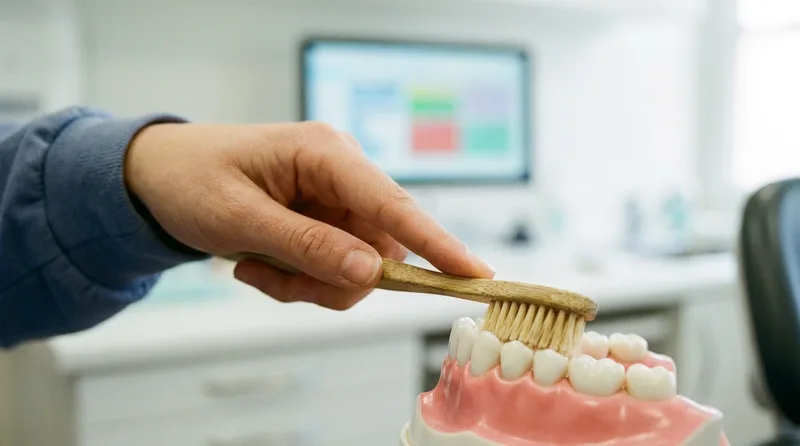
It's a common irony. People who care a lot about their teeth sometimes brush the hardest, believing that more force means a cleaner mouth. In fact, plaque comes off with gentle, thorough strokes. Extra pressure mostly wears down gum tissue and enamel.
Try these changes:
- Use a soft-bristled brush, and replace it every three months or when the bristles flare.
- Hold the brush like a pencil, not a fist, to keep pressure light.
- Angle bristles toward the gumline and use short, gentle strokes.
- Consider a pressure-sensing electric brush, which warns you when you press too hard.
- Take your time. Two minutes of gentle brushing beats 30 seconds of scrubbing.
Tooth wear near the gumline can also show up as small notches. Our guide to notches at the gumline explains what they are and why they appear.
Can Grinding or Clenching Cause Receding Gums at 20?
Grinding and clenching can contribute to recession by placing extra force on teeth and the bone around them. Stressful years in your 20s and 30s often bring more clenching, so a night guard may help protect teeth and gums.
Many people clench or grind without knowing it, especially during sleep. Clues include morning jaw tightness, headaches, flat or chipped teeth, and notches near the gumline. Heavy forces can flex teeth slightly, which stresses the gum margin over time.
Signs worth mentioning to your dentist:
- A tight or tired jaw when you wake up.
- Teeth that look flat, worn, or chipped.
- Sensitivity at the gumline, especially to cold.
- A partner who hears grinding at night.
A custom night guard is a simple, comfortable way to cushion those forces. Stress management, regular exercise, and limiting late-night caffeine can also ease clenching. Your dentist can check your bite and tell you whether grinding plays a role in your recession.
Do Braces, Aligners, or Crooked Teeth Contribute to Gum Recession?
They can. Teeth that sit outside the bone, due to crowding or movement, may have thinner gum coverage and recede more easily. Orthodontic care often helps by placing teeth where gums and bone can support them.
Gum tissue and bone form a supportive frame around each tooth. When a tooth sits too far toward the cheek or lip, that frame can be thin, and the gum edge tends to recede. Crowded teeth also make cleaning harder, which can lead to plaque and inflammation.
Orthodontic treatment doesn't cause recession in most people, but it deserves monitoring when gums are thin. Your dentist can check your gums before and during treatment and adjust the plan if needed. Learn more about orthodontics in Wylie.
There's another benefit. According to the ADA, straight teeth are easier to clean, which can reduce the risk of cavities and gum disease by up to 30%. Good hygiene during treatment matters just as much. Brush gently, clean around brackets or attachments, and keep your cleanings on schedule.
How Do Tobacco and Vaping Affect Young Gums?
Smoking, vaping, and other nicotine products reduce blood flow to the gums and can mask early gum disease. That combination makes inflammation harder to spot and healing slower, which can speed up recession over the years.

Nicotine narrows blood vessels. The gums receive less oxygen and fewer healing cells, so they respond poorly to plaque and irritation. Smokers may also bleed less, which can hide the warning signs of gum disease that would normally prompt a dental visit.
Vaping feels modern, but it isn't gentle on gums. Dryness, irritation, and nicotine exposure all play a part. If you're a parent or young adult curious about the effects, read our guide to vaping and oral health.
The American Dental Association's MouthHealthy page on gum disease explains how gum problems start and why early attention helps. If you want help cutting back, the national quitline at 1-800-QUIT-NOW offers free coaching, and your dentist can support you without judgment.
Want to know what's behind your gum changes?
Call Willow Family Dentistry for a gum exam. We'll measure, explain, and talk through your options.
Call (972) 881-0715 →How Do Genetics, Piercings, and Hormones Play a Role?
Some people are born with thin gum tissue or thin bone over their tooth roots, which makes recession more likely. Lip or tongue piercings and hormonal changes can also affect the gums, so family history and lifestyle matter.
Not every cause is something you did. Some of it is simply anatomy, and a gum "type" that runs in families explains why recession seems to show up in one sibling but not another.
Other contributors
- Thin gum tissue: thinner gums have less cushion and recede more easily.
- Lip or tongue piercings: jewelry can rub against the gum and wear it away over time.
- Hormonal shifts: pregnancy and other hormone changes can make gums more reactive to plaque.
- Missed cleanings: tartar builds up and irritates the gumline.
- Family history: if a parent had gum problems, mention it at your next visit.
Knowing your risks helps you and your dentist plan smart prevention. It also removes guilt. You can't change your genetics, but you can protect your gums with good habits and regular visits.
What Are the Early Signs of Receding Gums?
Early signs include teeth that look longer, new sensitivity to cold or sweets, notches near the gumline, and a visible ridge where gum meets root. Gums may also bleed with brushing, though many people notice nothing at first.
Recession is easy to miss because it happens slowly. Checking in the mirror once a month helps you catch changes early. Look for the following:
- A tooth that seems longer than its neighbors.
- A yellowish or darker band near the gumline, which is root surface.
- Sensitivity to cold air, drinks, or sweets.
- A notch you can feel with a fingernail at the gumline.
- Gums that bleed or look puffy when you brush or floss.
- Teeth that feel slightly loose.
Gum problems are more common than most young adults expect. According to the CDC (2024), 42% of adults aged 30 and older have some form of periodontal disease. Many of them feel little at first, which is why exams matter. The NIDCR's gum disease overview explains how it develops. If you're seeing bleeding when you brush, our guide to why gums bleed when brushing can help you sort out the cause.
What Should You Do If You Notice Receding Gums in Your 20s or 30s?
Schedule a dental exam so your dentist can measure the recession, find the cause, and recommend a plan. Meanwhile, brush gently with a soft brush, clean between your teeth daily, and avoid tobacco. Early action protects the gum you have.

You don't need to panic. Mild recession that isn't progressing may only need monitoring and gentler habits. Treatment grows more involved only when recession is advancing or exposed roots cause problems.
A sensible plan looks like this:
- Book an exam. Your dentist measures gum levels and looks for gum disease, grinding, and bite issues.
- Fix the cause. That might mean a technique change, a deep cleaning, a night guard, or orthodontic input.
- Protect sensitive areas. Desensitizing toothpaste or in-office treatments can help.
- Monitor over time. Photos and measurements show whether recession is stable.
- Consider grafting if needed. Gum grafting covers exposed roots when recession is advancing or causing problems. Read our guide to gum grafting, cost, and recovery.
Prevention pays off. According to the ADA, regular dental visits can catch 80% of oral health issues before they become serious. Americans who see a dentist regularly are 60% less likely to lose teeth, according to the Journal of Dental Research. Our preventive dentistry in Wylie includes exams and cleanings that keep small changes small.
When Should You See Willow Family Dentistry About Receding Gums?
See your dentist as soon as you notice a longer-looking tooth, new sensitivity, bleeding gums, or a visible notch. Willow Family Dentistry welcomes patients from Wylie, Murphy, Sachse, Lucas, Allen, and Plano for gum exams and periodontal care.
Many young adults put off an exam because nothing feels wrong yet, or because they feel embarrassed. Please don't. Patients across Collin County and North Texas visit us with exactly these concerns, and Dr. Jeong's judgment-free approach means you'll get answers, not a lecture.
At your visit, Dr. Jeong measures your gum levels, looks for the cause of recession, and uses iCAT 3D imaging when she needs a closer look at the bone beneath the gums. Our team speaks English, Korean, Spanish, and Vietnamese, so you can ask questions in the language you're most comfortable using. According to BMC Oral Health (2024), 36% of Americans have dental anxiety, and 12% have extreme dental fear, so you're far from alone.
- Book soon: exposed roots, new sensitivity, bleeding, or teeth that feel loose.
- Book a checkup: if you've simply noticed a change and want peace of mind.
What Is the Next Step for Receding Gums at 20?
Receding gums at 20 or 30 are more common than most people think, and catching them early gives you the most options. A simple exam finds the cause, and gentle daily habits protect the gums you have.
Don't wait for discomfort to decide. A short visit now can prevent a bigger problem later.
Results may vary. Please consult with Dr. Jeong for personalized treatment recommendations.
Ready to check on your gums?
Request an appointment with Dr. Jeong for a gentle gum exam and a clear plan, with no pressure and no judgment.
Request an Appointment →Prefer to ask a question first?
Contact Willow Family Dentistry →Dr. Esther B. Jeong, DDS
DDS · Willow Family Dentistry
Wylie family dentist with 15+ years of experience providing gentle, judgment-free dental care.
Frequently Asked Questions
Was this article helpful?
You may also like


Have a dental question?
Schedule a consultation and get personalized answers from Dr. Jeong.
Call us
(972) 881-0715
Hours
Mon – Thu: 9am – 5pm
Fri: By Appointment
Location
1125 W FM 544, Wylie
Emergency? Same-day appointments available.