How to Floss Correctly (and Why Most People Don't)
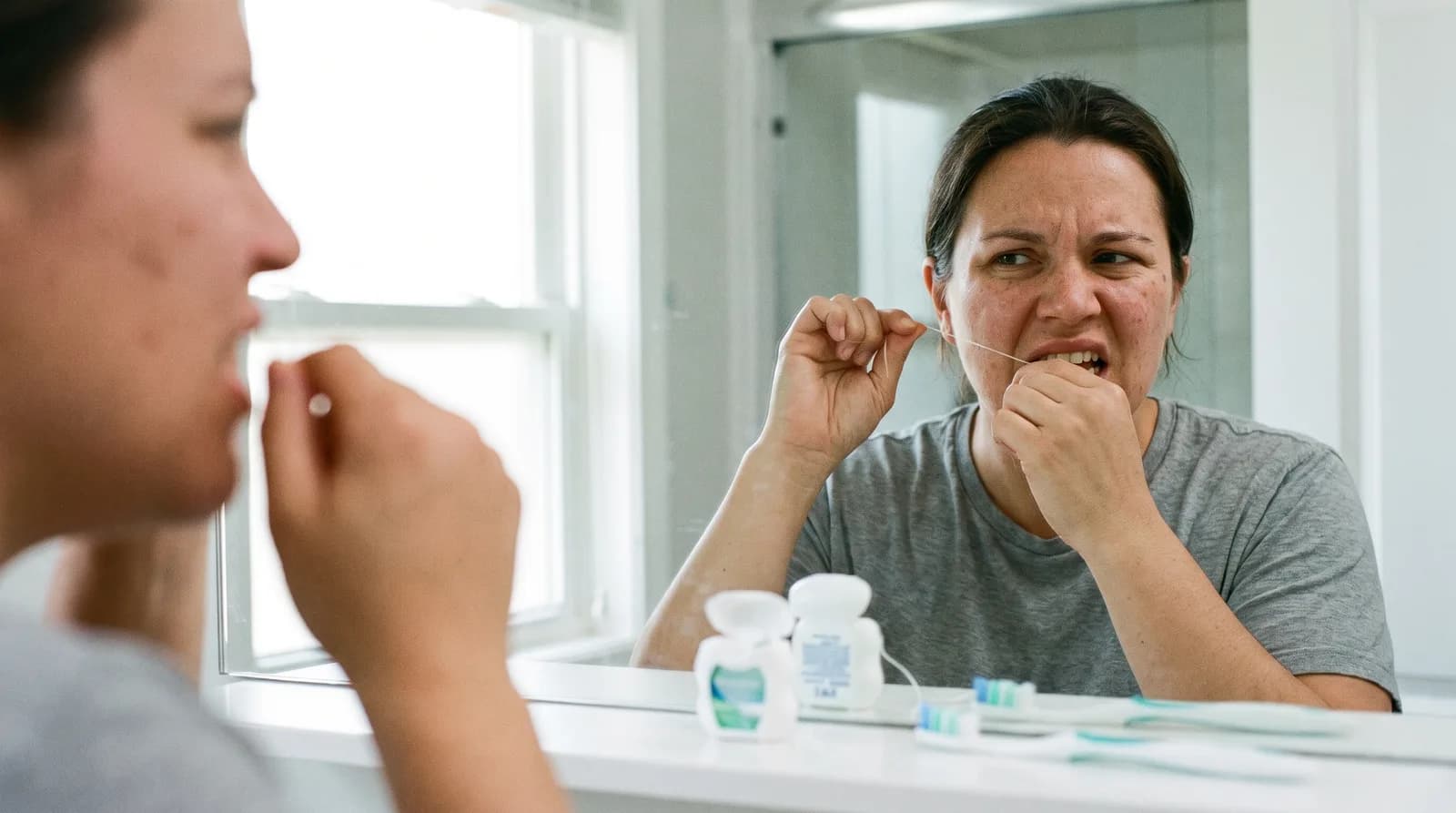
Flossing is one of those things most people do inconsistently, do quickly, or stopped doing altogether after being told it was fine for years. It is not fine. Knowing how to floss correctly is not complicated, but the gap between what most people do and what actually disrupts plaque between the teeth is significant enough that a brief correction in technique produces a noticeable difference at the next cleaning. At Willow Family Dentistry in Wylie, TX, Dr. Esther B. Jeong reviews flossing technique with patients during hygiene visits and finds the same few mistakes coming up repeatedly.
Why Does Flossing Matter So Much?
Toothbrush bristles cannot reach the contact areas between teeth where two surfaces touch. That interproximal space is where plaque accumulates undisturbed and where a disproportionate share of cavities and early gum disease originates. Flossing is the only tool that disrupts plaque in that space.
Toothbrush bristles clean the outer, inner, and chewing surfaces of the teeth but cannot reach the contact areas between teeth where two adjacent tooth surfaces touch. That interproximal space is where plaque builds undisturbed between brushings, and it is where a disproportionate share of cavities and early gum disease originates. Flossing is the only tool that disrupts plaque in that space.
According to the American Dental Association's MouthHealthy resource on flossing, interdental cleaning is an essential part of oral hygiene that removes plaque and food particles that a toothbrush cannot reach. The ADA recommends once-daily interdental cleaning as a standard component of every oral hygiene routine alongside twice-daily brushing.
Published research on flossing compliance and outcomes has found that patients who floss regularly have significantly lower rates of interproximal decay and gum inflammation compared to those who do not, with some studies showing 30% to 40% reductions in gingival bleeding scores with consistent daily flossing, according to that body of evidence. The clinical impact is real and measurable at dental exams.
The Correct Flossing Technique Step by Step
Correct flossing technique removes plaque from the tooth surfaces and slightly below the gumline without snapping or sawing in a way that damages the gum tissue. The motion is a C-shape against each tooth, not a back-and-forth cutting motion between teeth.
How to floss correctly:
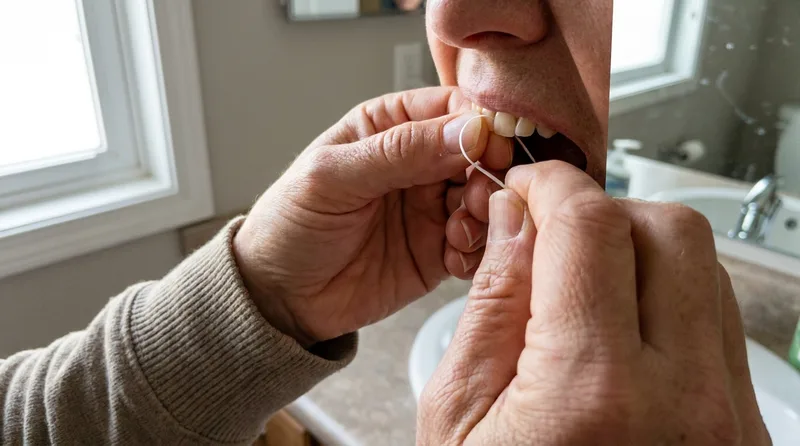
- Start with enough floss. Use 18 to 24 inches of floss so you have clean sections to work with throughout the mouth. Wind most of it around the middle fingers of each hand, leaving two to three inches taut between them to work with.
- Guide the floss gently between teeth. Use your thumbs and index fingers to guide the floss. Ease it between the teeth with a gentle zigzag motion rather than snapping it through, which can cut the gum tissue.
- Curve into a C-shape around each tooth. Once the floss is between the teeth, curve it into a C against one tooth surface and slide it gently up and down two to three times, going slightly below the gumline. Then curve it against the adjacent tooth and repeat the same motion.
- Use a fresh section for each space. Wind the used floss onto one finger and unroll a fresh section for the next contact area so you are not redistributing bacteria and plaque from one space to another.
- Cover all contacts including the back of the last molars. The very back surface of the last molar in each quadrant is often missed entirely. Floss that surface even though there is no adjacent tooth to reach between.
- Floss once daily, before or after brushing. The timing relative to brushing does not significantly affect the outcome. What matters is that it happens every day. Many patients find flossing before brushing easier because the brushing then clears the dislodged debris.
According to the American Dental Association, the correct flossing technique involves curving the floss around each tooth rather than using a sawing or snapping motion, and gentle insertion below the gumline is part of effective plaque removal rather than something to avoid.

What Mistakes Do Most People Make When Flossing?
Most patients who floss are making at least one technique error that significantly reduces effectiveness. The most common are snapping the floss through the contact, using a sawing motion instead of a C-shape, stopping at the gumline, and reusing the same section for multiple teeth.
Most patients who do floss are making at least one of these mistakes, which reduces how effective the flossing actually is.
- Snapping the floss through the contact. Forcing floss between teeth by snapping it through rather than guiding it gently damages the gum tissue at the contact point over time and misses the plaque on the tooth surfaces on the way through.
- Using a sawing motion instead of a C-shape. A back-and-forth sawing motion moves the floss in the space between teeth but does not wrap against either tooth surface effectively. Plaque adheres to the curved tooth surface, not to the air between the teeth.
- Stopping at the gumline. The gumline is not the finish line. The floss needs to go slightly below the gum margin, where the gum tissue meets the tooth root, to disrupt the plaque that accumulates there. This is where early gum disease begins.
- Reusing the same section throughout the mouth. Using the same section of floss for every contact just moves plaque from one space to the next. Advance to a clean section for each tooth.
- Skipping the back molars. The distal surface of the last molar in each quadrant and the areas around any crowns, bridges, or implants are the most commonly skipped. These are also the areas where the hygienist most frequently finds buildup at cleaning appointments.
- Doing it only before a dental appointment. Last-minute flossing before a cleaning is transparent to the hygienist and does not substitute for a regular daily habit. Bleeding during flossing at an exam is a clinical finding, not an embarrassment, and it tells a clear story about the state of the gum tissue.
Do Floss Picks and Threaders Work as Well?
Floss picks are convenient plastic tools with a short pre-threaded floss section. They reach between teeth better than not flossing, but the fixed short section makes it harder to form a true C-shape against each tooth. Floss threaders are essential for cleaning around bridges, braces, and implants.
Floss picks are the plastic Y-shaped tools with a short pre-threaded section of floss. They are more convenient than traditional floss for some patients, particularly those with limited dexterity, and they do clean between teeth. The main limitation is that it is harder to form a true C-shape against each tooth with a pick compared to traditional floss, and the same short section is used throughout the entire mouth rather than advancing to clean sections. They are better than not flossing, but traditional floss used correctly is more effective.
Floss threaders are thin flexible needles used to guide floss under bridges, around orthodontic wires, and through implant contacts. They are essential for patients who have fixed appliances that conventional floss cannot reach around. Super Floss, which has a stiff threader end, spongy middle section, and regular floss end in a single pre-cut strand, is another option for the same situations. If you have a bridge, braces, or implants and are not currently cleaning underneath them effectively, this is worth discussing at your next appointment.
Are Water Flossers and Interdental Brushes Effective?
Interdental brushes fit between teeth and can be more effective than floss in spaces with recession or larger gaps, but cannot enter tight contacts. Water flossers flush plaque below the gumline and work well for patients with braces, implants, or limited dexterity, but do not fully replace mechanical flossing for most patients.
Interdental brushes, which are small bristled brushes that fit between teeth, are particularly effective for patients with larger interproximal spaces from gum recession or tooth anatomy. Research has found that interdental brushes can be more effective than floss at removing plaque in spaces where the brush fits without forcing. They are not effective in tight contacts where only floss can enter.
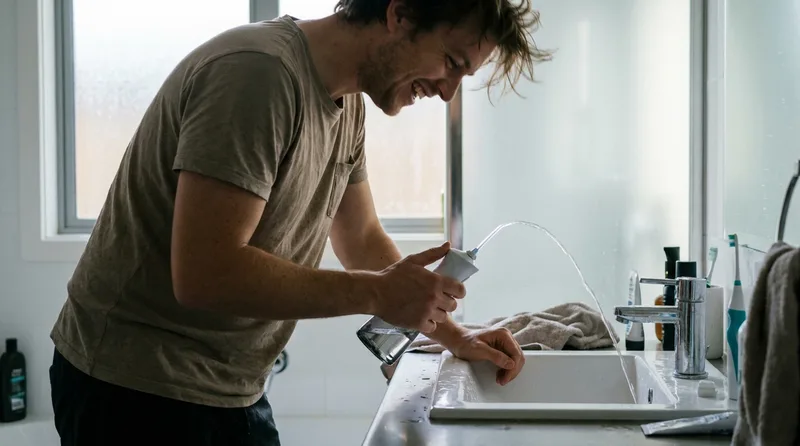
Water flossers use a pressurized stream of water to flush food and some plaque from between teeth and below the gumline. They are particularly useful for patients with braces, implants, bridges, or limited dexterity and can reach areas that are difficult to access with traditional floss. Clinical evidence supports their use as an adjunct to brushing, and some studies show them to be equivalent to traditional floss for gum health outcomes in certain patient populations. They are not a complete replacement for mechanical plaque disruption with floss in patients with tight contacts and no special appliances.
Our article on correct brushing technique covers the brushing side of the equation alongside flossing, and our article on plaque vs tartar explains what happens when plaque in the interproximal spaces is not removed before it hardens into calculus.
When Will You See Results?
Bleeding when you start flossing after a break is normal and resolves within one to two weeks as gum tissue becomes healthier. Noticeable changes including less bleeding at cleanings and fresher breath typically appear within two to four weeks of consistent daily technique.
If you are starting to floss daily after a long break, the gum tissue may bleed for the first few days. This is not a reason to stop. The bleeding is a sign of gum inflammation from plaque accumulation, and it typically resolves within one to two weeks of consistent daily flossing as the tissue becomes healthier. Bleeding that does not improve after two weeks of consistent flossing warrants a dental evaluation to assess whether the inflammation has a deeper cause.
The most noticeable changes with consistent correct flossing are less bleeding at dental cleanings, cleaner-feeling teeth, and reduced bad breath from the interproximal areas. These changes typically become apparent within two to four weeks of consistent daily technique. The deeper impact on cavity prevention and gum health accumulates over months and years and is measured at each dental exam through pocket depth readings, bleeding scores, and X-ray comparisons over time.
Want a quick technique check?
At your next cleaning at Willow Family Dentistry in Wylie, TX, ask Dr. Jeong or your hygienist to review your flossing technique. A two-minute demonstration at the chair makes more difference than any written guide.
Explore preventive dentistryFurther Reading
Flossing is one part of the complete preventive routine covered at Willow Family Dentistry.
- Enamel Erosion: How Acid Wears Down Your Teeth
- Are Dental X-Rays Safe? How Often Do You Need Them?
- Acid Reflux and Your Teeth: The GERD-Dental Connection
Results may vary. Please consult with Dr. Jeong for personalized treatment recommendations.
Dr. Esther B. Jeong, DDS
DDS · Willow Family Dentistry
Wylie family dentist with 15+ years of experience providing gentle, judgment-free dental care.
Frequently Asked Questions
Was this article helpful?
You may also like



Have a dental question?
Schedule a consultation and get personalized answers from Dr. Jeong.
Call us
(972) 881-0715
Hours
Mon – Thu: 9am – 5pm
Fri: By Appointment
Location
1125 W FM 544, Wylie
Emergency? Same-day appointments available.