Mouth Ulcers Causes, Types, and When to Worry

Most people have had a mouth ulcer at some point and found it healed on its own within a week or two without much attention. That is usually the right outcome. But not all oral ulcers are the same, and some presentations warrant evaluation rather than watchful waiting. Understanding the different types of mouth ulcers causes, what the normal healing timeline looks like for each, and which features should prompt a dental visit helps separate the ones that are genuinely benign from the ones that need attention.
At Willow Family Dentistry in Wylie, TX, Dr. Esther B. Jeong evaluates oral soft tissue changes at every comprehensive exam and can assess any ulcer that does not follow the expected healing pattern for a benign lesion.
What Is a Mouth Ulcer?
A mouth ulcer is an open sore on the soft tissue lining the inside of the mouth. Most are benign and heal within one to two weeks without treatment. The key task is distinguishing the common benign types from the small subset that require dental evaluation because they do not follow an expected healing pattern.
A mouth ulcer is a break in the mucous membrane lining the inside of the mouth, creating an open sore on the soft tissue. Ulcers can appear on the inner cheeks, inner lips, tongue, floor of the mouth, soft palate, and throat. They are not all caused by the same thing, do not all look the same, and do not all carry the same significance. The most important distinction for any oral ulcer is whether it fits the pattern of a known benign condition or whether it has features that require professional evaluation to rule out something more serious.
According to Healthline, most mouth ulcers are harmless and resolve on their own within one to two weeks. However, ulcers that persist beyond three weeks, grow over time, or appear alongside other symptoms warrant dental or medical evaluation, as these features can indicate conditions requiring treatment.
Types of Mouth Ulcers and Their Causes
There are several distinct types of mouth ulcers, each with different causes, appearances, and healing timelines. Knowing which type you are dealing with helps set accurate expectations and identify when something does not fit the expected pattern.
| Type | Cause | Appearance | Healing time |
|---|---|---|---|
| Aphthous (canker sore) | Unknown; triggers include stress, dietary irritants, minor trauma | Round or oval, white or yellow center, red border | 7-14 days (minor); up to 6 weeks (major) |
| Traumatic ulcer | Biting the cheek, sharp food edge, ill-fitting denture, orthodontic wire | Irregular shape, located at site of injury | 7-10 days once source removed |
| Viral (herpetic) | Herpes simplex virus type 1; primary infection or reactivation | Clusters of small blisters that rupture into ulcers; often on keratinized tissue | 7-14 days |
| Systemic disease-related | Associated with Crohn's disease, celiac disease, Behcet's syndrome, inflammatory bowel conditions | May resemble aphthous ulcers but recur more frequently | Variable; recur with the underlying condition |
| Drug-related | NSAIDs, beta-blockers, nicorandil, some chemotherapy agents | May resemble aphthous lesions; timing correlates with medication | Resolves when medication is changed; discuss with prescriber |
| Oral cancer | Malignant transformation; associated with tobacco, alcohol, HPV | Does not heal; may be indurated (firm beneath); irregular border | Does not resolve spontaneously |
What Are Aphthous Ulcers?
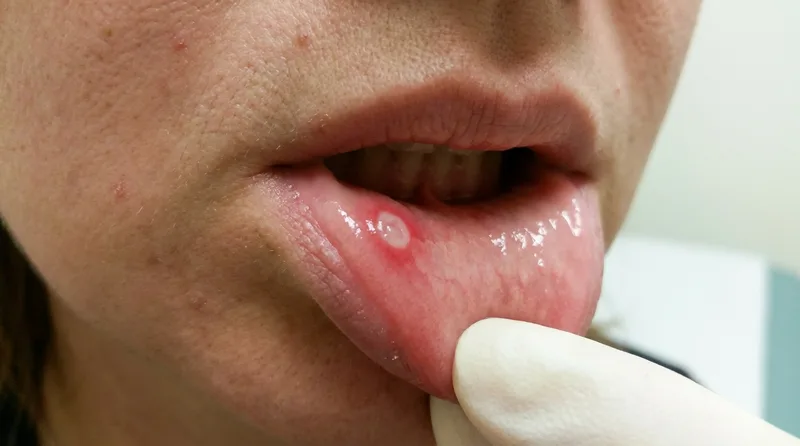
Aphthous ulcers, commonly called canker sores, are the most common type of mouth ulcer. They appear on the non-keratinized soft tissue inside the mouth, are not contagious, have no viral cause, and heal on their own within one to two weeks in their minor form.
Aphthous ulcers, commonly called canker sores, account for the majority of mouth ulcers that patients experience. They appear on the non-keratinized soft tissue inside the mouth, specifically the inner cheeks, inner lips, tongue, and soft palate, and they heal on their own within one to two weeks for minor cases. They are not contagious, not caused by a virus, and not a sign of any serious underlying condition in most people.
Minor aphthous ulcers are less than 1 centimeter in diameter, have the classic white or yellowish center with a red border, and heal completely without scarring in seven to fourteen days. Major aphthous ulcers are larger than 1 centimeter, significantly more painful, and may take up to six weeks to heal, sometimes leaving a faint scar. Herpetiform aphthous ulcers appear as clusters of very small ulcers, sometimes dozens at once, that merge into larger irregular lesions.
According to the American Dental Association's MouthHealthy resource on canker sores, approximately 20% of people experience recurrent aphthous ulcers, making them one of the most common oral soft tissue conditions encountered in dentistry. Our dedicated article on canker sore causes and treatment covers the specific triggers and management approaches in detail.
What Causes Traumatic Ulcers?
Traumatic ulcers are caused by direct physical injury to the oral mucosa, such as biting the cheek, a sharp food edge, an ill-fitting denture, or an orthodontic wire. The location matches the source of injury, and the ulcer heals within seven to ten days once the cause is removed.
Traumatic ulcers are caused by direct physical injury to the oral mucosa. Biting the cheek or tongue during eating, contact with a sharp food edge such as a chip or hard cracker, irritation from an ill-fitting denture, and friction from a protruding orthodontic wire are all common causes. The location of a traumatic ulcer matches the source of the injury, which helps distinguish it from aphthous ulcers that appear without a clear mechanical cause.
Traumatic ulcers heal within seven to ten days once the source of irritation is eliminated. A traumatic ulcer from biting the cheek will heal on its own; one from a sharp denture flange or orthodontic wire will persist and potentially worsen until the appliance is adjusted. If an ulcer correlates with a dental appliance, contact the dental office rather than waiting for spontaneous improvement that will not occur while the source remains.
When Is a Mouth Ulcer a Red Flag?
Most mouth ulcers are benign and self-limiting, but certain features indicate that a lesion needs evaluation rather than home monitoring. The features that distinguish potentially significant ulcers from benign ones are not complicated to recognize.
See a dentist about a mouth ulcer if:
- It has not started healing after two to three weeks. A benign ulcer should show measurable improvement within this window. A lesion that is the same size or larger after three weeks has not followed the expected healing trajectory.
- It is growing. Benign ulcers do not grow after their initial formation. An ulcer that is visibly larger over days or weeks is a feature that warrants evaluation regardless of other characteristics.
- It feels firm underneath when touched. Induration, the feeling of firmness or hardness beneath the ulcer surface, is a clinical feature associated with malignancy rather than benign inflammatory lesions. A lesion that feels firm when pressed with a finger or tongue should be evaluated promptly.
- It has an irregular or rolled border. Benign ulcers typically have a regular border. An irregular, rolled, or everted border is a feature that can indicate a malignant process.
- It is on the floor of the mouth, lateral tongue, or soft palate without an obvious explanation. These are the highest-risk sites for oral cancer. An unexplained ulcer at these locations warrants evaluation more promptly than one at a lower-risk site.
- It is accompanied by a lump in the neck. A cervical lymph node that is enlarged or firm alongside an oral ulcer suggests a process that requires evaluation beyond dental examination.
- It recurs very frequently with minimal or no symptom-free periods. Frequent recurrence with very short remission intervals may indicate a systemic condition driving the ulceration rather than simple aphthous disease.
Our article on cold sore vs canker sore covers how to distinguish between the two most commonly confused oral sores, and our article on geographic tongue covers the tongue surface change most often mistaken for an ulcerating condition.
Why Does Oral Cancer Screening Matter?
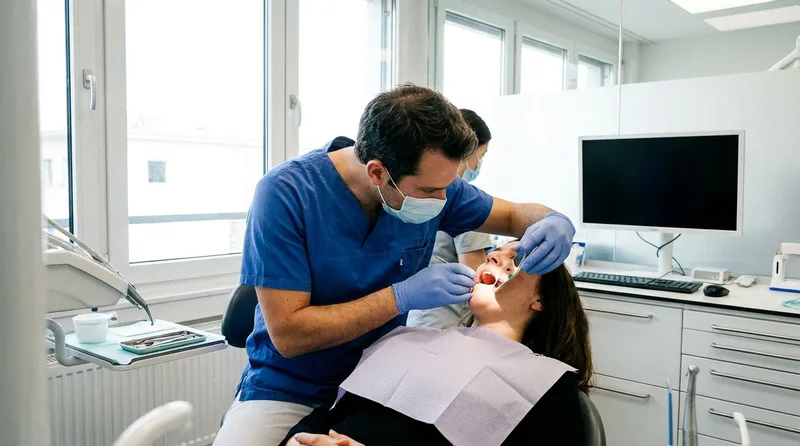
Oral cancer screening is part of every comprehensive dental exam at Willow Family Dentistry. Dr. Jeong examines all soft tissue surfaces at each visit and documents any lesions, providing the ongoing monitoring needed to identify lesions that change character over time rather than evaluating each one in isolation.
Oral cancer screening is part of every comprehensive dental exam at Willow Family Dentistry. Dr. Jeong examines the soft tissue of the lips, cheeks, tongue, floor of the mouth, palate, and throat at each visit and documents any lesions that are present. This ongoing monitoring is how lesions that change character over time are identified rather than only being evaluated in isolation at a single visit.
According to published research on oral soft tissue lesions, approximately 3% of oral ulcers presenting to a dental practice represent a clinically significant condition requiring intervention, according to that body of evidence. The stakes of a missed malignant lesion are high enough that any ulcer not following an expected benign healing pattern warrants clinical evaluation rather than extended watchful waiting. Early detection of oral cancer significantly improves survival outcomes, which is why routine screening rather than waiting for symptoms matters.
If you have a mouth ulcer that concerns you or that has not healed within two to three weeks, contact Willow Family Dentistry for an evaluation. Soft tissue examinations take only a few minutes and provide clear information about whether monitoring, further evaluation, or referral is the appropriate next step.
Mouth ulcer that won't heal?
Book an evaluation at Willow Family Dentistry in Wylie, TX. Dr. Jeong will examine the lesion, assess whether it fits a benign pattern, and let you know clearly whether monitoring or further evaluation is needed.
Explore preventive dentistryFurther Reading
Mouth ulcers are one of several soft tissue topics covered at Willow Family Dentistry.
- White Tongue: What Your Tongue Says About Your Health
- Dental Fluorosis: White Marks From Too Much Fluoride
- Are Dental X-Rays Safe? How Often Do You Need Them?
Results may vary. Please consult with Dr. Jeong for personalized treatment recommendations.
Dr. Esther B. Jeong, DDS
DDS · Willow Family Dentistry
Wylie family dentist with 15+ years of experience providing gentle, judgment-free dental care.
Frequently Asked Questions
Was this article helpful?
You may also like



Have a dental question?
Schedule a consultation and get personalized answers from Dr. Jeong.
Call us
(972) 881-0715
Hours
Mon – Thu: 9am – 5pm
Fri: By Appointment
Location
1125 W FM 544, Wylie
Emergency? Same-day appointments available.