Dissolvable Stitches After Tooth Extraction: How Long?

Dissolvable stitches after tooth extraction raise the same questions for almost everyone. Are they supposed to feel like that? Why is there a thread poking out? When will they finally disappear?
This guide explains how long dissolvable stitches take to dissolve, what normal looks like along the way, and how to eat, rinse, and brush without disturbing them. If something doesn't look right, a same-day emergency dentist in Wylie is available when you need one.
This article is general education, and your dentist's instructions come first.
Having a tooth removed soon?
Dr. Jeong explains stitches, aftercare, and what's normal before you leave the chair, so you can recover with confidence.
Meet Dr. Jeong →How Long Do Dissolvable Stitches Take to Dissolve After Tooth Extraction?
Dissolvable stitches after a tooth extraction usually break down within one to two weeks, though some last up to four. The exact timing depends on the suture material, the location in your mouth, and how much healing the area needs.
Don't be alarmed if yours seem to hang on a bit longer than a friend's. Stitches near the back of the mouth see more chewing and tongue contact, so they often loosen sooner. Stitches in a protected spot can last longer. Both are normal.
Here's a general guide to the common types:
| Stitch type | Typical timeline | What to expect |
|---|---|---|
| Dissolvable (absorbable) | About 1-2 weeks, sometimes up to 4 | Loosen, fray, and fall out on their own |
| Slower-dissolving sutures | 2-4 weeks | May stay longer after surgical extractions |
| Non-dissolvable | Removed at a follow-up visit, often around day 7-10 | Your dentist takes them out in minutes |
Your dentist chooses the material based on your procedure, and Dr. Jeong will tell you which type you have. If you're not sure, ask at your follow-up visit.
One more point is worth knowing. Stitches don't need to be fully gone for the area to be healing well. The gum can already be closing underneath while a small piece of thread remains on top.
Why Do Dentists Place Dissolvable Stitches After Tooth Extraction?
Dentists place stitches to hold the gum edges together, protect the blood clot, and reduce bleeding. They're most common after surgical extractions, wisdom tooth removal, and any procedure where the gum was opened or the socket is large.
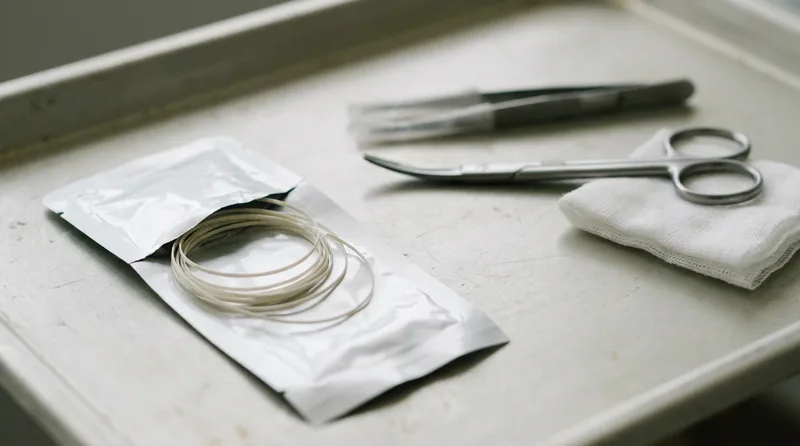
A simple extraction of a small, loose tooth often needs no stitches at all. The clot forms on its own, and the socket heals from the bottom up. Surgical removals are different, because the gum may have been lifted to reach the tooth or bone, and stitches put the tissue back where it belongs.
Stitches help in several ways:
- They hold the gum snugly over the socket so food stays out.
- They protect the clot, which lowers the chance of dry socket.
- They reduce bleeding in the first day or two.
- They guide the tissue as it heals, so the gumline closes neatly.
Think of stitches as a temporary bandage that happens to live inside your mouth. They do their job quietly and then disappear.
What Does Normal Healing Look Like With Stitches?
Normal healing with stitches includes mild tenderness, a slightly rough thread you can feel with your tongue, and thread ends that fray, loosen, or fall out between days 5 and 14. Pink, calm gum around the stitch is a good sign.
Your tongue will probably spend a lot of time exploring a new thread. That's normal, and so is the urge to fiddle with it. Try to resist, because tugging can reopen the gum edges.
Signs that stitches are doing fine
- Thread ends look white, tan, or slightly frayed.
- The gum around the stitches is pink, not bright red or hot.
- Mild tenderness fades day by day.
- You see a small piece of thread in your mouth, or find one on your toothbrush or pillow.
- A white or yellowish layer appears near the socket, which is usually healing tissue.
That last point confuses people. If you're wondering about white tissue, read our guide to white stuff in a tooth extraction socket. For the bigger picture of the first two weeks, see our tooth extraction recovery day by day timeline.
How Do You Clean Your Mouth Without Disturbing Stitches?
Wait 24 hours, then rinse gently with warm salt water after meals, and brush your other teeth as usual. Keep the toothbrush away from the stitches for the first few days, and never tug at a loose thread.
Clean doesn't mean aggressive. Food trapped around stitches can irritate the gum, but forceful rinsing can loosen the clot and the thread together. Gentle is the goal.
Follow this routine:
- First 24 hours: no rinsing, spitting, or touching the area.
- After 24 hours: mix half a teaspoon of salt in a cup of warm water and let it flow gently around the area, then let it fall out of your mouth.
- After every meal: repeat the gentle rinse so food doesn't linger.
- Brushing: use a soft brush on your other teeth. Stay a few millimeters away from the stitches until your dentist says it's fine.
- If a thread is annoying you: leave it alone. Call the office instead of trimming it yourself.
Avoid alcohol-based mouthwash, which can irritate healing tissue, and skip smoking, vaping, and straws, which can disturb the clot.
What Can You Eat With Stitches in Your Mouth?
Stick to soft, cool, or lukewarm foods like yogurt, scrambled eggs, mashed potatoes, and smoothies eaten with a spoon. Avoid crunchy, sticky, spicy, or seedy foods that can catch on the stitches or irritate the area.

Eating is where most people worry about stitches, and with good reason. A stray seed or hard chip can catch on a thread and tug at tender gum. A little planning makes meals much easier.
Good choices
- Yogurt, pudding, and applesauce for the first day or two.
- Scrambled eggs, oatmeal, and cottage cheese once you feel hungry for more.
- Mashed potatoes, soft pasta, and well-cooked vegetables as you improve.
- Blended soups that have cooled to lukewarm.
Foods to skip until healed
- Chips, nuts, popcorn, and crusty bread.
- Sticky candy, caramel, and chewy bagels.
- Spicy or acidic foods that sting tender gum.
- Anything with small seeds, like berries or sesame buns.
Chew on the opposite side when you can, and cut food into small pieces.
Related: Want a day-by-day eating plan after oral surgery? See our 14-day recovery menu →
What If a Stitch Comes Out Early or Won't Dissolve?
A stitch that comes out early is usually fine if the area isn't bleeding and the gum looks calm. A stitch that hasn't dissolved after four weeks, or one that feels sharp or bothersome, deserves a quick check at your dentist.
Stitches often loosen before the gum is fully sealed, and the body finishes the job on its own. That's why a lost thread on day five is rarely a problem. What matters is what happens next. If the area stays calm and pink, relax.
When a lost stitch is no big deal
- The gum looks pink and intact.
- Any bleeding stopped quickly with a little gauze pressure.
- Tenderness continues to improve.
When to check in
- Bleeding that won't slow after firm gauze pressure.
- A thread that pokes into your cheek or tongue and keeps irritating it.
- A stitch that's still there after about four weeks.
- A non-dissolvable stitch that wasn't removed at your follow-up.
Never snip a stitch with household scissors. Your dentist can trim or remove it in seconds, using sterile tools.
Not sure about a stitch?
Call Willow Family Dentistry. A team member can tell you whether what you're seeing is normal or needs a quick look.
Call (972) 881-0715 →When Do Stitches Mean You Should Call the Dentist?
Call the same day if you notice fever, pus, swelling that grows after day four, bleeding that won't slow, a foul taste, or discomfort that rises instead of easing. Those signs point beyond routine stitch healing.
Stitches rarely cause trouble, but they can sit near a socket that develops dry socket or infection. The American Dental Association's MouthHealthy dry socket page explains how dry socket develops and how dentists treat it.
Watch for these warning signs:
- Fever, chills, or a swollen face after the first few days.
- Pus or yellow-green discharge around the stitches.
- Bright red bleeding that soaks gauze every 20 minutes.
- A foul taste or odor that rinsing doesn't clear.
- Throbbing discomfort around days 3 to 5 that spreads toward your ear.
For bleeding steps, see our guide to bleeding after tooth extraction. According to the ADA Health Policy Institute, about 2 million emergency room visits each year in the US are for dental issues. A phone call to your dentist is often a faster first step.
Can Anxiety About Surgery and Stitches Be Eased?
Yes. Anxiety about extractions and aftercare is common, and it can be eased with clear instructions, a judgment-free dental team, and sedation options when appropriate. Knowing what to expect often removes much of the worry before the appointment.
You are far from alone. According to BMC Oral Health (2024), 36% of Americans have dental anxiety, and 12% have extreme dental fear. The Journal of Dental Anesthesia reports that sedation dentistry has helped 75% of fearful patients maintain regular dental visits. The ADA also cites a safety record exceeding 99.9% for IV sedation in dental settings.
At Willow Family Dentistry, Dr. Jeong's judgment-free philosophy means you can ask any question, including the small ones about stitches. If nerves are what's keeping you from a needed extraction, our sedation dentistry options include nitrous oxide and IV sedation.
Written aftercare instructions help too. Ask for them before surgery, keep them somewhere easy to find, and add our phone number to your contacts so help is one tap away.
When Should You Call Willow Family Dentistry About Your Stitches?
Call the same day for heavy bleeding, fever, pus, or rising discomfort. Call during office hours for a stitch that irritates your cheek or hasn't dissolved after four weeks. Willow Family Dentistry serves Wylie, Murphy, Sachse, Lucas, Allen, and Plano.

Questions about stitches rarely feel urgent, but they're worth asking. Patients across Collin County and North Texas call us with the same handful of stitch questions, and most turn out to be normal healing. We would much rather answer a quick call than have you worry through the weekend.
At your visit, Dr. Jeong checks the area, trims or removes a bothersome stitch with sterile tools, and uses iCAT 3D imaging when she needs a closer look beneath the gum. Our team speaks English, Korean, Spanish, and Vietnamese, so you can describe what you're feeling in the language you're most comfortable using.
- Call right away: heavy bleeding, fever, pus, or spreading swelling.
- Call this week: a thread that irritates your cheek, or a stitch that's still there after four weeks.
What Should You Remember About Dissolvable Stitches?
Dissolvable stitches usually disappear within one to two weeks, and a loose thread is rarely a problem. Rinse gently, eat soft foods, leave the area alone, and call if bleeding, fever, or rising discomfort appears.
Most stitch worries come down to patience. Give the area time, and check in with us if anything feels off.
Results may vary. Please consult with Dr. Jeong for personalized treatment recommendations.
Need an extraction or have a stitch question?
Request an appointment with Dr. Jeong for gentle, judgment-free care and clear aftercare instructions.
Request an Appointment →Prefer to ask a question first?
Contact Willow Family Dentistry →Dr. Esther B. Jeong, DDS
DDS · Willow Family Dentistry
Wylie family dentist with 15+ years of experience providing gentle, judgment-free dental care.
Frequently Asked Questions
Was this article helpful?
You may also like



Have a dental question?
Schedule a consultation and get personalized answers from Dr. Jeong.
Call us
(972) 881-0715
Hours
Mon – Thu: 9am – 5pm
Fri: By Appointment
Location
1125 W FM 544, Wylie
Emergency? Same-day appointments available.