Water Flosser vs String Floss: Which Cleans Better?
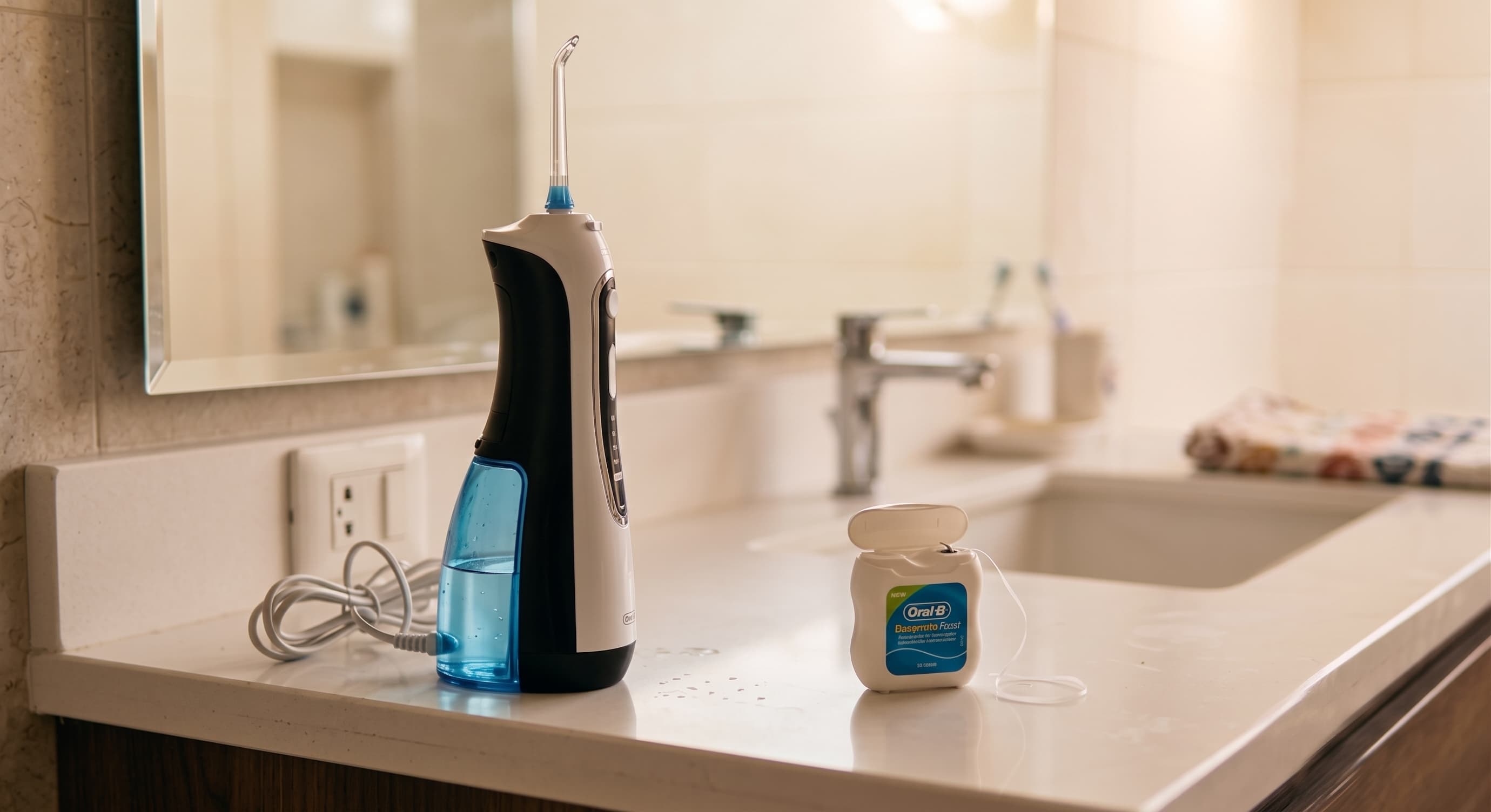
The water flosser vs floss debate generates strong opinions in dental offices and even stronger ones on social media. Water flosser devotees insist they'll never go back to string. String floss purists call water flossers a gimmick. And patients caught in the middle just want a straight answer: which one actually cleans better? The ADA accepts both as effective interdental cleaning methods and grants its Seal of Acceptance to products in both categories. But "both work" isn't the whole story. The clinical evidence shows they work differently, and which one works better depends on your specific dental situation.
Dr. Esther Jeong at Willow Family Dentistry in Wylie, TX recommends based on the patient's anatomy, dexterity, restorations, and gum health status rather than making a blanket recommendation for one over the other. Here's the evidence behind each, who benefits most from which, and the bottom line for your specific teeth.
How Does String Floss Clean Between Teeth?
String floss works through mechanical contact. You wrap the floss around the tooth surface, slide it beneath the gumline into the sulcus (the shallow groove between the tooth and gum), and scrape the floss against the tooth in a C-shape motion. The physical contact of the floss fiber against the tooth surface disrupts and removes the bacterial biofilm (plaque) that adheres to the interproximal (between-tooth) surfaces.
The key advantage of string floss is its ability to physically scrape biofilm off the tooth surface. Plaque is a sticky, organized bacterial community that resists being rinsed away. It needs mechanical disruption to detach from the tooth. String floss provides that disruption through direct physical contact under pressure. According to the ADA, the mechanical biofilm disruption from string floss is the standard against which all other interdental cleaning methods are measured.
The limitation: technique matters enormously. Effective flossing requires wrapping the floss into a C-shape around each tooth, sliding beneath the gumline, and using an up-and-down scraping motion against the tooth surface on both sides of every interproximal contact. Most people don't do this. According to clinical observation data, the majority of patients who report flossing daily use a sawing motion that snaps the floss between teeth without properly wrapping or scraping, reducing effectiveness by 50% or more. The tool works. The technique frequently doesn't.
How Does a Water Flosser Clean Between Teeth?
A water flosser (oral irrigator) delivers a pressurized stream of water that flushes the spaces between teeth and beneath the gumline. The pulsating water dislodges loose food debris, disrupts loosely attached plaque, and reaches areas that are difficult or impossible to access with string floss: deep periodontal pockets, around orthodontic brackets, beneath bridge pontics, and around dental implant abutments.
The mechanism is hydraulic rather than mechanical. The water stream doesn't scrape biofilm through physical contact the way floss does. Instead, it disrupts the outer layers of the biofilm through turbulence and pressure, reducing bacterial load without fully removing the biofilm's attachment to the tooth. According to the ADA, water flossers are effective at reducing gingivitis and bleeding, which indicates they're reducing the bacterial challenge to the gums even if the biofilm removal mechanism differs from string floss.
The key advantage of water flossers is accessibility. They clean areas that string floss physically can't reach (deep pockets, fixed appliances, complex restorations) and they require less dexterity than proper string floss technique. Patients with braces, bridges, implants, arthritis, or limited hand mobility often achieve better outcomes with a water flosser than with improperly used string floss.
What Does the Clinical Research Actually Say?
The research comparing water flossers and string floss has a nuanced answer that neither camp loves: both reduce gingivitis and plaque, but through different mechanisms and with different strengths.
| Metric | String Floss | Water Flosser |
|---|---|---|
| Plaque Removal (Biofilm) | Superior when technique is correct (C-shape scraping) | Good for loose plaque; less effective on firmly attached biofilm |
| Gingivitis Reduction | Effective | Equal or slightly better in some studies |
| Bleeding Reduction | Effective | Often superior (flushing reduces bacterial load in sulcus) |
| Deep Pocket Cleaning (4mm+) | Limited (floss can't reach deep pockets) | Superior (water reaches 50-90% of pocket depth) |
| Around Braces/Bridges/Implants | Difficult; requires threaders or specialized floss | Superior (water navigates around hardware easily) |
| Technique Sensitivity | High (poor technique dramatically reduces effectiveness) | Low (point and trace the gumline) |
| Compliance | Low (only ~30% of adults floss daily) | Higher (patients find it more pleasant and easier) |
| Cost | $2-$5/month | $40-$100 upfront + water |
The bottom line from the research: properly used string floss removes more firmly attached biofilm. Water flossers reduce gingivitis and bleeding equally or better, clean areas string floss can't reach, and are used more consistently because they're easier. According to a systematic review cited by the Journal of Clinical Dentistry, water flossers demonstrated up to 29% better plaque reduction than string floss in patients with orthodontic appliances and up to 51% better gingivitis reduction around implants.
The uncomfortable truth for the string-floss-only camp: a water flosser used daily beats string floss used twice a week (which is the actual compliance rate for most adults). The best interdental cleaner is the one you'll actually use every day.
Who Should Use a Water Flosser?
Dr. Jeong specifically recommends water flossers for patients in the following categories, where the clinical evidence favors irrigation over string.
Patients with braces or orthodontic appliances. Brackets, wires, and bands create dozens of hard-to-reach spaces that trap food and plaque. String floss requires threaders to navigate around wires, making the process tedious enough that most orthodontic patients skip it. A water flosser cleans around every bracket and under every wire in 60 seconds. The ADA recognizes water flossers as particularly valuable for orthodontic hygiene.
Patients with dental implants. The tissue around an implant (peri-implant mucosa) is more vulnerable to bacterial irritation than natural gum tissue. Water flossers clean around implant abutments more thoroughly and less traumatically than string floss, which can catch on implant margins and cause tissue damage. Studies show water flossers reduce peri-implant inflammation significantly better than string floss.
Patients with bridges or fixed dental work. The pontic (false tooth) of a bridge sits against the gum ridge with a small space beneath it that collects food and bacteria. String floss requires a threader to access this space. A water flosser flushes beneath the pontic effortlessly with every use.
Patients with periodontal disease. Periodontal pockets of 4mm+ are beyond the reach of string floss but within the reach of a water flosser tip. Irrigation reduces bacterial counts in pockets and delivers antimicrobial solutions when added to the reservoir (chlorhexidine diluted per dentist's instruction). For gum disease patients at Willow, Dr. Jeong often prescribes a water flosser as part of the home maintenance protocol between scaling and root planing appointments.
Patients with arthritis, limited dexterity, or physical disabilities. Wrapping string floss around fingers and maneuvering it between back teeth requires fine motor control that some patients don't have. A water flosser requires only pointing the tip along the gumline, making effective interdental cleaning accessible to patients who physically can't manage string floss.
Who Should Stick with String Floss?
String floss remains the better choice for certain patients and situations.
Patients with tight contacts between teeth. Some teeth sit so close together that even a water flosser stream can't penetrate the contact area effectively. String floss physically slides between the contact and scrapes both tooth surfaces. If your teeth are tightly spaced with no gaps, string floss reaches the contact zone more reliably.
Patients with no restorations, healthy gums, and good dexterity. If you have a natural, unrestored dentition, healthy gums with no pockets, and the manual skill to floss properly (C-shape wrap, below the gumline, both tooth surfaces in every space), string floss provides the most thorough biofilm removal. You're the ideal candidate for the tool that works best when used correctly.
Budget-conscious patients. String floss costs $2-$5 per month. A quality water flosser costs $40-$100 upfront. If cost is a factor and your dexterity is good, string floss delivers excellent results for minimal investment.
Can You Use Both?
Yes, and Dr. Jeong recommends this combination for patients who want the most thorough cleaning possible. The protocol: string floss first to mechanically scrape the tight contact areas, then follow with the water flosser to flush debris from the spaces, reach beneath the gumline, and clean around any restorations or appliances. The string floss handles the tight-contact biofilm. The water flosser handles everything the string can't reach.
According to clinical data, patients who use both string floss and a water flosser show the lowest plaque scores and the healthiest gum measurements of any interdental cleaning group. The combination outperforms either method alone.
For patients who will realistically only use one tool: the one you'll use daily is the right one. A water flosser used every day provides better outcomes than string floss used twice a week. Dr. Jeong would rather you irrigate daily than floss sporadically.
Not Sure Which Is Right for Your Teeth?
Dr. Jeong evaluates your specific anatomy, restorations, gum health, and dexterity to recommend the interdental cleaning method that gives you the best results. Ask at your next cleaning.
Request an Appointment →What About Floss Picks, Interdental Brushes, and Other Tools?
The interdental cleaning market has expanded beyond string floss and water flossers. Here's where the other options fit.
Floss picks (Y-shaped disposable handles with pre-threaded floss) are more convenient than spool floss but less effective because the short, fixed floss segment can't wrap into a C-shape around the tooth. They're better than nothing for patients who won't use spool floss, but they sacrifice the scraping motion that makes string floss effective. The ADA accepts floss picks as an alternative when spool floss isn't used.
Interdental brushes (tiny bottle-brush-shaped picks) are excellent for patients with gaps between teeth, receded gums that create open spaces below the contact point, or periodontal maintenance patients with wider embrasures. Clinical research shows interdental brushes are the most effective tool for open interproximal spaces, outperforming both string floss and water flossers in this specific anatomy.
Air flossers use a burst of air and microdroplets to clean between teeth. They're less studied than water flossers and generally considered less effective because the burst is momentary rather than sustained. They're an option for patients who find even water flossers too messy.
The water flosser vs floss question doesn't have a universal winner because teeth aren't universal. A patient with braces, an implant, and a bridge needs a different tool than a patient with 28 natural teeth and tight contacts. The research supports both. Dr. Jeong's recommendation is specific to your mouth. Ask at your next visit at Willow Family Dentistry and she'll tell you exactly which tool (or combination) gives your specific teeth the best protection.
The Best Floss Is the One You'll Use
Dr. Jeong recommends the interdental tool that matches your anatomy, restorations, and daily habits. Personalized advice at every cleaning visit.
Request an Appointment →Questions about your oral hygiene routine?
Call (972) 881-0715 →Dr. Esther B. Jeong, DDS
DDS · Willow Family Dentistry
Wylie family dentist with 15+ years of experience providing gentle, judgment-free dental care.
Frequently Asked Questions
Was this article helpful?
You may also like

Have a dental question?
Schedule a consultation and get personalized answers from Dr. Jeong.
Call us
(972) 881-0715
Hours
Mon – Thu: 9am – 5pm
Fri: By Appointment
Location
1125 W FM 544, Wylie
Emergency? Same-day appointments available.