Teeth Sensitive to Sweets: What It's Telling You

Tooth sensitivity to sweets is one of those symptoms people often dismiss as just how their teeth are, but it is almost always telling you something specific. Teeth sensitive to sweets respond differently than sensitivity to cold or pressure, and the cause matters because it points to different treatment paths. Understanding why sweets trigger tooth pain, and what the most common underlying causes are, helps you decide whether this is something to mention at your next cleaning or something to call about sooner.
At Willow Family Dentistry in Wylie, TX, Dr. Esther B. Jeong evaluates sensitivity complaints at every exam and helps patients understand what their symptoms indicate before discomfort progresses into something more involved.
Why Do Sweets Make Teeth Hurt?
Sweets trigger tooth sensitivity through an osmotic mechanism: sugar draws fluid out of the dentinal tubules, stimulating the nerve through fluid movement. This is distinct from cold sensitivity, which triggers the same nerve through thermal pressure rather than osmotic pull.
Sweets trigger tooth sensitivity through a different mechanism than cold does. Cold sensitivity is primarily a thermal response, where rapid temperature change causes the fluid inside dentinal tubules to move and stimulate the nerve. Sweet sensitivity is an osmotic response: sugar draws fluid out of the dentinal tubules through osmotic pressure, which also moves fluid and stimulates the nerve, but through a different trigger.
Both types of sensitivity involve the same underlying exposure: dentin that is no longer protected by an intact enamel layer or healthy gum tissue. When enamel is thinned by acid erosion or wear, or when the gum has receded to expose the root surface, the dentinal tubules are close to the surface and accessible to stimuli they would otherwise never encounter. Sugar is one of those stimuli.
The key distinction from cold sensitivity is that sweet sensitivity is particularly associated with early decay and acid erosion, because sugar as a solute is specifically what the osmotic mechanism responds to. Cold sensitivity has a broader range of causes. When a tooth hurts specifically in response to sweets but not necessarily to cold, early cavity formation or surface acid damage is a more likely explanation than when both triggers cause pain.
Early Tooth Decay: The Most Common Cause
Early tooth decay is the most common cause of sweet sensitivity and one of the most important to identify promptly. A tooth that hurts in response to sugar often signals that enamel has been breached enough for the osmotic stimulus to reach the dentin beneath, making early treatment simpler and less invasive.
Early tooth decay is the most common cause of sweet sensitivity. It is also one of the most important to catch promptly. Early-stage cavities are far easier to treat than decay that has progressed to pulp involvement. A tooth that hurts when you eat candy or drink a sweet beverage is often signaling that the enamel has been breached enough for the sugary stimulus to reach the dentin beneath.
According to the American Dental Association's MouthHealthy resource, approximately 1 in 8 adults experience tooth sensitivity, according to ADA prevalence data. Sensitivity to sweets is often an early warning sign of decay not yet visible to the naked eye. This is why sweet sensitivity is worth calling about sooner rather than waiting for a future routine exam. Catching a cavity while it is still small significantly reduces the treatment required.
Decay that has reached the dentin but not yet the pulp produces the classic sweet sensitivity pattern: a sharp pain that occurs specifically when sugar contacts the tooth and fades within seconds or minutes. If the pain lingers for 30 minutes or more after removing the sweet, or if it has evolved into spontaneous aching, the nerve may already be involved and prompt evaluation is needed.
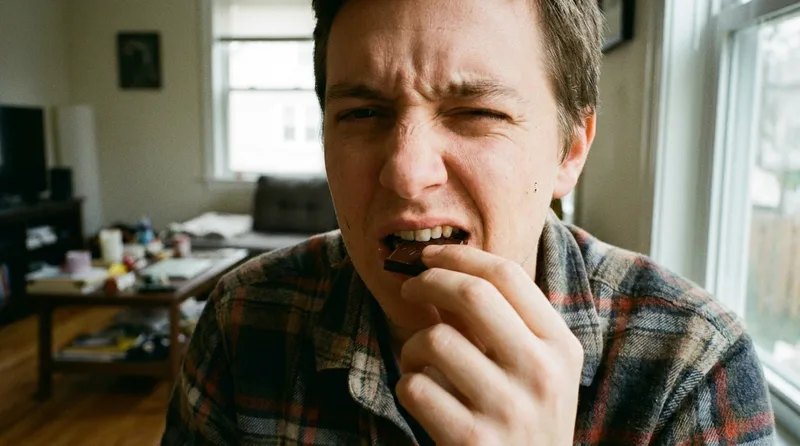
Enamel Erosion From Acid
Enamel erosion from dietary or gastric acid thins the enamel layer, reducing the barrier between the tooth surface and the dentin beneath. When enamel is thinned, the osmotic pull of sugar produces sensitivity across multiple affected teeth rather than at a single point.
Enamel erosion from dietary or gastric acid is the second major cause of sweet sensitivity. When enamel is thinned by acid exposure, the osmotic pull of sugar produces sensitivity. The enamel layer is thinner, so the dentin beneath is closer to the surface. Unlike decay, which involves bacterial acid destroying enamel from a localized starting point, erosion produces a more diffuse sensitivity pattern across multiple teeth, particularly those that have the most acid exposure.
Common dietary sources of erosive acid include carbonated beverages, citrus juices, sports drinks, and wine. Each lowers the mouth pH below the critical threshold at which enamel dissolves. Gastric acid from GERD or frequent acid reflux is a potent erosive source as well, particularly on the upper back teeth where acid pools when lying down. Our article on acid reflux and tooth damage covers how GERD creates a distinctive erosion pattern.
When sweet sensitivity is diffuse and present across multiple teeth rather than localized to one specific tooth, erosion is a more likely explanation than a single cavity. The treatment approach also differs: erosion management focuses on reducing acid exposure and strengthening remaining enamel with fluoride, while a cavity requires direct restorative treatment of the affected tooth.
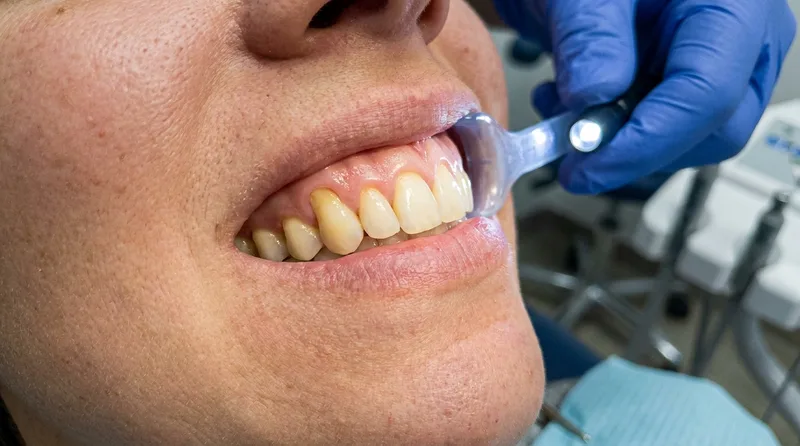
Gum Recession and Root Exposure
Gum recession exposes the root surface, which is far more porous than enamel and provides much less barrier against osmotic stimuli. A tooth with recession can feel acutely sensitive to sweets even when the enamel on the crown is fully intact.
Gum recession that exposes the root surface creates sweet sensitivity because root cementum is softer and more porous than enamel and has significantly larger dentinal tubule openings. The root surface provides far less barrier against osmotic stimuli than the enamel-covered crown, which is why a tooth with gum recession can feel acutely sensitive to sweets even when the enamel on the crown is intact.
Root exposure is particularly associated with sensitivity because the root surface was never designed to be exposed to the oral environment. Overly aggressive brushing, gum disease, and natural anatomical variation in gum tissue attachment height can all cause recession. The sensitivity from root exposure tends to be present for both cold and sweet stimuli, though the degree varies.
According to Healthline, gum recession is one of the leading causes of tooth sensitivity in adults and can progress gradually enough that patients adapt to a lower level of function without realizing how much the situation has changed. Our article on enamel erosion covers how surface loss from any cause, including gum recession, changes the barrier between the tooth's nerve and the outside world.

A Cracked Tooth
A cracked tooth can produce sweet sensitivity when the crack allows the osmotic stimulus to reach dentin or pulp tissue. Cracked tooth sensitivity often has a positional quality, worse when biting certain directions, but sweets can also trigger it even without biting.
A cracked tooth can produce sweet sensitivity when the crack opens slightly under the osmotic pressure of a sugar solution, allowing that stimulus to reach the dentin or, in more significant cracks, the pulp. Cracked tooth sensitivity often has a more positional quality than decay or erosion-related sensitivity; it may be worse when biting in a certain direction or when releasing pressure, but sweets can also be a trigger.
Cracks that are invisible to the naked eye can still be clinically significant. A tooth with unexplained sensitivity or multiple triggers without an obvious cause is worth having evaluated. A thorough exam including transillumination can find crack lines that routine examination misses.
A Recent Filling or Dental Work
Temporary sweet sensitivity following a recent filling, crown, or other dental procedure typically resolves within four to six weeks as the tooth settles. Post-procedure sensitivity results from working close to the dentin and is expected, not a sign of a problem with the restoration.
Temporary sweet sensitivity following a recent filling, crown, or other dental procedure is common and usually resolves on its own within four to six weeks as the tooth settles. The preparation process for these procedures involves working close to or directly within the dentin, which leaves the tooth temporarily reactive. Sweet sensitivity during this recovery period is expected and does not indicate a problem with the restoration.
If sweet sensitivity following recent dental work persists beyond six weeks or worsens rather than improving, it is worth calling the office. Persistent post-restoration sensitivity can sometimes indicate that the bite needs a minor adjustment or that the restoration has a marginal gap that is allowing stimuli to reach the dentin.
When Should You See a Dentist About Sweet Sensitivity?
Sweet sensitivity that is new, worsening, or has lasted more than a week or two is worth an evaluation. Most causes are more easily managed when caught early: a small cavity is far simpler to treat than a large one, and enamel erosion addressed before significant structure is lost is more manageable.
Sweet sensitivity that is new, has been present for more than a week or two, or is getting worse rather than staying the same is worth an evaluation rather than waiting to see if it resolves. Most of the causes are more easily managed when caught early: a small cavity is simpler to treat than a large one, and enamel erosion addressed before significant structure is lost is more manageable than addressing it after the damage is extensive.
Specific symptoms that warrant calling sooner include: pain that lingers 30 minutes or more after the sweet is gone; spontaneous pain without a trigger; pain that has spread to multiple previously fine teeth; or sensitivity with visible changes like discoloration or pitting. Our article on plaque and tartar covers how bacterial buildup contributes to the decay process that drives sweet sensitivity, and our article on sudden cold sensitivity covers the overlapping but distinct picture when cold is the primary trigger.
Teeth sensitive to sweets?
Book an evaluation at Willow Family Dentistry in Wylie, TX. Dr. Jeong will identify the cause and give you a clear treatment plan before small problems become bigger ones.
Explore preventive dentistryFurther Reading
Sweet sensitivity connects to several other topics in oral health. The articles below go deeper on the causes most commonly linked to sensitivity to sweets.
- Does Mouthwash Actually Work? A Dentist's Honest Take
- Are Dental X-Rays Safe? How Often Do You Need Them?
- Stress and Teeth Grinding: Jaw Pain and Damage
Results may vary. Please consult with Dr. Jeong for personalized treatment recommendations.
Dr. Esther B. Jeong, DDS
DDS · Willow Family Dentistry
Wylie family dentist with 15+ years of experience providing gentle, judgment-free dental care.
Frequently Asked Questions
Was this article helpful?
You may also like



Have a dental question?
Schedule a consultation and get personalized answers from Dr. Jeong.
Call us
(972) 881-0715
Hours
Mon – Thu: 9am – 5pm
Fri: By Appointment
Location
1125 W FM 544, Wylie
Emergency? Same-day appointments available.