Tartar vs Plaque: The Difference and Why It Matters
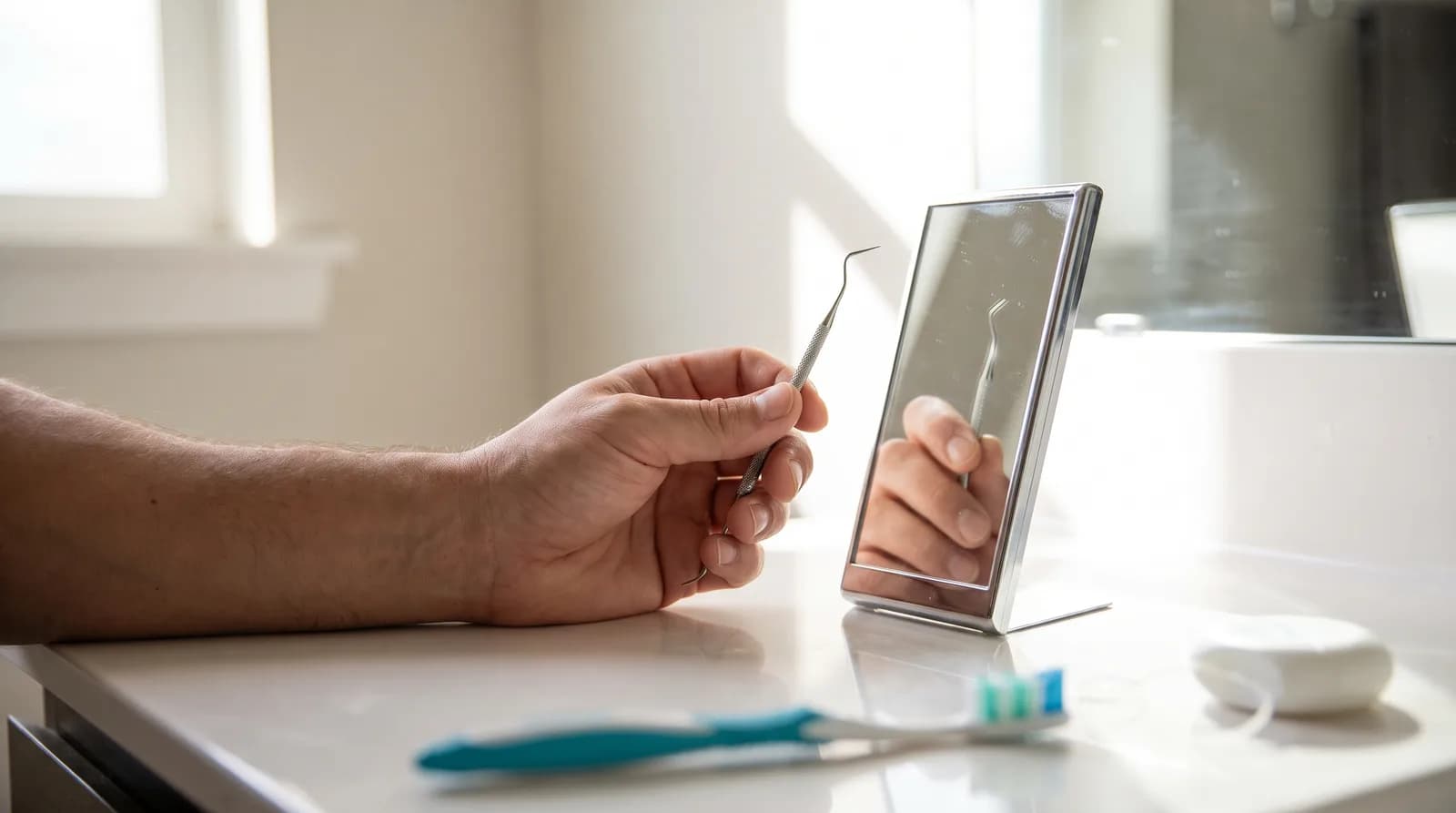
Most people use plaque and tartar interchangeably. The tartar vs plaque distinction is important though, because they describe two different things at two different stages of the same problem. Understanding the tartar vs plaque difference matters because the interventions are completely different: plaque can be removed at home with consistent brushing and flossing, but tartar cannot. Once plaque has hardened into tartar, only a dental professional can remove it, which is one of the main reasons regular cleanings matter even for people who brush well every day.
At Willow Family Dentistry in Wylie, TX, Dr. Esther B. Jeong covers this distinction with patients at every cleaning visit, because understanding what is happening in the mouth is the clearest path to the daily habits that actually prevent buildup.
What Is Plaque?
Plaque is a soft, sticky bacterial film that forms on teeth within hours of brushing. It feeds on sugars and produces acids that attack enamel and irritate gums. Because it is soft, daily brushing and flossing can remove it before it causes lasting damage.
Plaque is a soft, sticky film of bacteria that forms continuously on the surfaces of the teeth, along the gumline, and between teeth. It begins forming within hours after brushing, which is why twice-daily brushing and daily flossing are necessary rather than optional. The bacteria in plaque feed on the sugars and starches left on the teeth after eating and drinking, and as they do, they produce acids that attack tooth enamel and irritate the gum tissue.
Plaque is colorless to pale yellow and is not always visible to the naked eye, which is why disclosing tablets that stain plaque a bright color are sometimes used to show patients exactly where they are missing during brushing. Because plaque is soft and still adherent to the tooth surface rather than calcified, it can be disrupted and removed through consistent mechanical cleaning with a toothbrush and floss.
According to the American Dental Association's MouthHealthy resource on brushing, plaque that is not removed through daily brushing and flossing is the primary cause of tooth decay and gum disease. The bacteria in plaque are the direct cause of the acid that erodes enamel and the inflammation that begins gum disease.
What Is Tartar?
Tartar, also called calculus, is what forms when plaque is not removed and mineralizes onto the tooth surface. Minerals from saliva bind to the bacterial film and harden it into a rigid deposit that no toothbrush can remove. Only a dental professional with scaling instruments can take it off.
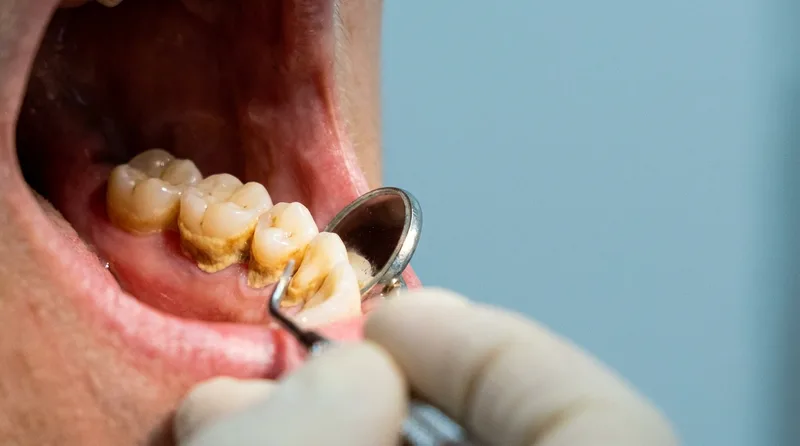
Tartar, also called calculus, is what forms when plaque is not adequately removed and mineralizes on the tooth surface. Minerals from saliva, primarily calcium and phosphate, bind to the bacterial film and harden it into a rigid, cement-like deposit that adheres firmly to the tooth. This process begins within 24 to 72 hours of plaque formation and accelerates over time, according to research on calculus formation rates.
Tartar appears as a yellow, brown, or off-white hardened deposit, most visibly on the inner surfaces of the lower front teeth and along the gumline of the upper back teeth, where salivary gland openings are close to the tooth surfaces. It is rough in texture, and this rough surface makes it easier for more plaque to accumulate on top of it, which accelerates further buildup in the same areas.
Unlike plaque, tartar is bonded chemically and mechanically to the tooth surface. No amount of brushing or flossing removes it once it has calcified. The only way to remove tartar is through professional dental cleaning using specialized instruments that can break the bond between the calculus and the tooth surface.
Why Can't You Remove Tartar at Home?
Tartar cannot be removed at home because it has hardened into a mineralized deposit bonded to the tooth surface. It is harder than toothbrush bristles, and no amount of brushing disrupts it. Professional scaling tools are required to break the bond between tartar and tooth.
Tartar cannot be removed at home because it has undergone a mineralizing process that makes it essentially as hard as bone, chemically bonded to the enamel or root surface. Brushing against tartar with even a firm toothbrush does not disrupt it; the deposit is harder than the bristles. Attempting to scrape tartar off with fingernails or improvised tools risks scratching the enamel surface and causing more harm than the deposit itself.
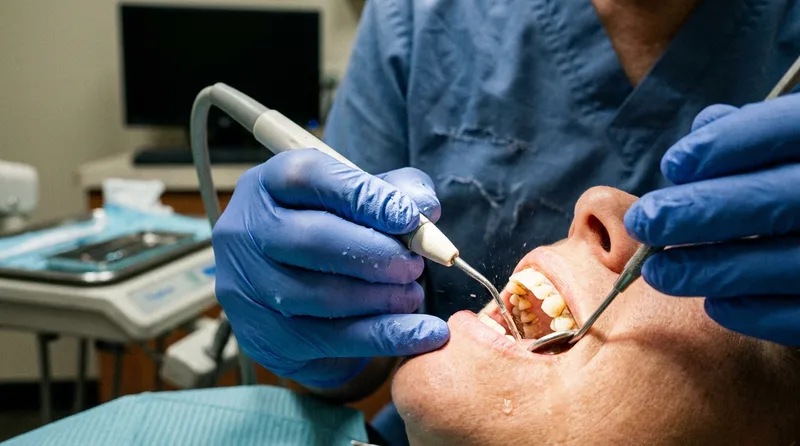
Professional removal uses ultrasonic scalers and hand scalers with metal tips engineered to vibrate or cut at the interface between the tartar deposit and the tooth surface. This requires professional training both to be effective and to avoid damage to the enamel, cementum, and gum tissue around the deposit. It is not a procedure that can be replicated at home regardless of the tools available.
This is the fundamental reason why professional dental cleanings remain necessary even for patients with excellent home care. Everyone forms some tartar, and the longer it remains, the more calcified and difficult to remove it becomes. Our article on correct tooth brushing technique covers how to maximize plaque removal at home so that the amount of plaque that progresses to tartar between cleanings is as small as possible.
What Damage Does Tartar Cause?
Tartar causes damage through two main mechanisms: the bacteria it harbors continue producing acid and inflammatory compounds against the adjacent tooth and gum tissue, and the physical presence of the rough deposit beneath or along the gumline creates chronic irritation that drives gum inflammation and, over time, bone loss.
Research has found that subgingival calculus is one of the primary drivers of periodontitis progression. According to published evidence, studies show that patients with moderate calculus deposits have approximately 3 times the risk of significant attachment loss compared to those with minimal deposits, according to that periodontal research. The immune response to the bacterial load concentrated in subgingival calculus triggers the breakdown of the ligament and bone that support the tooth.
Above the gumline, supragingival tartar creates a rough harbor for more plaque, contributes to bad breath from the bacterial activity within it, and can cause the gum tissue to bleed and recede from chronic irritation. Patients sometimes notice that certain areas bleed reliably when brushing, and tartar buildup at the gumline is a frequent cause of that pattern.
According to Healthline, both plaque and tartar increase the risk of cavities, gum disease, and tooth loss when not managed through consistent brushing, flossing, and professional cleaning.
How Quickly Does Plaque Turn Into Tartar?
Plaque can begin mineralizing into early tartar within 24 to 72 hours of forming, though the rate varies by individual. This short window is why daily brushing and flossing must be consistent rather than occasional to interrupt the process before hardening begins.
Plaque can begin mineralizing into early tartar within 24 to 72 hours of forming on the tooth surface, though the rate varies based on individual saliva chemistry, diet, and the specific location on the tooth. Some people form tartar faster than others due to higher calcium concentrations in their saliva or other factors, which is why some patients need cleanings every three to four months while others manage well with twice-yearly visits.
The practical implication of this timeline is that the window for effective home removal is short. Plaque that is allowed to sit undisturbed for three days is likely already beginning to calcify. This is why consistent daily oral hygiene is more effective than occasional intense brushing: plaque that is disrupted every day never gets the sustained undisturbed time it needs to harden.
Locations where plaque is hardest to reach consistently, such as the back surfaces of the lower front teeth and the areas just below the gumline between molars, are predictably the places where tartar accumulates fastest. These are also the areas where dental instruments are most needed to reach and remove what toothbrushes cannot.
How Are Plaque and Tartar Removed at a Dental Cleaning?
At a professional cleaning, the hygienist uses ultrasonic and hand scalers to remove plaque and tartar from all tooth surfaces including below the gumline, followed by polishing to smooth the enamel. These tools reach areas and remove deposits that no home instrument can address.
At a professional dental cleaning at Willow Family Dentistry, the hygienist uses a combination of ultrasonic scaling and hand scaling to remove both plaque and tartar from all tooth surfaces, including below the gumline where home instruments cannot reach. The ultrasonic scaler uses vibration and water irrigation to break apart and flush away deposits; hand scalers are used to refine the surface and remove remaining deposits with precise tactile feedback.
After scaling, the teeth are polished with a slightly abrasive paste that smooths the enamel surface and removes surface staining. A smooth enamel surface is less hospitable to plaque adhesion than a rough one, which is why polishing is a standard part of the cleaning sequence rather than just an aesthetic step.
For patients with significant tartar buildup below the gumline or early signs of gum disease, a deeper cleaning called scaling and root planing may be recommended. This is a more involved procedure that targets subgingival calculus on the root surfaces and is typically done under local anesthesia for comfort. Our article on enamel erosion covers how acid damage from plaque bacteria compounds over time when tartar buildup is left unaddressed.
How Can You Slow Tartar Buildup Between Cleanings?
The most effective strategy is maximizing plaque removal before it can calcify: brushing twice daily, flossing once daily, and using a tartar-control toothpaste with pyrophosphates to slow mineralization of residual plaque. Reducing snacking frequency also limits the substrate plaque bacteria need to thrive.
The most effective strategy for slowing tartar buildup between cleanings is maximizing plaque removal before it can calcify: brushing twice daily with a fluoride toothpaste, flossing once daily to clear interproximal plaque that brushes cannot reach, and using an antiseptic mouthwash if recommended by your dentist to reduce bacterial load. Tartar-control toothpastes containing pyrophosphates or zinc can slow the mineralization of residual plaque at the tooth surface, though they do not remove tartar that has already formed.
Diet also plays a role. Frequent consumption of sugary or starchy foods provides the substrate that plaque bacteria need to thrive and produce acid. Reducing snacking frequency and rinsing with water after meals reduces the amount of time plaque bacteria have access to fermentable carbohydrates between brushing sessions.
Staying well hydrated supports saliva flow, which is the mouth's natural buffering and cleansing mechanism. Saliva neutralizes acids, washes away food particles, and provides the minerals that support enamel remineralization. Our article on whether mouthwash actually works covers how rinse products fit into an overall oral hygiene routine alongside brushing and flossing.
How Often Should You Get a Professional Cleaning?
For most healthy adults, professional cleanings every six months provide adequate tartar removal and allow the hygienist to identify early signs of decay or gum disease before they become more significant. Patients who form tartar quickly, have a history of gum disease, smoke, or have other risk factors may benefit from more frequent cleanings every three to four months.
The right interval is a clinical judgment based on how much tartar is present at each visit, how quickly it has formed since the last cleaning, and the overall health of the gum tissue. If your last cleaning revealed significant buildup or your hygienist has recommended more frequent visits, that recommendation is worth following rather than stretching the interval for convenience.
Willow Family Dentistry welcomes patients for routine cleanings and comprehensive dental exams throughout Wylie and the surrounding communities. To schedule a cleaning, contact the office directly.
Time for a cleaning?
Book a professional cleaning at Willow Family Dentistry in Wylie, TX. Dr. Jeong and the hygiene team will remove the tartar that brushing can't reach and give you a clear picture of your oral health.
Explore preventive dentistryFurther Reading
Plaque and tartar control connect to several other preventive topics covered at Willow Family Dentistry.
- Acid Reflux and Your Teeth: The GERD-Dental Connection
- Are Dental X-Rays Safe? How Often Do You Need Them?
- Vaping Teeth Damage: What Dentists Are Seeing in 2026
Results may vary. Please consult with Dr. Jeong for personalized treatment recommendations.
Dr. Esther B. Jeong, DDS
DDS · Willow Family Dentistry
Wylie family dentist with 15+ years of experience providing gentle, judgment-free dental care.
Frequently Asked Questions
Was this article helpful?
You may also like


Have a dental question?
Schedule a consultation and get personalized answers from Dr. Jeong.
Call us
(972) 881-0715
Hours
Mon – Thu: 9am – 5pm
Fri: By Appointment
Location
1125 W FM 544, Wylie
Emergency? Same-day appointments available.