Choosing a Pediatric Dentist in Wylie, TX: Parent Guide
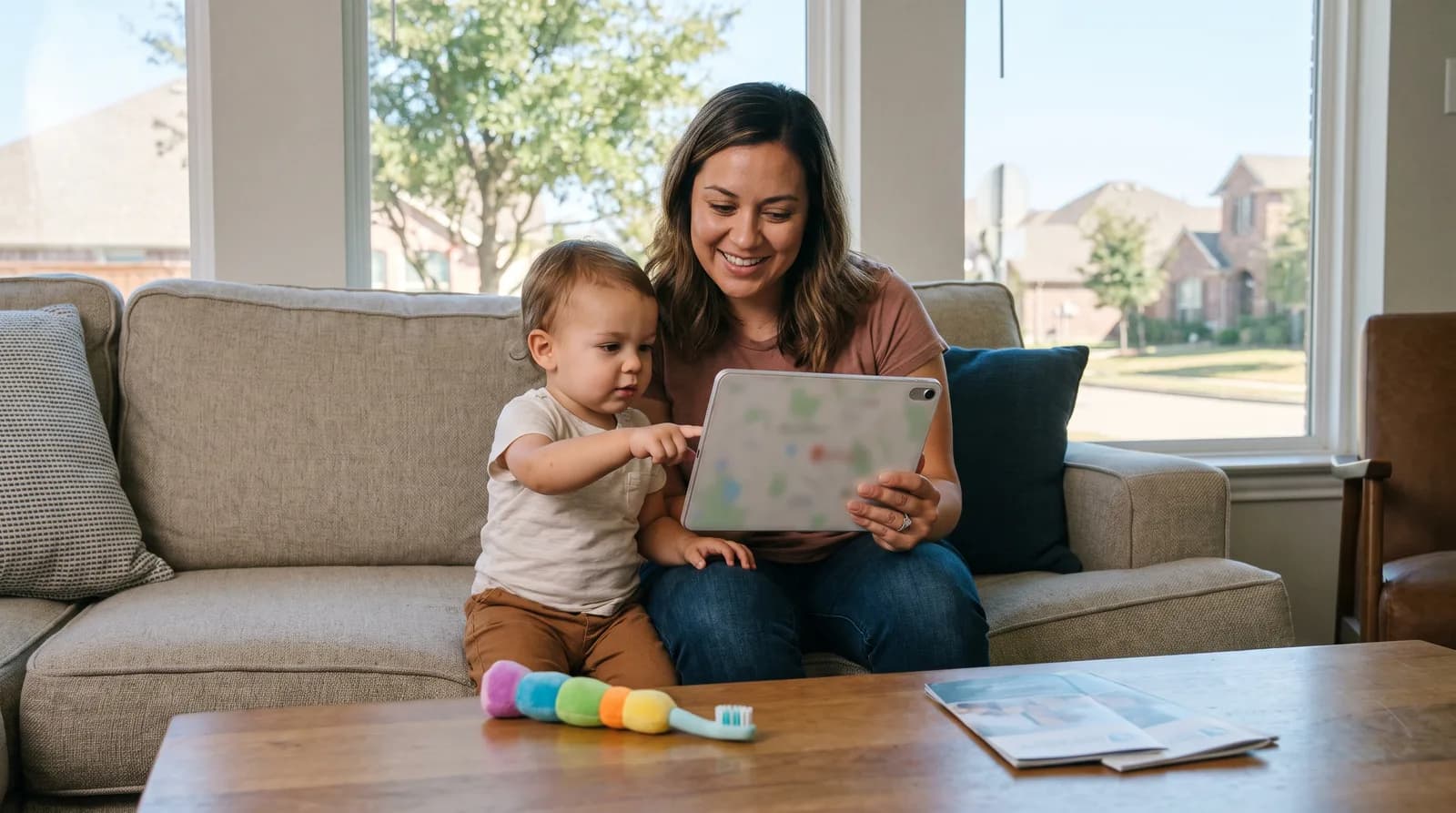
Choosing a pediatric dentist in Wylie is a decision most parents make once and then live with for ten years. The first few visits set the tone. Get it right and checkups stay routine. Get it wrong and you are arguing in the car every six months.
Here's the problem. Search for a children's dentist in Wylie, TX and you get a wall of near-identical websites, all promising gentle care for kids. Almost none of it helps you tell one practice from another. The things that actually separate a good fit from a poor one are narrower than the marketing suggests.
This guide covers what to look for, which questions to ask before you book, and what a child's visit actually involves. It's written for parents in Wylie, Murphy, Sachse, and Lucas who want to make one good decision and stop shopping.
What Should Parents Look For in a Pediatric Dentist in Wylie?
Look for four things: real experience treating children, a behavior-guidance approach that does not rely on force, comfort options for anxious kids, and same-day availability when something breaks. Everything else, including office decor and waiting room toys, matters far less than these four.
Experience with children is not the same as experience with adults. Any pediatric dentist in Wylie sees both, but the two are not interchangeable. Kids have shorter attention spans, smaller mouths, and a much lower tolerance for surprise. A provider who works with children daily knows to narrate every step before it happens, and knows when a visit should end early rather than push a child past their limit.
Behavior guidance is the second filter, and it's the one parents rarely think to ask about. Ask how the team handles a child who refuses to open. The answer tells you a lot. A practice that describes holding a child still is telling you something important about its philosophy.
Third, ask what comfort options exist beyond talking a child through it. Some kids need more support. Fourth, ask about emergencies. Playground accidents don't wait for Tuesday.
- Daily pediatric experience, not occasional child patients squeezed between adult appointments
- A named behavior-guidance method such as tell-show-do, described without hesitation
- Comfort options on-site, so a nervous child does not get referred out mid-treatment
- Same-day emergency slots held open for existing families
- Language match if English is not your child's first language at home
Meet the team before you commit
Willow Family Dentistry is a private practice in Wylie, TX, and Dr. Esther Jeong sees families of every age, from toddlers through grandparents. You can request a first visit online in about a minute.
Request an Appointment →When Should Your Child First See a Dentist?
By age one, or within six months of the first tooth appearing, whichever comes first. That's the ADA recommendation, and most parents miss it by two or three years. The first visit is short, mostly a look and a conversation, and it exists to catch problems while they are still small.
The reason for the early start is straightforward. Tooth decay is the most common chronic disease in children, roughly five times more common than asthma, according to the ADA. It also moves faster in baby teeth, where the enamel is thinner. A cavity that would take two years to become a problem in an adult tooth can get there in months.
Early visits do something else that's harder to measure. They make the office boring. A child who has been in the chair six times before anything is ever needed treats the seventh visit as routine. A child whose first visit happens because something already hurts learns a different lesson.
There is a long tail to this. The ADA reports that regular dental visits catch around 80% of oral health issues before they turn serious, and research published in the Journal of Dental Research found that people who see a dentist regularly are about 60% less likely to lose teeth. Those habits start in childhood.
If your child is already past age one, don't overthink it. The second-best time is now.
Related: Kindergarten is a common trigger point for a first appointment, and there is a specific way to prepare a nervous child for it. Read the first dental visit guide →
What Actually Happens at a Child's Dental Visit?
A routine children's visit runs 30 to 45 minutes and follows a predictable order. Nothing about it should be a surprise to your child, because a good team explains each step before doing it. For most kids the entire appointment is a cleaning, a look, and a conversation.
Here's the usual sequence:
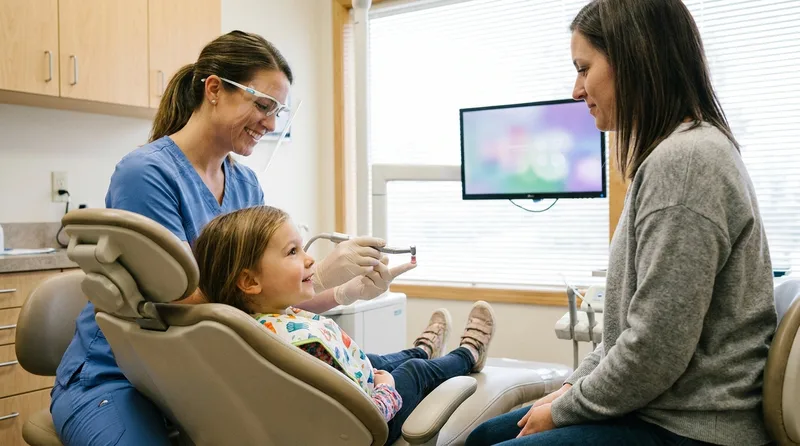
- Health history and questions. Habits, diet, thumb sucking, any concerns you have noticed at home.
- Tell-show-do introduction. Each instrument is named, shown, and demonstrated on a finger or a mirror before it goes near a tooth.
- Cleaning and polish. Plaque and tartar removed, then a polish that most kids describe as tickly.
- Examination. A check of every tooth, the bite, the gums, and the soft tissue.
- X-rays if needed. Not at every visit, and not for every child.
- Fluoride and a plan. A varnish application, then a conversation with you about what comes next.
Parents can usually stay in the room with younger children. Ask about this in advance, because policies differ between practices and a surprise separation at the door is the fastest way to lose a nervous four-year-old's trust.
How Do You Tell if a Practice Is Genuinely Kid-Friendly?
Watch what the team does rather than what the website says. A genuinely kid-friendly office schedules children when the pace is calmer, keeps the language plain, and lets a child set some of the terms. Toys in the corner are easy. Patience during a difficult appointment is not.
Language is a good tell. Practices used to treating children have replaced the alarming vocabulary entirely. You will hear about sleepy juice rather than a local anesthetic, and about a tooth counter or a small brush rather than the equipment's clinical name. That vocabulary is not decoration. It removes the words a child would otherwise take home and worry about.
Family structure matters too. Being able to book your kids and yourself on the same morning saves a working parent a second trip across Wylie. At Willow Family Dentistry, the team speaks English, Korean, Spanish, and Vietnamese, which matters when a grandparent brings a child to the appointment.
One more signal: does the practice explain and then step back, or does it push a treatment plan on the first visit? A judgment-free approach shows up in how a team responds when you say no.
What Helps an Anxious Child Get Through an Appointment?
Start with behavior guidance, add comfort options only if a child needs them. Roughly 36% of Americans report dental anxiety and about 12% report extreme fear, according to BMC Oral Health, and most of that starts in childhood. Preventing it is easier than treating it later.
Tell-show-do handles most children on its own. The provider names the tool, shows it, demonstrates it somewhere harmless, then uses it. Predictability is what calms a child. Surprise is what does the opposite.
When that isn't enough, nitrous oxide is the usual next step. It's mild, it wears off within minutes, and the child stays awake and responsive throughout. For longer treatment or for children who cannot tolerate a full appointment, IV sedation is available at some practices, including Willow Family Dentistry. Having both options in one office matters, because the alternative is a referral somewhere unfamiliar at exactly the wrong moment.
The payoff is long-term. The Journal of Dental Anesthesia reports that sedation dentistry has helped about 75% of fearful patients keep up with regular visits, which is really the whole point: not one comfortable appointment, but a child who keeps coming back.
Whatever route you take, keep your own language neutral at home. Children read parental nervousness accurately.
Anxious child, or an anxious parent?
Dr. Esther Jeong practices judgment-free dentistry in Wylie, with nitrous oxide and IV sedation both available on-site. Tell us what your child struggles with and we will plan around it.
Meet Dr. Jeong →Which Preventive Treatments Matter Most for Kids?
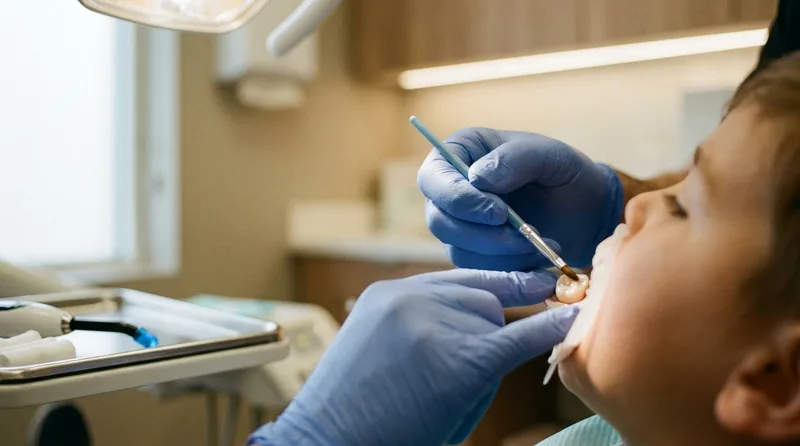
Sealants and fluoride do the heaviest lifting, followed by mouthguards for any child playing contact sports. These three cost little, take minutes, and prevent the treatments that are expensive and stressful later. Preventive care is where a pediatric dentist earns their keep.
Sealants are the single best return. The CDC reports that dental sealants reduce cavity risk in school-age children by nearly 80%, and they go on the chewing surfaces of the back molars in a few minutes with no numbing required. Yet the CDC also finds that around 20% of children ages 5 to 11 have at least one untreated decayed tooth.
| Treatment | Typical age | What it does |
|---|---|---|
| Dental sealants | 6 and 12, as molars erupt | Seals the grooves where most childhood cavities start |
| Fluoride varnish | Every checkup from age 1 | Strengthens enamel and can reverse very early decay |
| Custom mouthguard | Any child in contact sports | Protects front teeth from impact injuries |
| Six-month checkup | From age 1 onward | Catches problems while they are still small and inexpensive |
Home routine carries the rest. A workable morning brushing routine and school lunches that are not constant sugar do more over a year than any single appointment. Sports families should read the custom mouthguard guide before the season starts.
How Does a Private Practice Compare to a Corporate Chain?
The main differences are continuity and pressure. In a private practice you usually see the same provider every visit, and treatment recommendations are not shaped by corporate production targets. Chains often win on evening hours and location count. Neither model is automatically better, but the trade-offs are real.
Continuity matters more for children than for adults. A child who sees the same face every six months builds a relationship. Rotating providers reset that relationship each time, and for a nervous child the reset is expensive.
The second difference is pressure. Ask any parent who has left an appointment holding a treatment plan they didn't understand. A practice with no upselling built into its model tends to explain the options and then wait. That is what the judgment-free philosophy at Willow Family Dentistry means in practice: no lectures about the last two years of missed checkups, no pressure to decide in the chair.
Technology is worth one question. Preventive and diagnostic imaging such as iCAT 3D scanning gives a much clearer picture than flat X-rays when a bite or an erupting tooth looks unusual.
What Should You Ask Before Booking the First Appointment?
Ask six questions, and ask them by phone rather than by email. How a front desk answers tells you what the practice is like on a busy Tuesday. Every question below has a right answer, and none of them require you to know anything about dentistry.
- How do you handle a child who will not open? Listen for tell-show-do and for a willingness to stop.
- Can I stay in the room? The answer should be yes for younger children.
- What comfort options do you offer on-site? Nitrous oxide at minimum.
- How fast can you see us for a broken tooth? Same-day is the standard worth holding out for.
- Can our whole family book together? Saves you a second trip.
- What is my share of the cost? A specific number beats a vague reassurance.
On the emergency question specifically, know the answer before you need it. A knocked-out permanent tooth can often be saved if it is reimplanted within about 30 minutes, according to the ADA. That window closes while you are searching for a phone number.
Related: Two situations account for most calls from parents during the school year, and both are worth reading before they happen. See the child toothache guide →
The other one worth bookmarking is what to do with a knocked-out tooth at school, and if you are booking a routine visit for the fall, the back to school dental checkup guide covers timing.
How Do You Make the Switch to a New Practice?
Three steps: book the first visit, request your records from the previous office, and bring your insurance card. Records transfer takes a signed release and usually a week. You do not need to tell your old practice anything, and you do not need to wait for a checkup to be due.
Most families switch for a practical reason. A move across Wylie, a bad experience with a nervous child, a chain that never has the same provider twice, or an emergency that got handled badly. Whatever the reason, the transition is administrative, not medical.
Bring three things to the first appointment: your insurance information, a list of any medications your child takes, and whatever you know about the last visit. If your child has an existing fear, say so at booking rather than at the door. It changes how the appointment gets scheduled.

General guidance about children's dental care is also available from the ADA's consumer site, MouthHealthy, which is a reasonable second opinion on anything a practice tells you.
The single thing that predicts how your child feels about dental care at twenty is how the first five appointments went at four. Not the technology, not the waiting room. The way the team handled the moments when your child was uneasy.
So when you evaluate a pediatric dentist in Wylie, weight the behavior questions heaviest. Ask what happens when a child refuses. Ask whether you can stay. Ask what the office does at 4pm on a Friday when a tooth breaks. Then pick the practice whose answers sounded like they had been given before.
Results may vary. Please consult with Dr. Jeong for personalized treatment recommendations.
Ready to book your child's first visit in Wylie?
Willow Family Dentistry is a private, family practice on W FM 544 in Wylie, TX, with same-day emergency appointments, nitrous oxide and IV sedation on-site, and a team that speaks English, Korean, Spanish, and Vietnamese.
Request an Appointment →Prefer to ask a question first, or check whether we take your insurance?
Contact Willow Family Dentistry →Dr. Esther B. Jeong, DDS
DDS · Willow Family Dentistry
Wylie family dentist with 15+ years of experience providing gentle, judgment-free dental care.
Frequently Asked Questions
Was this article helpful?
You may also like

Have a dental question?
Schedule a consultation and get personalized answers from Dr. Jeong.
Call us
(972) 881-0715
Hours
Mon – Thu: 9am – 5pm
Fri: By Appointment
Location
1125 W FM 544, Wylie
Emergency? Same-day appointments available.