Dental Implants for Seniors: Are You a Good Candidate?

Dental implants for seniors raise one question more than any other: does age itself rule someone out? It doesn't. Dr. Esther Jeong at Willow Family Dentistry in Wylie, TX has placed implants in patients well into their 80s, and she's turned down candidates in their 50s. The deciding factors are health status, bone volume, and medication history, not the number of birthdays.
This guide walks through exactly what determines candidacy, what can be worked around, and what genuinely changes the plan. If you or a parent are weighing implants against dentures or a bridge, the dental implants page at Willow Family Dentistry covers the procedure itself in more depth.
Roughly 120 million Americans are missing at least one tooth, according to the American College of Prosthodontists, and a large share of that group is over 60. That means the question of implant candidacy for older adults comes up constantly, not as an edge case.
Can Seniors Get Dental Implants at Any Age?
Yes, age alone never disqualifies a patient from dental implants. What matters is bone volume, overall health, and healing capacity, none of which map neatly to a birth year. A healthy 82-year-old can be a better candidate than an unhealthy 55-year-old.
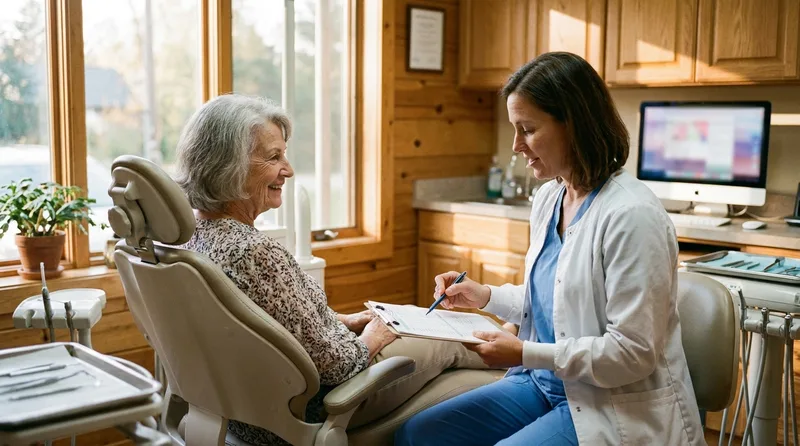
The data backs this up clearly. A systematic review comparing implant outcomes across age groups found that patients over 75 had a 96.8% five-year survival rate, actually higher than the 92.1% seen in the 65-75 cohort, according to a meta-analysis published in a peer-reviewed implant journal. Older patients aren't automatically riskier. They're just evaluated on different criteria than a 30-year-old would be.
Dr. Jeong's approach reflects this. She doesn't set an age cutoff. Instead, she runs the same evaluation for every senior patient: an iCAT 3D scan to measure bone, a full medication and medical history review, and an honest conversation about what's realistic. Some patients are cleared in one visit. Others need a few months of prep work first. Neither outcome has anything to do with age on its own.
What Health Conditions Affect Implant Candidacy for Seniors?
Uncontrolled diabetes, active cancer treatment, and severe immunosuppression are the conditions most likely to delay implant surgery. Well-managed chronic conditions, including controlled diabetes and stable heart disease, usually aren't a barrier at all.
The distinction that matters is between "having" a condition and "having it uncontrolled." A patient with an A1C above 8.0 needs that number brought down before surgery is scheduled, not because implants are unsafe for diabetics in general, but because healing depends on stable blood sugar. The same logic applies across the board. It's rarely the diagnosis itself that changes the plan. It's whether the condition is currently managed.
- Usually not a barrier: controlled diabetes, managed hypertension, stable heart disease, most common chronic conditions once stabilized.
- Often requires delay or coordination: uncontrolled diabetes, active cancer treatment, recent radiation to the jaw, severe immunosuppression.
- Always requires physician coordination first: any condition currently being actively treated or adjusted.
Dr. Jeong coordinates directly with a patient's physician whenever a medical condition is part of the picture. That conversation, not a chart of diagnoses, is what actually decides the timeline.
Consider two patients, both 78. One has well-controlled type 2 diabetes, checks in with her physician quarterly, and keeps her A1C near 6.5. The other has diabetes that hasn't been reviewed in two years and doesn't know his current numbers. Same diagnosis. Very different candidacy conversation. The first patient can often move toward implant planning right away. The second needs a physician visit before anything gets scheduled. Age had nothing to do with either outcome.
Wondering where your health status leaves you?
An iCAT 3D scan and a review of your medical history answer the candidacy question directly, without guesswork.
Request an Appointment →Does Bone Loss Rule Out Dental Implants for Older Adults?
No, bone loss doesn't automatically rule out implants. It changes the plan. Insufficient bone can often be rebuilt through grafting, and many seniors have more bone available than they expect.
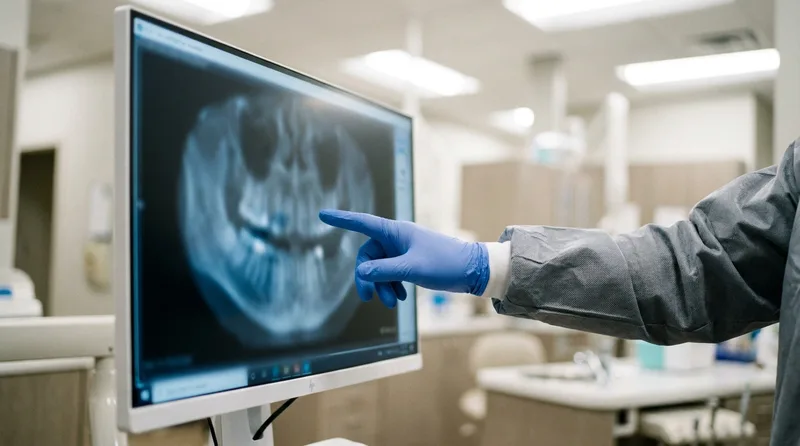
Jawbone density and hip or spine density don't always move together. A patient with diagnosed osteoporosis may still have adequate jawbone for an implant, because the two skeletal sites respond differently to bone loss. This is exactly why Dr. Jeong relies on the iCAT 3D scan rather than assuming from a diagnosis alone. The scan measures height, width, and density in millimeters at the precise site an implant would go, which turns a guess into a number.
Recent clinical research supports this separation between osteoporosis and implant risk. A systematic review and meta-analysis of implant outcomes in osteoporotic patients found no significant difference in implant survival or failure rates between osteoporotic and non-osteoporotic patients. Osteoporosis changes how a case gets planned. It doesn't close the door on it. Dental implants overall carry a 95-98% success rate over ten years, according to research published in the Journal of Oral and Maxillofacial Surgery, a figure that holds up well even among older patients with bone-density concerns.
When bone volume genuinely is insufficient, grafting builds up the site over three to six months before the implant goes in. It adds time. It doesn't add a permanent no.
Grafting itself has become a fairly routine part of implant planning rather than an unusual complication. Bone graft material, whether from the patient's own body, a donor source, or a synthetic substitute, integrates with the existing jawbone and creates a stable foundation. Most seniors who need grafting go on to receive a successful implant afterward. The extra months are a planning detail, not a setback worth abandoning the process over.
How Do Blood Thinners and Osteoporosis Medication Affect Implant Surgery?
Blood thinners and osteoporosis medications require coordination, not automatic disqualification. Many seniors on warfarin, Eliquis, or Xarelto safely go through implant surgery without stopping their anticoagulant, once the prescribing physician confirms the specific dose and bleeding risk involved.
The decision depends on the specific medication, dose, and the patient's overall bleeding risk, which is why Dr. Jeong loops in the prescribing physician before finalizing any surgical date. Some patients continue their anticoagulant through surgery with no adjustment. Others benefit from a temporary modification under medical supervision. Neither path is decided in the dental chair alone.
Bisphosphonates for osteoporosis carry a separate, smaller consideration: the risk of medication-related osteonecrosis of the jaw. That risk is tied closely to how long the patient has taken the drug and whether it's oral or IV. Short-duration oral bisphosphonate use carries a low documented risk, and Dr. Jeong reviews the specific duration and type for every patient before proceeding, rather than treating "on a bisphosphonate" as a single category.
Newer osteoporosis medications, including denosumab and romosozumab, carry their own separate risk profiles that don't map directly onto the older bisphosphonate research. A patient switching between osteoporosis medications, or one whose prescribing physician has recently changed the regimen, benefits from a fresh conversation rather than relying on general rules of thumb. This is exactly the kind of detail that gets missed when candidacy is judged from a medication list alone instead of a full medical history review.
How Long Does Healing Take for Senior Implant Patients?
Healing generally takes longer for senior implant patients, often stretching to four to six months compared to roughly three months for a younger adult in similar health. The final outcome doesn't change. Only the timeline does, and Dr. Jeong plans for it from day one.
Slower bone remodeling is a normal part of aging, and Dr. Jeong builds that reality into every treatment plan rather than pushing a standard timeline onto every patient. A 75-year-old and a 35-year-old can end up with the exact same successful result. The 75-year-old's crown placement appointment just gets scheduled further out from the surgery date.
Patience during this stretch matters more than most patients expect. Loading a crown onto an implant before the bone has fully integrated is one of the more common causes of late implant failure, and it's entirely avoidable by respecting the extended timeline rather than rushing it.
The biology behind the slower timeline is straightforward. Bone remodeling, the process where the implant fuses to the jawbone through osseointegration, relies on cellular turnover that naturally slows with age. It doesn't stop. It just runs at a different speed, similar to how a broken bone in an 80-year-old takes longer to knit than the same fracture in a teenager. Dr. Jeong checks integration progress at follow-up visits before moving to the next stage, rather than working from a fixed calendar date alone.
Are Dental Implants for Seniors Worth It Compared to Dentures?
Dental implants for seniors typically outperform dentures on stability, chewing function, and long-term jawbone preservation, provided bone and health both check out. Dentures remain the better fit for patients who aren't surgical candidates or prefer a non-surgical route.
| Factor | Dental Implants | Conventional Dentures |
|---|---|---|
| Stability | Fixed in the jawbone, doesn't shift | Rests on the gum, can shift while eating or speaking |
| Chewing efficiency | Restores roughly 90% of natural chewing power, per AAID data | Restores roughly 25-40% of natural chewing power |
| Jawbone effect | Stimulates bone, slows resorption | No bone stimulation; jawbone gradually resorbs |
| Surgery required | Yes, minor oral surgery | No |
That said, implants aren't automatically the right call for every senior. A patient with elevated surgical risk, significant bone deficiency they'd rather not graft, or a straightforward preference for a non-surgical path is often well served by a modern denture instead.
Related: Weighing implants against every other option, not just dentures? See the full comparison of implants, dentures, and bridges for seniors →
What Should Seniors Ask Before Getting Dental Implants?
The right questions focus on individual case specifics, not general implant statistics. A good consultation should leave a senior patient with a clear yes or no on candidacy, not a vague maybe.
- What does my bone scan actually show, in millimeters, at the site being considered?
- Which of my current health conditions or medications need coordination with my physician first?
- What's a realistic healing timeline for my specific case, not the average case?
- What happens if bone grafting is needed, and how does that change the timeline?
- Am I a better fit for a single implant, an implant-supported denture, or a different option entirely?
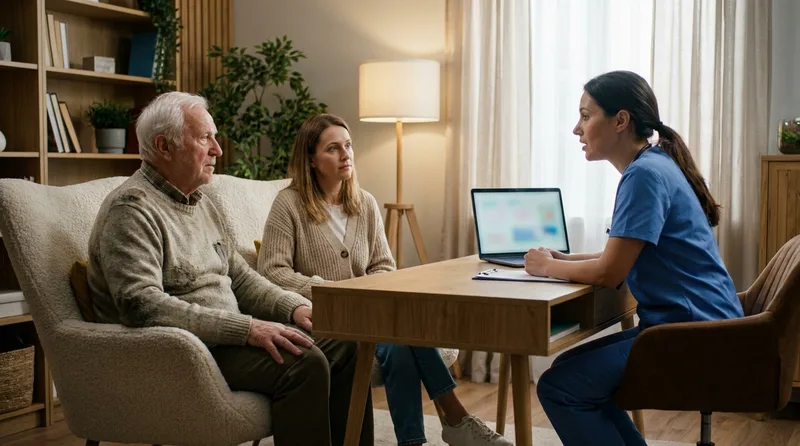
Dr. Jeong walks every senior patient through these exact points at Willow Family Dentistry, using the iCAT 3D scan results as the anchor for the conversation rather than a generic slideshow. Family members are always welcome in the room. Many of Dr. Jeong's senior patients bring an adult child to help absorb the details and ask follow-up questions afterward.
Cost breakdown, separately, without the guesswork
For a full, itemized look at what an implant costs and what typically factors into that number, see the dedicated pricing guide.
See the Cost Breakdown →Age narrows nothing by itself. What actually determines whether dental implants for seniors make sense is bone volume, health stability, and medication coordination, each evaluated individually rather than assumed from a birth date. Dr. Jeong's iCAT 3D scan and full medical review turn that evaluation into a specific answer for a specific patient, not a general rule applied to an age group.
If you or a parent are wondering whether implants are realistic, the only reliable way to know is a scan and a conversation. Willow Family Dentistry sees this exact question from senior patients and their families regularly, and Dr. Jeong presents the honest answer either way.
Results may vary. Please consult with Dr. Jeong for personalized treatment recommendations.
Find Out If You're a Candidate
An iCAT 3D scan and a review of your health history give you a specific answer, not a general guideline. Dr. Jeong welcomes family members at the consultation.
Request an Appointment →Prefer to talk it through first?
Call (972) 881-0715 →Dr. Esther B. Jeong, DDS
DDS · Willow Family Dentistry
Wylie family dentist with 15+ years of experience providing gentle, judgment-free dental care.
Frequently Asked Questions
Was this article helpful?
You may also like

Have a dental question?
Schedule a consultation and get personalized answers from Dr. Jeong.
Call us
(972) 881-0715
Hours
Mon – Thu: 9am – 5pm
Fri: By Appointment
Location
1125 W FM 544, Wylie
Emergency? Same-day appointments available.