Partial Dentures: Types, Fit, and Daily Care in Wylie TX
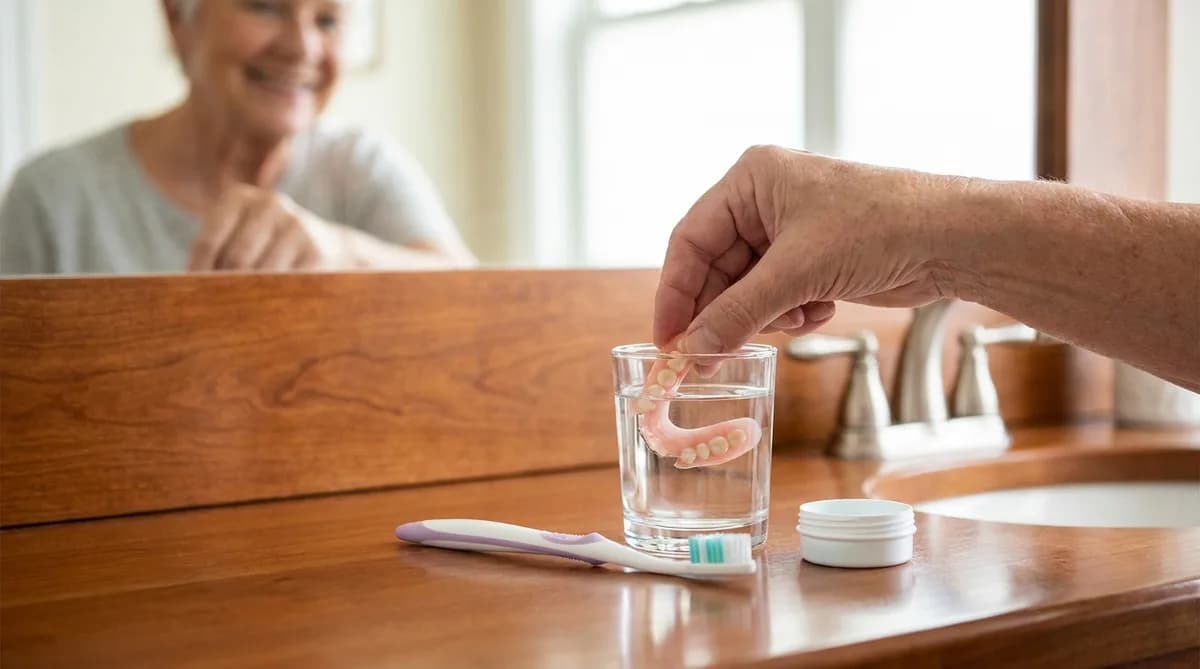
If you are missing several teeth but still have healthy natural teeth remaining, partial dentures are one of the most practical ways to restore your smile, your bite, and your confidence without full-mouth reconstruction. They are removable, relatively straightforward, and have been a proven solution for partial tooth loss for generations. The challenge is that not all partial dentures are the same, and the differences between types matter more than most patients realize before they start treatment.
This guide explains the three main types of partial dentures, how they differ in fit and durability, what life with a partial is actually like, and how to care for one properly. At Willow Family Dentistry in Wylie, TX, Dr. Esther B. Jeong helps patients choose the right restoration for their specific teeth, budget, and lifestyle, without pressure toward any particular option.
What Are Partial Dentures and Who Needs Them?
These restorations are removable dental appliances that replace one or more missing teeth while anchoring to or resting against the remaining natural teeth. Unlike a dental bridge, which is cemented permanently in place, a partial denture can be taken out for cleaning and at night. They are designed for patients who have lost some but not all of their teeth in one or both arches.
The need for partial dentures is common. Adults aged 20 to 64 have an average of 26 remaining teeth out of a full 32, according to the National Institute of Dental and Craniofacial Research (NIDCR), which means missing teeth are the rule rather than the exception for many adults. More broadly, more than 120 million Americans are missing at least 1 tooth, according to US dental research, a figure that reflects how widespread partial tooth loss has become across all age groups.
The appliances address the functional and esthetic effects of missing teeth: restoring chewing ability, preventing neighboring teeth from drifting into the gap, supporting the lips and cheeks, and improving the appearance of the smile. They are not always the only or the best option for a given patient, which is why a consultation is the starting point rather than a self-diagnosis.
What Are the Different Types?
The three main types of partial dentures are cast metal (removable partial denture or RPD), flexible resin, and acrylic. Each has a different base material, attachment mechanism, durability profile, and best-fit situation. Knowing those differences helps patients have a more informed conversation with their dentist rather than simply accepting the first option presented.
| Type | Framework | Attachments | Best suited for |
|---|---|---|---|
| Cast metal (RPD) | Thin metal framework with acrylic teeth | Metal clasps that grip natural teeth | Long-term use, strong bite, sturdy anchor teeth |
| Flexible resin | Soft, nylon-based material throughout | Flexible gum-colored clasps, no visible metal | Comfort, esthetics, patients sensitive to metal |
| Acrylic (flipper) | Full acrylic base, less rigid | Acrylic clasps or simple wire | Temporary or transitional use |
Most dentists consider the cast metal RPD the gold standard for long-term partial denture use because it is the most durable, the most precisely fitting, and the least bulky of the three. Flexible partials are gaining popularity for their improved esthetics and comfort, particularly in the front of the mouth. Acrylic flippers are typically used as a temporary solution while a permanent restoration is being planned, such as during implant osseointegration.

What Is a Cast Metal RPD and How Does It Work?
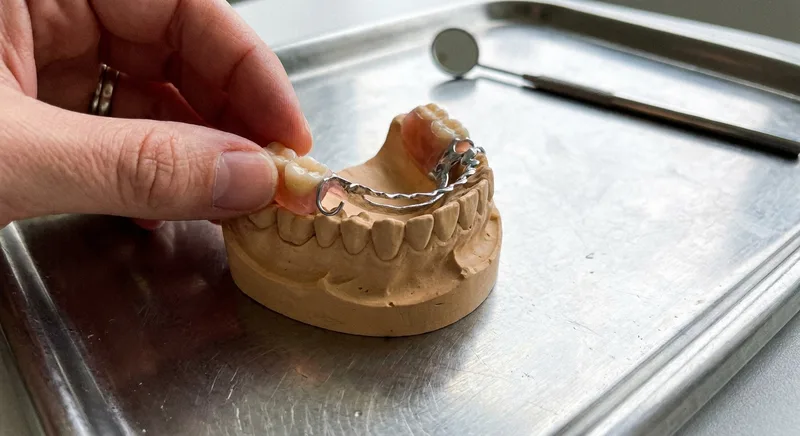
A cast metal partial denture, often called an RPD, uses a thin, precisely fitted metal framework as its foundation, with artificial teeth attached on acrylic bases. The metal clasps grip specific natural teeth, called abutment teeth, to hold the partial firmly in place. Because the framework is custom-cast to your mouth's exact dimensions, an RPD fits more precisely and distributes chewing forces more evenly than less rigid alternatives.
Cast metal partials are the most durable option, often lasting 10 years or more with proper care. They are thinner and less bulky than acrylic versions, which makes them more comfortable during daily function. The visible metal clasps are the main esthetic trade-off, which is why this design works best for replacing back teeth where the clasps are less visible.
The process involves multiple appointments: impressions, jaw measurements, a metal framework try-in, and a final delivery with adjustments. The initial fitting period requires patience while the mouth adapts, but the long-term reward is a stable, strong appliance that holds up well to normal eating and speaking.
What Are Flexible Partials and Are They Better?
Flexible partial dentures use a thin, lightweight nylon-based material instead of a metal framework. The gum-colored clasps blend with surrounding tissue, making them far less visible than metal clasps. They are also more comfortable for many patients because the material conforms to the gum surface rather than pressing against it.
Flexible partials are not universally better, however. They are harder to adjust or repair if they crack or break, they may not distribute bite forces as evenly as a metal framework, and their long-term durability varies more by patient habits and bite strength. They work best for replacing one or a few front teeth where esthetics is the priority, or for patients who find metal clasps uncomfortable or visible.
The choice between flexible and cast metal is not always obvious, and it often comes down to which teeth are being replaced, how many clasps are needed, the strength of the patient's bite, and whether esthetics or durability is the higher priority. Dr. Jeong can walk through these trade-offs with specific recommendations during a consultation.
How Long Does a Partial Denture Last and What Affects the Fit?
Cast metal partial dentures typically last 10 years or more; flexible and acrylic versions have shorter or more variable lifespans. Fit is the more pressing long-term concern: the jaw remodels as bone resorbs under missing teeth, gradually changing the shape the partial was made for. Regular checkups and timely relining keep it stable and protect the remaining teeth.
The NIDCR's data showing that adults aged 20 to 64 retain an average of 26 teeth out of 32 reflects just how common partial tooth loss is, which means the population using partial dentures is large and varied. The needs of a 45-year-old replacing two lower back teeth differ significantly from those of a 70-year-old replacing several teeth across the arch. Both may use a partial, but the type, fit, and long-term plan will differ accordingly.
Bone resorption, the natural process by which the jaw shrinks where tooth roots are absent, affects fit over time regardless of the denture type. This is one reason implant-supported options are worth considering for longer-term planning, since implants preserve bone by stimulating it. Our comparison of dental implants versus dentures walks through how these two paths differ in long-term fit and comfort.
Regular dental checkups allow the fit to be monitored and adjusted before it causes problems. A partial that rocks, slips, or causes sore spots should be evaluated promptly, since continued wear of an ill-fitting partial can damage the supporting teeth and tissue.
How Do You Care for Partial Dentures Day to Day?
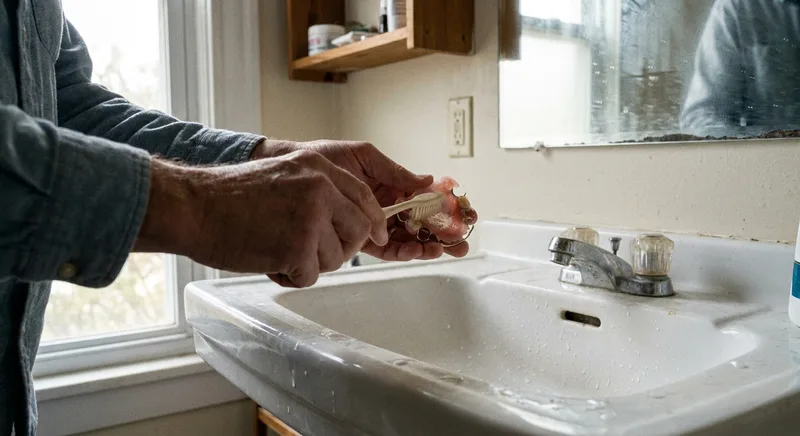
Caring for your partial properly extends their life, protects the natural teeth they rest against, and keeps the gums healthy. The daily routine is straightforward but must be consistent. The appliances should be removed for cleaning and for sleeping, both of which allow the gums and oral tissues to rest and recover.
Here is the daily care routine that most dentists recommend:
- Remove the partial after meals when possible and rinse it under water to clear debris.
- Brush the partial gently with a soft brush and denture cleaner, not regular toothpaste, which is too abrasive.
- Brush your natural teeth, gums, and tongue before reinserting the partial.
- Soak the partial in a denture-cleaning solution or plain water overnight to keep it from drying out and warping.
- Handle the partial over a folded towel or a basin of water when cleaning to cushion it if dropped.
- Never use boiling water, bleach, or harsh chemicals, which can damage the material or alter the fit.
According to the American Dental Association's MouthHealthy resource on dentures, keeping natural teeth and gums clean is just as important as cleaning the partial itself. Plaque accumulates under the clasps and along the edges of the partial, which can accelerate decay on the abutment teeth if oral hygiene is neglected.
Are Partials the Best Option for Missing Teeth, or Should You Consider Alternatives?
Removable partial dentures are one of several options for replacing missing teeth, and they are the best fit for some patients but not all. The main alternatives are dental bridges, which are cemented permanently in place, and dental implants, which replace the tooth root itself and do not depend on adjacent teeth for support. Each has trade-offs in terms of invasiveness, longevity, and effect on neighboring teeth.
This option is typically preferred when the missing teeth are spread across the arch, when the remaining teeth are not strong enough to support a bridge, or when patients prefer a non-surgical, reversible option. They also tend to be more accessible from a cost standpoint, though the full cost comparison over a lifetime is worth considering. Our overview of implants versus bridges and our article on full mouth reconstruction provide broader context if you are missing multiple teeth and weighing all your options.
The American Dental Association notes that the right restoration depends on clinical factors unique to each patient. Willow Family Dentistry does not steer patients toward any particular option. The recommendation follows the patient's clinical situation, preferences, and goals, which is why a proper exam and conversation come first. Whether partial dentures are the right answer for you depends on factors only visible in person.
Missing several teeth and not sure where to start?
Book a consultation at Willow Family Dentistry in Wylie, TX. Dr. Jeong will assess your teeth and walk you through partial denture options and alternatives, with no pressure in any direction.
Explore restorative dentistryFurther Reading
Partial dentures are one approach to tooth replacement. The articles below go deeper on the alternatives and on the broader context of restorative options for patients missing multiple teeth.
- Dentures Cost in Texas 2026: Full, Partial, and Implant-Supported
- All-on-4 Dental Implants vs Traditional: Which Is Right?
- Tooth Replacement Options: Implants, Dentures, and Bridges
Results may vary. Please consult with Dr. Jeong for personalized treatment recommendations.
Dr. Esther B. Jeong, DDS
DDS · Willow Family Dentistry
Wylie family dentist with 15+ years of experience providing gentle, judgment-free dental care.
Frequently Asked Questions
Was this article helpful?
You may also like



Have a dental question?
Schedule a consultation and get personalized answers from Dr. Jeong.
Call us
(972) 881-0715
Hours
Mon – Thu: 9am – 5pm
Fri: By Appointment
Location
1125 W FM 544, Wylie
Emergency? Same-day appointments available.