Jawbone Loss After Tooth Loss: Why It Happens
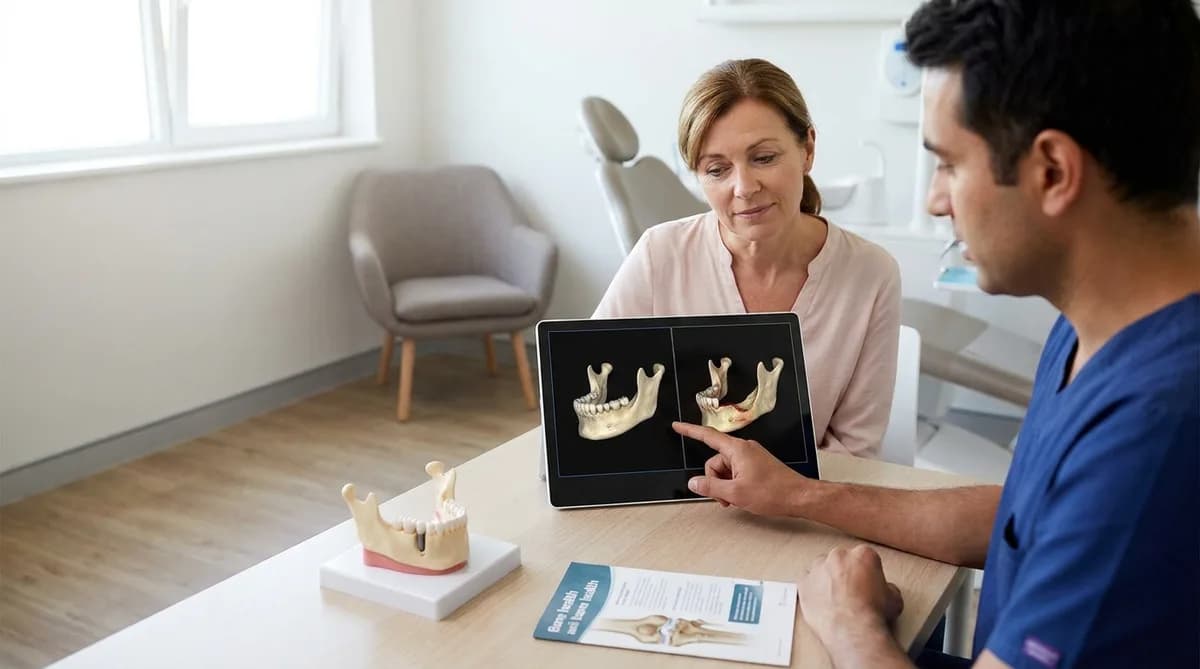
Most patients know that a missing tooth affects how they look and how they chew. Fewer realize it also triggers a process happening silently inside the jaw: jawbone loss after tooth loss, called alveolar bone resorption. Once a tooth root is gone, the bone that surrounded it begins to shrink, and that process does not stop on its own. Understanding why it happens, how fast it progresses, and what actually stops it is one of the most useful things a patient can know when weighing tooth replacement options.
At Willow Family Dentistry in Wylie, TX, Dr. Esther B. Jeong walks patients through this topic often, because the timing of tooth replacement directly affects how much bone remains when it comes time to restore the smile. This guide explains the mechanism of jawbone loss, the facial and functional consequences, and how different replacement options compare in terms of bone preservation.
Why Does Jawbone Loss After Tooth Loss Happen?
The jawbone shrinks after tooth loss because it no longer receives the stimulation it needs to maintain its density. Every time you bite or chew, the force travels through the tooth root into the surrounding bone, signaling the body to keep rebuilding it. When the root is gone, that signal stops. The body interprets the absence of stimulation as a signal that the bone is no longer needed, and it begins to reabsorb, or break down and redirect, the bone tissue.
This process is called alveolar bone resorption, and it begins within weeks of losing a tooth. The bone does not wait for a bridge or denture to be placed; resorption starts almost immediately after the root is removed. The outer wall of the socket, called the buccal plate, tends to break down first because it is the thinnest part of the surrounding bone structure.
Understanding this mechanism matters because it explains why timing is so important when considering tooth replacement. A patient who delays treatment for several years faces a different, more complex clinical situation than one who acts promptly, simply because there is less bone left to work with.
How Fast Does Jawbone Loss Happen?
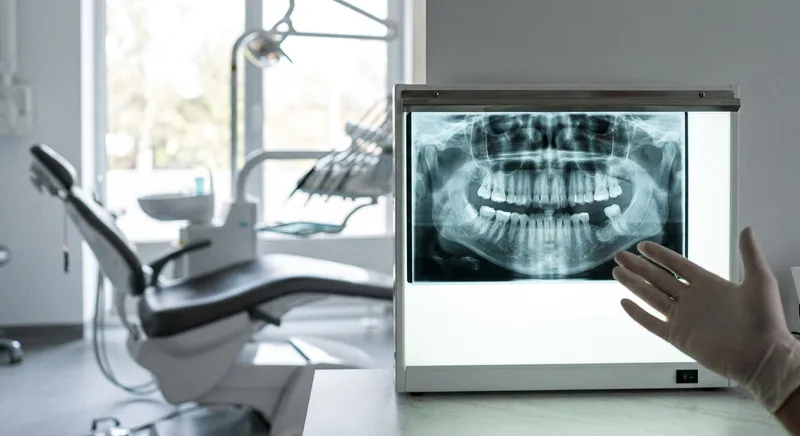
Jawbone loss after tooth loss is fastest in the first year and significant within the first few months. Research in clinical dentistry has found that up to 50% of the width of the alveolar ridge can be lost within the first year after tooth loss, according to that body of research. In the first three months alone, the bone can lose as much as 32% of its width, with the most rapid changes happening in the period immediately following extraction.
The numbers are striking because they happen quietly and without pain. Most patients are unaware of any bone change during this period. Over the first two to three years, studies report 40% to 60% of total bone volume can be lost, according to clinical research on alveolar ridge changes. After that initial rapid phase, resorption slows but does not stop, continuing at roughly 0.25% to 0.5% per year for the rest of the person's life if the tooth is never replaced with something that stimulates the bone.
The lower jaw tends to resorb differently from the upper. The mandible is denser and loses more height than width, while the upper jaw can lose width rapidly. Either way, the outcome over time is a narrower, shorter ridge than the patient started with, which has real consequences for future treatment options.
What Are the Visible and Functional Effects of Jawbone Loss?
Jawbone loss changes how you look and how your dental appliances fit. Visually, the lower face loses its supporting structure and can appear sunken or aged. Functionally, dentures and bridges become unstable as the ridge they rest on shrinks. These changes build slowly and are easy to miss until they become significant. The visible effects of jawbone loss include changes to facial structure, particularly a sunken or aged appearance around the mouth and jaw, as the underlying bone that supports soft tissue shrinks. The functional effects include difficulty chewing, shifting of neighboring teeth into the gap, and problems with the fit of dentures or other removable appliances over time. These changes accumulate gradually, which is why patients often do not connect them to a missing tooth they lost years earlier.
From a facial perspective, the lower third of the face depends on the jawbone for its shape. When significant resorption occurs, the cheeks and lips can lose support, the chin appears to protrude more, and the overall facial profile takes on a sunken quality that many people associate with aging. These are direct structural consequences of bone loss, not simply the effects of getting older.
For patients with dentures or bridges, bone resorption creates a practical problem: appliances that once fit well begin to rock, slip, or cause sore spots as the ridge changes beneath them. A bridge that relied on a certain bone and gum profile may become less stable over years of resorption. A denture that fit at delivery may need relining or replacement well before its expected lifespan because the foundation it rests on has changed.
Which Tooth Replacement Options Preserve Jawbone?
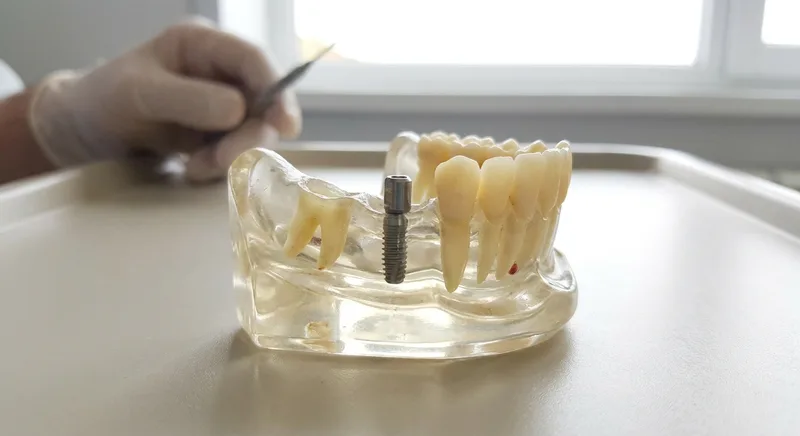
Only dental implants preserve jawbone after tooth loss. Implants are the only tooth replacement option that functions as a root substitute, transmitting chewing forces into the bone and providing the stimulation needed to maintain density. Bridges and dentures sit above the bone or anchor to neighboring teeth and do not prevent resorption in the area where the tooth root is missing.
According to the American Dental Association's MouthHealthy resource, dental implants are considered the closest option to natural teeth in terms of both function and bone preservation. The titanium implant post fuses directly with the jawbone through a process called osseointegration, and once integrated, it behaves much like a natural root in terms of transmitting bite forces into the bone.
A bridge, by contrast, spans the gap and distributes force to the abutment teeth on either side. The bone beneath the pontic, the false tooth in the middle, continues to resorb unchecked. A denture distributes pressure across the gum surface but does not stimulate the bone underneath, which is one reason denture fit tends to change over years of wear. Our comparison of implants versus bridges and our full overview of implants versus dentures go deeper on these trade-offs.
Can Jawbone Loss Be Reversed or Treated?
Jawbone loss cannot reverse on its own, but bone grafting can rebuild the ridge to restore volume for implant placement. Grafting uses donor material to regenerate lost bone, and the success depends on how much original bone remains and the health of the surrounding tissue. Acting before the loss becomes severe preserves more options. Jawbone loss cannot be reversed on its own, but it can be treated with bone grafting procedures that rebuild the ridge before implant placement. If enough time has passed after tooth loss, the remaining bone volume may be insufficient to place an implant without first augmenting the site. Bone grafts use donor material, either from the patient's own body, a tissue bank, or a synthetic source, to regenerate volume in the area.
The National Institute of Dental and Craniofacial Research notes that gum disease is one of the leading causes of bone loss in the jaw, separate from tooth loss itself, and that treating underlying gum disease is essential before any restorative work. The same principle applies to bone grafting: the jaw must be healthy and free of infection before regeneration can succeed.
Not every patient who has experienced jawbone loss will need a graft, and the decision depends on how much bone remains, its density, and where the implant needs to be placed. Our article on whether you need a bone graft for dental implants walks through the assessment criteria in detail.
What Happens During an Implant Consultation When Bone Loss Is Present?
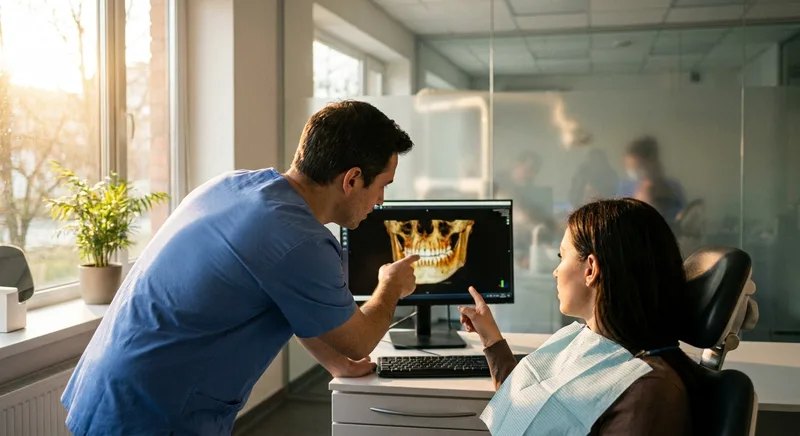
During an implant consultation when bone loss is present, the dentist assesses how much bone volume remains, whether it is sufficient for implant placement, and whether grafting is needed before proceeding. The assessment uses dental X-rays and, for more complex cases, cone-beam CT imaging that produces a three-dimensional picture of the bone and its density.
At Willow Family Dentistry, this evaluation is part of every implant consultation. The iCAT 3D imaging system allows Dr. Jeong to measure the exact dimensions of available bone, plan the ideal implant position, and communicate clearly with patients about whether they can proceed directly or whether a preparatory graft is recommended. Our step-by-step guide to what to expect with dental implants in Wylie and our overview of the five factors that determine implant candidacy are helpful reads before a consultation.
The practical takeaway is this: the sooner bone loss is evaluated after a tooth is lost, the more options remain on the table. Waiting does not make treatment easier; it typically makes it more involved. Patients who come in within weeks or a few months of losing a tooth generally have better bone volume and a simpler path to implant placement than those who wait years.
How Do You Know If You Have Jawbone Loss?
Most people cannot feel jawbone loss, which is why a dental evaluation with imaging is the only reliable way to measure it. Signs that prompt a check include a loose-fitting denture or bridge, shifting of neighboring teeth, or subtle facial changes around the jaw and mouth. Any of these after a tooth has been missing for a year or more is reason to ask your dentist. You may have jawbone loss if you have a tooth that has been missing for a year or more, if a denture or bridge that used to fit well has become loose or uncomfortable, or if your face has changed subtly around the jaw or mouth area. Most people cannot feel jawbone loss happening, which is why a dental evaluation with imaging is the only reliable way to know how much bone remains.
Neighboring teeth shifting toward the gap, food trapping in the space, and changes in your bite are also signs worth discussing at your next appointment. None of these symptoms guarantee significant bone loss, but they suggest the area deserves attention. For patients who are missing multiple teeth, our overview of partial dentures cover the broader restoration options alongside implants.
Willow Family Dentistry serves Wylie and the surrounding North Texas communities with comprehensive implant evaluation and planning. Whether you lost a tooth recently or years ago, an honest assessment of your bone health is the starting point for any restoration plan.
Worried about bone loss from a missing tooth?
Book an implant consultation at Willow Family Dentistry in Wylie, TX. Dr. Jeong will assess your bone volume, explain your options, and tell you honestly whether you can proceed directly to an implant or need a preparatory step first.
Explore dental implantsFurther Reading
Jawbone loss is one part of the broader tooth replacement picture. The articles below go deeper on implant candidacy, bone grafting, and the options available when multiple teeth are missing.
- Dental Implant Consultation in Wylie, TX: What to Expect
- All-on-4 Implants vs Traditional: Which Is Right?
- Tooth Replacement Options: Implants, Dentures, and Bridges
Results may vary. Please consult with Dr. Jeong for personalized treatment recommendations.
Dr. Esther B. Jeong, DDS
DDS · Willow Family Dentistry
Wylie family dentist with 15+ years of experience providing gentle, judgment-free dental care.
Frequently Asked Questions
Was this article helpful?
You may also like



Have a dental question?
Schedule a consultation and get personalized answers from Dr. Jeong.
Call us
(972) 881-0715
Hours
Mon – Thu: 9am – 5pm
Fri: By Appointment
Location
1125 W FM 544, Wylie
Emergency? Same-day appointments available.