Invisalign Attachments and Refinements: What to Expect
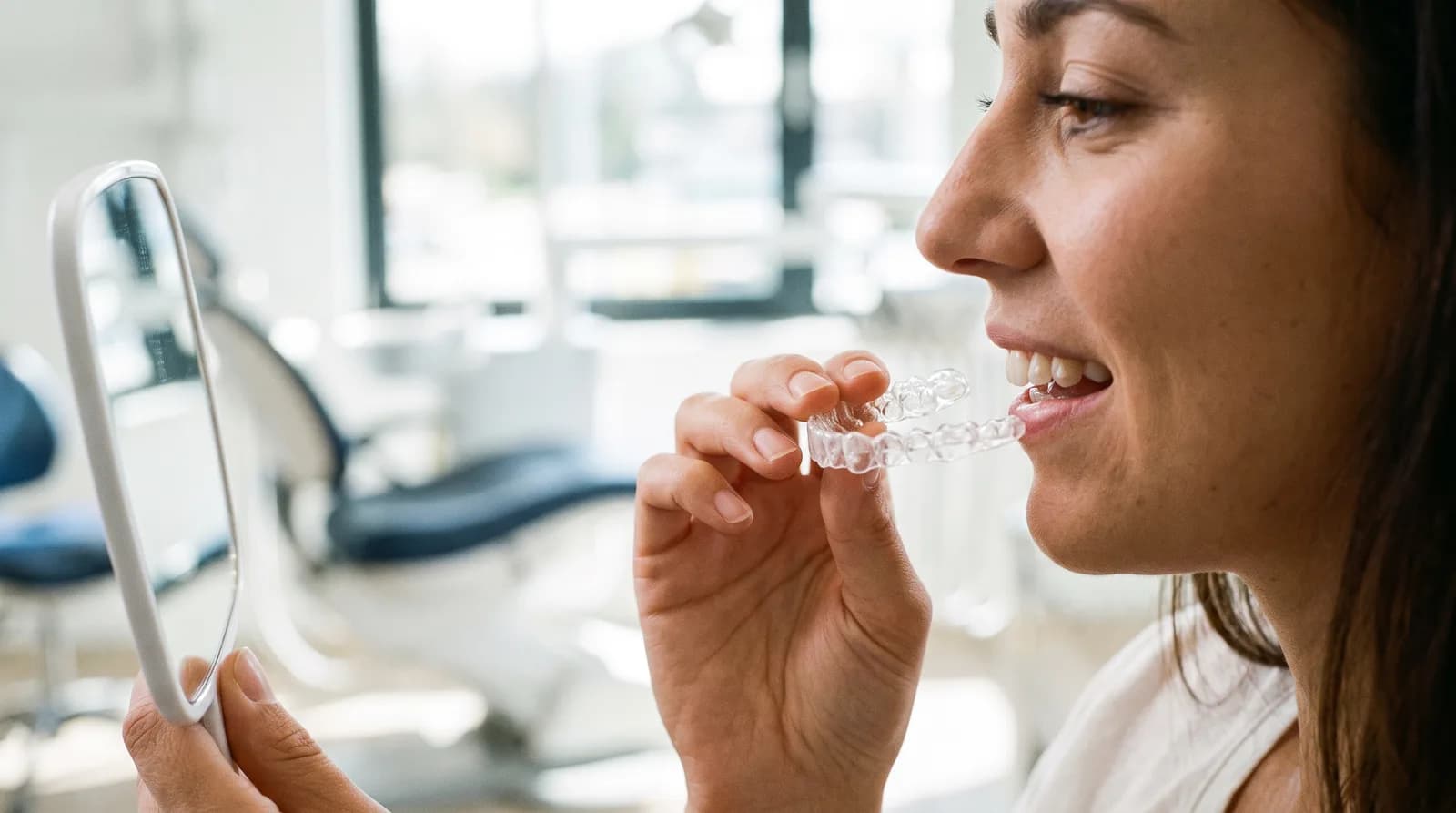
Patients starting Invisalign treatment often find out about attachments and refinements only after they are already in treatment, which leads to unnecessary confusion and surprise. Invisalign attachments are small tooth-colored bumps bonded to specific teeth that give the aligners something to grip for more precise tooth movement, and refinements are additional aligner stages added when the original treatment plan needs an adjustment. Neither is a sign that something went wrong; both are standard parts of how modern clear aligner treatment works. This guide explains what they are, what they involve, and what to expect.
At Willow Family Dentistry in Wylie, TX, Dr. Esther B. Jeong discusses attachments and refinements during the initial Invisalign consultation so patients are not caught off guard when they encounter them during treatment.
What Are Invisalign Attachments?
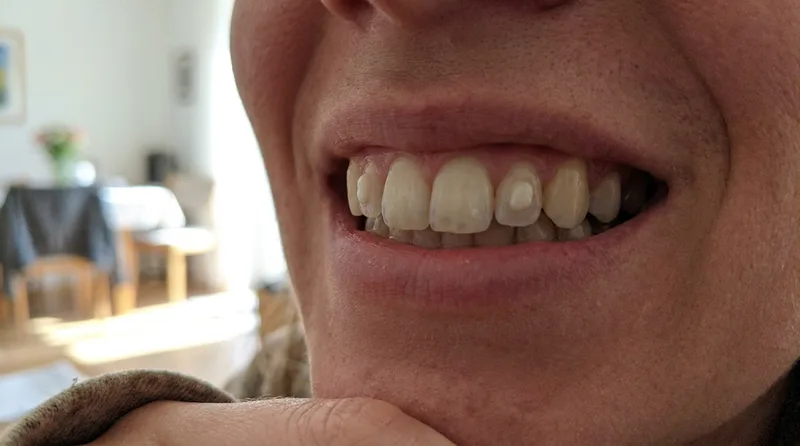
Invisalign attachments are small tooth-colored composite bumps bonded to specific teeth to help aligners apply precise directional force. They are used when a tooth needs to rotate, tip, or move vertically in ways a smooth tray surface cannot achieve alone.
Invisalign attachments are small, precisely shaped dots of tooth-colored composite resin bonded directly to the surface of specific teeth. They function as handles or anchors that allow the aligners to apply controlled force in specific directions that would otherwise be difficult to achieve with smooth aligner trays alone. A tooth that needs to rotate, tip, or move vertically requires more precise directional force than a flat aligner surface can generate, and an attachment provides the physical geometry to make that possible.
Attachments are designed using Invisalign's digital treatment planning software, which calculates which teeth need them and what shape will produce the required force vector. The shapes are typically oval, rectangular, or beveled depending on the movement needed. Some patients have only a few attachments; others have many, depending on the complexity of their case and which movements are required.
The attachments are placed at the start of treatment or partway through when specific movements begin. They are bonded with the same dental composite used for tooth-colored fillings and are designed to be nearly invisible at normal conversational distance, though they are visible up close, particularly on front teeth.
Why Do Some Invisalign Patients Have Attachments and Others Don't?
Whether a patient needs attachments depends on the type of tooth movements in their treatment plan. Simple cases may require none; cases involving rotation, vertical movement, or torque typically do. More attachments generally means a more detailed treatment plan, not a more serious problem.
Whether a patient has attachments depends entirely on the type and complexity of tooth movements in their treatment plan. Simple spacing corrections or mild crowding cases sometimes require no attachments at all. Cases involving significant rotation, vertical movement, tipping, or torque, particularly of back teeth and canines, typically require attachments to achieve the planned movements with the precision needed for a successful outcome.
Patients sometimes assume that having more attachments means their case is more serious or that something is wrong. The opposite is closer to the truth: a treatment plan with well-placed attachments is a sign that the digital planning is detailed enough to account for the specific challenges of each tooth movement, rather than relying on generic aligner pressure that may not produce accurate results.
The number and position of attachments also changes across the treatment sequence. Some attachments are added partway through as treatment progresses to more complex movements, and others are removed once those movements are complete. Not all attachments stay on from the beginning of treatment to the end.
What Do Invisalign Attachments Feel Like?
Attachments feel like small bumps on the teeth and are most noticeable in the first few days. The tongue and inner lips quickly map the new surfaces, which can feel strange initially. This sensitivity almost always fades within a week as the mouth adapts.
Invisalign attachments feel like small bumps on the tooth surface and are most noticeable in the first few days after placement. The tongue and inner lips are very sensitive to new surfaces in the mouth and will map the attachments immediately, which can feel strange or even uncomfortable at first. This sensitivity almost always fades within a week as the mouth adapts to the new contours.
The main practical adjustment is that the aligners now fit more snugly around the attachments, which can make them slightly harder to seat and remove than a tray without attachments. Patients usually find a technique that works well for them within a few days. Some patients use removal tools designed for aligner trays, which can help when multiple attachments are involved.
Attachments occasionally cause minor irritation to the inside of the cheek or lip if they are in a position where friction is constant. This can be addressed with a small amount of orthodontic wax applied directly to the attachment, the same approach used for bracket irritation with traditional braces. If irritation persists beyond the first couple of weeks, it is worth mentioning at the next appointment so the surface can be smoothed slightly if needed.
How Are Attachments Placed and Removed?
Attachments are placed in a 15 to 30 minute appointment using a positioning template. The process is painless and requires no drilling or anesthesia. Removal at the end of treatment is equally simple and leaves the tooth surface completely unchanged.
Attachments are placed in a single appointment that typically takes 15 to 30 minutes. The process is quick and entirely painless: the tooth surface is lightly etched with a mild acid to improve bonding, the composite material is applied using a template from a special tray that positions each attachment precisely, and the composite is hardened with a light. No drilling or anesthesia is involved.
Removal is equally simple. At the end of treatment, each attachment is polished off the tooth surface using a fine polishing instrument. The process takes about the same amount of time as placement and leaves the tooth surface smooth and unchanged. Because the composite is bonded only to the enamel surface and not to the tooth structure itself, the tooth underneath is unaffected by either the placement or the removal.
Attachments can be removed earlier if one falls off before treatment is complete, which occasionally happens with patients who eat very hard or sticky foods or who handle their aligners roughly. A detached attachment is replaced at the next appointment; missing one for a short period rarely derails treatment significantly, though it is worth reporting rather than waiting until the scheduled visit.

What Are Invisalign Refinements?
Invisalign refinements are additional aligner sets prescribed after the original series when tooth positions have not fully reached their planned result. They are a standard and expected part of comprehensive aligner treatment for a significant proportion of cases, not a sign that something went wrong.
Invisalign refinements are additional sets of aligners prescribed after the original series is complete when the final tooth positions have not yet fully matched the planned result. They are one of the most commonly misunderstood parts of Invisalign treatment: many patients assume that reaching the end of their original aligner series means treatment is finished, but refinements are a standard and expected part of comprehensive clear aligner treatment for a significant proportion of cases.
Research published in the orthodontic literature suggests that the accuracy of Invisalign tooth movement varies by movement type, with rotations and vertical movements showing more variability than tipping movements, according to that body of evidence. Refinements exist precisely to address this: they are the mechanism by which the treating dentist corrects for any tooth positions that did not move exactly as planned and finishes the case to the required standard.
The refinement process involves new scans or impressions of the current tooth positions, an updated digital treatment plan mapping the remaining movements needed, and a new set of aligners fabricated to complete those movements. Some patients need only a short refinement sequence of a few trays; others need a more involved second phase depending on how much correction is needed.
How Common Are Refinements and How Long Do They Take?
Refinements are more common than most patients expect, with published research suggesting more than 50% of comprehensive cases require at least one. Duration ranges from a few trays over weeks to 20 or more trays extending treatment by several months, depending on how much correction is needed.
Refinements are more common than most patients expect. Studies in the clinical orthodontic literature have found that a significant majority of comprehensive Invisalign cases require at least one refinement, with some estimates placing that figure above 50%, according to published research. This does not reflect poor treatment; it reflects the reality that biological tooth movement is variable and that finishing to a precise standard often requires course correction.
How long a refinement takes depends on how much movement remains. Minor touch-ups may require only 5 to 10 additional trays and a matter of weeks. More substantial refinements can require 20 or more trays and extend treatment by several months. The treating dentist reviews the current tooth positions, determines what movements are still needed, and prescribes a refinement sequence accordingly.
Refinements are included in the Invisalign fee structure in many practices, meaning there is no separate charge for the additional aligner trays themselves, though this varies. Patients should confirm at the start of treatment whether refinements are included or whether additional charges apply, since understanding this upfront prevents financial surprises mid-treatment.

Tips for Managing Attachments During Treatment
Managing attachments well during Invisalign treatment comes down to a few consistent habits that reduce irritation, maintain the bond, and keep the attachments looking clean throughout the process. They are not difficult to care for, but they do add a small amount of daily maintenance that patients without attachments do not need to think about.
- Avoid hard, crunchy, or sticky foods eaten directly on the attachment surface, since excessive mechanical stress can dislodge the bond.
- Brush gently around each attachment to prevent staining and plaque buildup at the base of the composite.
- Use orthodontic wax on any attachment that is causing cheek or lip irritation in the first days after placement.
- Remove aligners carefully from the back of the mouth rather than prying at the front, to reduce stress on attachments.
- Report a detached attachment promptly rather than waiting for the next scheduled appointment, since some movements require the attachment to be in place to proceed effectively.
According to the American Dental Association's MouthHealthy resource on orthodontic treatment, consistent follow-through on maintenance habits during aligner treatment is one of the most important factors in achieving the planned outcome on schedule. The American Dental Association recommends discussing all orthodontic options including clear aligners with your dentist before starting treatment. Our guide on Invisalign versus braces covers how this fits into the broader choice between aligner and bracket-based treatment.
When Should You Ask Your Dentist About Attachments or Refinements?
Ask about attachments before treatment starts if aesthetics during treatment are a priority, so you know exactly which teeth will have visible bumps. Ask about refinements as you approach the end of your original aligner series to understand the likelihood and timeline of an additional phase.
Ask your dentist about attachments before treatment begins if you are concerned about aesthetics during treatment, since knowing what to expect from attachments on specific teeth allows you to make an informed decision before committing. Ask about refinements during treatment if you are approaching the end of your original aligner series and want to understand the likelihood of a refinement phase given your case complexity.
Willow Family Dentistry provides Invisalign treatment for adults and teens in Wylie and the surrounding North Texas communities. If you are considering starting treatment or have questions about where you are in an existing Invisalign case, our articles on Invisalign candidacy and on crossbite treatment and underbite correction cover the range of conditions Invisalign can address.
Questions about Invisalign attachments or refinements?
Book a consultation at Willow Family Dentistry in Wylie, TX. Dr. Jeong will walk you through your specific treatment plan, what attachments are needed and why, and what to expect at each stage.
Explore clear alignersFurther Reading
Attachments and refinements are details within a broader Invisalign decision. The articles below cover the bigger picture of aligner treatment at Willow Family Dentistry.
- Adult Braces Options in Wylie, TX
- Why Are My Teeth Shifting? Adults Explained
- Stress and Teeth Grinding: Jaw Pain and Damage
Results may vary. Please consult with Dr. Jeong for personalized treatment recommendations.
Attachments and refinements are one part of a wider plan, so it helps to see the full range of orthodontic treatment in Wylie before starting.
Dr. Esther B. Jeong, DDS
DDS · Willow Family Dentistry
Wylie family dentist with 15+ years of experience providing gentle, judgment-free dental care.
Frequently Asked Questions
Was this article helpful?
You may also like


Have a dental question?
Schedule a consultation and get personalized answers from Dr. Jeong.
Call us
(972) 881-0715
Hours
Mon – Thu: 9am – 5pm
Fri: By Appointment
Location
1125 W FM 544, Wylie
Emergency? Same-day appointments available.