Are You a Dental Implant Candidate? 5 Key Factors
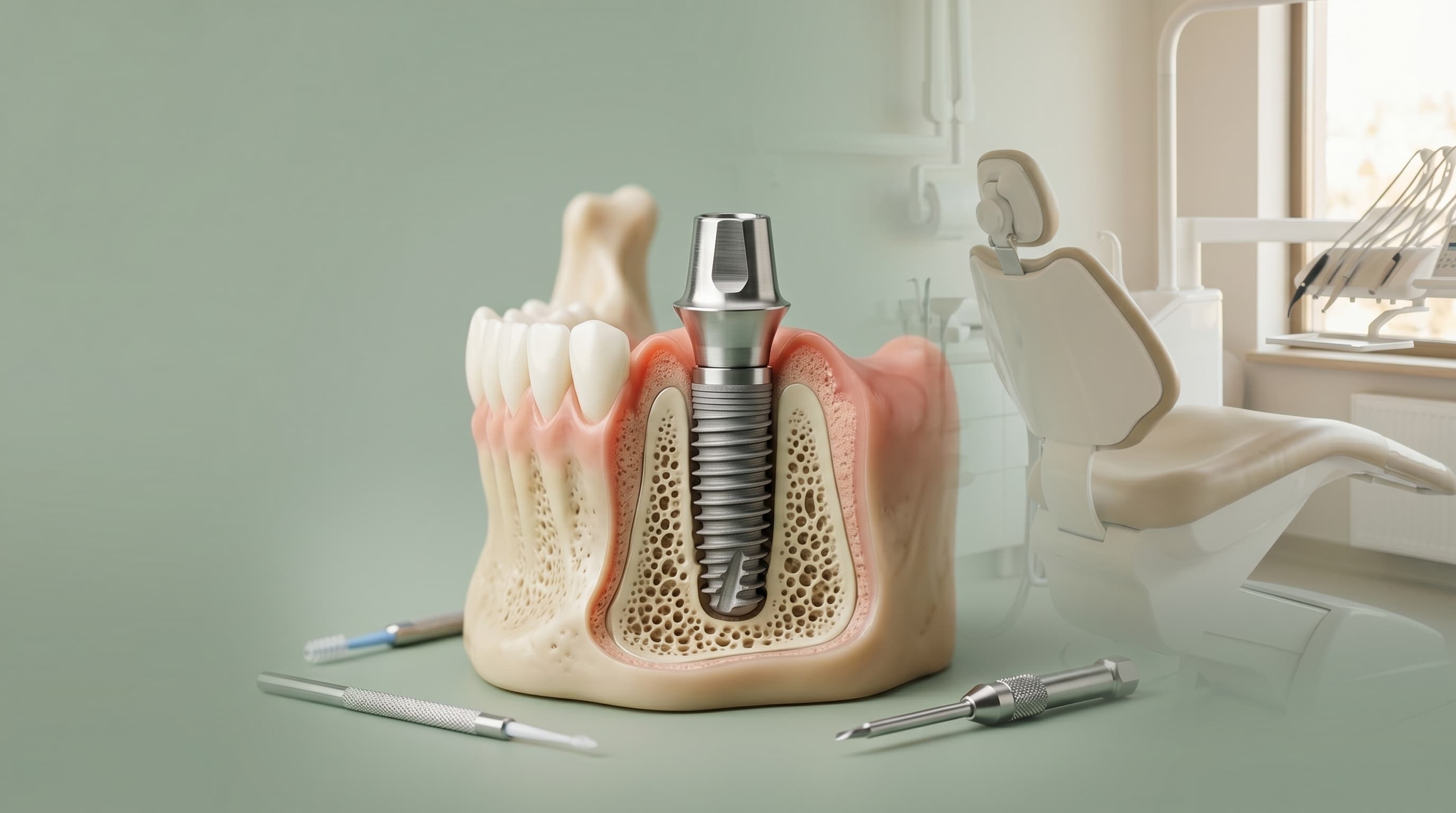
If you're missing a tooth and considering a replacement, the first question isn't which type of implant to get. It's whether you're a dental implant candidate in the first place. The American College of Prosthodontists estimates that 120 million Americans are missing at least one tooth, but not all of them are ready for an implant on day one. Some need preparation. A few need an alternative. Most just need a clear evaluation.
At Willow Family Dentistry in Wylie, TX, Dr. Esther Jeong evaluates five specific factors before recommending implant placement. This guide walks through each one so you can understand where you stand before you even book a consultation.
What Makes Someone a Good Dental Implant Candidate?
A good dental implant candidate has enough jawbone to anchor a titanium post, healthy gum tissue free of active infection, no uncontrolled medical conditions that impair healing, doesn't smoke or is willing to quit, and is committed to caring for the implant long-term. When these five factors line up, dental implants carry a 95-98% success rate over ten years according to the Journal of Oral and Maxillofacial Surgery.
That success rate isn't automatic. It reflects outcomes for patients who were properly screened, whose implants were precisely placed, and who followed through with aftercare. Patients who skip the screening process or push forward despite risk factors see lower success rates. That's not a reason to be afraid of implants. It's a reason to take the evaluation seriously.
Here's the encouraging part: most of these factors are either fixable or manageable. Low bone? Grafting can rebuild it. Gum disease? Treat it first, then proceed. Smoker? Quitting for a defined window dramatically improves your odds. Very few patients are told "implants will never work for you." Most are told "here's what we need to address first."
Factor 1: Do You Have Enough Bone to Support an Implant?
Bone density is the foundation of every successful implant. The titanium post needs a minimum amount of healthy bone to fuse with during osseointegration, the process where your jawbone literally grows around and locks onto the implant. Without enough bone, the implant has nothing to hold onto.
Here's what most patients don't realize: the moment you lose a tooth, the bone underneath starts shrinking. Your body reabsorbs bone that's no longer stimulated by a tooth root. The longer the gap has been there, the more bone has been lost. A patient who had a tooth extracted six months ago typically has significantly more bone than someone who's been wearing a partial denture for ten years. Timing matters.
Dr. Jeong assesses bone density using the iCAT 3D cone beam scanner in her Wylie office. The scan produces a three-dimensional map of your jaw, showing bone height, width, and density at the exact planned implant site. She can measure whether there's enough bone for a standard implant or whether grafting would be needed to build the site up first.
Bone grafting sounds intimidating, but it's a routine procedure. Dr. Jeong places a graft material at the deficient site, and your body regenerates new bone over 3-6 months. Once the bone has matured, the implant can be placed into a solid foundation. It adds time to the overall treatment, but it doesn't disqualify you as a dental implant candidate. It just changes the timeline.
Related: See how 3D imaging makes implant planning more precise. → How iCAT 3D Imaging Makes Dental Implants More Precise
Factor 2: Are Your Gums Healthy Enough for Surgery?
Active gum disease is one of the most common reasons a dental implant candidate needs treatment before proceeding with placement. Bacteria from periodontal infection can compromise the surgical site, prevent proper healing, and significantly increase the risk of early implant failure.
The numbers put this in perspective. The CDC reports that 42% of adults aged 30 and older have some form of periodontal disease. That's nearly half the adult population. Many of those patients want implants, and most can eventually get them, but the gum disease has to be addressed first.
Dr. Jeong checks gum health during the implant consultation by measuring pocket depths around every tooth. Healthy gums have pocket depths of 1-3 millimeters with no bleeding. Pockets of 4mm or deeper with bleeding on probing indicate active disease. If she finds periodontal issues, the first step is scaling and root planing to eliminate the infection. After treatment, a re-evaluation at 4-6 weeks confirms the gums have healed enough to proceed.
This isn't just about passing a checkbox. Healthy gums at the time of surgery directly affect how well the implant integrates and how long it lasts. Placing an implant into a mouth with active periodontal disease is like building a house on a contaminated foundation. It can be done, but the odds of long-term problems go up dramatically.
Not Sure About Your Gum Health?
Dr. Jeong evaluates gum health as part of every implant consultation. If treatment is needed first, she'll build it into your overall timeline.
Request an Appointment →Related: Understand what stage of gum disease you might be in. → Stages of Gum Disease: Gingivitis vs Periodontitis
Factor 3: How Does Smoking Affect Implant Success?
Smoking is the single biggest controllable risk factor for implant failure. Research cited by the ADA shows that smokers have implant failure rates two to three times higher than non-smokers. Nicotine constricts blood vessels, reduces oxygen delivery to the tissues, and directly impairs the bone-healing process that makes osseointegration possible.
Let's be direct about what this means in practice. A non-smoker with good bone and healthy gums has a 95-98% chance of implant success. A pack-a-day smoker with the same bone and gum profile may see that number drop to the low 90s or high 80s. The implant can still work. But the margins get thinner, and the risk of complications during healing increases meaningfully.
Dr. Jeong doesn't automatically refuse implants for smokers. She has an honest conversation about the risks and makes a strong recommendation: quit for at least two weeks before surgery and eight weeks after. That window gives your blood vessels time to recover, improves oxygen flow to the surgical site, and gives the bone its best chance of fusing with the titanium post. Patients who follow this protocol see outcomes much closer to non-smoker levels.
If quitting entirely isn't realistic, reducing cigarette count and switching to a cessation aid during the healing period still helps. The point isn't perfection. It's giving the implant the best possible environment to succeed. Every cigarette skipped during the critical healing window is a meaningful improvement in your odds.
Related: What determines how long your implant lasts after placement? → How Long Do Dental Implants Last? The Honest Answer
Factor 4: Do Medical Conditions Affect Your Eligibility?
Certain medical conditions affect how your body heals after implant surgery, which matters because osseointegration is fundamentally a healing process. The key word in almost every case is "uncontrolled." A well-managed condition rarely disqualifies you as a dental implant candidate. An uncontrolled one changes the conversation.
Diabetes
Uncontrolled diabetes slows wound healing and increases infection risk at the surgical site. But a patient with well-managed Type 2 diabetes and a stable A1C below 7% can absolutely have a successful implant. Dr. Jeong may coordinate with your physician to confirm your glucose levels are stable before scheduling surgery. According to the Mayo Clinic, diabetes doesn't rule out implants when it's properly controlled.
Osteoporosis and Bisphosphonate Medications
Osteoporosis itself doesn't necessarily prevent implant placement, but the medications used to treat it can. Bisphosphonates (drugs like alendronate and risedronate) alter bone metabolism in ways that can interfere with healing at the implant site. Long-term intravenous bisphosphonate users carry higher risk than those on oral tablets. Dr. Jeong reviews your medication history and may consult with your prescribing physician before proceeding.
Autoimmune Conditions and Immunosuppression
Conditions like rheumatoid arthritis, lupus, or any disease requiring immunosuppressive medication can slow healing. Patients who've had organ transplants and take anti-rejection drugs fall into this category too. These conditions don't automatically disqualify you, but they require more careful planning and potentially longer healing times.
Radiation Therapy to the Head and Neck
Patients who've received radiation therapy to the jaw area may have compromised bone vascularity, which makes osseointegration harder. The timing between radiation completion and implant placement matters significantly. Dr. Jeong works with your oncology team to determine the safest window.
The common thread across all of these: transparency with your dentist. Dr. Jeong asks about your full medical history, current medications, and any treatments you've undergone not to find reasons to say no, but to plan the safest, most predictable path to yes.
Have a Complex Medical History?
Dr. Jeong screens every patient individually and coordinates with your medical team when needed. A complex history means a more careful plan, not a closed door.
Request an Appointment →Factor 5: Are You Ready for the Aftercare Commitment?
This is the factor most patients overlook, and it's the one that determines whether your implant lasts 10 years or 30. A dental implant isn't a "set it and forget it" solution. It requires the same care as a natural tooth, and in some ways, more attention because the consequences of neglect are expensive.
The implant post can't get a cavity. But the gum and bone tissue around it are still vulnerable to bacterial infection. Peri-implantitis, the implant equivalent of gum disease, affects roughly 20% of implant patients to some degree within 5-10 years according to the American Academy of Periodontology. Patients who skip cleanings, ignore gum bleeding around the implant, or don't keep up with brushing and flossing are the ones who end up in that 20%.
What does proper aftercare look like? Brush twice a day, making sure to angle the bristles toward the gumline around the implant. Floss daily, using either traditional floss threaded around the implant or a water flosser directed at the implant-gum junction. Keep your regular dental checkup schedule. Dr. Jeong monitors the implant at every visit, checking for bone changes, gum recession, and early signs of infection. If you grind your teeth, wear the night guard she prescribes.
The patients who get decades out of their implants aren't doing anything heroic. They're showing up, brushing, flossing, and keeping their appointments. That's it. If that commitment sounds manageable to you, you're a stronger dental implant candidate than you might think.
Related: How often should you really be visiting the dentist? → How Often Should You Go to the Dentist?
Being a dental implant candidate isn't pass/fail. It's a spectrum. Some patients walk in ready for placement next week. Others need gum treatment, bone grafting, or a few months of smoking cessation first. The evaluation exists to figure out where you are on that spectrum and build a plan that gets you to the finish line safely.
If you've been wondering whether implants could work for you, the only way to know for sure is a clinical evaluation with 3D imaging. Dr. Jeong at Willow Family Dentistry will assess your bone, your gums, your medical history, and your goals, then give you a direct answer. Not a maybe. Not a "come back in six months and we'll see." An answer and a plan.
Find Out If Implants Are Right for You
Dr. Jeong evaluates every factor with a 3D scan and a thorough exam. You'll leave with a clear answer and a personalized treatment plan.
Request an Appointment →Want to talk about your specific situation?
Call (972) 881-0715 →Dr. Esther B. Jeong, DDS
DDS · Willow Family Dentistry
Wylie family dentist with 15+ years of experience providing gentle, judgment-free dental care.
Frequently Asked Questions
Was this article helpful?
You may also like



Have a dental question?
Schedule a consultation and get personalized answers from Dr. Jeong.
Call us
(972) 881-0715
Hours
Mon – Thu: 9am – 5pm
Fri: By Appointment
Location
1125 W FM 544, Wylie
Emergency? Same-day appointments available.