Cold Sore vs Canker Sore: How to Tell Them Apart
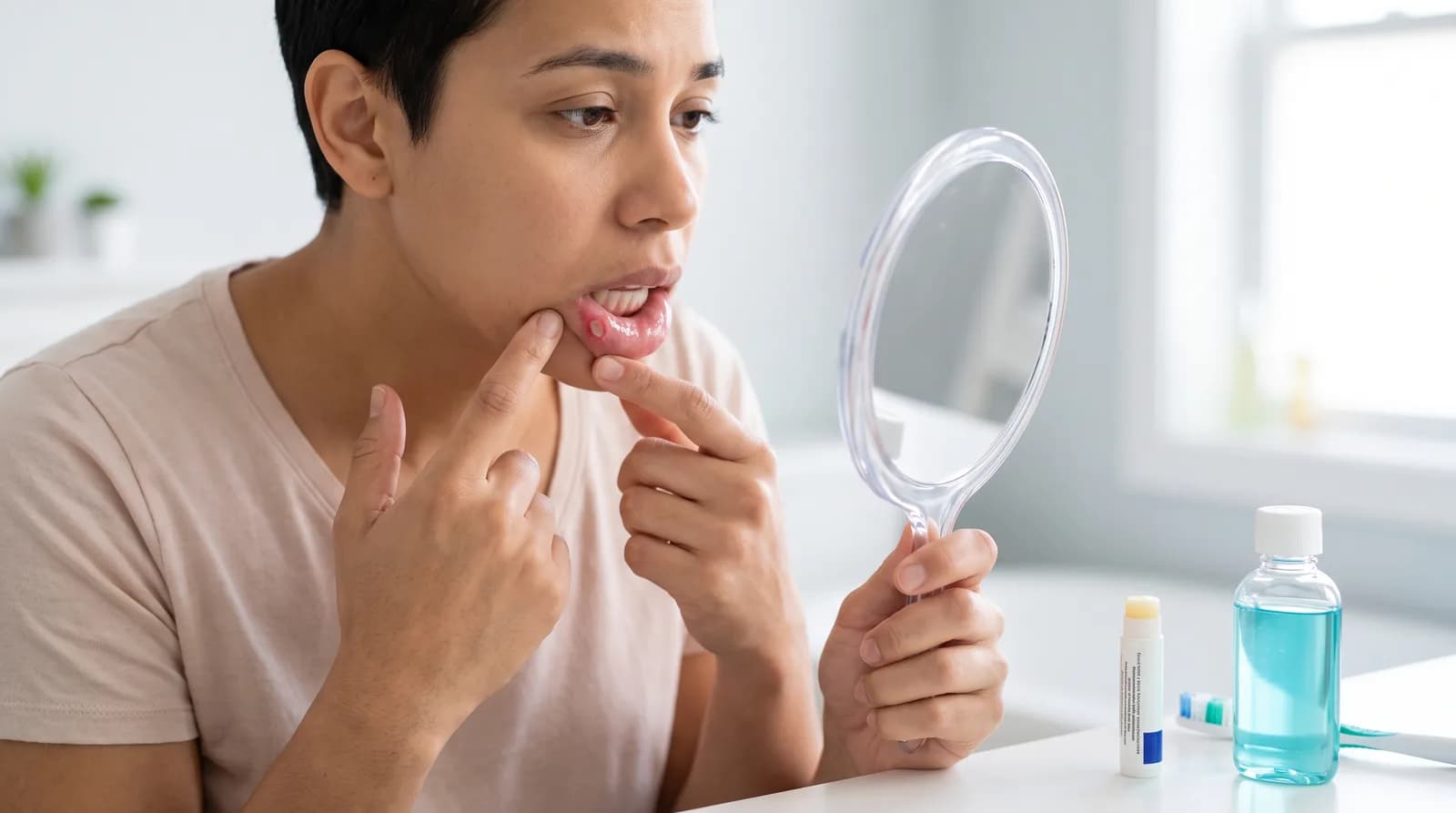
Cold sores and canker sores look similar enough that people regularly confuse them, but they are caused by entirely different things, behave differently, and require different management. The most important distinction is contagion: a cold sore vs canker sore comparison starts here. Cold sores are caused by herpes simplex virus type 1, are contagious, and appear on or outside the lips. Canker sores are not caused by a virus, are not contagious, and appear only inside the mouth on soft tissue. Getting the two straight matters both for how you manage them and for how you communicate with the people around you.
At Willow Family Dentistry in Wylie, TX, Dr. Esther B. Jeong answers questions about oral sores regularly at checkups and can help evaluate anything that does not fit the expected pattern for either condition.
What Is a Cold Sore?
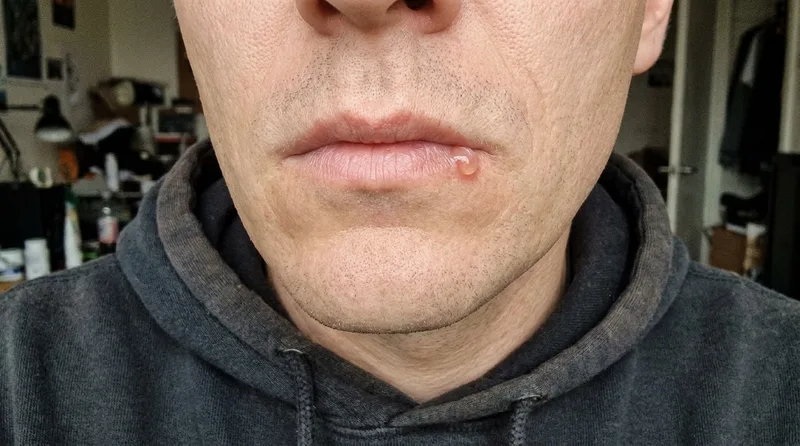
A cold sore is a fluid-filled blister caused by herpes simplex virus type 1 (HSV-1) that appears on the outer lip or lip border, not inside the mouth. It begins with a tingling warning, progresses to blisters that crust over, and heals in seven to ten days.
A cold sore is a fluid-filled blister caused by herpes simplex virus type 1 (HSV-1) that typically appears on or around the outer lip, at the lip border, or on the skin just below the nose. It is not an oral sore in the strict sense; it lives at the boundary between the lip and the surrounding skin rather than on the soft tissue inside the mouth.
Cold sores go through a predictable sequence: a tingling or burning sensation in the area one to two days before the blister appears, followed by a cluster of small fluid-filled blisters that break open, crust over, and heal over the course of seven to ten days. The tingling prodrome, the characteristic location at the lip border, and the crusting stage are all features that distinguish cold sores from canker sores.
HSV-1 is extremely common. According to WebMD, studies suggest that more than half of American adults carry HSV-1, though many never develop visible cold sores. Once infected, the virus remains dormant in nerve tissue permanently and can reactivate in response to triggers including sun exposure, fever, illness, stress, hormonal changes, and lip injury.
What Is a Canker Sore?
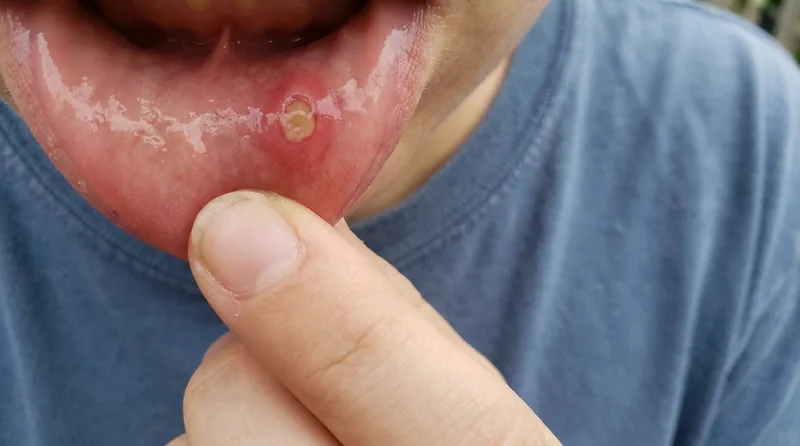
A canker sore is a shallow ulcer with a white or yellow center and a red border that appears only on soft tissue inside the mouth. It is not caused by a virus, is not contagious, and typically heals on its own within one to two weeks without treatment.
A canker sore, clinically called an aphthous ulcer, is a shallow, round or oval ulcer with a white or yellowish center and a red border that appears on the soft tissues inside the mouth: the inner cheeks, inner lips, gum tissue away from the teeth, the tongue, or the soft palate. Unlike cold sores, canker sores are not caused by a virus, are not contagious, and never appear on the outer lip or skin.
Canker sores are among the most common oral conditions. According to the American Dental Association's MouthHealthy, approximately 20% of people experience recurrent aphthous ulcers, making canker sores one of the most common oral soft tissue conditions in dentistry. They typically heal on their own within one to two weeks without treatment.
The cause of canker sores is not fully understood, but known triggers include minor tissue trauma such as biting the cheek, sharp food edges, or dental appliance irritation; stress; hormonal changes; nutritional deficiencies in vitamin B12, iron, or folate; and certain foods including citrus, tomatoes, and spicy foods in some individuals. Unlike cold sores, they do not recur at the same location each time and are not driven by a latent virus.
Cold Sore vs Canker Sore: Side-by-Side Comparison
Cold sores and canker sores are among the most common oral conditions adults experience. According to published clinical data, cold sores recur in approximately 20% to 40% of infected individuals at least once per year, while canker sores affect up to 20% of the general population at any given time, according to ADA prevalence data. Together they account for a large proportion of the soft tissue concerns patients raise at dental visits.
The most reliable way to tell a cold sore from a canker sore is location combined with whether a tingling warning preceded it. Cold sores always start with a prodrome and appear outside or at the border of the lip; canker sores appear inside the mouth with no warning sensation.
| Cold Sore | Canker Sore | |
|---|---|---|
| Cause | Herpes simplex virus type 1 (HSV-1) | Unknown; multiple triggers |
| Contagious? | Yes, highly contagious by direct contact | No |
| Location | Outer lip, lip border, skin near mouth | Inside mouth: cheeks, tongue, soft palate |
| Appearance | Fluid-filled blisters that crust over | Shallow ulcer, white/yellow center, red border |
| Warning sign | Tingling or burning 1-2 days before | No prodrome |
| Healing time | 7-10 days | 7-14 days |
| Recurrence | Same location each time (latent virus) | Different locations each time |
| Virus remains? | Yes, permanently dormant in nerve tissue | No viral component |

Are Cold Sores Contagious?
Cold sores are highly contagious during active outbreaks and can spread through direct contact, kissing, or sharing utensils and lip products. Canker sores, by contrast, are entirely non-contagious with no viral component and no transmission risk whatsoever. This distinction matters for how patients communicate with partners, family members, and coworkers during an active outbreak.
Cold sores are highly contagious during the active outbreak, particularly from the blister stage through crusting. The virus is transmitted through direct skin-to-skin or oral contact and can be spread to another person's mouth, eyes, or genitals through kissing, sharing utensils or lip products, or touching the active sore and then touching another surface. Transmission is also possible, though less likely, when no visible sore is present during asymptomatic viral shedding.
During an active cold sore, avoiding kissing and sharing anything that contacts the mouth is the practical guidance. The virus is not transmitted through casual contact such as sharing the same room, using the same bathroom, or touching objects the person has handled in ordinary circumstances. It requires direct mucous membrane or skin-to-mucous membrane contact.
Canker sores, by contrast, are entirely non-contagious. There is no virus involved and no mechanism for transmission. Sharing food, drinks, or utensils with someone who has a canker sore carries no risk of developing one yourself.
What Triggers Each Type?
Cold sore triggers are factors that reactivate latent HSV-1 from its dormant state in the trigeminal nerve ganglion. The most reliably documented triggers include: sun exposure to the lips without UV protection, fever or systemic illness, physical or emotional stress, hormonal changes particularly around menstruation, lip injury or dental work involving the lip area, and immune suppression from any cause.
People who experience frequent cold sore outbreaks often identify their personal trigger pattern over time. UV-protective lip balm is one of the more evidence-supported preventive measures for sun-triggered outbreaks, and some patients benefit from antiviral medications taken at the start of the prodrome stage to shorten or suppress the outbreak.
Canker sore triggers are more varied and less predictable. Common associations include mechanical trauma to the mouth lining such as biting the cheek or irritation from a sharp tooth edge or orthodontic wire, emotional stress, hormonal fluctuations, and dietary triggers including acidic or spicy foods. Nutritional deficiencies in vitamin B12, iron, or folic acid are associated with recurrent canker sores in some patients, and addressing the deficiency can reduce frequency. Our article on canker sore causes and treatment covers the full range of triggers and what actually speeds healing.
How Long Do They Last and How Are They Treated?
Cold sores heal in seven to ten days; antiviral medications started during the prodrome can shorten outbreaks. Canker sores heal on their own within one to two weeks. Neither has a permanent cure, but both can be managed to reduce frequency and severity.
Cold sores typically heal in seven to ten days. There is no treatment that eliminates the underlying virus, but antiviral medications such as acyclovir and valacyclovir can shorten outbreak duration and reduce severity when started early, ideally during the prodrome stage before the blister appears. Topical antiviral creams are also available over the counter and by prescription. Prescription options should be discussed with a physician or dentist who can assess the pattern and frequency of outbreaks.
Canker sores typically heal on their own within one to two weeks without any treatment. Minor sores resolve faster than major ones. Avoiding trigger foods during an active sore, keeping the area clean, and using a soft-bristled toothbrush reduce irritation during healing. Larger or more persistent sores that do not begin improving after two weeks warrant a dental evaluation to rule out other causes.
When Should You See a Dentist About an Oral Sore?
See a dentist about an oral sore that has not started healing after two weeks, is unusually large or painful, recurs very frequently, or does not fit the typical pattern of either a cold sore or canker sore. Persistent sores should be evaluated to rule out other causes including oral cancer in early stages.
See a dentist about an oral sore if it has not started healing after two weeks, if it is unusually large or severely painful, if sores are recurring very frequently with little time between outbreaks, or if you are unsure whether what you are seeing is a canker sore, cold sore, or something else entirely. Most routine canker sores and cold sores are self-limiting and do not require professional evaluation, but there are conditions that can mimic both, including oral cancer in its early stages, that warrant attention when a sore persists beyond the expected healing window.
At Willow Family Dentistry, oral cancer screenings are part of every comprehensive exam, and Dr. Jeong evaluates any soft tissue changes that appear during a visit. Our article on what your tongue reveals about your health covers other soft tissue changes worth knowing about.
Unsure about an oral sore?
Book an evaluation at Willow Family Dentistry in Wylie, TX. Dr. Jeong can assess any soft tissue change that does not follow the expected healing pattern for a cold sore or canker sore.
Explore preventive dentistryFurther Reading
Soft tissue oral health connects to several other topics covered at Willow Family Dentistry.
- Tartar vs Plaque: The Difference and Why It Matters
- Enamel Erosion: How Acid Wears Down Your Teeth
- Are Dental X-Rays Safe? How Often Do You Need Them?
Results may vary. Please consult with Dr. Jeong for personalized treatment recommendations.
Dr. Esther B. Jeong, DDS
DDS · Willow Family Dentistry
Wylie family dentist with 15+ years of experience providing gentle, judgment-free dental care.
Frequently Asked Questions
Was this article helpful?
You may also like
Have a dental question?
Schedule a consultation and get personalized answers from Dr. Jeong.
Call us
(972) 881-0715
Hours
Mon – Thu: 9am – 5pm
Fri: By Appointment
Location
1125 W FM 544, Wylie
Emergency? Same-day appointments available.