Bruxism Teeth Grinding: The Full Picture of Causes and Care

Most people who suffer from bruxism teeth grinding and clenching do not know they are doing it. Bruxism, also known as bruxism teeth grinding and clenching, is one of those conditions that causes significant cumulative damage while producing few obvious symptoms in its early stages. By the time patients notice the signs, weeks, months, or sometimes years of enamel wear, muscle tension, and jaw joint strain have already accumulated. This guide covers the full picture: what bruxism actually is, why it happens, how day grinding differs from sleep grinding, what damage it causes, and what treatment actually works.
At Willow Family Dentistry in Wylie, TX, Dr. Esther B. Jeong sees the effects of bruxism across all age groups and helps patients manage it before it escalates into more serious restorative problems.
What Is Bruxism and How Common Is It?
Bruxism is the involuntary grinding, clenching, or gnashing of the teeth and jaw, occurring either during sleep or while awake. It is far more common than most people realize. A 2024 systematic review and meta-analysis found that bruxism teeth grinding affects roughly 22% of adults globally, with sleep bruxism affecting approximately 21% of people and awake bruxism approximately 23%, according to that research. In North America, the prevalence of sleep bruxism is even higher, estimated at 31% in the same analysis.
Despite being this common, bruxism frequently goes undetected. The person doing it rarely feels the grinding happening, particularly during sleep, and the damage it produces develops so gradually that it can be mistaken for normal wear. A partner noticing a grinding sound at night, or a dentist observing characteristic wear patterns during a routine exam, is often how the condition first comes to light.
Bruxism is not a single condition but a spectrum. It ranges from mild, infrequent clenching that causes minimal damage to severe, nightly grinding that wears teeth down to a fraction of their original height over years. Where someone falls on that spectrum depends on the frequency and force of the habit, underlying risk factors, and how early it is identified and managed.
What Is the Difference Between Sleep Bruxism and Awake Bruxism?
Sleep bruxism and awake bruxism are classified as distinct conditions because they occur in different physiological states, involve different patterns of muscle activity, and often have different underlying drivers. Sleep bruxism occurs during sleep and involves rhythmic jaw muscle contractions; awake bruxism typically involves clenching without the rhythmic grinding motion and is more closely tied to psychological and emotional states during waking hours.
Sleep bruxism is classified as a sleep-related movement disorder. It tends to produce more enamel wear because the forces involved can be substantially higher during sleep, when the brain's feedback mechanisms that normally limit biting force are suppressed. Patients with sleep bruxism often wake with jaw soreness, headaches at the temples, or a feeling of fatigue in the jaw muscles, none of which they associate with grinding until someone points it out.
Awake bruxism is more likely to present as jaw tension, muscle tenderness, and awareness of clenching during stress, concentration, or screen time. Many people discover it when they notice their jaw is tight at the end of a workday, or when someone observes them holding their jaw clenched while working or driving. Our article on stress, teeth grinding, and jaw pain goes deeper on the psychological connection that drives awake bruxism specifically.
What Causes Bruxism?
Bruxism is driven by several overlapping factors rather than a single root cause, which is why management typically addresses multiple contributors simultaneously. Stress is the strongest documented driver, but sleep disorders, medications, caffeine, genetics, and personality traits all contribute meaningfully. Bruxism is multifactorial, meaning several contributing causes typically overlap in a single patient rather than one single cause explaining the habit. The most consistently identified drivers include stress and anxiety, certain medications, sleep disorders, and personality traits associated with hyperarousal and tension.
Key contributing factors include:
- Stress and anxiety: The strongest and most consistently documented association in the bruxism literature. Periods of heightened stress often correlate directly with increased grinding frequency and intensity.
- Sleep disorders: Obstructive sleep apnea has a documented association with sleep bruxism, and addressing the sleep disorder can sometimes reduce grinding activity. Bruxism episodes often cluster around periods of lighter sleep.
- Certain medications: SSRIs and other antidepressants, stimulant medications, and some antipsychotics are associated with increased bruxism activity as a side effect.
- Caffeine and alcohol: Both have been linked to increased bruxism activity, particularly sleep bruxism, when consumed in larger amounts or close to bedtime.
- Genetics: Bruxism runs in families, and genetic factors are thought to contribute to susceptibility independent of lifestyle.
- Personality and arousal: People with hyperaroused, competitive, or perfectionistic personality traits show higher rates of bruxism.
Understanding the likely driver matters for management, since stress-reduction strategies, medication adjustments, and sleep apnea treatment all address different causes and may be needed in combination with dental management.

What Damage Does Bruxism Cause to the Teeth and Jaw?
Bruxism causes progressive, cumulative damage to the teeth, the jaw muscles, and the temporomandibular joint, with severity proportional to the force and frequency of the habit over time. The damage does not reverse on its own once it has occurred, which is why early identification and intervention are so important.
Damage to the teeth includes:
- Enamel wear: Grinding gradually flattens and shortens the chewing surfaces, wearing away enamel that does not grow back. Our article on enamel erosion covers how enamel loss progresses and when restoration becomes necessary.
- Tooth sensitivity: As enamel thins, the dentin beneath becomes more exposed and reactive to temperature and sweet stimuli. Our article on sudden cold sensitivity covers the bruxism connection alongside other causes.
- Cracked teeth: The repeated stress of grinding can propagate cracks in enamel and dentin, sometimes resulting in a fractured cusp or a cracked tooth that needs a crown. Our guide to cracked tooth syndrome covers this specific presentation in detail.
- Chipped or broken restorations: Fillings, crowns, and veneers all have higher failure rates in patients with unmanaged bruxism.
Damage beyond the teeth includes jaw muscle soreness, headaches at the temples from overworked masseter and temporalis muscles, and strain on the temporomandibular joint. Our article on TMJ treatment explains how bruxism relates to jaw joint dysfunction and what the management options are when both conditions are present.
How Is Bruxism Diagnosed?
Bruxism is diagnosed through clinical examination of the teeth and jaw muscles, patient symptom history, and observation of characteristic wear patterns. Because most patients are unaware of the habit, the dentist's findings during a routine exam often initiate the diagnosis rather than patient complaint. Bruxism is diagnosed through a combination of clinical examination, patient history, and sometimes symptom tracking. There is no single definitive test, and the diagnosis is primarily clinical: a dentist examines the wear patterns on the teeth, assesses the jaw muscles and joint, reviews symptoms such as morning jaw soreness or headaches, and puts the picture together in context of the patient's reported habits and stress levels.
According to WebMD, most people are unaware they grind their teeth and may not know until a dentist identifies characteristic wear during a routine checkup. This is one of the strongest arguments for regular dental exams, since catching bruxism early, before significant wear has occurred, dramatically simplifies management. A dentist can also look for signs of bruxism in children, since the habit is common in kids and is covered in detail in our article on child teeth grinding at night.
What Are the Treatment Options for Bruxism?
Treatment for bruxism addresses both protection of the teeth and management of the underlying cause. No single treatment eliminates bruxism completely for most patients, but a combination of a custom night guard and targeted cause management substantially reduces damage and symptoms for the majority of people.
The main options include:
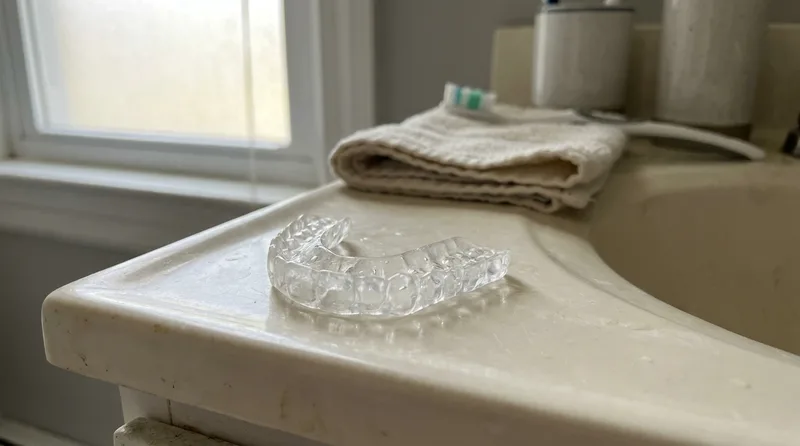
- Custom night guard: A dental appliance worn during sleep that creates a physical barrier between the upper and lower teeth. It does not stop the grinding reflex but prevents the teeth from wearing against each other, protecting enamel and reducing tooth damage. Custom-fitted guards from a dentist fit better and last longer than over-the-counter options.
- Stress management: Therapy, relaxation techniques, exercise, and mindfulness all have evidence supporting their role in reducing bruxism activity by addressing the primary psychological driver.
- Sleep apnea treatment: When bruxism is associated with obstructive sleep apnea, treating the underlying sleep disorder with a CPAP or oral appliance can reduce bruxism episodes.
- Medication review: If the habit began or worsened after starting a new medication, discussing an adjustment with the prescribing physician may help.
- Botox injections to the masseter: A growing option for severe cases, botulinum toxin injected into the jaw muscle reduces the force of contraction and can significantly decrease grinding-related muscle soreness and tooth load.
According to Healthline, while bruxism cannot always be fully stopped, protecting the teeth with a custom guard while addressing lifestyle and stress factors is the most effective approach for most patients.
When Should You See a Dentist About Bruxism?
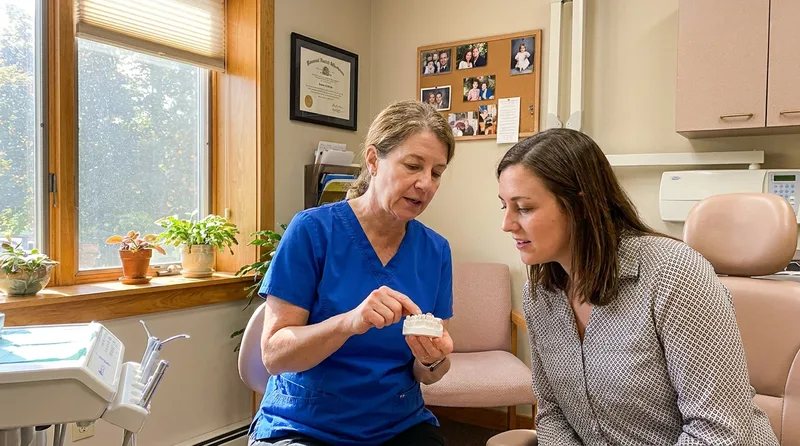
See a dentist if you wake with jaw soreness, temple headaches, or sore teeth; if a partner has mentioned grinding sounds at night; or if you notice your teeth look flatter or are more sensitive than before. Any of these warrants evaluation, since bruxism damage is cumulative and simpler to manage when caught early. You should see a dentist about bruxism if you wake with jaw soreness, headaches, or a sore feeling in the teeth; if a partner has mentioned grinding sounds at night; if you notice your teeth look flatter, shorter, or more sensitive than before; or if you regularly find yourself clenching during the day under stress. Any of these is worth raising at your next dental visit.
The earlier bruxism is identified and managed, the simpler and less costly the treatment tends to be. A patient who starts wearing a night guard before significant wear occurs preserves their natural enamel. A patient who waits until teeth are fractured or heavily worn faces more involved restorative work. Like most dental conditions, earlier is always better. Willow Family Dentistry provides custom night guards and full bruxism evaluations for patients throughout Wylie, TX and the surrounding area.
Waking up with jaw soreness or sore teeth?
Book an evaluation at Willow Family Dentistry in Wylie, TX. Dr. Jeong will assess for bruxism, check for any existing wear, and fit you with a custom night guard if needed.
Explore preventive dentistryFurther Reading
Bruxism sits at the center of a cluster of related dental and jaw concerns. The articles below go deeper on each of the main connected topics.
- Custom Mouthguard for Kids in Wylie, TX
- Loose Tooth in Adults: Causes and Treatment
- Tooth Abscess: Symptoms, Warning Signs, and Treatment
Results may vary. Please consult with Dr. Jeong for personalized treatment recommendations.
Dr. Esther B. Jeong, DDS
DDS · Willow Family Dentistry
Wylie family dentist with 15+ years of experience providing gentle, judgment-free dental care.
Frequently Asked Questions
Was this article helpful?
You may also like
Have a dental question?
Schedule a consultation and get personalized answers from Dr. Jeong.
Call us
(972) 881-0715
Hours
Mon – Thu: 9am – 5pm
Fri: By Appointment
Location
1125 W FM 544, Wylie
Emergency? Same-day appointments available.