Are Dental X-Rays Safe? Radiation Facts and How Often You Need Them
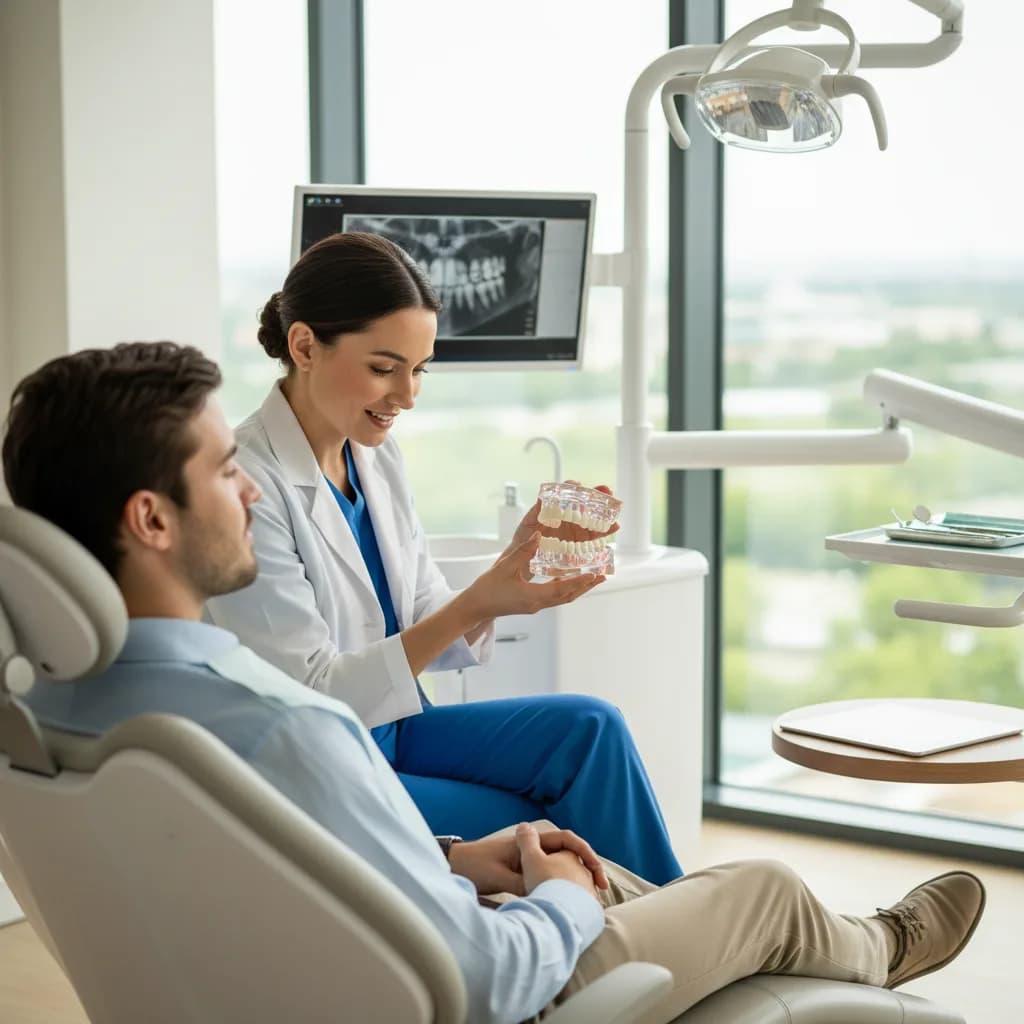
Are dental x-rays safe? This is the question patients ask more than any other about preventive dental care, and it deserves a direct answer: yes, dental x-rays are safe. The radiation dose from a dental x-ray is extremely small, smaller than the radiation you absorb from natural background sources during a single day of normal life. But "extremely small" isn't specific enough when you're the one sitting in the chair with a lead apron, so this guide puts the numbers in context with comparisons you can actually visualize, explains why the x-rays are clinically necessary, covers the ADA frequency guidelines by patient risk level, and addresses the pregnancy question directly.
Dr. Esther Jeong at Willow Family Dentistry in Wylie, TX uses digital x-rays and iCAT 3D cone-beam CT, both of which use significantly less radiation than the film-based x-rays of previous decades. She follows the ALARA principle (As Low As Reasonably Achievable) for every patient, taking only the images clinically needed and never more.
How Much Radiation Do Dental X-Rays Actually Expose You To?
Radiation dose is measured in microsieverts (µSv). Here's where dental x-rays fall compared to everyday radiation sources you encounter without thinking about them.
| Radiation Source | Dose (µSv) | Equivalent To |
|---|---|---|
| Single digital dental x-ray (periapical) | 5 µSv | Eating 50 bananas |
| Digital panoramic x-ray | 14-24 µSv | 1-2 days of natural background radiation |
| Full mouth series (18 digital images) | 34-90 µSv | 2-5 days of background radiation |
| iCAT cone-beam CT (dental) | 30-200 µSv | 2-10 days of background radiation |
| Cross-country flight (NY to LA) | 40 µSv | More than a full mouth series |
| Natural background radiation (annual) | 3,100 µSv | Baseline you receive just existing on Earth |
| Medical chest x-ray | 20 µSv | 4 individual dental x-rays |
| Medical CT scan (abdomen) | 8,000 µSv | ~1,600 individual dental x-rays |
The comparison that puts it in perspective: a single cross-country flight exposes you to more radiation than a full mouth series of dental x-rays. You receive more radiation from natural background sources (cosmic rays, radon in soil, potassium-40 in food) in 2-5 days of normal life than from a complete dental x-ray set. The banana comparison isn't a joke: bananas contain potassium-40, a naturally radioactive isotope. Eating one banana exposes you to approximately 0.1 µSv. A single dental x-ray is equivalent to about 50 bananas. According to the Mayo Clinic, dental radiation doses are among the lowest in all of diagnostic imaging.
Digital x-rays, which Willow uses exclusively, produce 50-80% less radiation than traditional film x-rays. The digital sensor requires less radiation to create a diagnostic image, and the image can be enhanced on screen without retaking at higher exposure. According to the ADA, the transition from film to digital imaging has reduced dental radiation exposure to the lowest levels in the history of dental radiography.
Why Are Dental X-Rays Clinically Necessary?
The clinical need is straightforward: x-rays reveal problems that are invisible to the naked eye, and most dental diseases develop between the teeth or below the gumline where visual examination can't reach.
Cavities between teeth (interproximal cavities) are the most common finding on bitewing x-rays. These cavities develop on the contact surfaces where two teeth touch, hidden from direct view. By the time an interproximal cavity is visible to the eye or causes symptoms, it's typically large enough to require extensive treatment. X-rays catch these cavities when they're small, when a simple filling resolves the problem rather than a crown or root canal. According to the ADA, bitewing x-rays detect interproximal cavities an average of 2-3 years before they become clinically visible.
Bone loss from periodontal disease is invisible in the mouth. The gums may look normal while the bone beneath them is dissolving. X-rays show the bone level around each tooth root, allowing Dr. Jeong to diagnose and stage gum disease, track progression between visits, and intervene before teeth become loose. Without x-rays, periodontal disease would only be diagnosed after teeth started moving, which is far too late for the best outcomes.
Infections at the root tips (periapical abscesses) appear as dark areas on x-rays around the root ends. Many abscesses are asymptomatic for months or years while they silently destroy bone. X-rays identify them before they become acute emergencies. According to clinical data, approximately 20% of periapical infections found on routine x-rays are in patients with no symptoms at all.
Impacted teeth, cysts, tumors, and developmental abnormalities are all detected radiographically before they cause problems. In children, x-rays verify that permanent teeth are developing normally, identify congenitally missing teeth, and guide orthodontic treatment planning.
Related: iCAT 3D imaging goes further than standard x-rays. → iCAT 3D Dental Imaging in Wylie, TX
How Often Do You Need Dental X-Rays?
The ADA doesn't prescribe a one-size-fits-all schedule. X-ray frequency is based on individual risk, and Dr. Jeong follows these evidence-based guidelines.
| Patient Category | Bitewings (Cavity Check) | Full Mouth / Panoramic |
|---|---|---|
| Low risk adult (no cavities in 3+ years, healthy gums) | Every 24-36 months | Every 5 years or as needed |
| Moderate risk adult (occasional cavities, mild gum disease) | Every 12-18 months | Every 3-5 years or as needed |
| High risk adult (active cavities, gum disease, dry mouth) | Every 6-12 months | Every 1-3 years or as needed |
| Child (developing dentition) | Every 6-12 months | Panoramic around age 6-7, then as needed |
| New patient (any age) | At first visit (baseline) | At first visit (baseline) or with recent transfer films |
Dr. Jeong assesses risk at every visit and adjusts the imaging schedule accordingly. A patient who was low-risk for 5 years but recently started a medication causing dry mouth moves to the moderate or high-risk schedule. A patient who had active cavities but improved their hygiene and fluoride exposure may move to a less frequent schedule. The imaging serves the patient's current clinical needs, not a calendar.
The ADA explicitly opposes "routine" x-rays taken at predetermined intervals regardless of clinical need. Every x-ray Dr. Jeong prescribes has a specific clinical reason documented in your chart.
Are Dental X-Rays Safe During Pregnancy?
This is the question that causes the most anxiety, and the answer is nuanced but reassuring.
The ADA, the American College of Obstetricians and Gynecologists (ACOG), and the American Academy of Pediatrics all agree: dental x-rays with proper shielding (lead apron with thyroid collar) are safe during pregnancy when clinically indicated. The radiation dose from a dental x-ray (5 µSv per image) is far below the threshold of concern for fetal exposure (50,000 µSv, which is roughly 10,000 individual dental x-rays). The lead apron blocks virtually all scatter radiation from reaching the abdomen.
That said, Dr. Jeong follows a conservative approach for pregnant patients. Elective or routine x-rays (the annual bitewings at a checkup where no problems are suspected) are deferred until after delivery when possible. X-rays for diagnosing acute problems (pain, swelling, infection, trauma) are taken during pregnancy because the risk of undiagnosed dental infection to the mother and fetus outweighs the negligible radiation exposure. An untreated dental abscess during pregnancy carries real risks (systemic infection, bacteremia, preterm labor) that a diagnostic x-ray does not.
According to the ADA, postponing necessary dental treatment during pregnancy out of radiation fear is more dangerous than the x-rays themselves. The second trimester is considered the optimal time for dental treatment during pregnancy, but urgent care is appropriate at any stage.
Are Dental X-Rays Safe for Children?
Children are more sensitive to radiation than adults because their cells are dividing faster during growth. This sensitivity is why pediatric x-ray protocols use smaller image receptors, lower radiation settings, and fewer images than adult protocols. The dose per image is lower and the number of images is minimized.
At the same time, children benefit more from dental x-rays than adults in some respects because their dental situation is changing rapidly: permanent teeth are developing, eruption patterns need monitoring, orthodontic planning requires imaging, and cavities in primary teeth progress faster than in permanent teeth. According to the American Academy of Pediatric Dentistry, the clinical benefit of pediatric dental x-rays substantially outweighs the minimal radiation risk when images are taken for specific diagnostic reasons.
Dr. Jeong uses the smallest sensor size for children, limits the field to the area of clinical interest, and takes the minimum number of images needed. Lead aprons with thyroid collars are used for every pediatric x-ray. She explains the reason for each image to parents before taking it.
Parents can also ask to see the images afterward. Dr. Jeong is happy to point out what she's looking for on the film, whether that's a cavity between two teeth or how a permanent tooth is positioned under a baby tooth, so the visit feels less like a mystery and more like a shared checkup.

Related: Fluoride safety for kids follows the same evidence-based approach. → Fluoride for Kids: Safe Amounts by Age
What Happens If You Refuse Dental X-Rays?
You have every right to decline x-rays. Dr. Jeong respects that decision and documents it in your chart. But declining x-rays has clinical consequences worth understanding.
Cavities between teeth will not be detected until they're large enough to see clinically or cause symptoms. By that point, the cavity that would have needed a $200 filling when caught on x-ray now needs a $1,000-$2,000 crown or root canal. The x-ray isn't an upsell. It's early detection that saves money and tooth structure.
Bone loss from gum disease will progress undetected. Without radiographic baseline and comparison images, Dr. Jeong can measure pocket depths (which indicate current disease activity) but cannot measure bone levels (which indicate cumulative damage). The full picture requires both clinical and radiographic data.
Infections, cysts, and impacted teeth will remain undiagnosed until they produce symptoms, which may be months or years after they formed. According to the ADA, declining dental x-rays doesn't reduce your radiation exposure meaningfully (given the tiny doses involved) but does reduce your dentist's ability to diagnose and prevent problems meaningfully.
Dr. Jeong's approach when patients express x-ray concern: she explains exactly which images she recommends and why, shows the radiation comparison chart, discusses the clinical findings the images would provide, and supports the patient's decision either way. Most patients who were hesitant proceed once they understand the numbers. Those who still prefer to decline are cared for to the best of Dr. Jeong's ability within the limitations of a visual-only exam.
Concerned About X-Ray Safety?
Dr. Jeong explains exactly which images she recommends and why, every time. Digital x-rays at Willow use 50-80% less radiation than film. Every image has a documented clinical reason.
Request an Appointment →Are dental x-rays safe? The radiation from a full set of dental x-rays equals 2-5 days of natural background exposure, less than a cross-country flight. Digital imaging has reduced doses to the lowest levels in dental history. The ADA prescribes x-ray frequency based on individual risk, not a fixed calendar. Pregnancy x-rays with shielding are safe when clinically needed. And the clinical information x-rays provide, detecting cavities 2-3 years before they're visible, preventing the silent progression of gum disease and infection, is irreplaceable by any other diagnostic method. If you have questions about x-ray safety, bring them to your next visit at Willow Family Dentistry. Dr. Jeong answers them with numbers, not reassurance.
Your Questions About X-Rays Deserve Real Answers
Dr. Jeong explains every x-ray she recommends with the clinical reason and the radiation context. Digital imaging at Willow uses 50-80% less radiation than film.
Request an Appointment →Questions about dental x-rays?
Call (972) 881-0715 →Dr. Esther B. Jeong, DDS
DDS · Willow Family Dentistry
Wylie family dentist with 15+ years of experience providing gentle, judgment-free dental care.
Frequently Asked Questions
Was this article helpful?
You may also like


Have a dental question?
Schedule a consultation and get personalized answers from Dr. Jeong.
Call us
(972) 881-0715
Hours
Mon – Thu: 9am – 5pm
Fri: By Appointment
Location
1125 W FM 544, Wylie
Emergency? Same-day appointments available.