Wisdom Teeth Removal: What to Expect Before, During, After
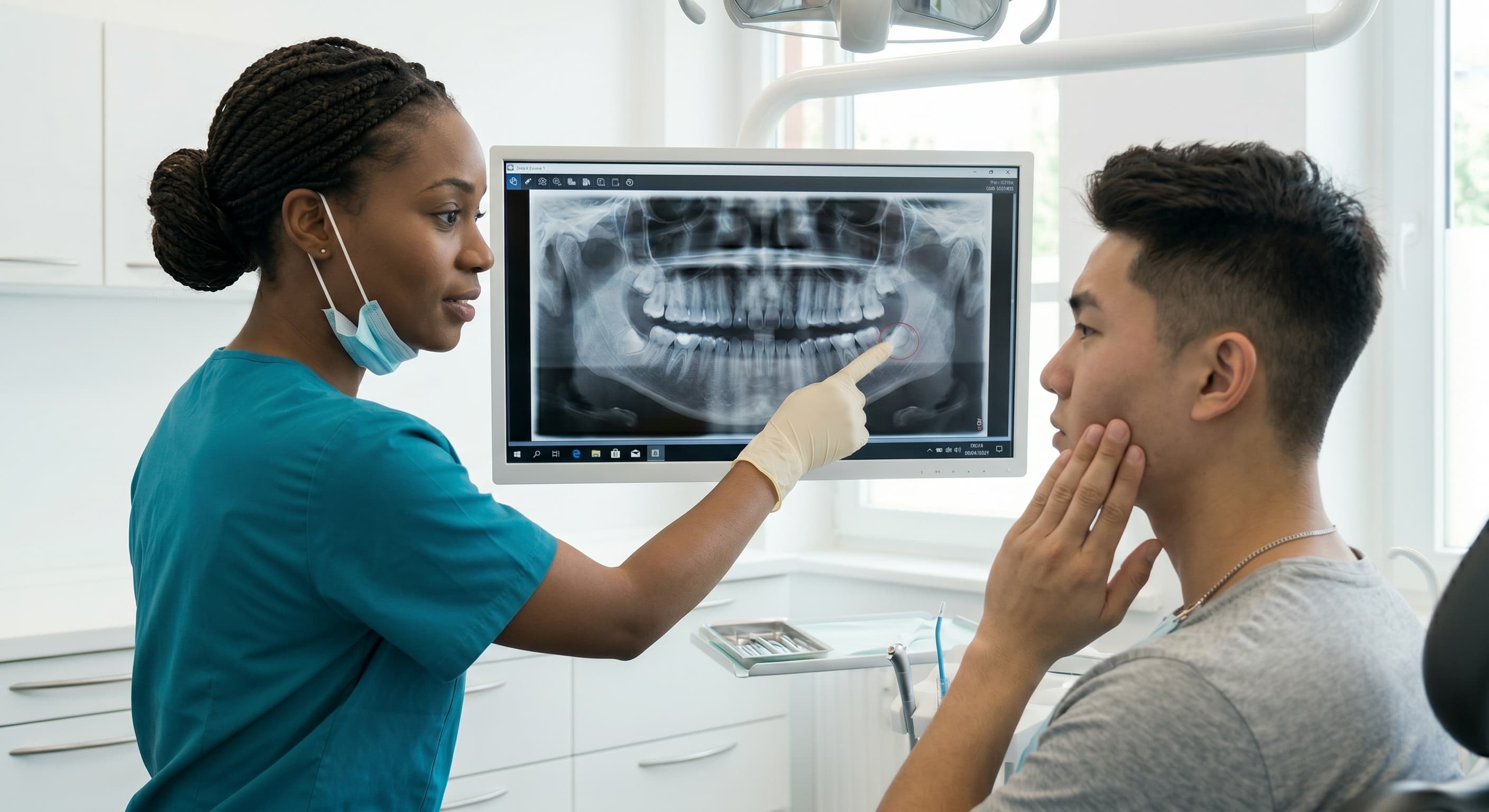
Wisdom teeth removal is the most common oral surgery in the United States, with approximately 10 million third molars extracted annually according to the American Association of Oral and Maxillofacial Surgeons. Despite how routine the procedure is, the anxiety around it remains high because most patients don't know what actually happens. They've heard horror stories about swelling, dry socket, and being loopy on anesthesia. The reality is more predictable and more manageable than the stories suggest. This guide walks through every phase, from the consultation that determines whether your wisdom teeth need to come out, through the procedure itself, to the day-by-day recovery, so you know exactly what to expect at Willow Family Dentistry in Wylie, TX.
Why Do Wisdom Teeth Need to Be Removed?
Not every wisdom tooth needs extraction. Dr. Esther Jeong evaluates each case individually using iCAT 3D imaging that shows the exact position, angulation, and relationship of each third molar to the adjacent teeth, nerves, and sinus. The ADA recommends removal when one or more of the following conditions are present.
Impaction is the most common reason. An impacted wisdom tooth is trapped beneath the gum, in the bone, or angled against the adjacent second molar because there isn't enough room in the jaw for it to erupt normally. Impacted teeth can be partially erupted (partially visible through the gum, creating a bacterial trap) or fully impacted (completely buried in bone). Partial impaction is particularly problematic because the flap of gum tissue over the tooth (operculum) traps food and bacteria, leading to recurrent infections called pericoronitis.
Crowding and damage to adjacent teeth. A wisdom tooth angled toward the second molar can press against its root, causing resorption (root damage) or shifting that affects the alignment of the entire arch. The Mayo Clinic notes that pressure from impacted wisdom teeth is a documented cause of second molar damage that requires additional treatment if not addressed.
Cyst or tumor formation. The sac surrounding an impacted wisdom tooth can fill with fluid and form a dentigerous cyst that destroys surrounding bone. Cysts are detected on X-ray or iCAT imaging before they cause symptoms. Left untreated, they expand and can damage adjacent teeth and nerves.
Recurrent infection or decay. A wisdom tooth that has partially erupted into a position that can't be cleaned effectively will develop cavities and gum infections repeatedly. Restoring a wisdom tooth with a filling or crown is rarely practical because access for the dentist's instruments is severely limited that far back in the mouth.
Wisdom teeth that are fully erupted, properly positioned, functional, cavity-free, and cleanable are not candidates for removal. Dr. Jeong monitors these teeth at regular exams and recommends extraction only if problems develop.
What Happens at the Wisdom Teeth Consultation?
The consultation determines whether extraction is needed, how complex the surgery will be, and which sedation approach matches your case and comfort level.
Dr. Jeong takes an iCAT 3D scan that shows each wisdom tooth's position in three dimensions: its angulation (vertical, horizontal, mesioangular, distoangular), its depth in the bone (partially erupted vs fully impacted), its proximity to the inferior alveolar nerve (the nerve that provides sensation to the lower lip and chin), and its relationship to the maxillary sinus (for upper wisdom teeth). This imaging data determines the surgical approach and allows Dr. Jeong to discuss specific risks for your anatomy before the procedure.
She reviews the imaging with you on a large monitor, explaining which teeth need removal and why, what the surgical approach will be for each tooth, and what risks are specific to your case. The most common risk discussed is temporary numbness of the lower lip or tongue from proximity to the inferior alveolar nerve, which occurs in approximately 1-5% of lower wisdom tooth extractions and resolves in the vast majority of cases within weeks to months. According to clinical data, the iCAT scan allows the surgeon to plan the extraction path to minimize nerve contact.
Sedation options are discussed based on the number of teeth being removed, the complexity of the impaction, and your anxiety level.
| Sedation Level | What You Experience | Best For | Cost |
|---|---|---|---|
| Local Anesthesia Only | Fully awake, area completely numb, feel pressure but no pain | Simple erupted extractions (1-2 teeth) | Included |
| Nitrous Oxide + Local | Relaxed, slightly giggly, fully conscious, no memory gaps | Mild anxiety, 1-2 teeth, shorter procedures | $50-$150 |
| IV Sedation + Local | Twilight state, minimal awareness, little to no memory of procedure | All 4 wisdom teeth, impacted teeth, significant anxiety | $300-$600 |
Most patients having all four wisdom teeth removed choose IV sedation because the combination of multiple extractions and the surgical time (45-90 minutes for all four) makes the twilight state significantly more comfortable than being awake. The procedure is the same regardless of sedation level. The sedation determines what you experience, not what happens clinically.
Related: Full comparison of sedation options. → Nitrous Oxide vs IV Sedation: Which Is Right for You?
What Happens During Wisdom Teeth Removal?
The surgical technique depends on whether the tooth is erupted, partially impacted, or fully impacted.
For erupted wisdom teeth that are above the gumline and have accessible roots, the extraction is similar to any other tooth extraction. Dr. Jeong numbs the area, loosens the tooth with an elevator instrument, and removes it with forceps. This takes 5-15 minutes per tooth.
For partially or fully impacted teeth, a surgical approach is required. Dr. Jeong makes a small incision in the gum tissue to expose the tooth and surrounding bone. If bone covers the tooth, she removes a thin layer of bone to access the crown. For teeth positioned at difficult angles or teeth with curved roots, she sections (cuts) the tooth into 2-3 pieces and removes each piece separately rather than trying to extract it whole. Sectioning reduces the force required and minimizes the size of the bone opening. According to the ADA, sectioning impacted wisdom teeth is standard practice that reduces surgical trauma and improves healing outcomes.
After the tooth is removed, Dr. Jeong cleans the socket, places any necessary bone graft material (when the extraction site is near the second molar and bone preservation is important for future stability), and closes the incision with dissolvable sutures. The entire process takes 20-30 minutes per impacted tooth. All four wisdom teeth, including two impacted, typically take 45-90 minutes from first incision to final suture.
Under IV sedation, patients remember nothing or almost nothing of the procedure. The most common report afterward: "Wait, it's done? I just fell asleep."
Day-by-Day Recovery After Wisdom Teeth Removal
Recovery follows a predictable timeline. Understanding what's normal at each stage prevents the panic that drives unnecessary emergency calls and ER visits.
Day of surgery (Day 0): You leave the office with gauze pads over the extraction sites. Bite firmly for 30-45 minutes to establish a blood clot. Numbness from local anesthesia lasts 2-4 hours. Swelling hasn't started yet. Start your prescribed medication (ibuprofen 600mg every 6 hours and any prescribed antibiotics) before the numbness wears off. Eat only cold, soft foods: ice cream, yogurt, smoothies (no straws, the suction can dislodge the clot). Keep your head elevated. Apply ice packs to the outside of your cheeks (20 minutes on, 20 minutes off) to slow the swelling that's coming.
Days 1-2: Swelling begins and increases. This is normal inflammation, not infection. Both cheeks may swell visibly, reaching peak fullness around 48-72 hours. Moderate soreness managed by ibuprofen. You may see minor oozing (pink saliva) for the first 24 hours. Continue ice packs. Continue soft, cool foods. Don't rinse, spit forcefully, or use straws. Don't brush the surgical sites. Sleep elevated.
Days 3-4: Swelling peaks. This is the worst it will look. Bruising may appear on the cheeks or jawline (more common with IV sedation where the jaw is open longer). The soreness shifts from constant to intermittent. You can begin gentle warm saltwater rinses (1/2 teaspoon salt in 8 ounces warm water, let it flow out of your mouth rather than spitting forcefully). Transition to warm soft foods: soup, mashed potatoes, scrambled eggs, pasta. The Mayo Clinic identifies days 3-4 as the peak-and-turn phase where symptoms stop worsening and begin improving.
Days 5-7: The turning point. Swelling recedes noticeably each day. Soreness fades to mild awareness. You can stop ibuprofen and take it only as needed. Resume gentle brushing around (not on) the extraction sites. Expand your diet to include most soft foods. The dissolvable sutures begin loosening. You'll feel significantly better by day 7 than you did on day 3.
Days 7-14: Most patients feel functionally normal by day 7-10. Mild stiffness when opening wide may persist. The extraction sites are closing with new tissue. Resume normal brushing everywhere. Return to a normal diet, avoiding hard, sharp, and very crunchy foods directly over the extraction sites for another week. Sutures dissolve or are removed at the 1-week follow-up.
Weeks 3-6: Complete soft tissue closure. The bone beneath remodels and fills in over 3-6 months, but you won't feel or notice this process. You're fully healed for practical purposes by week 3.
Related: Cavity pain before your extraction? → Cavity Pain Relief: Manage It Until You See Your Dentist
What Is Dry Socket and How Do You Prevent It?
Dry socket (alveolar osteitis) is the most feared complication and affects approximately 2-5% of routine extractions and 15-25% of impacted lower wisdom teeth extractions. It occurs when the blood clot that forms in the extraction socket is dislodged or dissolves before the wound heals, exposing the underlying bone to air, food, and bacteria. The result: intense, throbbing pain that starts 3-5 days after surgery and radiates to the ear. It's unmistakable.
Prevention is straightforward. Don't smoke for at least 72 hours (smoking is the #1 risk factor, increasing dry socket risk 3-4 times). Don't use straws for 7 days (the suction pulls on the clot). Don't rinse or spit forcefully for 48 hours. Don't touch the extraction site with your tongue or fingers. Don't eat hard, crunchy, or sharp foods near the site. According to the AAOMS, women on oral contraceptives have slightly elevated dry socket risk due to estrogen's effect on clot stability. Scheduling extraction during the low-estrogen phase of the cycle (days 23-28) may reduce this risk.
If dry socket occurs, Dr. Jeong treats it in-office by gently irrigating the socket and placing a medicated dressing (eugenol-based) that provides rapid pain relief within hours. The dressing is replaced every 2-3 days until the socket begins healing on its own. Dry socket delays recovery by 7-10 days but does not cause long-term complications.
How Much Does Wisdom Teeth Removal Cost in Wylie, TX?
| Extraction Type | Cost per Tooth | All 4 Teeth |
|---|---|---|
| Simple (erupted) | $150-$350 | $600-$1,400 |
| Surgical (soft tissue impaction) | $250-$500 | $1,000-$2,000 |
| Surgical (bony impaction) | $350-$650 | $1,400-$2,600 |
| IV Sedation (add-on) | $300-$600 (flat fee, all teeth) | |
Most dental PPO plans cover wisdom tooth extraction under surgical or basic benefits at 50-80%. Insurance typically covers simple extractions more generously than surgical impactions. Dr. Jeong's team verifies your coverage before the procedure so you know your exact out-of-pocket. HSA and FSA accounts cover wisdom teeth removal as a qualified medical expense, reducing your effective cost by 20-30% through pre-tax savings.
Related: Anxious about the procedure? → Dentist for Anxious Patients in Wylie, TX
Wisdom teeth removal is the most common oral surgery for a reason: most jaws don't have room for four extra teeth, and the problems from leaving impacted wisdom teeth untreated (infection, cyst formation, damage to adjacent teeth) are more costly and more painful than the extraction itself. The procedure takes 45-90 minutes, recovery peaks at day 3-4 and resolves by day 7-10, and the experience under IV sedation is one most patients describe as "I slept through it." If your wisdom teeth are causing symptoms or Dr. Jeong has identified them on imaging as a developing problem, schedule the consultation at Willow Family Dentistry. She'll show you exactly what the iCAT reveals and give you a clear plan.
See Your Wisdom Teeth in 3D
Dr. Jeong uses iCAT 3D imaging to show you exactly where your wisdom teeth sit, whether they need to come out, and what the procedure involves. One consultation, complete clarity.
Request a Consultation →Questions about wisdom teeth?
Call (972) 881-0715 →Dr. Esther B. Jeong, DDS
DDS · Willow Family Dentistry
Wylie family dentist with 15+ years of experience providing gentle, judgment-free dental care.
Frequently Asked Questions
Was this article helpful?
You may also like



Have a dental question?
Schedule a consultation and get personalized answers from Dr. Jeong.
Call us
(972) 881-0715
Hours
Mon – Thu: 9am – 5pm
Fri: By Appointment
Location
1125 W FM 544, Wylie
Emergency? Same-day appointments available.