Wisdom Teeth Removal Cost in Texas 2026: Insurance Guide
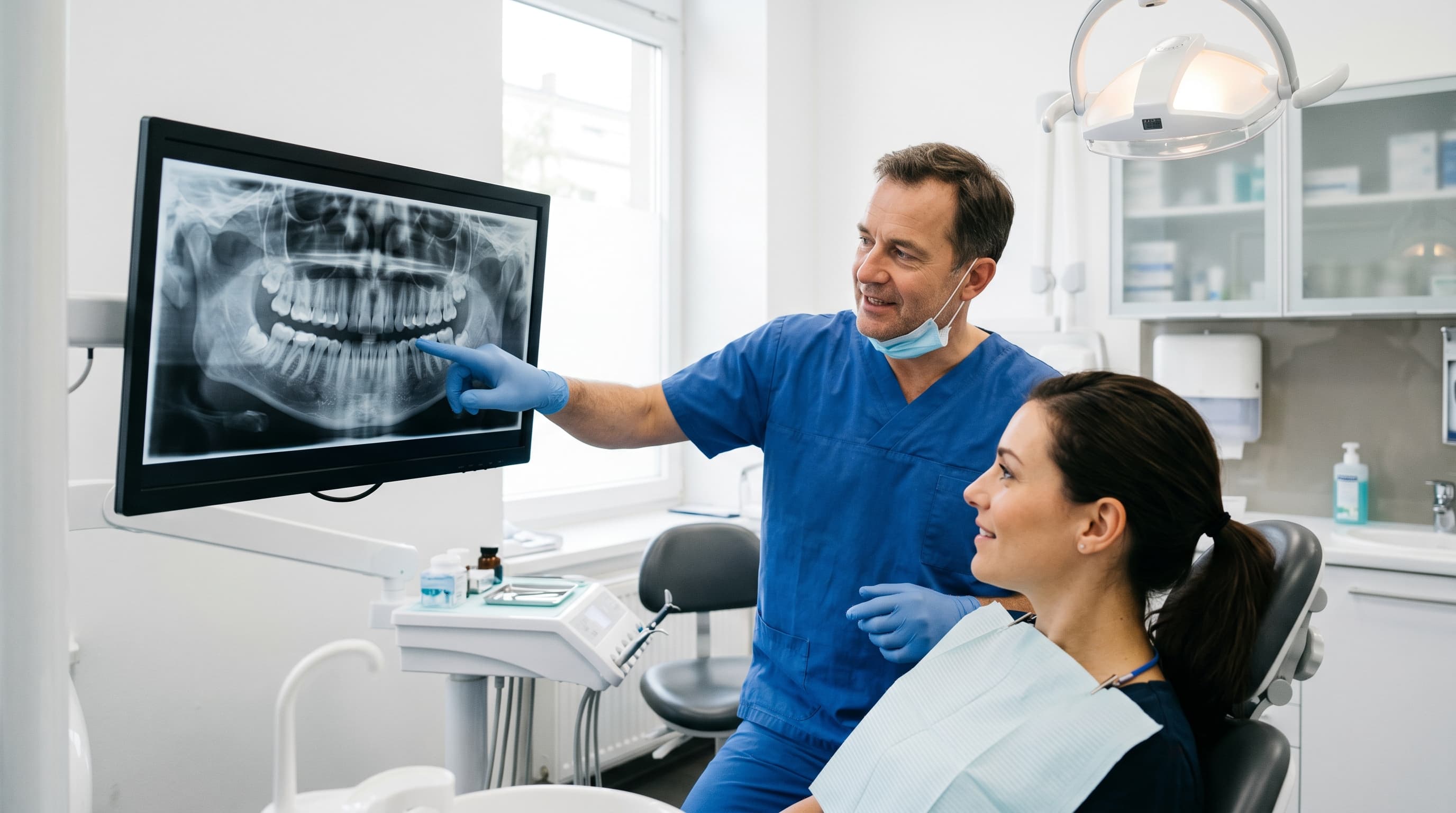
Wisdom teeth removal cost in Texas spans a wide range per tooth in 2026, depending on whether the extraction is simple or surgical. For all four wisdom teeth, the total before insurance can be significant, plus an additional fee for IV sedation if you choose it. Those ranges are wide because the cost is determined by impaction type, not by a flat "wisdom teeth" price. A fully erupted tooth that comes out with forceps in 10 minutes costs a fraction of a bony impaction that requires incision, bone removal, and sectioning. The AAOMS reports that impaction severity is the primary cost driver in wisdom tooth extraction, and most patients have a mix of impaction types across their four teeth.
Dr. Esther Jeong at Willow Family Dentistry in Wylie, TX provides a line-item cost breakdown at the consultation after the iCAT 3D scan reveals each tooth's exact position and impaction status. You know the cost per tooth, the sedation fee, and your insurance contribution before any surgery is scheduled. No estimates that balloon after the procedure. This guide breaks down the pricing so you can walk into the consultation informed.
For an exact figure on your own case, our emergency dental care in Wylie page has the number to call.
How Much Does Each Wisdom Tooth Cost to Remove?
Wisdom teeth removal cost per tooth ranges from budget-friendly for a simple erupted tooth to premium for a fully impacted one requiring bone removal. The exact price depends on extraction complexity, classified by CDT procedure codes that your insurance uses for reimbursement.
| Extraction Type | CDT Code | What's Involved | Cost per Tooth |
|---|---|---|---|
| Simple Erupted | D7140 | Fully visible, loosened with elevator, removed with forceps | Most budget-friendly |
| Soft Tissue Impaction | D7220 | Gum incision needed, tooth through bone but under gum | Budget-friendly to mid-range |
| Partial Bony Impaction | D7230 | Gum incision + bone removal to access partially buried tooth | Mid-range |
| Full Bony Impaction | D7240 | Gum incision + significant bone removal + tooth sectioning | Highest of the four types |
Most patients don't have four identical impactions. A typical case might include two partial bony impactions on the lower (where the jawbone is denser) and two soft tissue impactions on the upper (where the bone is thinner and teeth erupt more easily). The per-tooth cost varies accordingly.
Here's a common scenario: two lower partial bony impactions (typically the higher end of mid-range) plus two upper soft tissue impactions (typically budget-friendly to mid-range) make up the surgical fees. Add IV sedation, and the pre-insurance total lands in a moderate overall range. According to the ADA Health Policy Institute, this falls within the median range for all-four wisdom teeth extraction in the Texas market.
What Does Sedation Add to the Cost?
Sedation is the largest add-on to wisdom teeth removal cost, and the one most frequently left out of advertised prices. The extraction fees above include local anesthesia but not supplemental nitrous oxide or IV sedation, which most patients choose for wisdom teeth surgery.
| Sedation Type | Experience | Add-On Cost | Insurance Coverage |
|---|---|---|---|
| Local Only | Awake, numb, feel pressure | Included | Included in extraction fee |
| Nitrous Oxide | Relaxed, conscious, no memory gaps | Lower add-on cost | Rarely covered |
| IV Sedation | Twilight, minimal awareness, no memory | Higher add-on cost | Some plans cover partially under medical |
IV sedation is the most common choice for all-four extractions because 45-90 minutes of surgical work is substantially more comfortable in a twilight state. The fee is flat regardless of how many teeth are removed, which makes it more cost-effective per tooth when extracting all four simultaneously rather than splitting them across multiple appointments.
Related: Which sedation level is right for you? → Nitrous Oxide vs IV Sedation: Which Is Right?
How Does Insurance Cover Wisdom Teeth Removal in Texas?
Most dental PPO plans cover wisdom tooth extraction under surgical or basic services at 50-80%. The specifics depend on your plan tier, whether the extraction is coded as simple or surgical, and one factor patients rarely anticipate: age.
Age matters for coverage. Many dental plans cover wisdom tooth extraction at higher rates for patients under 19 or under 26 (depending on the plan's definition of "dependent"). Some plans reduce coverage or exclude wisdom teeth extraction entirely for patients over a certain age, reasoning that the procedure should have been done earlier. According to the ADA, verifying age-related coverage limits before scheduling is essential because the difference between "covered at 80%" and "excluded due to age" can be substantial.
| Coverage Scenario | Insurance Pays | Your Share |
|---|---|---|
| High coverage percentage, full annual max available | Most of the total | Smallest share |
| Moderate coverage percentage, full annual max available | About half | About half |
| Moderate coverage percentage, max already used elsewhere | Little to none | Most to all of the total |
| No dental insurance | None | Full total |
The annual maximum is the ceiling that limits coverage regardless of the percentage. If your plan covers surgical extractions at 80% but your annual max has already been partly used on other dental work this year, only the remaining balance is available for wisdom teeth regardless of the 80% calculation. This is why timing matters: scheduling wisdom teeth at the beginning of a benefit year when the annual max is full and untouched maximizes your insurance payout.
Medical insurance crossover applies in specific cases. If the wisdom teeth are being removed due to a medical condition (infection that's spread beyond the oral cavity, cyst or tumor requiring excision, or trauma), medical insurance may cover the surgical component. Dr. Jeong's billing team evaluates medical crossover for every surgical case. According to the Mayo Clinic, medical insurance claims for wisdom teeth are approved more frequently than patients expect when the documentation supports medical necessity.
How to Reduce Your Out-of-Pocket Cost
Five strategies consistently lower what Texas patients pay for wisdom teeth removal: timing the procedure early in the benefit year, using HSA or FSA funds, having all four removed at once, choosing in-network providers, and asking about payment plans. Each can meaningfully reduce the out-of-pocket total.
Schedule early in the benefit year. A full, unused annual maximum means your insurance covers the most it possibly can. Scheduling in January or February instead of November or December can mean the difference between a full annual maximum of coverage and a nearly exhausted one, if you've used your max on other dental work throughout the year.
Use HSA or FSA funds. Both accounts cover wisdom teeth removal as a qualified medical expense. At the 22% tax bracket, paying with FSA dollars saves roughly 22% in taxes, meaningfully lowering your effective cost. If you know wisdom teeth are coming, elect enough FSA dollars during open enrollment to cover the anticipated out-of-pocket.
Have all four removed at once. The IV sedation fee is the same whether you remove one tooth or four. Splitting extractions across two sessions doubles the sedation cost. Removing all four at once also means one recovery period instead of two. According to oral surgery data, single-session extraction of all four wisdom teeth is the standard recommendation when multiple teeth need removal.
Ask about dual coverage. If you're covered under two dental plans (your own and a parent's or spouse's), coordination of benefits may apply both plans to the procedure. The primary plan pays first, then the secondary plan covers a portion of the remaining balance.
Take advantage of in-office payment plans. Willow offers flexible financing that spreads your out-of-pocket over several months without third-party interest charges. CareCredit with 0% promotional financing is also available for larger balances.
Related: Maximize every benefit dollar. → How to Use Your HSA or FSA for Dental Work
How Does Willow's Pricing Compare?
Corporate dental chains and oral surgery centers advertise wisdom teeth removal starting at a very low headline price per tooth. That price quotes the simple erupted extraction code (D7140) and excludes the surgical fees that apply to the vast majority of wisdom teeth, plus the sedation fee, plus the consultation and imaging fees that some practices bill separately.
At Willow, the consultation includes iCAT 3D imaging at no separate charge. The per-tooth cost is based on the actual impaction type determined by that scan. The sedation fee is quoted upfront. And the total is the total, no add-ons, no surprise line items when you check out. According to the ADA, patients should compare total inclusive fees rather than advertised starting prices when evaluating wisdom teeth removal cost in Texas.
An additional advantage at Willow: Dr. Jeong handles the full case from imaging through surgery through follow-up. Corporate chains often have one provider do the consultation and a different provider perform the surgery. Continuity of care means the same dentist who planned the case based on your 3D imaging is the one holding the instruments. That matters for complex impactions near the nerve.
Get Your Exact Cost Before Surgery
Dr. Jeong provides a per-tooth cost breakdown after iCAT imaging shows the exact impaction type. Insurance verified. Sedation fee quoted upfront. No surprises.
Request a Consultation →Wisdom teeth removal cost in Texas is driven by impaction type, sedation choice, and insurance coverage. The per-tooth and all-four ranges are based on the CDT codes your insurance actually reimburses. Most patients with PPO coverage pay a modest fraction of the total out of pocket for all four teeth after insurance. HSA/FSA funds, benefit-year timing, and in-office payment plans bring the remaining cost into range for most budgets. The consultation at Willow Family Dentistry gives you every number, per tooth, before any commitment.
Results may vary. Please consult with Dr. Jeong for personalized treatment recommendations.
Know Your Exact Wisdom Teeth Cost
iCAT imaging reveals each tooth's impaction type. Insurance verified. Per-tooth pricing. Sedation options. One consultation, complete transparency.
Request a Consultation →Questions about wisdom teeth pricing or insurance?
Call (972) 881-0715 →Dr. Esther B. Jeong, DDS
DDS · Willow Family Dentistry
Wylie family dentist with 15+ years of experience providing gentle, judgment-free dental care.
Frequently Asked Questions
Was this article helpful?



Have a dental question?
Schedule a consultation and get personalized answers from Dr. Jeong.
Call us
(972) 881-0715
Hours
Mon – Thu: 9am – 5pm
Fri: By Appointment
Location
1125 W FM 544, Wylie
Emergency? Same-day appointments available.