What Happens If You Ignore a Cavity? A Timeline of Decay

What happens if you ignore a cavity genuinely follows a predictable path, moving through distinct stages rather than staying the same size indefinitely. You can learn more about dental fillings at Willow directly.
This guide walks through each stage of untreated decay, from the earliest changes to the most serious complications, and explains why waiting genuinely makes treatment more involved.
What Happens If You Ignore a Cavity? The Real Timeline
What happens if you genuinely ignore a cavity genuinely depends on which specific stage it's currently at, since decay genuinely progresses through the tooth in a fairly predictable overall sequence.
Each stage genuinely represents decay moving deeper into the tooth, from the outer enamel toward the sensitive inner pulp.
Only the earliest stage is genuinely reversible, which is exactly why catching decay early makes such a meaningful difference.
Understanding this progression genuinely helps explain why a small, painless spot can eventually become a much bigger problem.
Most patients genuinely find this timeline reassuring once they understand it, since it shows exactly where the window for a simple fix closes.
Stage 1: What Does Early Enamel Decay Actually Look Like?
Early decay genuinely begins as actual demineralization specifically, appearing as small white or chalky visible spots on the tooth's own outer visible surface with genuinely zero pain at all whatsoever.
| Stage | What's Happening |
|---|---|
| 1. Demineralization | White spots, fully reversible |
| 2. Enamel decay | Small cavity forms, usually no pain |
| 3. Dentin decay | Sensitivity typically begins |
This stage genuinely remains fully reversible with fluoride and improved oral hygiene, before any actual cavity has formed.
Regular checkups are genuinely the main way this stage gets caught, since it's rarely visible or noticeable without a professional exam.
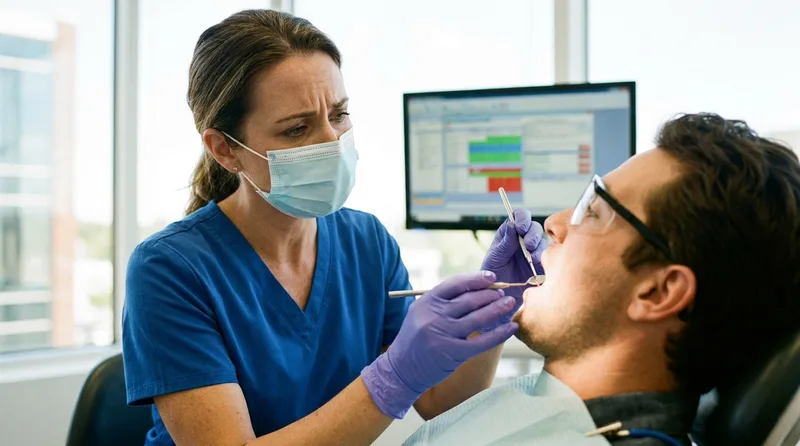
Roughly 20% of adults have some form of untreated tooth decay, according to Mayo Clinic oral health resources, and catching it at this earliest stage genuinely makes the biggest difference.
According to Mayo Clinic's resources on cavities, outer enamel decay genuinely doesn't usually cause pain or noticeable symptoms.
Noticed a Spot or Suspect a Cavity?
Catching decay early genuinely keeps treatment simple and affordable.
Contact Our Office →Stage 2: What Happens Once Decay Reaches the Dentin?
Once decay genuinely passes all the way through the enamel into the much softer dentin layer underneath it, the overall pace of progression noticeably genuinely picks up quite a bit.
- Softer material. Dentin breaks down faster than enamel
- Sensitivity begins. Hot, cold, or sweet triggers discomfort
- Larger filling needed. More tooth structure is affected
- Still treatable. A filling typically resolves this stage
A straightforward filling genuinely still resolves this stage well, though the restoration needed is larger than it would have been earlier.
Waiting past this stage genuinely means the next available fix involves considerably more of the tooth's natural structure.
This is genuinely the stage where most patients first notice something, even if it's just mild sensitivity to cold or sweets.
Stage 3: What Happens When Decay Reaches the Pulp?
Once decay genuinely reaches the pulp itself, the tooth's own inner nerve and entire blood supply system, the situation genuinely shifts from structural damage to a real active ongoing infection.
Nearly 92% of adults have had at least one cavity in their lifetime, according to ADA general patient resources, and most never progress this far with proper care.
A root canal genuinely becomes necessary at this stage to remove the infected tissue and save the tooth itself.
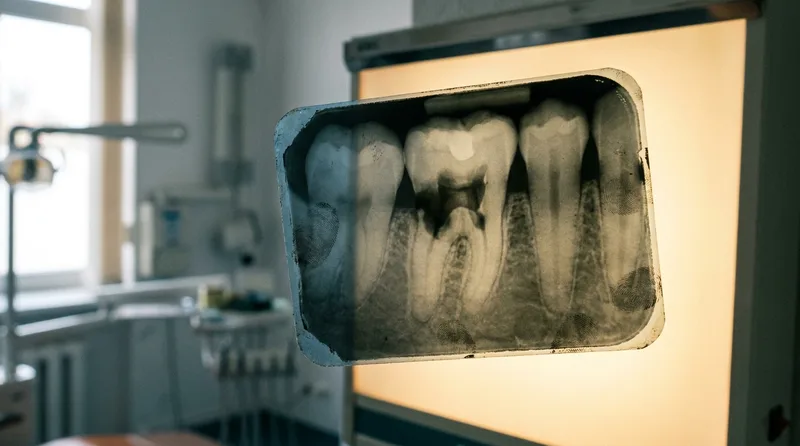
This is genuinely the point where many patients first experience noticeable, persistent pain rather than occasional sensitivity.
Stage 4: What Happens If a Pulp Infection Goes Untreated?
Left genuinely untreated for quite long enough indeed, a pulp infection genuinely spreads well beyond the root tip into the surrounding jaw bone itself, forming a quite painful overall abscess.
An abscess genuinely represents a serious infection, capable of causing facial swelling, fever, and in rare cases, spreading further into the body.
Our guide on cavity pain relief covers what to do if you're managing discomfort before reaching our office.
Swelling or fever alongside tooth pain genuinely warrants prompt attention rather than waiting for a routine appointment slot.
Why Is Pain Such an Unreliable Early Warning Sign?
Pain genuinely tends to show up quite late in this overall process, often only once decay has already genuinely reached the dentin stage or even the pulp stage itself quite specifically.
This genuinely means relying on pain alone to decide when to see a dentist can allow significant damage to occur unnoticed.
Regular checkups genuinely remain the most reliable way to catch decay before it reaches a painful, more involved stage.
Nearly 36% of Americans report some level of dental anxiety, according to ADA general patient resources, and understanding this timeline genuinely helps make the case for not avoiding routine visits.
Our guide on identifying a black spot on a tooth covers a visual sign worth checking even without any pain.
Untreated decay genuinely comes down to this: the problem doesn't stay the same, it grows. Results may vary. Please consult with Dr. Jeong for personalized treatment recommendations.
If you suspect decay, whether or not it hurts, our team is happy to take a look.
- Schedule an exam at the first sign of a spot or sensitivity
- Don't wait for pain to decide it's worth checking
- Treat early stages while a simple filling still resolves it
- Seek prompt care for any swelling or persistent pain
Don't Wait on a Cavity
Dr. Jeong can evaluate any concern before it becomes a bigger problem.
Contact Our Office →Dr. Esther B. Jeong, DDS
DDS · Willow Family Dentistry
Wylie family dentist with 15+ years of experience providing gentle, judgment-free dental care.
Frequently Asked Questions
Was this article helpful?
You may also like


Have a dental question?
Schedule a consultation and get personalized answers from Dr. Jeong.
Call us
(972) 881-0715
Hours
Mon – Thu: 9am – 5pm
Fri: By Appointment
Location
1125 W FM 544, Wylie
Emergency? Same-day appointments available.