Dental Bonding vs Veneers: Which Is Right for You? | Wylie
Dental bonding vs veneers is the most common decision patients face when they want to fix chipped, stained, or uneven teeth. Both improve your smile. Both are done in a dental chair. But they differ significantly in cost, durability, reversibility, and the types of problems they solve best. Choosing the wrong one means either overpaying for a minor fix or underpaying for a result that won't last.
At Willow Family Dentistry in Wylie, TX, Dr. Esther Jeong helps patients navigate this decision by matching the treatment to the problem, the budget, and the long-term goal. This guide covers everything you need to know to make that call with confidence.
What Is the Difference Between Dental Bonding and Veneers?
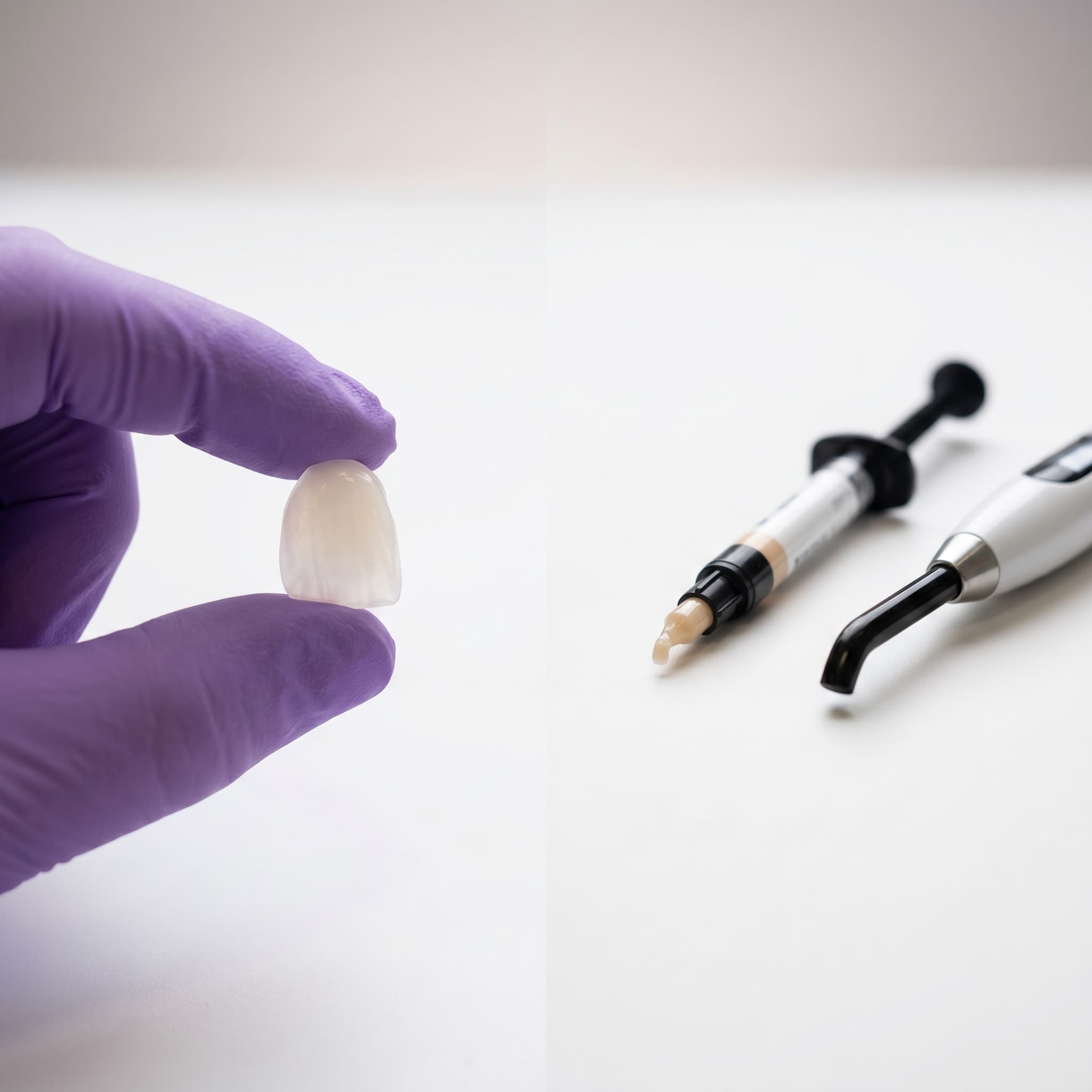
Dental bonding vs veneers comes down to material, process, and scope. Bonding uses composite resin (the same tooth-colored material used in modern fillings) applied directly to the tooth and shaped by hand. Veneers are thin shells of porcelain or pressed ceramic fabricated in a dental lab and permanently cemented to the front surface of the tooth.
Bonding is done in a single visit. Dr. Jeong etches the tooth surface, applies the resin, sculpts it to the right shape, and hardens it with a curing light. Start to finish: 30-60 minutes per tooth. No lab. No temporaries. You walk out with the finished result.
Veneers take two appointments. At the first, Dr. Jeong prepares the tooth by removing a thin layer of enamel (about 0.5mm), takes impressions, and places a temporary veneer. The lab fabricates the custom porcelain shell over 2-3 weeks. At the second visit, the temporary comes off and the permanent veneer is bonded in place. The result is a natural-looking, highly durable restoration that resists staining far better than composite.
How Do Bonding and Veneers Compare on Cost?
Cost is where the two options diverge most dramatically, and it's often the deciding factor for patients weighing dental bonding vs veneers.
Dental bonding typically costs $300-$600 per tooth. It's one of the most affordable cosmetic procedures available. No lab fees, no temporaries, no second appointment. The cost reflects the simplicity of the process: one visit, one material, one dentist.
Porcelain veneers cost $900-$2,500 per tooth depending on the material and lab. A full set of 6-8 veneers for a smile makeover can run $6,000-$20,000. That's a significant investment, and it reflects the custom lab fabrication, the material quality, and the longer lifespan of porcelain.
The ADA classifies both as cosmetic procedures, which means most dental insurance plans don't cover them. Some plans cover bonding when it's restoring a chipped or broken tooth (functional rather than purely cosmetic), so it's worth checking. Dr. Jeong's team verifies your benefits before treatment.
| Feature | Dental Bonding | Porcelain Veneers |
|---|---|---|
| Cost Per Tooth | $300-$600 | $900-$2,500 |
| Lifespan | 4-8 years | 10-15+ years |
| Appointments | 1 visit (30-60 min per tooth) | 2 visits over 2-3 weeks |
| Reversible? | Yes (minimal enamel removed) | No (enamel permanently reduced) |
| Stain Resistance | Moderate (can stain over time) | Excellent (porcelain resists staining) |
| Strength | Good for low-stress areas | Excellent for all visible teeth |
| Best For | Small chips, minor gaps, single-tooth fixes | Full smile makeovers, severe discoloration, shape changes |
Related: Considering a broader cosmetic transformation? → Smile Makeover Cost: Process and Results in Wylie TX
How Long Does Each Option Last?
Lifespan is where veneers clearly outperform bonding, and it's the factor that changes the cost-per-year math.
Dental bonding lasts 4-8 years on average. Composite resin is softer than porcelain and more susceptible to chipping, staining, and wear. Patients who drink a lot of coffee or red wine may notice discoloration within 2-3 years. Patients who bite their nails, chew ice, or use their front teeth to tear open packaging chip bonding faster. When bonding fails, it's usually a straightforward repair or replacement in a single visit.
Porcelain veneers last 10-15 years on average, and some last 20 years or more with careful maintenance. The ADA notes that porcelain is highly resistant to staining, which means your veneers look as good at year 8 as they did at year 1. Porcelain can still chip under excessive force (biting hard objects, grinding), but it handles normal daily use far better than composite.
Here's the cost-per-year comparison that matters. A $400 bonding that lasts 5 years costs $80 per year. A $1,500 veneer that lasts 12 years costs $125 per year. The veneer is more expensive per year, but if you factor in the 2-3 bonding replacements you'd need over that same 12-year span ($1,200 total), the gap narrows significantly. For patients who want a long-term result and are willing to invest upfront, veneers often provide better value over time.
Is Bonding Reversible and Why Does That Matter?
This is one of the most important differences between dental bonding vs veneers, and it rarely gets the attention it deserves. Bonding is essentially reversible. Veneers are not.
When Dr. Jeong places bonding, she etches the enamel surface lightly with a mild acid to help the resin adhere, but she doesn't remove significant tooth structure. If you decide years later that you want the bonding removed or replaced with a veneer, the underlying tooth is still intact. You haven't committed to a lifetime of restorations.
Veneers require removing approximately 0.5mm of enamel from the front of the tooth to make room for the porcelain shell. That enamel doesn't grow back. Once it's gone, the tooth will always need a veneer or crown to protect it. If a veneer chips or reaches the end of its lifespan, you replace it with another veneer, not bare tooth. That's a permanent commitment, and patients should understand it before saying yes.
For younger patients in their 20s, bonding can be the smarter first step. Fix the cosmetic issue now with a reversible option, and consider veneers later if your goals change or you want a longer-lasting result. Dr. Jeong discusses the reversibility factor with every cosmetic patient because it affects your options for decades to come.
Not Sure Which Option Fits Your Situation?
Dr. Jeong will evaluate your teeth, discuss your goals, and recommend the option that gives you the best result for your budget and timeline.
Request an Appointment →Which Cosmetic Problems Does Each One Solve Best?
The best choice depends on what you're trying to fix, and how dramatically you want to change your smile. Bonding and veneers excel at different things.
Bonding Works Best For
Small chips on the edge of a front tooth. Minor gaps between teeth (1-2mm closures). A single tooth that's slightly shorter or uneven compared to its neighbors. Mild discoloration on one or two teeth that doesn't respond to professional whitening. And covering exposed root surfaces where gum recession has occurred.
These are targeted, single-tooth fixes where the surrounding teeth look fine and you just need one spot corrected. Bonding handles these efficiently and affordably.
Veneers Work Best For
A full smile transformation where you want to change the color, shape, and alignment of multiple teeth at once. Severe intrinsic staining (like tetracycline stains) that whitening can't touch. Teeth that are significantly worn down, undersized, or irregularly shaped. Moderate crowding or spacing that you want corrected without orthodontics. And patients who want a uniform, highly polished result across their entire smile line.
The distinction is scope. Bonding is a touch-up tool. Veneers are a makeover tool. Using bonding for a full-smile transformation typically produces an uneven result because composite doesn't match porcelain's translucency, color stability, or polish retention across multiple teeth. Using veneers on a single small chip is overkill.
Related: Whitening might solve the problem without any restoration. → Teeth Whitening Wylie TX: Professional vs At-Home Guide
How Does Dr. Jeong Help You Choose?
The decision between dental bonding vs veneers isn't one you should make from a website. It requires looking at your specific teeth, understanding your goals, and factoring in your budget. That's what the cosmetic consultation at Willow Family Dentistry is for.
Dr. Jeong starts by examining the teeth you want to improve. She looks at the enamel condition, the bite, the color of the surrounding teeth, and the scope of the change you're after. Then she talks through the realistic options. Sometimes patients come in expecting to need veneers and find out bonding will handle the issue for a fraction of the cost. Sometimes the opposite happens: a patient hoping for a quick bonding fix learns that the underlying problem (severe staining, significant shape irregularity) needs porcelain to look right.
She also considers your habits and lifestyle. A patient who grinds their teeth needs to know that both bonding and veneers are at higher risk of chipping without a night guard. A patient who drinks coffee daily should know that bonding will stain faster than porcelain. According to the American Academy of Cosmetic Dentistry, 99.7% of Americans believe a smile is an important social asset, so getting the right treatment matters both functionally and personally.
The consultation includes a clear cost estimate for both options so you can compare directly. No pressure to choose the more expensive one. No judgment if you go with bonding for budget reasons. Dr. Jeong's job is to give you accurate information and let you decide.
See What's Possible for Your Smile
Dr. Jeong evaluates your teeth, explains both options side by side, and gives you a clear cost estimate so you can choose with confidence.
Request an Appointment →Dental bonding vs veneers isn't about which is "better." It's about which is better for your specific teeth, your goals, and your budget right now. Bonding gives you a fast, affordable, reversible fix for minor issues. Veneers give you a durable, stain-resistant, transformative result for bigger changes. Both are legitimate cosmetic solutions, and both are available at Willow Family Dentistry.
The best next step? Schedule a cosmetic consultation with Dr. Jeong. She'll show you what each option would look like for your situation and let you make the call.
Ready to Improve Your Smile?
Schedule a cosmetic consultation with Dr. Jeong. She'll compare bonding and veneers for your specific teeth and give you honest recommendations.
Request an Appointment →Have questions about cosmetic options?
Call (972) 881-0715 →Dr. Esther B. Jeong, DDS
DDS · Willow Family Dentistry
Wylie family dentist with 15+ years of experience providing gentle, judgment-free dental care.
Frequently Asked Questions
Was this article helpful?


Have a dental question?
Schedule a consultation and get personalized answers from Dr. Jeong.
Call us
(972) 881-0715
Hours
Mon – Thu: 9am – 5pm
Fri: By Appointment
Location
1125 W FM 544, Wylie
Emergency? Same-day appointments available.