Scaling and Root Planing: What to Expect | Wylie TX
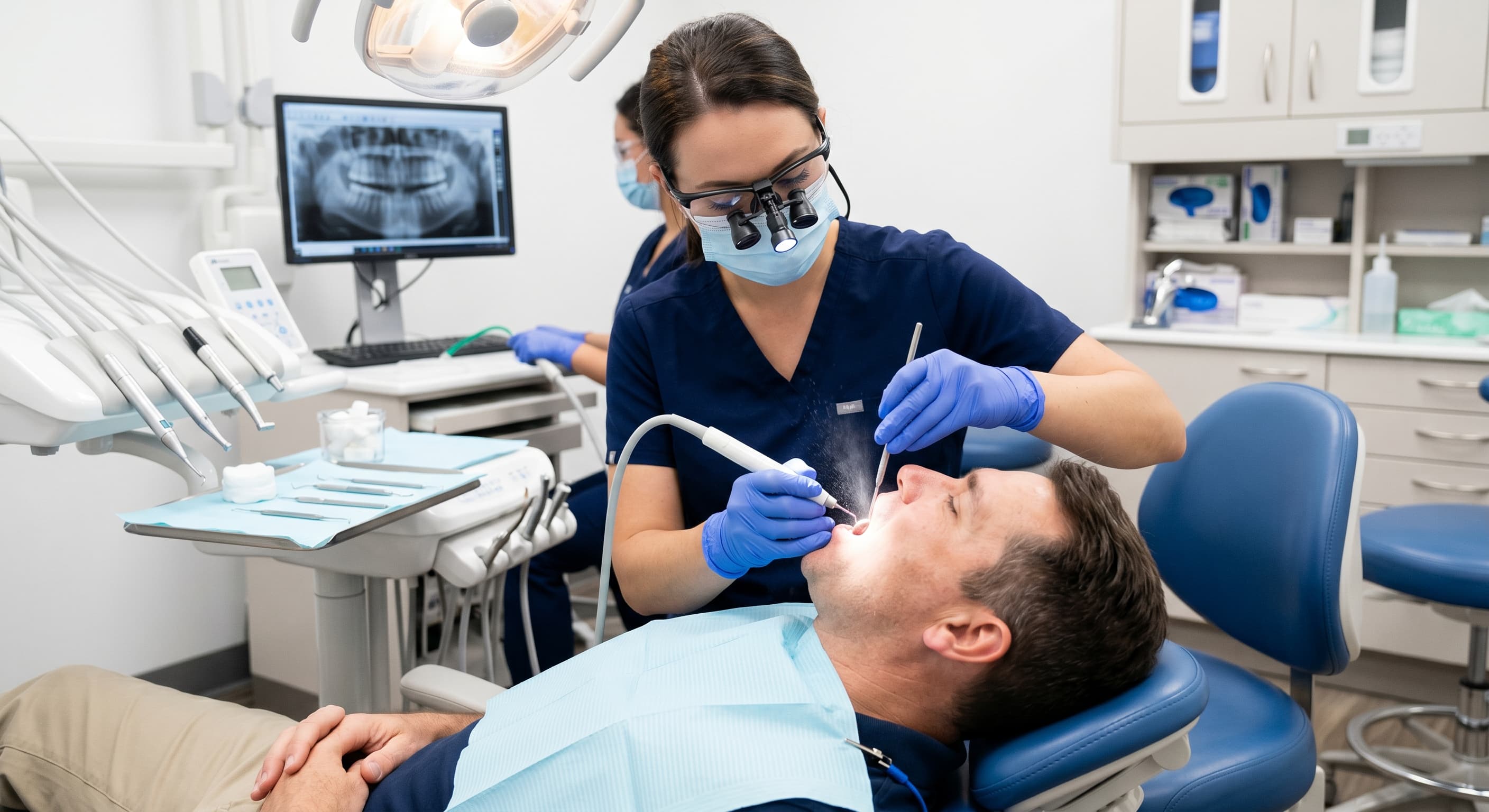
If your dentist just recommended a "deep cleaning," you're probably wondering what that actually means and whether it's really different from the cleaning you get twice a year. The short answer: yes, very different. According to the CDC, 42% of adults aged 30 and older have some form of periodontal disease, which means scaling and root planing is far more routine than most people think.
This guide breaks down exactly what happens during this procedure at Willow Family Dentistry in Wylie, TX. You'll learn what to expect at each stage, how long recovery takes, and why it's not nearly as intimidating as it sounds.
What Is Scaling and Root Planing?
Scaling and root planing is a non-surgical deep cleaning that removes bacteria, tartar, and toxins from below the gumline and smooths the root surfaces of your teeth so your gums can reattach. It's the first-line treatment for periodontitis, which is the stage of gum disease where pockets form between your teeth and gums.
Here's the short version of how gum disease progresses. Plaque builds up along your gumline. If it isn't removed, it hardens into calculus (tartar) that a regular toothbrush can't reach. Over time, that calculus pushes deeper below the gum tissue and creates pockets. Healthy gums sit tight against the tooth with pocket depths of 1-3 millimeters. When those pockets reach 4 millimeters or deeper, bacteria start colonizing the root surface, and your body's immune response begins breaking down the bone and tissue that hold your teeth in place.
That's where deep cleaning comes in. Dr. Esther Jeong measures your pocket depths during a routine exam using a small probe. If she finds pockets of 4mm or more with bleeding or signs of bone loss, she'll recommend treatment. It's not elective. Left alone, periodontitis can lead to tooth loss, and research from the American Academy of Periodontology has linked it to increased risk for heart disease, diabetes complications, and other systemic conditions.
How Is a Deep Cleaning Different From a Regular Cleaning?
A regular cleaning (prophylaxis) removes plaque and tartar from above the gumline and is preventive. Scaling and root planing goes below the gumline to treat active gum disease, and it's therapeutic. The two procedures serve completely different purposes, even though they both involve cleaning your teeth.
The confusion makes sense. Both happen in a dental chair, both involve instruments that scrape your teeth, and your insurance might even list them in the same category. But the similarities stop there. A prophylaxis takes 30-45 minutes, happens in a single visit, and doesn't require any numbing. A deep cleaning usually takes 1-2 hours per side of your mouth, may span two appointments, and involves local anesthetic to keep you comfortable.
| Feature | Regular Cleaning (Prophylaxis) | Deep Cleaning (SRP) |
|---|---|---|
| Purpose | Preventive maintenance | Treats active gum disease |
| Where It Cleans | Above the gumline | Above and below the gumline |
| Anesthetic | Not needed | Local anesthetic standard |
| Appointment Time | 30-45 minutes, one visit | 1-2 hours per side, often 2 visits |
| Pocket Depth | 1-3mm (healthy) | 4mm+ (disease present) |
| Frequency | Every 6 months | As needed, then maintenance every 3-4 months |
The key takeaway? A regular cleaning keeps healthy gums healthy. A deep cleaning treats gums that are already showing signs of disease. If Dr. Jeong recommends it, it's because a standard prophylaxis won't reach the bacteria causing the problem.
Related: Wondering why your gums bleed when you brush? That could be an early sign. → Why Do Gums Bleed When Brushing?
What Happens During the Procedure?
The treatment involves two steps done in the same appointment: scaling (removing tartar and bacteria from the tooth surface and below the gumline) and root planing (smoothing rough spots on the root where bacteria tend to collect). Most patients spend about 1-2 hours in the chair per quadrant of the mouth.
Dr. Jeong typically treats one side of the mouth per visit. So if you need all four quadrants treated, that's usually two appointments spaced a week or two apart. She starts by numbing the area with a local anesthetic. You won't feel the cleaning itself. Just pressure.
The first instrument you'll hear is an ultrasonic scaler. It vibrates at a high frequency and uses a water spray to break apart large deposits of tartar below the gumline. It's loud, but it's fast. After the ultrasonic does the heavy lifting, Dr. Jeong switches to hand instruments called curettes. These are smaller, more precise, and allow her to reach into deeper pockets and around the curved surfaces of each root.
What Does Root Planing Actually Do?
This is the part that separates a deep cleaning from just "scraping off tartar." The root surfaces of your teeth aren't smooth like the crown. They're covered in a layer called cementum, and when bacteria colonize below the gumline, toxins embed into that rough surface. Root planing smooths the cementum so your gum tissue can heal against a clean, even surface. Think of it like sanding a rough piece of wood before gluing it. The smoother the surface, the better the bond.
After both sides are complete, Dr. Jeong may place a localized antibiotic (like Arestin) directly into the deepest pockets. This slow-release medication continues fighting bacteria for days after the appointment. Not every patient needs it, but for pockets of 5mm or deeper, it can significantly improve outcomes.
Your Comfort Comes First
Every deep cleaning at Willow Family Dentistry includes local anesthetic so you stay comfortable throughout the entire procedure.
Learn About Periodontal Treatment →Does a Deep Cleaning Require Sedation?
Local anesthetic is standard for all deep cleaning procedures, and it's enough for most patients. But if you have dental anxiety or a strong gag reflex, Willow Family Dentistry also offers nitrous oxide and IV sedation to keep you relaxed.
This matters more than you might think. A 2024 study published in BMC Oral Health found that 36% of Americans experience dental anxiety, and 12% have extreme dental fear. For those patients, the anxiety around the procedure is often worse than the treatment itself. Sedation removes that barrier entirely.
Nitrous oxide (sometimes called laughing gas) is the lightest option. You breathe it through a small mask, feel calm within a few minutes, and it wears off almost immediately after the mask is removed. You can drive yourself home. It's a good fit for patients who feel nervous but don't need full sedation.
IV sedation is deeper. You'll be awake but in a twilight state where you likely won't remember the appointment afterward. It's ideal for patients with severe anxiety or those who need multiple quadrants treated in a single session. You'll need someone to drive you home, and you should plan to rest for the remainder of the day.
Dr. Jeong's approach is straightforward: she discusses your options before the appointment, recommends a level of sedation based on your comfort and treatment needs, and lets you make the final call. No judgment either way. The sedation options at Willow Family Dentistry exist so that fear never becomes the reason you skip treatment your gums actually need.
Related: Want the full breakdown of sedation levels? → Sedation Dentistry Wylie TX: Your Options Explained
What Does Recovery Look Like After Scaling and Root Planing?
Recovery is mild for most patients. You can expect some gum tenderness and tooth sensitivity for 3-7 days, with the first 48 hours being the most noticeable. Most people return to normal activities the same day.
The numbness from the local anesthetic wears off in 2-4 hours. Once it does, you may notice that your gums feel tender and slightly swollen. That's normal. It means your body is starting the healing process. Over-the-counter anti-inflammatory medication and warm salt water rinses (half a teaspoon of salt in eight ounces of warm water) are usually all you need.
What to Eat After a Deep Cleaning
Stick with soft, lukewarm foods for the first 24-48 hours. Yogurt, soup, scrambled eggs, oatmeal, and smoothies are all good choices. Avoid anything spicy, acidic, crunchy, or extremely hot for the first few days. Your gums are healing, and sharp or acidic foods can irritate the treatment areas.
Brushing and Flossing After Treatment
Don't skip brushing. Use a soft-bristled toothbrush and brush gently around the treated areas. You can resume flossing the day after the procedure, but be gentle near the gumline. If Dr. Jeong placed antibiotic microspheres in any pockets, she'll let you know which areas to avoid flossing for 7-10 days so the medication stays in place.
Dr. Jeong will schedule a follow-up visit about 4-6 weeks after your last treatment appointment. At that visit, she'll re-measure your pocket depths to see how much improvement the gums have made. Most patients see pocket depths decrease by 1-2 millimeters, and bleeding on probing drops significantly. That follow-up is how you'll know the treatment worked.
Concerned About Your Gum Health?
Dr. Jeong provides a thorough gum evaluation and explains all your options in language that makes sense. No lectures, no judgment.
Request an Appointment →How to Keep Your Gums Healthy After a Deep Cleaning
The treatment resets your gum health, but it doesn't make you immune to future problems. Keeping your gums healthy after scaling and root planing requires a shift in both your home care routine and your dental visit schedule. The good news is that it's straightforward once you know what to focus on.
For the first year after treatment, Dr. Jeong typically recommends periodontal maintenance visits every 3-4 months instead of the standard 6-month schedule. These aren't regular cleanings. They're targeted appointments where the hygienist measures pocket depths, removes any new buildup below the gumline, and catches early signs of relapse before they become a problem. Research from the ADA shows that patients who stick with a 3-month maintenance schedule are significantly less likely to experience disease progression.
At home, the basics matter more than ever. Brush twice a day with a soft-bristled or electric toothbrush, focusing on the gumline at a 45-degree angle. Floss daily. If you struggle with traditional floss, a water flosser can be a good alternative for reaching deeper pockets. And consider adding an antimicrobial mouthwash to your routine, especially in the first few months post-treatment.
Watch for warning signs that the disease may be returning: gums that bleed when you brush, persistent bad breath, gums pulling away from teeth, or teeth that feel loose. If any of those show up between maintenance visits, call the office. Catching a flare-up early is always easier than treating it after bone loss has progressed. According to the Mayo Clinic, periodontitis is the leading cause of tooth loss in adults, but it's manageable when caught and treated consistently.
Related: Gum disease doesn't just affect your mouth. → Gum Disease and Heart Disease: What Your Dentist Knows
Scaling and root planing isn't something to dread. It's the single most effective non-surgical treatment for stopping gum disease before it costs you a tooth. The procedure itself is comfortable with anesthetic and sedation options, recovery is mild, and the results show up in your pocket depth measurements within weeks.
If Dr. Jeong has recommended this treatment, or if you've been avoiding a dental visit because you suspect something is going on with your gums, the best next step is a straightforward one. Schedule a gum evaluation at Willow Family Dentistry and find out exactly where you stand. No guesswork. No pressure. Just answers.
Your Gums Deserve Attention
Schedule a gum health evaluation with Dr. Jeong. She'll measure your pockets, explain what she finds, and walk you through every option.
Request an Appointment →Questions before you book?
Call (972) 881-0715 →Dr. Esther B. Jeong, DDS
DDS · Willow Family Dentistry
Wylie family dentist with 15+ years of experience providing gentle, judgment-free dental care.
Frequently Asked Questions
Was this article helpful?
You may also like


Have a dental question?
Schedule a consultation and get personalized answers from Dr. Jeong.
Call us
(972) 881-0715
Hours
Mon – Thu: 9am – 5pm
Fri: By Appointment
Location
1125 W FM 544, Wylie
Emergency? Same-day appointments available.