How to Fix an Overbite: Treatment Options by Severity

An overbite is the most common bite problem in the United States. The American Association of Orthodontists estimates that about 70% of people have one. Most never need overbite correction.
What decides that is one measurement: how far the upper front teeth overlap the lower ones.
- 2-4 mm is normal. Leave it alone.
- More than 4 mm is a deep overbite, and so is any bite where the lower front teeth reach the roof of the mouth. That one needs treating.
Many deep overbites can still be corrected without brackets, with clear aligners in Wylie. Left alone, they wear the front teeth down faster, strain the jaw joint, and change how the smile looks.
Which treatment you need comes down to one question: is your overbite dental or skeletal?
Dr. Esther Jeong at Willow Family Dentistry in Wylie, TX answers that with iCAT 3D imaging and cephalometric analysis (a ceph, for short). She measures first, then recommends.
What's the Difference Between Dental and Skeletal Overbite?
A dental overbite means the front teeth are tipped the wrong way on jaws that fit well. A skeletal overbite means the jaw bones themselves do not line up. Your provider should answer this question first, because the label decides the whole treatment plan.
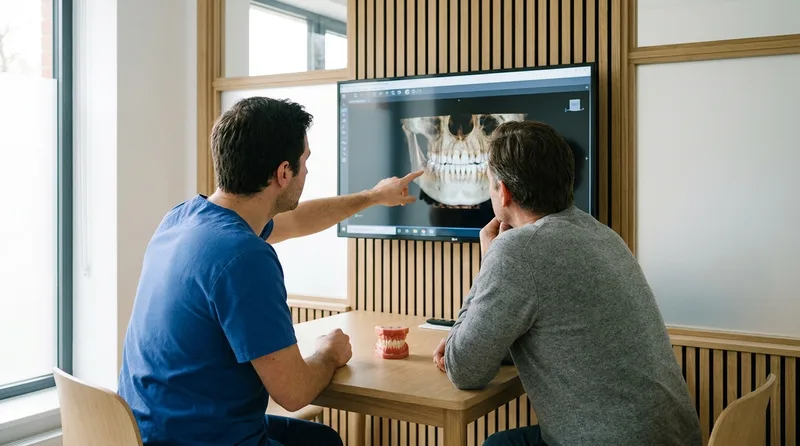
Dental overbite
- The upper front teeth tilt too far forward, or the lower front teeth tilt too far back.
- The jaws stay in good proportion. The teeth are simply pointed the wrong way.
- These cases respond well to Invisalign or braces alone, because the teeth move inside bone that already sits in the right place.
- The ADA notes that most overbites in the general population are dental rather than skeletal.
Skeletal overbite
- The upper jaw sits too far forward, the lower jaw sits too far back, or both.
- The teeth can be perfectly straight on each jaw and the bite still will not fit.
- Children with this pattern need growth help. Adults usually need braces plus jaw surgery.
- The Mayo Clinic notes that moving teeth alone leaves the jaw mismatch in place, which produces a compromised result.
Quick view:
- Cause: tilted teeth on jaws that fit vs jaw bones that do not match
- Profile: balanced face vs receded chin and a convex profile
- How common: most overbites vs less common and more complex
- Treatment: Invisalign or braces vs growth help in kids, surgery plus braces in adults
- Complexity: moderate vs high
Plenty of overbites are a mix of both. Dr. Jeong's ceph analysis measures how much each part contributes. A mostly dental case with a small jaw component can usually be corrected with orthodontics alone. A mostly skeletal case has to be treated at the jaw.
What Causes an Overbite?
Most overbites come from a mix of four things: genes, childhood habits, tooth loss, and jaw joint problems. Genes carry the most weight. Jaw size, tooth size, and the way the two jaws meet are inherited, so an overbite often runs in a family.
- Genetics. If one or both parents have an overbite, the child is far more likely to have one, whatever their habits. Skeletal overbites carry the strongest family link. Dental overbites are shaped more by habits and environment.
- Childhood habits. Thumb sucking, pacifier use past age 3, and tongue thrusting all push outward on the upper front teeth. Over years, that pressure tips them forward. The AAO recommends breaking a thumb-sucking habit before age 4.
- Tooth loss and drifting. When lower back teeth are missing and never replaced, the remaining teeth drift. The bite relationship changes, and the overbite can deepen. This shows up most often in adults who lost molars years ago.
- Jaw joint and growth problems. Anything that affects the jaw joint while a child is growing can change how the lower jaw develops. Childhood fractures of the jaw joint head, juvenile arthritis in the TMJ, and unexplained breakdown of the joint head (idiopathic condylar resorption) can all deepen an overbite by holding the lower jaw back.
What Are the Overbite Correction Options?
Overbite correction runs from clear aligners for mild dental cases to jaw surgery for severe skeletal ones. Dr. Jeong matches the plan to the type of overbite and its size in millimeters. Four treatment paths cover almost every case she sees.
The first three are handled in house as part of orthodontic care in Wylie. Surgical cases are planned here and co-managed with an oral surgeon.
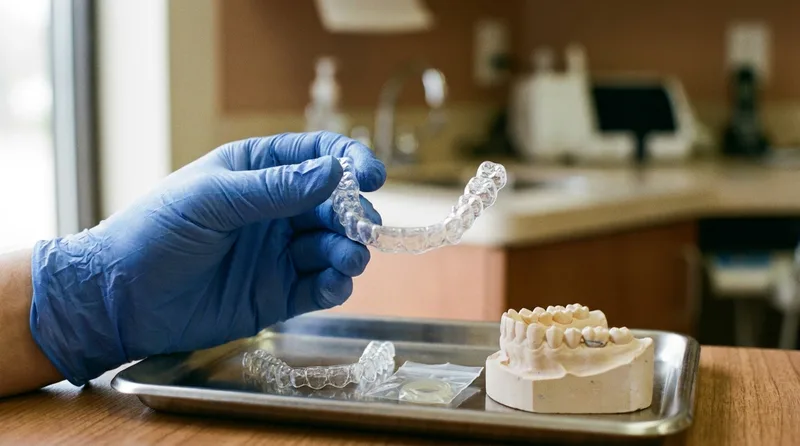
Invisalign for mild to moderate dental overbite
Invisalign can correct dental overbites up to 4-6 mm. It works three ways at once:
- The upper front teeth tip back.
- The lower front teeth tip forward.
- Bite ramps, small acrylic platforms built into the upper aligners, guide the lower jaw forward as treatment runs.
The ADA reports that modern Invisalign protocols, with precision attachments and elastics, match braces for the right cases.
What to expect at Willow Family Dentistry
- ClinCheck planning simulates the correction digitally, tooth by tooth, before the first aligner goes in.
- Treatment usually takes 12-18 months.
- Most cases also use elastics, the small rubber bands that connect the upper and lower aligners, because front-to-back correction needs that extra force.
Wondering if aligners can fix your overbite?
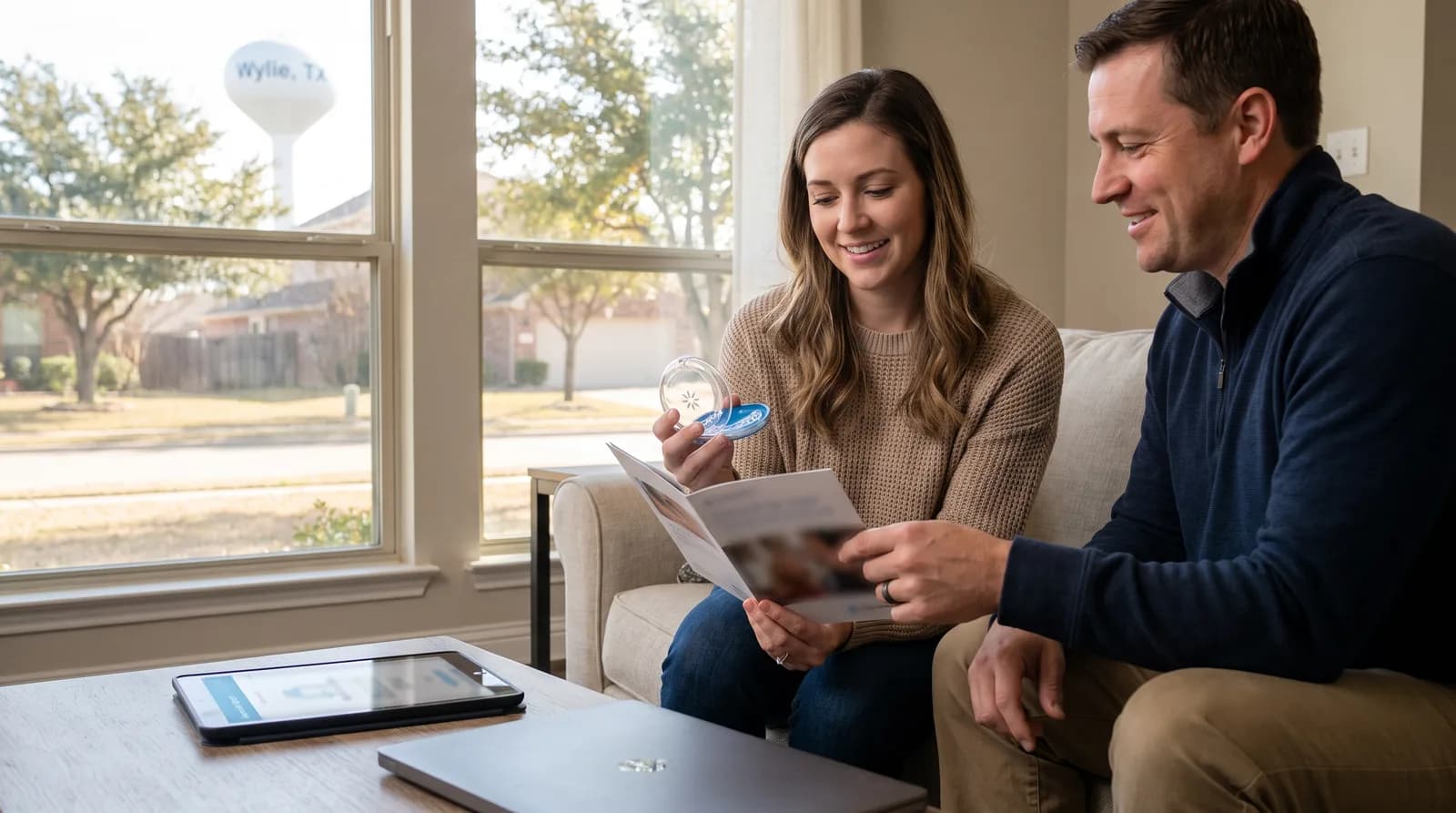
Most mild to moderate dental overbites can be corrected without brackets. See how clear aligners work at Willow Family Dentistry, from the first scan through to the ClinCheck preview of your finished bite.
Explore clear aligners in WylieTraditional braces for moderate to severe dental overbite
Braces remain the most versatile tool for a complex overbite, because they control every tooth in three dimensions at the same time.
- When the upper front teeth need to move a long way back, a premolar may need to be extracted to make room.
- Class II elastics, running from the upper canines to the lower molars, draw the upper arch back and the lower arch forward together.
- A moderate to severe dental overbite usually takes 18-24 months in braces.
- The results are predictable and well documented across decades of orthodontic practice.
Dr. Jeong recommends braces when the case involves extractions, difficult tooth movements, or a need for maximum control.
Growth help for children ages 7-12
When a skeletal overbite is caught while a child is still growing, functional appliances change the plan completely. A Herbst appliance, Twin Block, or MARA holds the lower jaw in a forward position.
- The lower jaw is encouraged to grow forward.
- Forward growth of the upper jaw gets restrained at the same time.
- The jaw mismatch gets corrected by the child's own growth instead of by surgery.
Why timing decides everything
- The AAO reports that growth help works best between ages 8 and 12, while the lower jaw is still actively growing.
- Once growth finishes, usually around 14-16 in girls and 16-18 in boys, these appliances no longer move the jaw.
- That is why the AAO recommends an orthodontic check by age 7. Catching a skeletal overbite early opens a window that later closes for good.
Jaw surgery plus orthodontics for severe skeletal overbite in adults
Adults with a severe skeletal overbite may need surgery. These are the cases past roughly 8-10 mm, usually with a receded chin and a convex profile, in a patient whose growth is finished.
The plan runs in three stages
- 12-18 months of braces to align the teeth on each jaw.
- Surgery to move the lower jaw forward, the upper jaw back, or both.
- 6-12 months of braces to settle the final bite.
What the surgery involves
- An oral and maxillofacial surgeon performs it in a hospital, under general anesthesia.
- Recovery takes about 4-6 weeks before normal activity and 3-6 months for full healing.
- The profile improves too, since the chin comes forward and the facial proportions balance out.
- It tends to hold up best over the long term, because the skeletal cause is removed rather than worked around.
| Overbite severity | Best treatment | Timeline | Cost range |
|---|---|---|---|
| Mild dental (4-6 mm) | Invisalign with elastics | 12-18 months | $4,500-$7,500 |
| Moderate dental (6-8 mm) | Braces or Invisalign with elastics | 18-24 months | $5,000-$8,000 |
| Skeletal, child still growing | Growth help appliance, then Phase 2 braces | 12-18 months Phase 1, plus 18-24 months Phase 2 | $3,000-$5,000 Phase 1, plus $4,000-$7,000 Phase 2 |
| Severe skeletal, adult | Braces plus jaw surgery | 2-3 years in total | $20,000-$40,000, surgery often covered by medical |
Related reading: Invisalign Cost in Wylie, TX: 2026 Pricing Breakdown covers what each aligner case actually costs.
What Happens If You Don't Correct an Overbite?
A mild overbite of 2-4 mm needs no treatment and causes no trouble. A deep overbite left alone tends to get worse over time. The damage builds slowly, over years rather than months, and it shows up in four main ways.
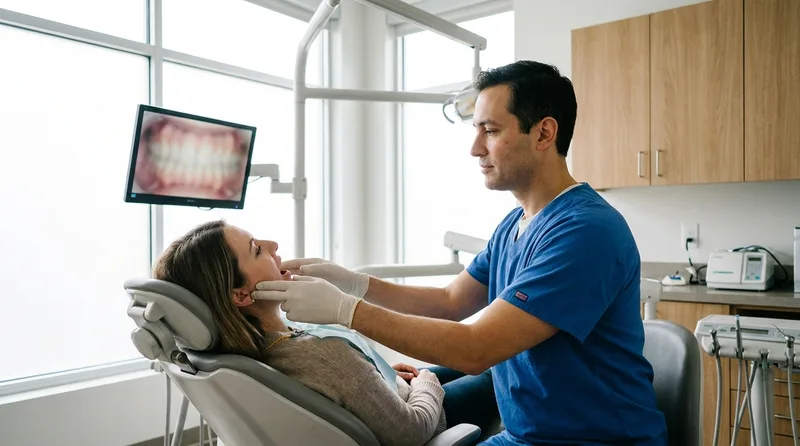
- Faster wear on the front teeth. In a deep overbite, the lower front teeth hit the back surfaces of the upper front teeth, or the palate itself, with every bite. Enamel on both surfaces wears faster than normal. Over decades, the front teeth grow shorter and thinner. The ADA lists overbite-related wear among the most common causes of front tooth fracture in adults over 40.
- Jaw joint trouble. A deep overbite pushes the lower jaw back and loads the joint in a way it was not built for. Clicking, discomfort, headaches, and limited opening follow. Patients with deep overbites report TMJ problems at much higher rates than patients with normal bites.
- Soft tissue damage. In severe cases, the lower front teeth bite into the gum tissue behind the upper front teeth. The result is chronic irritation, ulceration, and gum recession on the palate. It keeps coming back until the overbite itself is corrected.
- Speech and chewing. A severe overbite can affect S and Z sounds. Biting into food with the front teeth gets harder, because the lower teeth cannot reach it. And if the upper teeth stick out far enough to break the lip seal, mouth breathing can follow.
Related reading: TMJ Exercises That Actually Work covers the jaw joint side of a deep bite.
What Should You Expect During Overbite Correction?
Expect one planning visit, then three treatment phases, then retainers for the long run. Dr. Jeong starts with an iCAT scan, measures the overlap in millimeters, and runs a ceph analysis to separate the tooth part from the jaw part.
She then walks through the options that fit your anatomy. If Invisalign is the plan, you also see the ClinCheck simulation at that first visit.
- Align and level. Crowded and rotated teeth get straightened first, on both arches.
- Correct the overbite. This is the main event: pulling the upper front teeth back, opening the bite, wearing elastics, or some combination of the three. It is usually the longest phase, because front-to-back tooth movement is slower than simple straightening.
- Finish and detail. The bite gets fine-tuned for even contact and appearance.
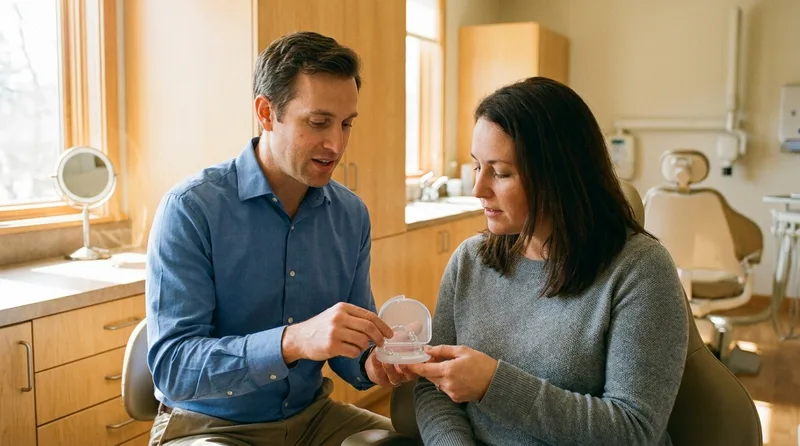
Then come the retainers, and they matter more here than in most cases. Deep overbites relapse more readily than other bite problems. The muscle and ligament forces that created the overbite are still there after treatment. Wearing a retainer at night keeps the lower jaw from settling back and the front teeth from overlapping again.
Ready to Evaluate Your Overbite?
Dr. Jeong uses iCAT 3D imaging and ceph analysis to sort your overbite into dental, skeletal, or mixed, then recommends the treatment that matches your own anatomy.
Request a ConsultationOverbite correction ranges from a straightforward Invisalign case to a combined surgical plan. What works for you comes down to the type and the severity, which is why the measuring step comes before any recommendation. If your overbite is affecting your bite, your wear patterns, your jaw comfort, or your confidence, book a consultation at Willow Family Dentistry. Dr. Jeong will measure exactly what you are dealing with and show you what correction looks like for your own teeth and jaws.
Results may vary. Please consult with Dr. Jeong for personalized treatment recommendations.
See Your Overbite Correction Before It Starts
Dr. Jeong uses iCAT imaging and ClinCheck simulation to show you the projected correction step by step, before treatment begins. One visit, a clear plan.
Request a ConsultationQuestions about overbite correction?
Call (972) 881-0715Dr. Esther B. Jeong, DDS
DDS · Willow Family Dentistry
Wylie family dentist with 15+ years of experience providing gentle, judgment-free dental care.
Frequently Asked Questions
Was this article helpful?
You may also like


Have a dental question?
Schedule a consultation and get personalized answers from Dr. Jeong.
Call us
(972) 881-0715
Hours
Mon – Thu: 9am – 5pm
Fri: By Appointment
Location
1125 W FM 544, Wylie
Emergency? Same-day appointments available.