IV Sedation Dentistry: How It Works and Who It's For
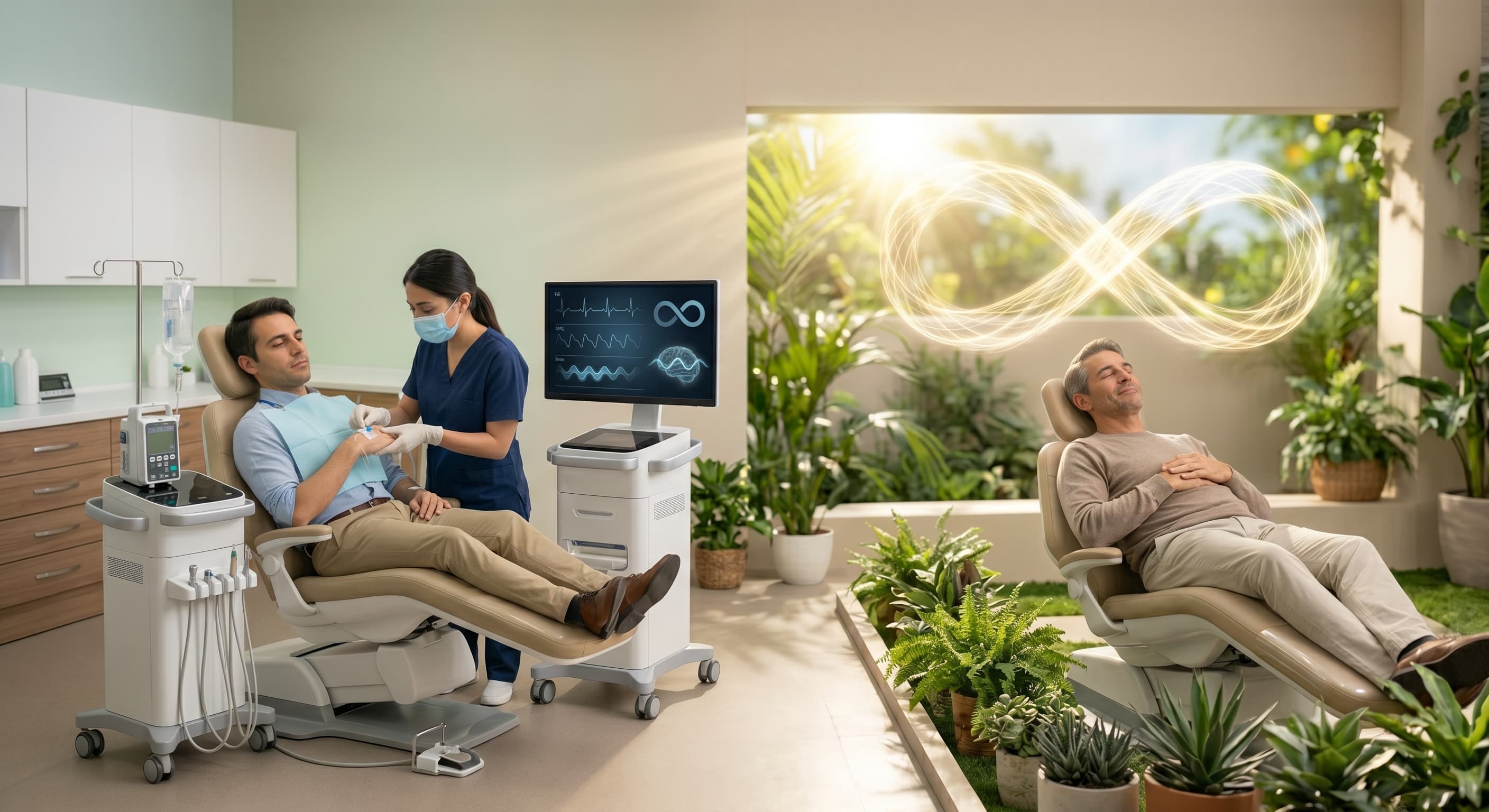
IV sedation dentistry is the reason some patients finally come back to the dentist after years of avoiding it. If you've ever cancelled an appointment because the anxiety was too much, or if you've sat in the parking lot trying to talk yourself into walking through the door, this article is for you. A 2024 study in BMC Oral Health found that 36% of Americans experience dental anxiety and 12% have extreme dental fear. Those numbers represent real people skipping real care, and IV sedation exists to change that.
At Willow Family Dentistry in Wylie, TX, Dr. Esther Jeong offers IV sedation as one of two sedation options alongside nitrous oxide. This guide covers exactly how it works, what the experience feels like, who qualifies, and what the safety data actually says.
IV sedation is one of two options Dr. Jeong offers. See IV sedation in Wylie.
What Is IV Sedation Dentistry?
IV sedation dentistry delivers anti-anxiety medication directly into your bloodstream through a small intravenous line, putting you in a deeply relaxed twilight state where you're conscious but unlikely to remember the procedure afterward. You breathe on your own, you can respond to verbal cues, but the anxiety and awareness of what's happening are essentially gone.
According to Healthline, IV sedation is one of the most commonly used forms of conscious sedation in dentistry. It's not general anesthesia, and that's an important distinction. According to the Mayo Clinic, general anesthesia renders you completely unconscious and requires a breathing tube, an anesthesiologist, and typically a hospital or surgical center setting. IV sedation is lighter. You're technically awake, your protective reflexes stay intact, and you don't need intubation. But from your perspective as the patient, the effect is similar: you close your eyes, and the next thing you know, the procedure is done.
It's also not the same as nitrous oxide. Nitrous oxide (laughing gas) takes the edge off but keeps you fully alert. You remember everything. You can drive yourself home. IV sedation goes much deeper. You won't remember most of the appointment, you'll need someone to drive you, and the relaxation effect lasts several hours after the procedure ends.
How Does IV Sedation Work During a Dental Appointment?
The sedation process starts before you arrive at the office and follows a specific sequence designed to keep you safe and comfortable from start to finish. Dr. Jeong's team walks you through every step ahead of time so there are no surprises on the day of your appointment.
Before Your Appointment
You'll receive pre-operative instructions a few days before the visit. Don't eat or drink anything for at least 6-8 hours prior to your appointment. Wear a short-sleeved shirt so the IV can be placed easily. Arrange for a responsible adult to drive you home and stay with you for a few hours afterward. Take your regular medications with a small sip of water unless Dr. Jeong tells you otherwise.
At the Office
When you arrive, the team will check your vitals: blood pressure, heart rate, and oxygen saturation. Dr. Jeong reviews your medical history one more time and confirms there are no changes since your consultation. Then she places a small IV line, usually on the back of your hand or inside your forearm. The insertion feels like a brief pinch and takes just a few seconds.
Once the line is in, Dr. Jeong begins administering the sedation medication slowly. This is one of the biggest advantages of IV sedation over oral sedation: she can adjust the dosage in real time. If you need a little more to reach the right level of relaxation, she adds it. If you're responding well to a lower dose, she holds there. That precision is impossible with a pill.
Throughout the entire procedure, a pulse oximeter on your finger monitors your blood oxygen level, and a blood pressure cuff tracks your vitals at regular intervals. Dr. Jeong watches these numbers continuously. You're never unmonitored.
Most patients report that the medication takes effect within 30-60 seconds. One moment you're aware of the IV, and the next you're drifting into a calm, dreamlike state. Time compresses. A 90-minute implant placement or a full quadrant of restorative work can feel like it took five minutes.
Related: Haven't been to the dentist in a while? You're not alone, and there's no judgment here. → Haven't Been to the Dentist in Years? Start Again in Wylie TX
Who Is a Good Candidate for IV Sedation?
IV sedation is appropriate for patients whose anxiety, medical needs, or treatment complexity make standard local anesthetic insufficient on its own. It's not reserved for extreme cases. Many patients who simply feel very uneasy in the dental chair are good candidates.
The most common reasons patients choose IV sedation at Willow Family Dentistry include severe dental anxiety or phobia that has caused them to delay or avoid care, a strong gag reflex that makes it difficult to tolerate instruments in the mouth, lengthy procedures like dental implant placement or multiple extractions in a single visit, a history of traumatic dental experiences, and difficulty getting numb with local anesthetic alone.
There's also a practical side. Some patients choose IV sedation because they want to combine several procedures into one appointment rather than spacing them out over weeks. A patient who needs three crowns, a filling, and a deep cleaning might prefer one longer appointment under sedation rather than four separate visits. That's a valid reason, and Dr. Jeong supports it.
Who Should Not Have IV Sedation?
Not everyone qualifies. Dr. Jeong screens every patient carefully before recommending IV sedation. Conditions that may rule it out include uncontrolled high blood pressure, severe respiratory conditions like advanced COPD, certain cardiac arrhythmias, pregnancy, and allergies to benzodiazepine medications. Some medications, particularly certain blood thinners and central nervous system depressants, may also require adjustments or make IV sedation inadvisable.
That screening happens during a pre-sedation consultation. Dr. Jeong reviews your full medical history, current medications, and any prior reactions to anesthesia. If IV sedation isn't the right fit, she'll recommend an alternative. For many patients, nitrous oxide provides enough relief to get through the procedure comfortably.
Ready to Find Out If IV Sedation Is Right for You?
Dr. Jeong offers a pre-sedation consultation where she reviews your health history, answers your questions, and recommends the best approach for your comfort.
Request an Appointment →How Safe Is IV Sedation at the Dentist?
IV sedation in dental settings has a safety record exceeding 99.9%, according to data cited by the ADA and published studies in the Journal of Dental Anesthesia. Serious complications are exceptionally rare when administered by trained providers who follow established monitoring protocols.
Let's be direct about this. IV sedation is a real medical procedure. Medication is entering your bloodstream, your level of consciousness is changing, and there are physiological effects on your heart rate and breathing. Pretending otherwise wouldn't be honest. But the reason the safety record is so strong is that the protocols around it are rigorous and well-established.
At Willow Family Dentistry, Dr. Jeong follows every standard the ADA outlines for office-based sedation. That means continuous pulse oximetry, periodic blood pressure monitoring, a trained team member dedicated to watching your vitals during the procedure, emergency drugs and reversal agents (like flumazenil for benzodiazepines) on hand, and current ACLS certification. If anything shifts during the procedure, she has the training and the equipment to respond immediately.
The Journal of Dental Anesthesia has also reported that sedation dentistry has helped 75% of fearful patients maintain regular dental visits, meaning the long-term health benefit of getting anxious patients into the chair consistently often outweighs the minimal procedural risk. Avoiding care entirely carries its own consequences: untreated decay, advancing gum disease, infections, and tooth loss.
Related: Looking for more ways to manage dental anxiety beyond sedation? → Dental Anxiety Tips: 7 Ways We Help Patients in Wylie, TX
What Does Recovery Look Like After IV Sedation?
Recovery from IV sedation is gradual but straightforward. Most patients feel drowsy for 1-2 hours after the procedure, and the sedation effects fully clear by the end of the day. Plan to take it easy, but you won't be out of commission for long.
When the procedure is finished, Dr. Jeong stops the IV medication and monitors you in the office until you're alert enough to walk with assistance. Your designated driver takes you home. For the next few hours, you'll feel sleepy and a bit foggy. Some patients nap. That's perfectly normal and actually the best thing you can do.
The First 24 Hours
Don't drive, operate machinery, or make important decisions for at least 24 hours after your appointment. The medication is out of your system faster than that, but your judgment and reaction time may still be slightly off. Eat soft, easy foods: soup, yogurt, scrambled eggs, smoothies. Drink plenty of water. Avoid alcohol entirely for the rest of the day.
The most common side effects in the first few hours include drowsiness (by far the most frequent), mild nausea in some patients, a slight headache, and a feeling of emotional vulnerability or tearfulness. All of these resolve quickly. If Dr. Jeong performed any dental work during the appointment, you may also have numbness from the local anesthetic that wears off separately in 2-4 hours.
By the following morning, the vast majority of patients feel completely back to normal and can return to work, school, or their regular routine. There's no multi-day recovery period.
One practical note for the morning after: eat something light before taking any prescribed pain medication, since IV sedation can leave the stomach more sensitive than usual for the first day. If nausea, a headache, or grogginess lasts past 24 hours, call the office rather than waiting it out.

Don't Let Anxiety Keep You From the Care You Need
IV sedation at Willow Family Dentistry lets you get caught up on dental care in comfort. Dr. Jeong's judgment-free approach means no lectures about how long it's been.
Request an Appointment →How Is IV Sedation Different From Other Sedation Options?
There are several levels of sedation used in dentistry, and they differ in how they're administered, how deeply they sedate you, and how long the effects last. Knowing the differences helps you have a more informed conversation with Dr. Jeong about which option fits your situation.
| Feature | Nitrous Oxide | IV Sedation | General Anesthesia |
|---|---|---|---|
| How It's Given | Inhaled through a nose mask | Intravenous line (hand or arm) | IV plus breathing tube |
| Consciousness Level | Fully aware | Twilight (conscious but amnestic) | Completely unconscious |
| Memory of Procedure | Full memory | Little to no memory | No memory |
| Recovery Time | Minutes (drive yourself home) | Hours (need a driver, rest of day off) | Hours to days (hospital setting) |
| Dosage Control | Adjustable in real time | Adjustable in real time | Managed by anesthesiologist |
| Best For | Mild anxiety, short procedures | Moderate-severe anxiety, longer procedures | Complex oral surgery, hospital-based care |
Willow Family Dentistry offers nitrous oxide and IV sedation because those two options cover the full spectrum of anxiety and procedure complexity that a private dental practice sees. Nitrous works well for patients who feel nervous but can tolerate the appointment with a little help. IV sedation is the right choice when anxiety runs deeper or when the procedure itself demands a longer, more relaxed session.
Dr. Jeong doesn't push one option over the other. She explains both, answers your questions, and lets you decide. Some patients start with nitrous and realize they'd prefer IV sedation next time. Others try IV sedation once and feel confident enough to switch to nitrous for simpler visits. There's no wrong path.
Related: Want a broader overview of all sedation options? → Sedation Dentistry Wylie TX: Your Options Explained
IV sedation dentistry isn't about being "too afraid" for regular dental care. It's a clinical tool that makes it possible for anxious patients to receive treatment they've been putting off, sometimes for years. The safety data supports it. The recovery is short. And for the right patient, it can be the difference between continuing to avoid the dentist and finally getting caught up.
If you've been thinking about it, the next step is simple. Call Willow Family Dentistry and ask about a sedation consultation. Dr. Jeong will review your history, explain your options, and help you decide whether IV sedation, nitrous oxide, or standard care with local anesthetic is the best fit. No pressure. No judgment. Just a plan that works for you.
Results may vary. Please consult with Dr. Jeong for personalized treatment recommendations.
Dental Care Without the Dread
Schedule a sedation consultation with Dr. Jeong. She'll explain every option, answer every question, and build a plan around your comfort level.
Request an Appointment →Prefer to talk it through first?
Call (972) 881-0715 →Dr. Esther B. Jeong, DDS
DDS · Willow Family Dentistry
Wylie family dentist with 15+ years of experience providing gentle, judgment-free dental care.
Frequently Asked Questions
Was this article helpful?



Have a dental question?
Schedule a consultation and get personalized answers from Dr. Jeong.
Call us
(972) 881-0715
Hours
Mon – Thu: 9am – 5pm
Fri: By Appointment
Location
1125 W FM 544, Wylie
Emergency? Same-day appointments available.