Immediate Dentures: Teeth the Same Day as Extraction

Most patients facing multiple extractions assume they will have to go without teeth during the healing period. Immediate dentures change that equation: they are dentures placed in the mouth on the same day as the extractions, so patients leave the appointment with teeth rather than waiting weeks or months for conventional dentures to be fabricated after healing is complete. This guide explains how immediate dentures work, what the healing period involves, why relining is necessary, and who makes a good candidate.
At Willow Family Dentistry in Wylie, TX, Dr. Esther B. Jeong discusses immediate dentures as part of broader tooth replacement planning conversations, because the decision involves real trade-offs worth understanding before committing.
What Are Immediate Dentures?
These are removable dentures fabricated before the teeth are extracted and inserted into the mouth on the same day as extraction surgery. They serve as a placeholder during the healing phase and allow patients to avoid the social and functional difficulty of going without teeth during the weeks or months it takes for the gums and bone to heal after extractions.
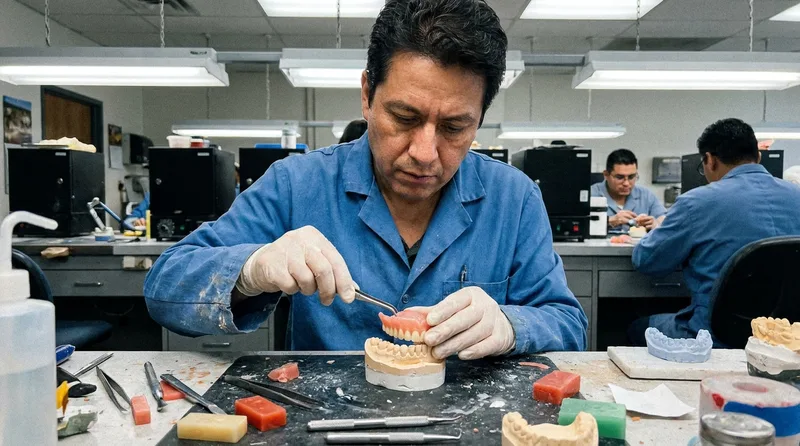
The fabrication process begins before the extractions: impressions are taken of the existing teeth, measurements of the jaw and bite are recorded, and the dentures are custom-made using those pre-extraction records. This approach works, but it comes with an inherent limitation: because the denture is made before the tissue heals, it cannot be fabricated to the final post-healing shape of the gum ridge. That discrepancy is what makes relining later a near-certainty rather than a possibility.
They are most commonly used for full extractions, where all remaining teeth in one or both arches are being removed, though they can also be used for partial tooth removal in some situations. They are a transitional solution as much as a definitive one.
How Does the Immediate Denture Process Work?
The immediate denture process involves several appointments before and after extraction day, with the fabrication happening before surgery and the adjustments happening after. Understanding the full timeline helps patients set realistic expectations for what the weeks following extraction will actually involve.
Here is the typical sequence:
- Consultation and records: Impressions, bite measurements, and shade selection are completed before any extractions. These records allow the dental lab to fabricate the denture.
- Denture fabrication: The lab creates the denture based on pre-extraction records, a process that typically takes one to two weeks.
- Extraction day: The teeth are extracted and the immediate denture is placed directly into the mouth. The denture acts as a bandage of sorts, protecting the extraction sites and reducing swelling by maintaining pressure on the tissue.
- Post-extraction adjustment period: The denture is typically left in place for the first 24 hours without removal, then adjusted by the dentist in the days that follow as swelling changes. Multiple follow-up appointments in the first few weeks are standard.
- Soft or hard reline: As the bone and gum tissue heal and reshape over several months, the fit of the immediate denture changes. A reline, either soft (temporary) or hard (more durable), is performed to refit the denture to the new tissue contours.
- Final denture or long-term plan: Most dentists recommend replacing the immediate denture with a conventional denture six to twelve months after healing is complete, when the tissue has fully stabilized. Alternatively, some patients use this period to plan for implant-supported options.
What Are the Advantages of Immediate Dentures?
The primary advantage is that patients never go without teeth, which matters for function, speech, confidence, and work during a period that would otherwise require going without. Same-day placement also begins the adaptation process immediately.
The primary advantage of immediate dentures is that patients never go without teeth. This matters enormously for most people: going toothless for weeks affects eating, speaking, social confidence, and work. Immediate dentures eliminate that gap, allowing patients to maintain normal function and appearance from the moment they leave the extraction appointment.
A secondary advantage is that the denture acts as a compression dressing over the extraction sites, which can reduce swelling and help the tissue heal more evenly. Patients with immediate dentures also begin adapting to wearing a denture right away, which means they are learning to eat and speak with it while the adjustments are being made, rather than going through that learning curve months later when the conventional denture is delivered.
Psychologically, the same-day transition matters too. Patients who know they will leave the office with teeth are generally less anxious about the extraction process and more likely to proceed with treatment they may have been postponing for years out of fear of the edentulous period. The ADA MouthHealthy resource on dentures covers how long-term denture care and maintenance work. Our article on implants versus dentures covers how the longer-term options compare once healing is complete.
What Are the Disadvantages and Trade-Offs of Immediate Dentures?
The main disadvantages of this approach are the need for relining as healing progresses, the higher total investment compared to conventional dentures (because you essentially pay for two phases of denture work), and the inherent imprecision of fitting a denture to a mouth before it has healed. Understanding these trade-offs upfront prevents disappointment later.
Key trade-offs include:
- Fit changes with healing: Research on post-extraction resorption shows the jaw ridge can lose up to 25% of its vertical height in the first year after extraction, according to studies on alveolar bone changes, which is why an immediate denture that fit well on day one will fit noticeably differently within a few months. An immediate denture that fits adequately on extraction day will become looser over time. This is expected and not a failure, but it requires relining.
- More follow-up visits: The adjustment and relining process requires more dental visits than conventional dentures, which are delivered after healing is complete and need fewer modifications.
- Higher total investment: Two phases of denture work, the immediate denture and the subsequent reline or replacement, typically cost more overall than a single conventional denture placed after healing.
- Cannot preview the result: With conventional dentures, a wax try-in allows the patient to see and approve the appearance before the final denture is made. This step is not possible with immediate dentures since the teeth are still present when impressions are taken.
According to the American Dental Association guidance on dentures, patients should be fully informed about the healing timeline and the likelihood of needing adjustments before agreeing to immediate denture placement.
What Is the Healing Period Like With Immediate Dentures?
Healing spans four to six months for initial tissue changes and up to a year for full stabilization, with multiple follow-up visits and adjustments along the way. The first 24 to 48 hours are the most uncomfortable.
The healing period with immediate dentures typically spans four to six months for the initial major tissue changes and up to a year for full bone and gum stabilization. It is not a passive process: patients have multiple follow-up visits, the denture is adjusted as the tissue changes, and a formal reline is performed once the initial healing is mostly complete.
The first 24 to 48 hours are the most uncomfortable. Swelling from the extractions makes the denture tight, and patients may experience soreness at the extraction sites. The denture should not be removed during the first 24 hours unless instructed, since reinserting it after the swelling peaks can be difficult and painful.
After the first few days, swelling begins to resolve and follow-up adjustments begin. Soft spots or sore areas are relieved, pressure points are identified and adjusted, and the fit is monitored as the tissue continues to change. Patients typically see their dentist several times in the first four to six weeks, then less frequently as the tissue stabilizes. Our article on jawbone loss after tooth loss explains in detail why this tissue remodeling happens and why it is unavoidable regardless of what restoration is placed.
What Is a Denture Reline and Why Is It Necessary?
A reline adds new material to the tissue surface of the denture to restore fit as healing changes the gum and bone contours. It is necessary with immediate dentures because the pre-extraction tissue shape differs from the post-healing shape.
A denture reline is a procedure that adds new material to the tissue-fitting surface of the denture to compensate for the changes in the gum and bone since the denture was originally made. A reline restores the fit and prevents the rocking, slipping, and sore spots that come with a poorly fitting denture.
Soft relines use a pliable material that cushions the tissue and is typically used as a temporary measure in the early healing months before a hard reline is appropriate. Hard relines use a more rigid material similar to the original denture base and produce a more durable, stable result. Most immediate denture patients have at least one reline in the first year, and some have two.
Once healing is complete and the tissue has fully stabilized, many dentists recommend replacing the relined immediate denture with a new conventional denture fabricated to the final healed tissue shape. This gives a more precise fit, a better aesthetic result, and a fresh denture with full expected longevity. Our guides on partial dentures and on denture costs in Texas cover the conventional denture options patients often consider at that stage.

Are Immediate Dentures the Right Choice?
This option is the right choice for patients who need multiple extractions and cannot or do not want to go through a period without teeth, who are not yet candidates for implants or are not ready to pursue them, and who understand and accept the healing-phase trade-offs. They are a meaningful solution for many patients, but they work best for patients who go into the process with accurate expectations.
For patients who are open to a longer-term approach, using the healing period after extractions to plan for implant-supported dentures can produce a better final outcome than starting and relining conventional dentures. The time and investment spent on an immediate denture can instead be directed toward an implant evaluation. Our articles on All-on-4 implants and on full mouth reconstruction cover the broader spectrum of options for patients missing or about to lose most of their teeth.
Willow Family Dentistry helps patients in Wylie and the surrounding North Texas communities navigate this decision honestly. The right path depends on your timeline, health, goals, and what you want your smile to look like years from now, not just on extraction day.
Facing extractions and want to understand your options?
Book a consultation at Willow Family Dentistry in Wylie, TX. Dr. Jeong will walk you through immediate dentures, conventional dentures, and implant options so you can make a fully informed decision.
Explore restorative dentistryFurther Reading
Immediate dentures are one part of a broader tooth replacement picture. The articles below go deeper on long-term alternatives and the costs involved.
- Tooth Replacement Options for Elderly Patients
- Dental Implants vs Bridges: Honest Pros and Cons
- Dental Implants in Wylie, TX: Your Step-by-Step Guide
Results may vary. Please consult with Dr. Jeong for personalized treatment recommendations.
Dr. Esther B. Jeong, DDS
DDS · Willow Family Dentistry
Wylie family dentist with 15+ years of experience providing gentle, judgment-free dental care.
Frequently Asked Questions
Was this article helpful?



Have a dental question?
Schedule a consultation and get personalized answers from Dr. Jeong.
Call us
(972) 881-0715
Hours
Mon – Thu: 9am – 5pm
Fri: By Appointment
Location
1125 W FM 544, Wylie
Emergency? Same-day appointments available.