iCAT Scan TMJ Diagnosis: 3D Imaging for Jaw Pain
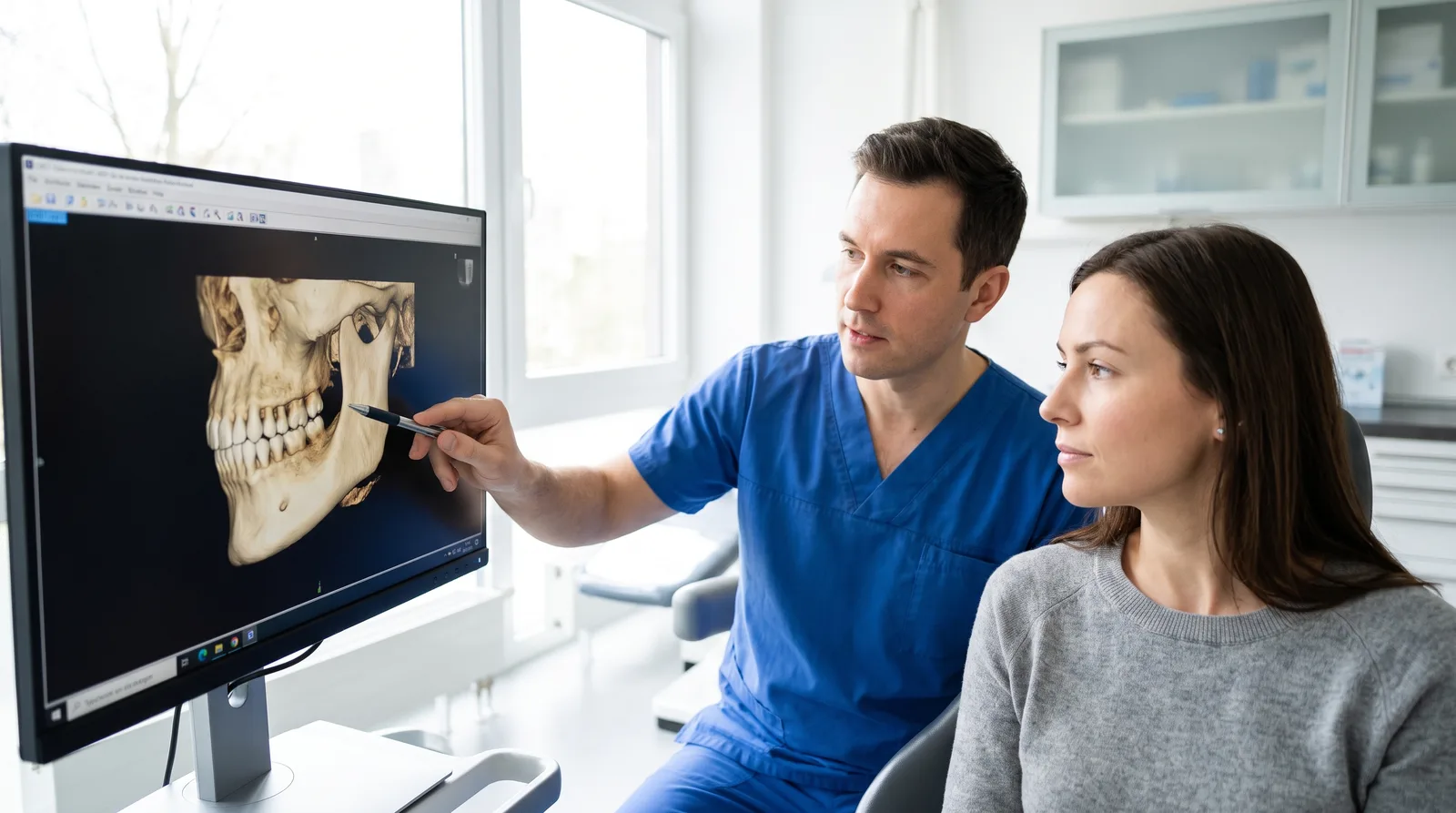
If your dentist has mentioned an iCAT scan TMJ diagnosis as part of evaluating your jaw pain, this guide walks through why 3D imaging genuinely helps with this specific joint in ways a standard X-ray simply can't. You can learn more about iCAT 3D imaging at Willow directly.
If you're dealing with ongoing jaw pain, our broader guide on TMJ treatment covers the full picture of care beyond just diagnosis.
The jaw joint is genuinely one of the most complex joints in the body, which is exactly why standard imaging sometimes falls short of showing what's actually happening.
Getting an accurate diagnosis matters just as much as getting the right treatment, since the wrong assumption about what's causing jaw pain can lead to time spent on an approach that was never going to help.
iCAT Scan TMJ Diagnosis: Why Does the Jaw Joint Need 3D Imaging?
The temporomandibular joint genuinely moves in multiple directions at once, combining both rotation and sliding motion together, which makes it genuinely difficult to capture accurately in a flat, two-dimensional image.
A standard dental X-ray shows a single flat view, which can hide overlapping structures or fail to show the joint's true position and shape from other angles.
An iCAT scan captures a full three-dimensional image instead, letting your dentist examine the joint from any angle rather than relying on one fixed perspective.
This matters specifically for TMJ issues because the joint's problems are often structural, involving the exact shape and alignment of bone, not just visible on a flat surface view.
Without this level of detail, some jaw joint issues can be genuinely misdiagnosed or missed entirely, leading to treatment that doesn't address the actual underlying cause.
This is part of why patients sometimes try several approaches without relief before imaging finally reveals what was actually happening in the joint all along.
What Can an iCAT Scan Reveal That a Regular X-Ray Can't?
An iCAT scan can genuinely reveal joint space narrowing, subtle bone changes, and structural asymmetry between the left and right jaw joints, details that a flat X-ray often misses entirely.
| Imaging Type | What It Shows |
|---|---|
| Standard X-ray | Flat, single-angle view of teeth and jaw |
| iCAT 3D scan | Full three-dimensional joint structure, any angle |
This level of detail genuinely helps your dentist distinguish between different causes of jaw pain, such as joint degeneration versus muscle tension, which can look similar without proper imaging.
Getting this distinction right matters, since the appropriate treatment for a structural joint issue is often genuinely different from what helps muscle-related jaw tension.
Roughly 92% of adults have had at least one cavity in their lifetime, according to ADA general patient resources, and dental imaging plays a similarly important role in catching a wide range of issues early.
According to the ADA's general patient care resources, accurate diagnostic imaging genuinely plays a meaningful role in developing an effective treatment plan for joint-related jaw pain.
Dealing With Ongoing Jaw Pain?
Our team can discuss whether an iCAT scan makes sense for your specific symptoms.
Contact Our Team →What Does the iCAT Scanning Process Actually Involve?
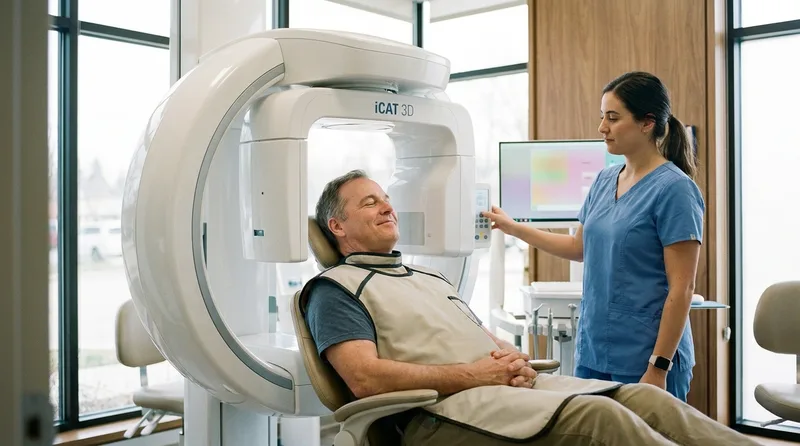
Getting an iCAT scan is genuinely quick and quite comfortable overall, involving no injections or prep, just sitting still for about 20 seconds while the scanner rotates around your head.
The scan itself uses a significantly lower radiation dose than a traditional medical CT scan, while still capturing the detailed 3D information your dentist needs.
Results are available almost immediately, letting your dentist review the images with you during the same visit rather than waiting days for results.
No special preparation is needed beforehand, though you'll be asked to remove any metal jewelry or accessories that could interfere with the image quality.
The scan is also completely painless, involving nothing more than sitting comfortably while the machine rotates around your head capturing images from multiple angles.
Most patients describe the experience as genuinely easier than a standard dental X-ray, since there's no biting down on anything or holding an awkward position.
Children and anxious patients in particular often find the process genuinely more comfortable than they expected, since it requires no cooperation beyond sitting still briefly.
Who Should Consider an iCAT Scan for Jaw Pain?
Patients with persistent jaw pain, clicking or popping sounds, limited jaw movement, or pain that hasn't genuinely improved with conservative treatment are all good candidates for this kind of imaging.
- Persistent jaw pain. Especially pain lasting more than a few weeks
- Clicking or popping. Sounds during chewing or jaw movement
- Limited jaw movement. Difficulty opening or closing fully
- No improvement with conservative care. Splints or exercises haven't helped
Our guide on stress and teeth grinding covers a related, common contributor to jaw pain that sometimes accompanies structural joint issues.
If conservative treatments like a night guard haven't provided relief, that's often a genuine signal that imaging could help identify something the initial approach didn't address.
Bringing up your specific symptoms in detail during a consultation helps your dentist decide whether imaging is genuinely the right next step for your situation.
Keeping a brief log of when your jaw pain occurs, what triggers it, and how long episodes last can genuinely help this conversation be more productive.
- Schedule a consultation to discuss your specific jaw pain symptoms
- Your dentist determines whether an iCAT scan is appropriate
- Complete the quick, comfortable 3D scan during your visit
- Review results together and discuss next steps for treatment
How Does This Compare to iCAT Imaging for Implants?
Willow's own iCAT scanner genuinely serves multiple distinct purposes well beyond just TMJ diagnosis specifically, with dental implant planning being just another quite common application of the same underlying technology.
Our guide on how iCAT imaging helps with implants covers that specific application in more detail, if you're exploring tooth replacement options.
Nearly 36% of Americans report some level of jaw or facial pain related to TMJ issues at some point, according to ADA general patient care resources, making accurate diagnosis genuinely valuable for a meaningful portion of patients.
Whether the goal is precise implant placement or understanding jaw joint structure, the same 3D imaging technology genuinely provides detail that flat X-rays simply cannot capture.
Having this technology available in-house means Willow can offer comprehensive diagnostic imaging without referring patients elsewhere for a specialized scan.
This convenience genuinely matters for patients already dealing with the discomfort of jaw pain, since it removes an extra appointment and a separate office visit from the process.
What Happens After Your TMJ Diagnosis?
Once your own dentist carefully reviews your own iCAT scan results, the next steps genuinely depend on what the imaging reveals about your specific jaw joint structure and symptoms overall.

Treatment options range from conservative approaches like a night guard or targeted exercises to more involved care, depending on what the imaging genuinely shows.
Your dentist will walk through the specific findings with you, explaining exactly what the scan revealed and why a particular treatment approach genuinely makes sense.
Having the actual images to reference during this conversation genuinely helps patients understand their own diagnosis, rather than relying on a description alone.
Call (972) 881-0715 if you're dealing with ongoing jaw pain and want to discuss whether iCAT imaging could help identify what's actually going on.
An iCAT scan TMJ diagnosis genuinely gives your dentist a clearer, more complete picture than a standard X-ray alone can provide. Results may vary. Please consult with Dr. Jeong for personalized treatment recommendations.
If jaw pain has been affecting your daily life, our team is happy to discuss whether 3D imaging is the right next step for you.
Get a Clearer Picture of Your Jaw Pain
Our team can discuss whether an iCAT scan is the right next step for your specific symptoms.
Request an Appointment →Dr. Esther B. Jeong, DDS
DDS · Willow Family Dentistry
Wylie family dentist with 15+ years of experience providing gentle, judgment-free dental care.
Frequently Asked Questions
Was this article helpful?



Have a dental question?
Schedule a consultation and get personalized answers from Dr. Jeong.
Call us
(972) 881-0715
Hours
Mon – Thu: 9am – 5pm
Fri: By Appointment
Location
1125 W FM 544, Wylie
Emergency? Same-day appointments available.