Gum Grafting Procedure: Cost, Recovery, and What to Expect
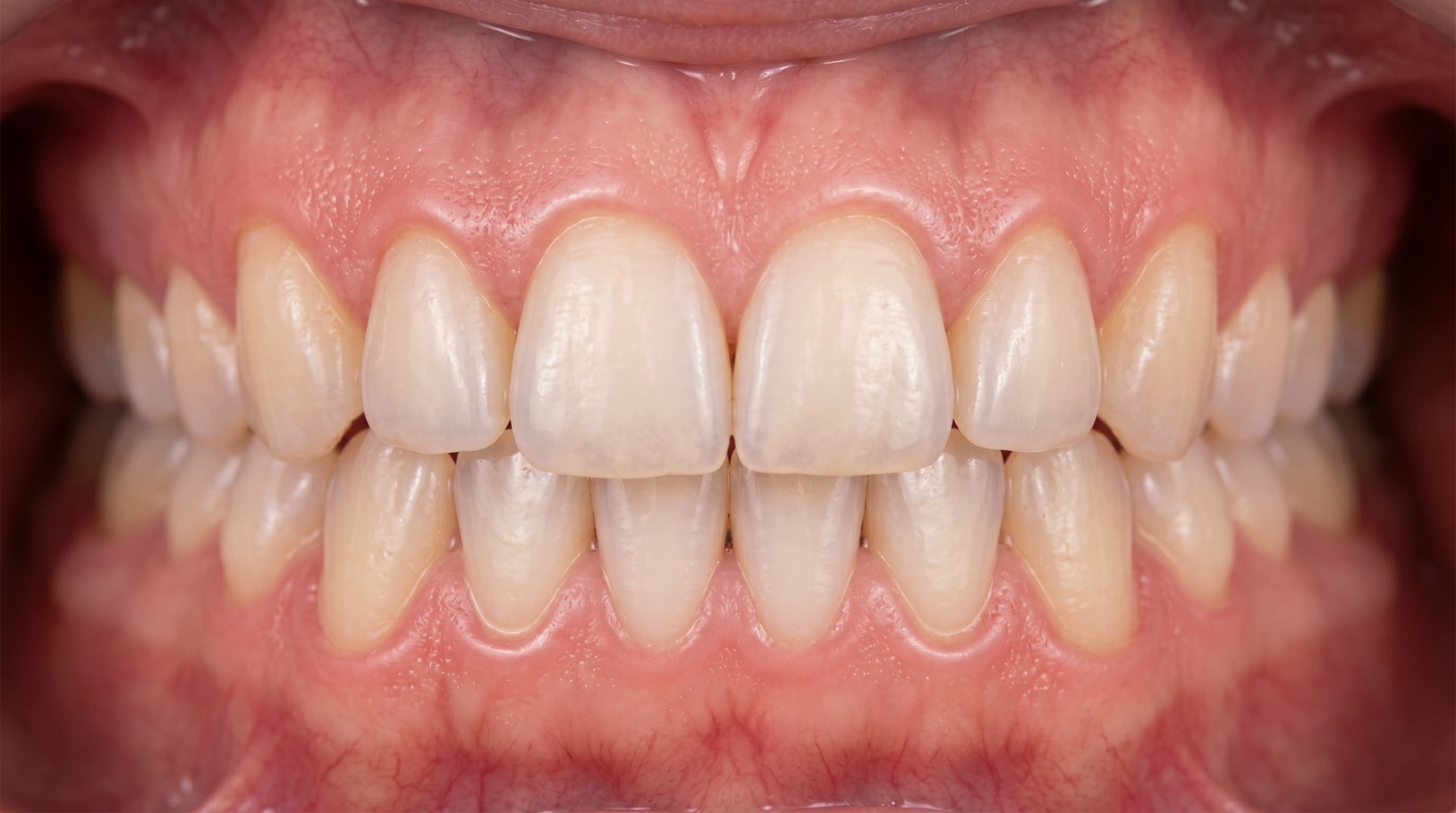
A gum grafting procedure restores the protective tissue your teeth need after recession has pulled the gumline away from the root surface. If you've read that receding gums don't grow back on their own, you already know the honest starting point. Gum grafting is how the coverage gets restored: by moving tissue from elsewhere in your mouth or using donor material to rebuild what recession destroyed. The American Academy of Periodontology reports that gum grafting has a root coverage success rate exceeding 90% when performed on appropriate candidates. This guide walks through what the procedure involves, what each technique costs, and what the recovery actually looks like day by day.
Dr. Esther Jeong at Willow Family Dentistry in Wylie, TX evaluates recession severity and tissue thickness to recommend the grafting technique that matches your anatomy. Not every recession needs the same approach, and not every case is ready for grafting (active gum disease must be treated first). The consultation determines which path makes sense for your teeth.
What Are the Different Types of Gum Grafting Procedures?
Three main gum grafting procedures are used in 2026, each designed for a different clinical scenario. The technique Dr. Jeong recommends depends on your recession depth, tissue thickness, and how many teeth are involved.
Connective Tissue Graft (CTG)
The gold standard and the most commonly performed gum grafting procedure. Dr. Jeong creates a small flap in the roof of your mouth (palate), removes a piece of the connective tissue from underneath, and closes the flap with sutures. The harvested tissue is then placed over the exposed root at the recession site and sutured into position. Your body integrates the transplanted tissue with the existing gum over 3-6 months, creating permanent, healthy coverage that's indistinguishable from the original gumline.
According to the AAP, connective tissue grafts achieve the highest and most predictable root coverage rates of any grafting technique. They're the first-line recommendation for patients with moderate recession (3-5mm) on one to three teeth where the goal is complete root coverage and cosmetic improvement.
The palatal donor site is the part patients worry about most. The tissue underneath the palate is thick and vascular, which means it heals well but produces moderate soreness for 5-7 days. Dr. Jeong places a protective palatal stent (a small acrylic shield) over the donor site to reduce discomfort during the first week. Most patients describe the palatal soreness as "worse than expected for 3 days, then fine."
Free Gingival Graft (FGG)
Instead of taking tissue from underneath the palate, the free gingival graft takes a thin strip directly from the palatal surface. This surface tissue is thinner and tougher than the connective tissue used in CTG grafts. It's placed at the gumline of the recession site to create a wider band of thick, attached gum tissue that resists future recession.
FGG is used primarily when the goal is tissue thickening rather than root coverage. Patients with thin biotype tissue (genetically thin gums) who haven't yet experienced severe recession benefit from FGG as a preventive measure. The ADA recognizes tissue thickening as a valid periodontal intervention that reduces future recession risk by creating more robust tissue at the vulnerable gumline zone.
The limitation: FGG tissue doesn't blend as seamlessly with the surrounding gum as connective tissue does. The grafted area may look slightly different in color or texture, especially on front teeth where cosmetic appearance matters. For back teeth or sites where function matters more than appearance, FGG is an effective and slightly less expensive option.
AlloDerm (Acellular Dermal Matrix)
AlloDerm is processed human donor tissue (from tissue banks, the same type used in burn treatment and reconstructive surgery) that serves as a scaffold for your body to grow new tissue into. It eliminates the palatal donor site entirely: no second surgical site, no palatal soreness, no stent. Dr. Jeong places the AlloDerm membrane over the exposed root and sutures it into position. Your own cells migrate into the matrix over 3-6 months, converting it into living gum tissue.
AlloDerm is ideal for patients who want to avoid the palate harvest (the most common reason patients delay grafting), patients who need multiple sites treated in one session (harvesting enough palatal tissue for 6-8 teeth is difficult), and patients whose palatal tissue is too thin to serve as a reliable donor. According to clinical research, AlloDerm root coverage rates are slightly lower than CTG (80-85% vs 90%+) but the difference narrows with experienced providers and appropriate case selection.
Pinhole Surgical Technique (PST)
The newest and least invasive option. No scalpel incisions, no palatal harvest, no sutures at the recession site. Dr. Jeong makes a tiny pinhole in the gum tissue above the recession, loosens the tissue through the pinhole with specialized instruments, and gently slides it downward to cover the exposed root. Collagen strips inserted through the pinhole stabilize the tissue in its new position.
PST treats multiple teeth in a single session with dramatically less discomfort than traditional grafting. Most patients return to normal activities within 24-48 hours. The technique requires adequate existing tissue above the recession to reposition, so it's not appropriate for cases where the tissue is extremely thin or the recession is severe. Dr. Jeong evaluates PST suitability at the consultation.
| Technique | Best For | Root Coverage Rate | Palatal Donor? | Cost per Site |
|---|---|---|---|---|
| Connective Tissue Graft | Root coverage, 1-3 teeth, cosmetic areas | 90%+ | Yes | $600-$1,200 |
| Free Gingival Graft | Tissue thickening, preventing future recession | 70-80% | Yes | $500-$1,000 |
| AlloDerm | Multiple sites, avoiding palatal harvest | 80-85% | No | $700-$1,400 |
| Pinhole (PST) | Multiple teeth, minimal invasion, fast recovery | 85-90% | No | $800-$1,500 |
What Does Gum Grafting Recovery Look Like Day by Day?
Recovery from a gum grafting procedure is more manageable than most patients expect. The timeline below reflects a connective tissue graft, which has the longest recovery of the four options. AlloDerm recovery is similar but without palatal soreness. PST recovery is significantly shorter (24-48 hours to normal activity).
Day of surgery: you leave with gauze over the graft site and numbness lasting 2-4 hours. The graft site will have sutures and a protective dressing. If a palatal donor was used, a stent or dressing covers that site too. Take your prescribed ibuprofen (600mg) before the numbness wears off. Eat cold, soft foods only: yogurt, smoothies, ice cream, mashed potatoes. Avoid anything hot, spicy, crunchy, or chewy. Don't brush the surgical area.
Days 1-3: swelling peaks on day 2, similar to any oral surgery. Moderate soreness at both the graft and donor sites, managed effectively with ibuprofen on a regular schedule. The palatal site is typically more uncomfortable than the graft site during this phase. Continue soft, cool foods. Sleep with your head elevated on an extra pillow to reduce swelling. According to the Mayo Clinic, managing post-surgical inflammation with consistent anti-inflammatory medication produces better healing outcomes than as-needed dosing.
Days 4-7: the turning point. Swelling recedes noticeably. Soreness transitions from constant to occasional. The palatal site feels significantly better. You can expand to warm soft foods (soup, pasta, scrambled eggs). The graft site may look white or yellowish, which is normal healing tissue, not infection. Don't poke it, don't lift your lip to look at it excessively, and don't brush it yet.
Days 7-14: suture removal at Dr. Jeong's follow-up (if non-dissolving sutures were used). The graft is integrating with the surrounding tissue. Mild tenderness persists but doesn't affect daily life. Resume gentle brushing around (not directly on) the graft site with a soft brush. Normal diet resumes by day 10-14 for most patients, avoiding hard foods directly on the graft for another week.
Weeks 3-6: the graft matures. Color and texture gradually blend with surrounding tissue. Sensitivity at the graft site decreases as the new tissue thickens and vascularizes. Full healing takes 3-6 months, but you're functionally normal by week 3.
Ready to Restore Your Gumline?
Dr. Jeong evaluates your recession depth, tissue thickness, and number of affected teeth to recommend the grafting technique that gives you the best result with the most comfortable recovery.
Request an Appointment →How Much Does Gum Grafting Cost and Does Insurance Cover It?
The gum grafting procedure costs $500-$1,500 per site depending on the technique. Treating a single tooth is one site. Treating three adjacent teeth may count as one to three sites depending on how the recession is distributed and how the procedure is performed.
Most dental PPO plans cover gum grafting under periodontal benefits at 50-80% after your deductible. The procedure codes (D4270 for soft tissue allografts, D4273 for connective tissue grafts, D4275 for soft tissue pedicle grafts) are well-established periodontal codes that major carriers recognize. According to dental benefits data, gum grafting is one of the better-covered periodontal procedures because carriers recognize it as medically necessary tissue restoration rather than cosmetic enhancement.
HSA and FSA accounts cover gum grafting as a qualified medical expense. On a $1,000 graft with 50% insurance coverage, your out-of-pocket is $500. Paying that $500 with FSA pre-tax dollars reduces the effective cost to roughly $350-$400 depending on your tax bracket.
Dr. Jeong's team verifies your periodontal benefits before scheduling the procedure so you know your exact out-of-pocket. Some plans have annual maximums that limit total reimbursement. If multiple sites need grafting, treatment can be staged across benefit years to maximize coverage, the same strategy used for maximizing any dental insurance benefit.
What Happens If You Don't Treat Recession with Grafting?
Recession that's stable, mild, and causing no symptoms can be monitored without treatment. But progressive recession that's left untreated follows a predictable path toward more extensive and expensive problems.
Root surface decay develops because exposed roots lack the enamel protection that crown surfaces have. Root cementum is softer, more porous, and less acid-resistant than enamel. Cavities on root surfaces develop faster and are harder to restore because the surface is curved and often below the gumline. A root surface filling costs $200-$400. Repeated root fillings that fail may eventually require a crown ($800-$2,000).
Sensitivity worsens progressively as more dentin tubules are exposed. What starts as a zing from ice water becomes constant discomfort from cold air, hot coffee, and even room-temperature foods. Desensitizing toothpaste helps initially but becomes less effective as more root surface is exposed.
Tooth loss is the endpoint for severe, untreated recession. When bone loss accompanies the tissue loss (as it does in periodontitis-driven recession), the tooth eventually loses enough support to become mobile. A mobile tooth needs extraction. The replacement, whether implant ($3,100-$5,300), bridge ($2,000-$4,000), or partial denture ($500-$2,500), costs far more than the graft that would have prevented the loss.
The AAP recommends addressing recession before bone loss compromises the tooth's foundation. A graft on a tooth with 4mm of recession and intact bone is predictable. A graft on a tooth with 4mm of recession and 50% bone loss has a dramatically lower success rate. The window for straightforward grafting closes as the disease progresses.
Related: If gum disease is causing your recession, treat the disease first. → Scaling and Root Planing: What to Expect
A gum grafting procedure is one of the most predictable surgeries in periodontal dentistry: high success rates, manageable recovery, and results that last decades when the underlying cause of recession is addressed. If your gumline has pulled back, your roots are showing, or cold sensitivity is affecting your daily life, the grafting options above can restore coverage and stop the progression. Schedule an evaluation with Dr. Jeong at Willow Family Dentistry. She'll measure the recession, evaluate your tissue, and recommend the technique that fits your anatomy and your goals.
Restore the Gumline. Protect the Root.
Dr. Jeong offers connective tissue grafts, AlloDerm, and pinhole technique based on your recession severity and tissue type. Insurance verification included.
Request an Appointment →Questions about gum grafting?
Call (972) 881-0715 →Dr. Esther B. Jeong, DDS
DDS · Willow Family Dentistry
Wylie family dentist with 15+ years of experience providing gentle, judgment-free dental care.
Frequently Asked Questions
Was this article helpful?
You may also like


Have a dental question?
Schedule a consultation and get personalized answers from Dr. Jeong.
Call us
(972) 881-0715
Hours
Mon – Thu: 9am – 5pm
Fri: By Appointment
Location
1125 W FM 544, Wylie
Emergency? Same-day appointments available.