Does Insurance Cover Dental Implants in Texas?
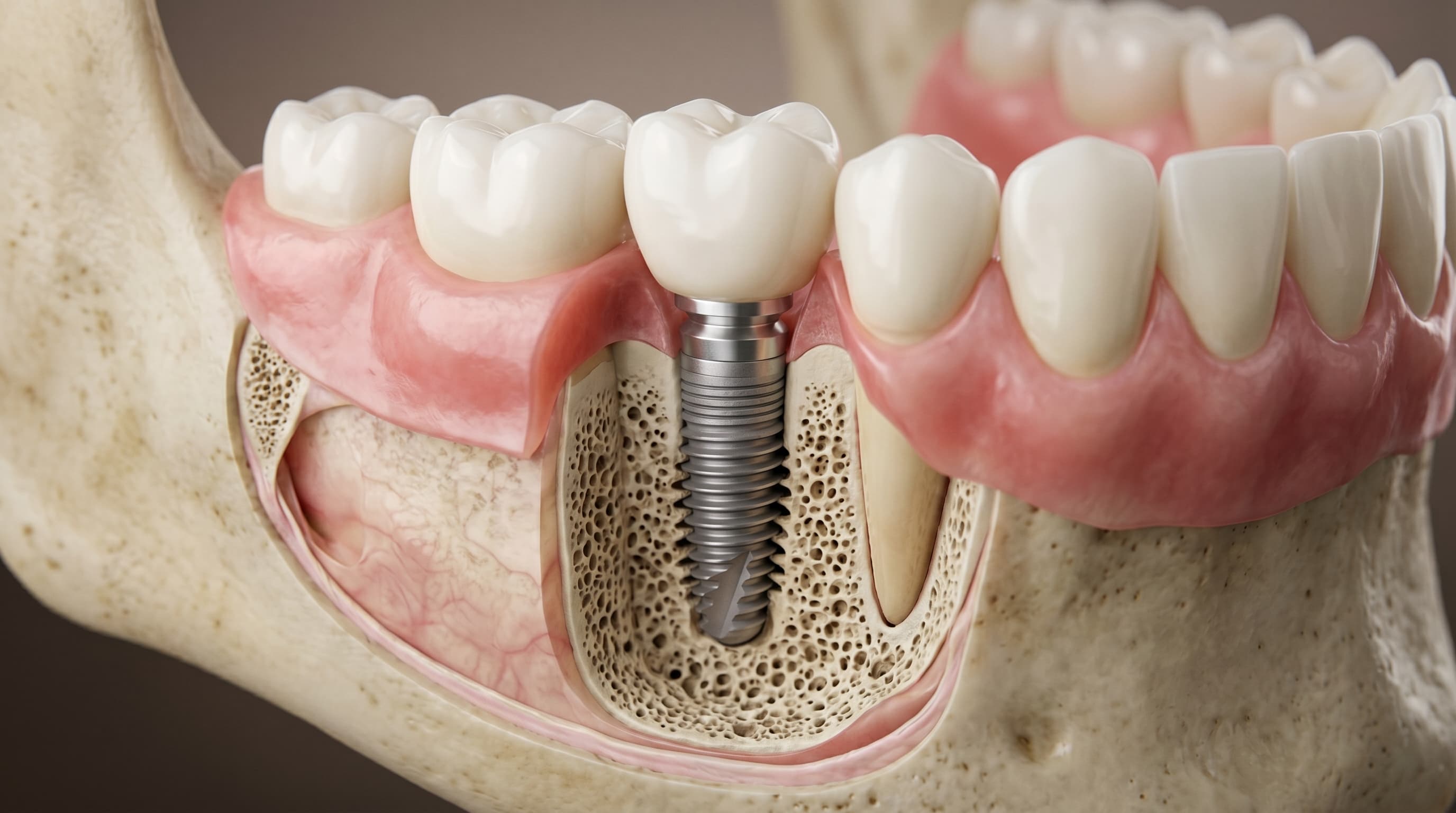
Does insurance cover dental implants in Texas? The short answer is yes, partially, and with more limitations than most patients expect. Most dental PPO plans classify implants as a "major" service and cover them at 50% up to your annual maximum, which typically ranges from $1,500-$2,500 per year. Since a single implant with abutment and crown costs $3,000-$5,500 total, insurance covers a meaningful portion but rarely the whole thing. The ADA reports that implant coverage has expanded significantly over the past decade as the procedure has become the standard of care for single-tooth replacement.
But the real complexity isn't whether your plan covers implants. It's the specific clauses, limitations, and timing rules that determine how much you actually receive. Missing-tooth clauses, annual maximum caps, waiting periods, and the largely unknown option of medical insurance crossover all affect your final out-of-pocket number. Dr. Esther Jeong's team at Willow Family Dentistry in Wylie, TX verifies every patient's dental and medical benefits before treatment to capture every available dollar.
How Do Texas Dental Plans Cover Implants?
Dental implant coverage follows the same structure as other major restorative work (crowns, bridges, dentures): the plan pays a percentage of the allowed fee, subject to your annual maximum and any applicable waiting period or exclusion. The key variables differ by carrier and plan tier.
| Carrier | Implant Coverage | Annual Max Range | Key Limitations |
|---|---|---|---|
| Delta Dental PPO | 50% (major) | $1,500-$2,000 | Some plans exclude implants entirely. Missing-tooth clause common. |
| BlueCross BlueShield TX | 50% (major) | $1,500-$2,500 | 12-month waiting period on many plans. Verify before starting. |
| Cigna DPPO | 50% (major) | $1,500-$2,500 | Often covers implants on mid-tier and above. Check for implant-specific exclusion. |
| Aetna PPO | 50% (major) | $1,500-$2,000 | Some employer plans cap implant benefit separately from annual max. |
| MetLife PDP | 50% (major) | $1,500-$2,000 | Implant coverage increasingly standard. Older plans may still exclude. |
| Guardian | 50% (major) | $1,500-$2,500 | Generally implant-friendly. Missing-tooth clause varies by employer plan. |
| Humana PPO | 50% (major) | $1,000-$1,500 | Lower annual max limits coverage. 24-month waiting period on some plans. |
| United Healthcare | 50% (major) | $2,000-$3,000 | Premium employer plans offer highest annual max. Best implant coverage potential. |
Here's the math on a typical case. A single implant totaling $4,500 (post + abutment + crown) on a plan with 50% major coverage and a $2,000 annual max: insurance pays 50% of $4,500 = $2,250, but capped at the $2,000 annual max. Your share: $2,500. If you've already used $500 of your annual max on other dental work that year, insurance pays only $1,500 toward the implant and your share rises to $3,000. Timing matters.
What Is the Missing-Tooth Clause and Does Your Plan Have One?
The missing-tooth clause is the single most common reason dental implant claims get denied, and most patients have never heard of it. A missing-tooth clause states that the plan will not cover replacement of any tooth that was already missing when your coverage began. If you lost a molar in 2020 and enrolled in your current dental plan in 2022, the plan may refuse to cover an implant at that site because the tooth was "pre-existing."
According to dental insurance industry data, approximately 30-40% of employer-sponsored PPO plans in Texas include some form of missing-tooth clause. The clause doesn't appear in every plan from the same carrier. It's selected by the employer when they purchase the plan. Two employees at different companies with the same Delta Dental PPO may have completely different missing-tooth provisions.
How to check: your Summary of Benefits document lists exclusions and limitations. Look for language about "replacement of teeth missing prior to the effective date" or "pre-existing missing teeth." If you can't find it, Dr. Jeong's team calls the carrier directly and asks the specific question during benefits verification. This is one of the first things they check for every implant patient because discovering the clause after treatment begins means an unexpected bill for the full amount.
If your plan has a missing-tooth clause, you still have options. Some plans waive the clause after a waiting period (12-24 months of continuous enrollment). If you're within that window, it may be worth waiting until the clause expires. Alternatively, if you're approaching open enrollment at work, switching to a plan without the clause (if available) removes the barrier entirely.
How Does the Annual Maximum Limit Implant Coverage?
The annual maximum is the total amount your dental plan pays for all services in a calendar year. It covers everything: cleanings, fillings, crowns, root canals, and implants. If your annual max is $2,000 and you've already used $800 on a crown and two fillings, you have $1,200 left for the implant. At 50% coverage, that $1,200 covers only $1,200 of the implant fee, regardless of the 50% calculation.
This is why timing your implant strategically across calendar years can save $1,000 or more. If your annual max resets in January, you can structure treatment to split costs across two benefit years. For example, Dr. Jeong places the implant post in November (using the remaining annual max from the current year) and places the abutment and crown in February (using the fresh annual max from the new year). The total insurance payout doubles because you're drawing from two years of benefits.
The ADA notes that dental annual maximums have not kept pace with the cost of dental care. The average annual max today ($1,500-$2,000) is roughly the same as it was in the 1980s, despite decades of inflation. This means out-of-pocket costs for major services like implants have grown relative to what insurance covers. It's a systemic limitation of dental insurance, not a reflection of your specific plan's quality.
Related: Full cost breakdown for every component. → Dental Implants in Wylie TX: Your Step-by-Step Guide
Can Medical Insurance Cover Part of Your Dental Implant?
This is the strategy most patients and even some dental offices overlook entirely. In specific circumstances, your medical insurance (health insurance, not dental) can cover portions of dental implant treatment. The key is whether the procedure is medically necessary, not just cosmetically or functionally desirable.
Medical insurance may cover implant-related costs when the tooth loss resulted from accidental trauma (a fall, car accident, or sports injury), the implant is needed after surgical removal of a tumor or cyst in the jaw, bone grafting is required to reconstruct the jaw after a medical condition or injury, or the implant is part of a treatment plan for a congenital condition (missing teeth from birth). According to the Mayo Clinic, medical plans increasingly recognize the health implications of tooth loss and may cover components of implant treatment when medical necessity is documented.
The surgical component (implant placement, bone grafting, sinus lift) is more likely to be covered by medical insurance than the prosthetic component (abutment and crown), which typically stays on the dental side. This means you could potentially have the surgery covered by medical insurance and the crown covered by dental insurance, reducing your out-of-pocket cost significantly.
Dr. Jeong's billing team checks both dental and medical benefits for every implant patient. They know which procedure codes to submit to medical carriers and how to document medical necessity when it applies. Most dental practices don't cross-file with medical insurance because it's administratively complex. Willow does it because it can save patients thousands of dollars.
We Check Both Your Dental AND Medical Benefits
Dr. Jeong's team verifies your dental coverage, checks for missing-tooth clauses, and cross-files with medical insurance when applicable. Most patients don't know their medical plan may cover part of implant treatment.
Request a Benefits Verification →How to Maximize Your Implant Insurance Benefits in Texas
Five strategies consistently reduce what Texas patients pay for dental implants.
Split treatment across benefit years. Place the implant post in December and the crown in January. You draw from two annual maximums instead of one, potentially doubling your insurance payout from $2,000 to $4,000. Dr. Jeong can structure the treatment timeline to align with your benefit reset date.
Use your HSA or FSA. Both accounts cover dental implants as a qualified medical expense. Paying your patient share with pre-tax dollars saves 20-30% depending on your tax bracket. A $3,000 out-of-pocket cost paid with FSA dollars effectively costs $2,100-$2,400 in real after-tax money.
Check for dual coverage. If you're on two dental plans (your own employer's plan plus a spouse's plan), coordination of benefits may allow both plans to contribute toward the implant. The primary plan pays first, then the secondary plan covers a portion of the remaining balance.
File with medical insurance when applicable. If your tooth loss involved trauma, a medical condition, or requires bone reconstruction, medical insurance may cover the surgical component. This is in addition to what dental insurance pays for the prosthetic crown, effectively creating a third source of coverage.
Ask about in-office payment plans. Willow offers flexible financing that spreads your patient share over the treatment period. Combined with insurance reimbursement and HSA/FSA funds, monthly payments can be surprisingly manageable even for multi-implant cases. According to WebMD, financing options have made implants accessible to a far broader range of patients than a decade ago.
Related: Is a bone graft adding to your implant cost? → Do You Need a Bone Graft for Dental Implants?
What If Your Plan Doesn't Cover Implants at All?
Some plans explicitly exclude implants, covering only bridges or dentures as tooth-replacement options. If yours is one of them, you're not out of options.
Your plan may cover the implant crown under the "major restorative" benefit even if it excludes the surgical implant post. This is a common gray area: the carrier refuses coverage for the implant surgery (D6010) but approves the implant-supported crown (D6065) at the major service percentage. It doesn't cover the full treatment, but it covers $400-$1,000 of the crown component.
Medical insurance crossover still applies regardless of dental exclusion. If the implant is medically necessary, the surgical component may be covered by your health plan even when your dental plan says no.
HSA, FSA, and financing options work the same way regardless of dental plan coverage. The tax savings from pre-tax accounts and the affordability of monthly payment plans make implants financially realistic even with zero dental insurance contribution.
The alternative to an implant, a bridge, costs $2,000-$4,000 and requires grinding down two healthy adjacent teeth. Over 15-20 years, the bridge may need replacement once or twice. The lifetime cost often equals or exceeds the implant that would have lasted with no replacement needed. The AAID reports 95-98% long-term implant success rates, making them the most durable tooth replacement available.
Related: Still deciding between the two options entirely → Dental Implants vs Dentures: Texas Cost, Comfort & Value
Related: What does the full recovery look like? → Dental Implant Recovery Timeline: Day-by-Day Guide
Does insurance cover dental implants in Texas? For most patients with PPO dental plans, yes, at 50% up to the annual maximum. But the real answer depends on your carrier, your employer's plan tier, whether a missing-tooth clause applies, how much annual max you have remaining, and whether medical insurance can cover the surgical component. The only way to know your exact number is verification, which is exactly what Dr. Jeong's team does for every implant patient at Willow Family Dentistry.
Know Your Exact Implant Coverage Before You Start
Dr. Jeong's team checks your dental benefits, medical crossover options, missing-tooth clauses, and annual max remaining. Complete clarity before any commitment.
Request a Consultation →Questions about implant insurance coverage?
Call (972) 881-0715 →Dr. Esther B. Jeong, DDS
DDS · Willow Family Dentistry
Wylie family dentist with 15+ years of experience providing gentle, judgment-free dental care.
Frequently Asked Questions
Was this article helpful?
You may also like


Have a dental question?
Schedule a consultation and get personalized answers from Dr. Jeong.
Call us
(972) 881-0715
Hours
Mon – Thu: 9am – 5pm
Fri: By Appointment
Location
1125 W FM 544, Wylie
Emergency? Same-day appointments available.