What Happens at a Dental Implant Consultation in Wylie
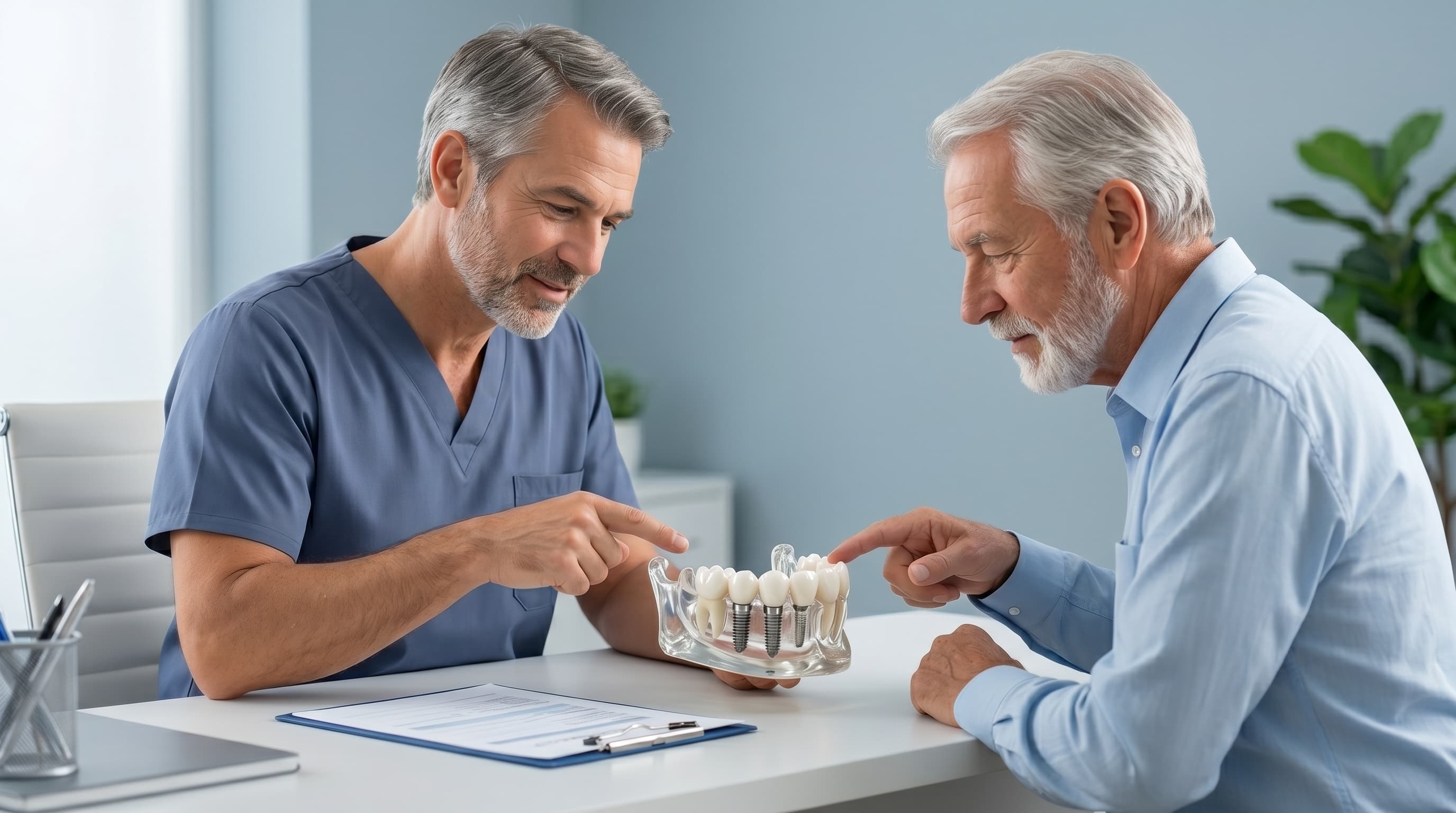
A dental implant consultation in Wylie is where you go from wondering whether implants are possible to knowing exactly what your case requires, what it costs, and how long it takes. Most patients arrive with two concerns: "do I have enough bone?" and "how much will this actually cost me?" Both get answered definitively in about 45 minutes at Willow Family Dentistry with clinical imaging, not guesswork. Dr. Esther Jeong uses the consultation to gather 3D diagnostic data, evaluate your anatomy, and present a complete treatment plan with line-item pricing before you commit to anything.
The American Academy of Implant Dentistry recommends that every implant consultation include comprehensive imaging, a thorough clinical examination, and a detailed discussion of the treatment plan, timeline, and costs. That's exactly the structure at Willow. No same-day pressure. No vague estimates. Just data, a plan, and time to decide.
Step 1: Your History, Your Concerns, Your Goals (5-10 Minutes)
The consultation starts with Dr. Jeong listening. She wants to understand what happened to the tooth (or teeth) you're looking to replace: how long it's been missing, how it was lost (extraction, trauma, decay, periodontal disease), whether the area has been giving you trouble, and what you've tried or considered already. A patient who lost a molar to a fracture six months ago has a different clinical starting point than someone who's been wearing a partial denture for five years.
She'll review your medical history with specific attention to factors that affect implant success: diabetes management (uncontrolled blood sugar slows bone healing), bisphosphonate medications (affect bone metabolism), smoking status (reduces blood supply to the surgical site), blood thinners (affect surgical planning), and any history of radiation therapy to the head or neck. According to the Mayo Clinic, most medical conditions don't disqualify patients from implants but do require adjustments to the treatment protocol.
Your goals matter too. Some patients want the most durable, permanent solution regardless of cost. Others need to balance quality with budget. Some are choosing between an implant and a bridge and want to compare. Dr. Jeong tailors the plan and the conversation to what you're actually deciding between, not a one-size presentation.
Step 2: iCAT 3D Imaging and Clinical Exam (15-20 Minutes)
This is the step that separates a thorough dental implant consultation in Wylie from a quick-look appointment that sends you home with a ballpark number. Dr. Jeong uses three diagnostic tools to evaluate your implant site.
The iCAT cone-beam CT scan takes 20 seconds and produces a complete 3D model of your jaw at the implant site. It shows bone width (is the ridge wide enough for a 4-5mm diameter implant?), bone height (is there enough vertical bone between the ridge crest and the nerve canal or sinus floor?), bone density (is the bone solid enough to achieve primary stability at placement?), and anatomical landmarks (where is the inferior alveolar nerve, the mental foramen, the maxillary sinus relative to the planned implant position?).
This information is invisible on standard 2D X-rays. A panoramic X-ray shows bone height but not width. It shows the nerve canal as a faint line but doesn't show its exact 3D position relative to the proposed implant trajectory. The ADA recognizes cone-beam CT as the standard of care for implant planning in cases where bone adequacy is in question. At Willow, the iCAT scan is included in every implant consultation because Dr. Jeong believes accurate planning requires 3D data, not assumptions.
The clinical exam evaluates the soft tissue at the implant site (gum health, tissue thickness, attached gingiva width), the adjacent teeth (condition, alignment, proximity), your bite relationship (how the implant crown will need to function with the opposing teeth), and any existing dental issues (cavities, gum disease, failing restorations) that need addressing before or alongside the implant.
Standard X-rays (periapical and panoramic) supplement the iCAT for specific views of adjacent teeth and the overall dental picture. Together, the three imaging modalities give Dr. Jeong a complete diagnostic dataset for planning.
Related: Not sure if you qualify? → Are You a Dental Implant Candidate? 5 Key Factors
Step 3: Do You Need a Bone Graft? (The Answer You Came For)
This is the question that keeps most patients up the night before the consultation. The iCAT scan answers it definitively. Dr. Jeong measures the bone at the implant site in three dimensions on the screen, with you watching, and tells you one of three things.
Your bone is sufficient. The ridge has adequate width, height, and density to support the implant without augmentation. Treatment proceeds on the standard timeline: implant placement, 3-6 months of osseointegration, then the final crown. Roughly 50% of patients fall in this category.
You need a minor graft that can happen simultaneously. The bone is mostly adequate but has a small deficiency (a thin spot, a slight concavity) that can be augmented at the same appointment as implant placement. A socket graft or small ridge augmentation is placed alongside the implant. The graft adds $400-$800 to the cost but doesn't add a separate healing phase. According to clinical data, simultaneous placement with minor grafting has success rates comparable to implants placed in fully adequate bone.
You need a staged graft first. The bone deficiency is too large to support the implant with primary stability. A bone graft (ridge augmentation or sinus lift) is placed first, heals for 4-6 months, and then the implant is placed into the new bone. This adds $600-$1,200 for the graft and 4-6 months to the overall timeline, but it produces a foundation that supports long-term implant success.
Dr. Jeong shows you the measurements on the iCAT screen so you can see exactly what she sees. "Your ridge is 6mm wide here. The implant needs at least 6mm. We're right at the threshold, so I recommend a small simultaneous graft to give us a safety margin." That level of transparency is the entire point of the imaging. No guessing. No "we'll see when we get in there." You know before surgery day.
Related: Full guide to bone grafting for implants. → Do You Need a Bone Graft for Dental Implants?
Step 4: The Treatment Plan and Timeline (10 Minutes)
With the imaging data and clinical exam complete, Dr. Jeong presents a step-by-step treatment plan tailored to your anatomy.
For a straightforward single implant with adequate bone, the plan looks like this: implant placement surgery (1-2 hours), healing and osseointegration (3-6 months of normal life with no symptoms), abutment and crown placement (2 visits over 2-3 weeks). Total timeline: 4-7 months from surgery to finished tooth. The ADA notes that implant treatment timelines have shortened significantly with advances in implant surface technology and guided surgical protocols.
For cases requiring bone grafting, the timeline extends: graft placement (if staged, not simultaneous), graft healing (4-6 months), implant placement, osseointegration (3-6 months), then crown. Total: 8-14 months. Longer, but each phase has a specific purpose, and rushing any of them risks the investment.
Dr. Jeong explains each phase, what to expect during each healing period, what you can eat and do (spoiler: you return to normal life within 1-2 weeks of each surgical phase), and when each follow-up appointment happens. You leave with a written timeline you can plan your schedule around.
Related: Full day-by-day recovery guide. → Dental Implant Recovery Timeline: Day-by-Day Guide
Step 5: Line-Item Cost and Insurance Verification (10 Minutes)
The cost conversation at Willow happens with a printed estimate in your hands, not a verbal ballpark. Dr. Jeong's treatment coordinator presents a line-item breakdown of every component.
For a single implant, the estimate shows the implant post ($1,800-$2,500), abutment ($500-$800), crown ($800-$2,000), and any add-ons specific to your case: bone graft ($400-$1,200 depending on type), IV sedation ($300-$600 if you prefer it over local anesthesia), extraction ($150-$350 if the tooth is still present), and temporary crown ($200-$500 if cosmetics during healing are a priority). The iCAT imaging is included in the consultation fee, not billed separately.
If you have dental insurance, the team will have already verified your benefits. They'll show you your annual maximum remaining, whether a missing-tooth clause applies, and exactly how much the plan pays toward the implant at the major-services percentage (typically 50%). They also check whether your medical insurance can cover the surgical component, a strategy most practices don't use because of the administrative complexity. According to WebMD, combining dental and medical insurance can significantly reduce implant out-of-pocket costs when the case qualifies.
HSA/FSA eligibility, in-office payment plans ($150-$300/month), and CareCredit 0% financing options are presented alongside the insurance breakdown. You leave knowing your exact out-of-pocket number and your monthly payment options. No follow-up phone call needed. No "we'll get back to you with the numbers."
Related: Full pricing breakdown by component. → Dental Implant Cost in Wylie, TX: 2026 Full Breakdown
What Should You Bring and What Happens After?
Bring your dental insurance card and medical insurance card (both, since medical crossover may apply). Bring a list of current medications and any relevant medical history. If you have X-rays or records from another dentist, bring those too. And bring your questions, whatever they are. The consultation exists to answer them.
After the consultation, you take the written treatment plan and estimate home. No same-day deposit is required. No "this price expires Friday." The plan and pricing are the same whether you schedule surgery next week or next month. Dr. Jeong's philosophy: a patient who takes time to think and decide with full information is a better patient than one who commits under pressure and has regrets later.
If you decide to proceed, the team schedules your surgery and any pre-operative appointments (pre-surgical cleaning, pre-medication instructions for patients on blood thinners or with specific medical considerations). If you decide implants aren't right for you, Dr. Jeong can discuss alternatives: a dental bridge, a partial denture, or simply monitoring the area if replacement isn't urgent. The AAID reports that 95-98% of modern dental implants succeed long-term, but the right choice for any individual depends on anatomy, health, budget, and goals, all of which the consultation addresses.
Related: Full carrier-by-carrier insurance guide. → Does Insurance Cover Dental Implants in Texas?
A dental implant consultation in Wylie at Willow Family Dentistry takes about 45 minutes and answers every question that's been keeping you on the fence: do I have enough bone, do I need a graft, what exactly does it cost, what does insurance cover, and how long does the whole process take. The iCAT 3D scan, clinical exam, and line-item estimate give you complete information to make a confident decision on your terms.
Your Implant Questions Answered in 45 Minutes
iCAT 3D imaging. Bone evaluation. Line-item cost breakdown. Insurance and medical crossover verification. No same-day commitment. Just answers.
Book Your Consultation →Questions before your implant consultation?
Call (972) 881-0715 →Dr. Esther B. Jeong, DDS
DDS · Willow Family Dentistry
Wylie family dentist with 15+ years of experience providing gentle, judgment-free dental care.
Frequently Asked Questions
Was this article helpful?
You may also like


Have a dental question?
Schedule a consultation and get personalized answers from Dr. Jeong.
Call us
(972) 881-0715
Hours
Mon – Thu: 9am – 5pm
Fri: By Appointment
Location
1125 W FM 544, Wylie
Emergency? Same-day appointments available.