Crossbite Treatment: What It Is and Why It Should Be Treated
Most people associate orthodontic problems with crowded or gapped teeth, but a crossbite is a different kind of misalignment, one that affects how the upper and lower teeth fit together rather than how individual teeth are spaced. It is common, it often goes unnoticed for years, and left untreated it can cause real wear and strain over time. This guide explains what a crossbite is and what crossbite treatment involves, including the difference between anterior and posterior types, why dentists recommend treating it, and what to expect at different ages.
At Willow Family Dentistry in Wylie, TX, Dr. Esther B. Jeong evaluates bite alignment as part of every comprehensive exam, because a crossbite is one of those conditions that is easy to overlook until it has already caused wear or discomfort.
What Is a Crossbite?
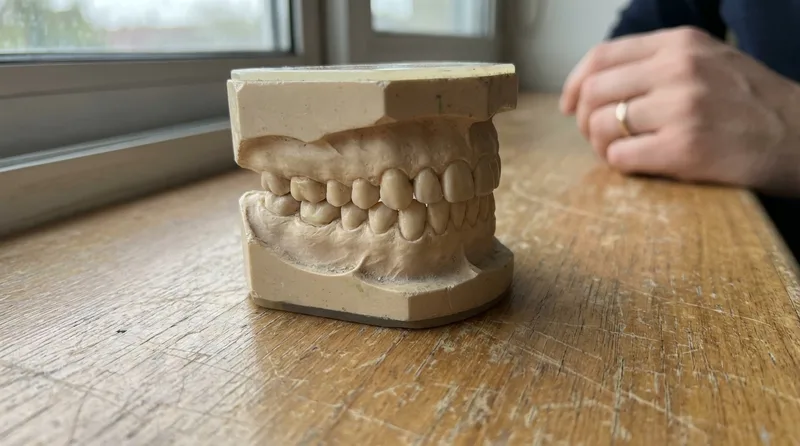
A crossbite is a misalignment in which one or more upper teeth sit inside the lower teeth when the jaw is closed, the reverse of a normal bite where the upper teeth slightly overlap the lower teeth. It is fundamentally a problem of how the upper and lower arches relate to each other, rather than how individual teeth are spaced or angled within one arch. A crossbite can involve a single tooth, several teeth, or one entire side of the mouth.
Crossbites are surprisingly common. Research published through Frontiers in Oral Health found crossbite affects roughly 10% of children in primary dentition, 11% in mixed dentition, and around 5% in permanent dentition, according to that body of research. The variation reflects the fact that some crossbites are identified and treated during childhood, while others persist or are not caught until adulthood.
A crossbite is different from an overbite or underbite, which describe the front-to-back relationship of the jaws. A crossbite describes a side-to-side, or transverse, misalignment. Understanding which type you or your child has is the first step toward understanding what treatment involves.
What Is the Difference Between Anterior and Posterior Crossbite?
An anterior crossbite affects the front teeth, where one or more upper front teeth sit behind the lower front teeth instead of in front of them. A posterior crossbite affects the back teeth, where the upper back teeth sit inside the lower back teeth rather than outside them. Each type has different causes and different treatment considerations.
An anterior crossbite often involves just one or two front teeth and can sometimes be confused with an underbite, though the mechanisms differ. It is frequently caused by the position of individual teeth rather than the entire jaw, though jaw position can also play a role. A posterior crossbite, by contrast, usually involves a narrow upper jaw relative to the lower jaw, causing the back teeth on one or both sides to bite inside the lower teeth instead of outside them.
Posterior crossbites are frequently unilateral, meaning they affect just one side, which can cause the lower jaw to shift sideways to find a comfortable bite. This shift, called a functional shift, can become a habitual pattern that affects jaw growth and symmetry over time if not addressed, particularly in growing children.
What Causes a Crossbite?
A crossbite is most often caused by a mismatch between the size or width of the upper and lower jaws, though tooth position, prolonged thumb sucking, and breathing patterns can also contribute. In many cases, more than one factor plays a role, and identifying the primary cause shapes the right treatment.
Common contributing factors include:
- A narrow upper jaw: The most common cause of posterior crossbite, often present from an early age and sometimes linked to mouth breathing.
- Prolonged thumb sucking or pacifier use: Can narrow the upper arch over time during childhood development.
- Delayed loss of baby teeth: Can cause permanent teeth to erupt in the wrong position.
- Genetics: Jaw size and shape run in families, and a mismatch between upper and lower jaw size is often inherited.
- Mouth breathing: Associated with palate narrowing during growth, which is one reason airway health is sometimes part of the orthodontic conversation.
Because the underlying cause varies so much by patient, an orthodontic evaluation looks beyond the visible bite to understand why it developed in the first place. This matters more for growing children, where addressing the cause early can guide jaw growth in a more favorable direction.
It is worth noting that not every narrow-looking bite is a true crossbite. Some patients have a naturally narrower upper arch that still meets the lower teeth correctly, while others have what looks like a minor crossbite that is actually within normal variation. This is exactly why a clinical exam, rather than a glance in the mirror, is the reliable way to confirm whether crossbite treatment is actually needed.
Why Should a Crossbite Be Treated?
A crossbite should be treated because it can cause uneven tooth wear, jaw asymmetry, gum recession, and jaw joint strain if left in place over time. Beyond the cosmetic effect, a crossbite changes how forces are distributed across the teeth and jaw every time you bite or chew, and that imbalance has consequences that accumulate gradually.
The most common consequences of an untreated crossbite include:
- Uneven or accelerated tooth wear: Teeth in a crossbite often contact at unusual angles, wearing down enamel faster than normal.
- Gum recession: Teeth forced into an abnormal position can push through thin bone, exposing the root and increasing recession risk.
- Jaw asymmetry: In children, an untreated posterior crossbite with a functional shift can influence asymmetric jaw growth.
- Jaw joint strain: The muscles and joints adapt to an uneven bite, which can contribute to jaw discomfort or clicking over time.
- Speech and chewing difficulty: Significant crossbites can affect how clearly certain sounds are produced and how efficiently food is chewed.
According to the American Dental Association's MouthHealthy resource, correcting bite problems early can prevent some of these downstream effects, which is part of why orthodontic evaluations are recommended starting around age seven, even before all permanent teeth have erupted.
How Is a Crossbite Treated in Children?
Crossbites in children are most effectively treated while the jaw is still growing, often using a palatal expander to gradually widen a narrow upper jaw before it fully matures. Early treatment takes advantage of growth that is still happening, which makes the correction more efficient than waiting until the jaw bones have fully developed.
A palatal expander is a fixed appliance that applies gentle, continuous pressure to widen the upper arch over weeks to months. Once the desired width is achieved, braces or other appliances may be used to fine-tune individual tooth positions. This staged approach, expand first and then align, is standard for posterior crossbites caught during childhood.
For an anterior crossbite, treatment sometimes simply involves a few months of braces or a removable appliance to move the affected teeth into the correct position, especially when only one or two teeth are involved. The American Academy of Pediatric Dentistry recommends an initial orthodontic evaluation by age seven specifically so issues like crossbite can be identified and addressed while treatment options are broadest.
Timing matters because the upper jaw has a natural growth plate, called the midpalatal suture, that fuses as a person matures. Expanding the jaw is far more efficient while that suture is still open, which is why pediatric dentists and orthodontists emphasize catching posterior crossbites well before adolescence whenever possible. Waiting until the teenage years or adulthood does not make treatment impossible, but it generally shifts the approach toward tooth movement or, in significant cases, surgical assistance rather than simple jaw expansion.
Can a Crossbite Be Treated in Adults?
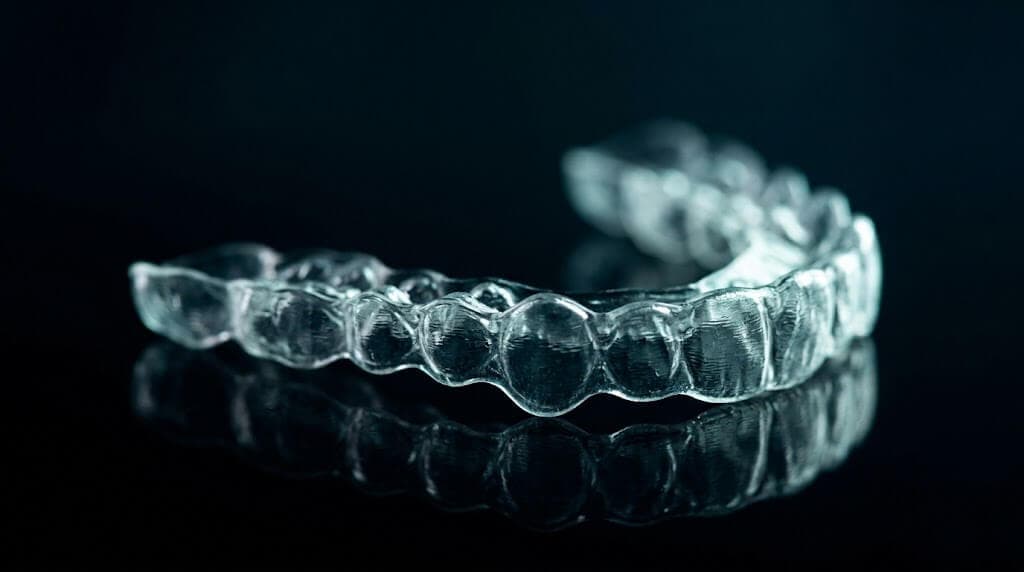
Crossbites can be treated in adults, though the approach differs from childhood treatment because the jawbone is no longer actively growing. Adult treatment typically relies on orthodontic tooth movement using clear aligners or braces, and in cases involving significant skeletal discrepancy, surgical correction may be considered alongside orthodontics.
For adults with a dental crossbite, meaning the issue is primarily about tooth position rather than jaw width, clear aligners can often correct the bite gradually over months, similar to how they address other alignment issues. Our guide to Invisalign versus braces covers how these treatments compare for adult patients.
For adults with a more significant skeletal crossbite, meaning the jaw bones themselves are mismatched in width, treatment is more involved and may require a combined orthodontic and surgical approach for full correction. Not every adult crossbite needs surgery, however, and many cases that look significant respond well to orthodontics alone. This is a clinical judgment made after a thorough evaluation, not something to assume from appearance alone. Our overview of adult braces options discusses the broader landscape of adult orthodontic treatment.

How Do You Know If You or Your Child Has a Crossbite?
Signs of a crossbite include teeth that visibly sit inside or outside their normal position when biting down, a jaw that shifts to one side when closing, uneven wear on certain teeth, or a face that looks slightly asymmetric. Some crossbites are obvious at a glance; others are subtle enough that only a dental exam reveals them clearly.
According to Healthline, parents are often the first to notice if a child's jaw seems to shift to one side when closing, or if the child seems to chew unevenly on one side. In adults, a crossbite is sometimes discovered only after wear patterns or sensitivity prompt a closer look. Either way, a dental exam with a bite assessment is the most reliable way to confirm a crossbite and understand its type and severity. If you have noticed your bite or your child's bite changing over time, our article on why teeth shift in adults covers related causes worth ruling out.
Willow Family Dentistry evaluates bite alignment at every comprehensive exam for patients of all ages. Whether the concern is a young child's developing bite or an adult bite that has changed over the years, Dr. Jeong can identify a crossbite and explain the most appropriate path forward.
Concerned about a crossbite for you or your child?
Book an evaluation at Willow Family Dentistry in Wylie, TX. Dr. Jeong will assess the bite, identify the type of crossbite present, and walk you through the right treatment options for your age and situation.
Explore clear alignersFurther Reading
Crossbite treatment connects to the broader orthodontic picture for both children and adults. The articles below go deeper on related options and considerations.
- Invisalign Candidacy: 7 Questions to Ask in Wylie, TX
- Gap Between Front Teeth: Causes and How to Close It
- Jawbone Loss After Tooth Loss: Why It Happens
Results may vary. Please consult with Dr. Jeong for personalized treatment recommendations.
Dr. Esther B. Jeong, DDS
DDS · Willow Family Dentistry
Wylie family dentist with 15+ years of experience providing gentle, judgment-free dental care.
Frequently Asked Questions
Was this article helpful?
You may also like


Have a dental question?
Schedule a consultation and get personalized answers from Dr. Jeong.
Call us
(972) 881-0715
Hours
Mon – Thu: 9am – 5pm
Fri: By Appointment
Location
1125 W FM 544, Wylie
Emergency? Same-day appointments available.