Cracked Tooth Syndrome: Symptoms, Diagnosis, and Treatment
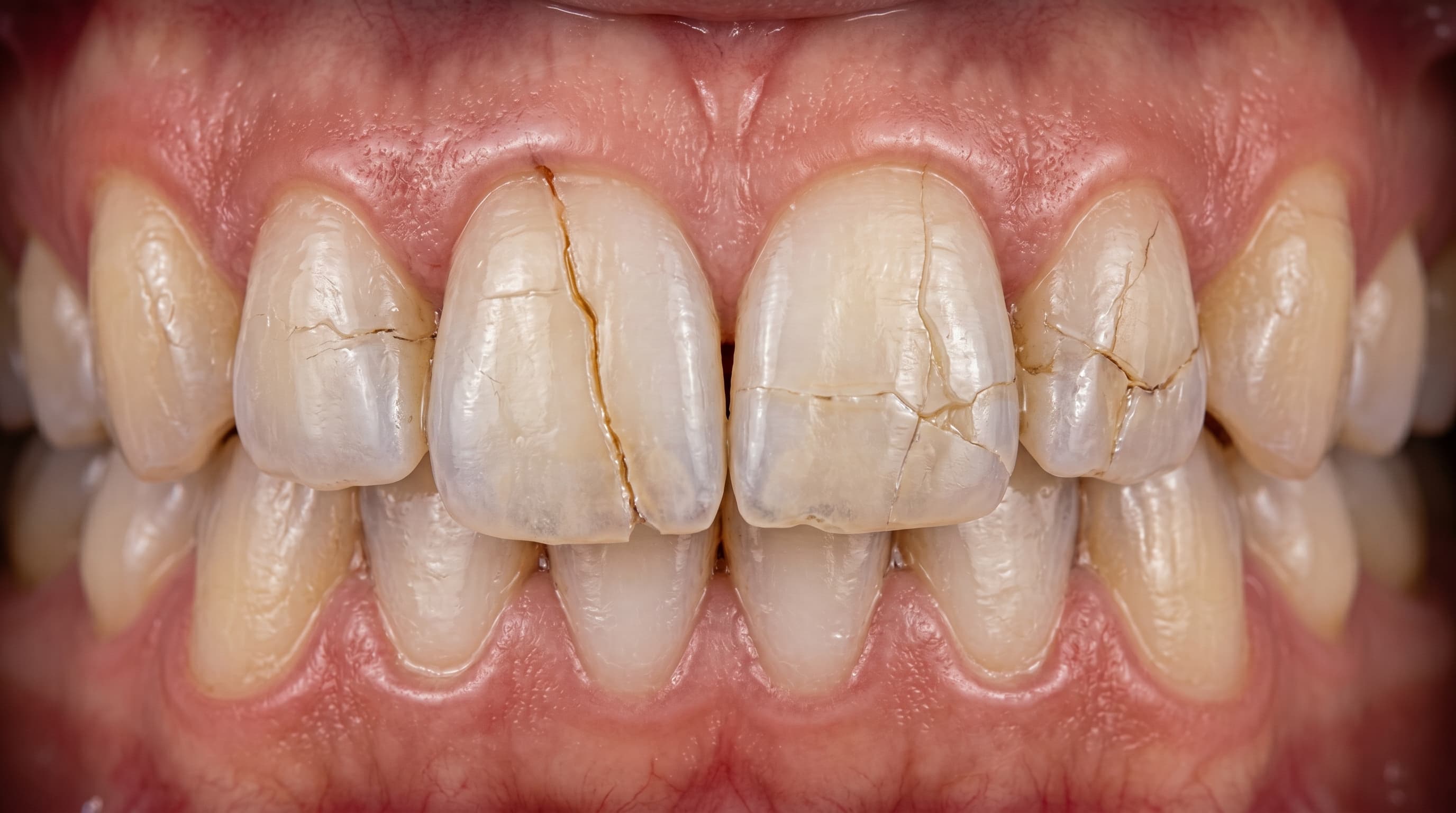
Cracked tooth syndrome is one of the most under-diagnosed conditions in dentistry. The crack is too small to see on an X-ray, too thin to feel with your tongue, and invisible to the naked eye. But it produces a pain pattern so specific that once you know what to look for, you can identify it yourself: a sharp, fleeting sting when you bite down on something hard, followed by a second spike of pain when you release the bite. That bite-and-release pattern is the signature of cracked tooth syndrome, and it sends thousands of patients on frustrating diagnostic journeys before someone finally identifies the crack.
The American Association of Endodontists identifies cracked teeth as the third leading cause of tooth loss in industrialized nations, behind periodontal disease and cavities. Dr. Esther Jeong at Willow Family Dentistry in Wylie, TX diagnoses cracked tooth syndrome regularly and uses specialized techniques including transillumination and 3D imaging that standard exams miss.
A cracked tooth often needs root canal treatment before a crown can go on. See root canal treatment in Wylie.
What Does Cracked Tooth Syndrome Feel Like?
The symptoms of cracked tooth syndrome are maddeningly inconsistent, which is exactly what makes it hard to diagnose. The pain doesn't behave like a cavity (constant, throbbing, worsening) or like a nerve issue (spontaneous, lingering, keeping you awake). It behaves like nothing else in dentistry.
The bite-and-release pattern is the hallmark. You bite down and feel a sharp sting on one specific tooth. It's fast, like a static shock. You open your mouth and a second wave of discomfort hits as the cracked pieces flex apart and release pressure on the nerve inside. Between bites, the tooth feels completely normal. No background ache. No spontaneous throbbing. Nothing until the next time you bite on that exact spot.
Cold sensitivity on one specific tooth that wasn't sensitive before. When a crack exposes the dentin layer, cold liquids reach the nerve through the fracture line. The sensitivity is sharp and localized to one tooth, unlike the generalized cold sensitivity from enamel erosion or recession that affects multiple teeth symmetrically.
Pain that comes and goes unpredictably. Some bites trigger it, others don't. Soft food never triggers it. Hard, crunchy food sometimes does but not always. The inconsistency depends on whether the food contacts the crack line at the right angle to flex the pieces apart. According to the ADA, this intermittent pattern is the primary reason cracked teeth go undiagnosed for months or even years.
The pain may be impossible to localize. Patients often can't tell which tooth hurts. They point to a region ("somewhere in the upper left") rather than a specific tooth because the pain is so brief that it's gone before they can isolate it. This vagueness frustrates patients and dentists alike and is one of the defining features of the condition.
Related: Cold sensitivity has 8 possible causes. → Teeth Sensitive to Cold Suddenly? 8 Causes and Fixes
Why Do X-Rays Miss Most Cracks?
This is the question that frustrates patients most. You went to the dentist, they took X-rays, everything looked normal, and they told you nothing was wrong. But the pain continued. The problem isn't the dentist. It's the physics of X-ray imaging.
Dental X-rays are two-dimensional projections of three-dimensional structures. They excel at showing cavities (density differences between healthy and decayed tooth structure), bone loss (visible gaps where bone used to be), and infections (dark areas at root tips). What they cannot reliably show is a hairline fracture running vertically through a tooth, because the X-ray beam must pass exactly parallel to the crack plane to detect it. If the beam passes at even a slight angle to the crack, the intact tooth structure on either side of the fracture overlaps and masks it completely.
According to the ADA, standard periapical and bitewing X-rays detect fewer than 30% of cracked teeth. That means over 70% of cracks are invisible on the most common dental imaging. This is why cracked tooth syndrome is diagnosed through clinical tests and specialized techniques, not imaging alone.
The iCAT 3D cone-beam CT scan at Willow improves detection significantly because it captures the tooth from hundreds of angles rather than one. Vertical and oblique fractures that hide on 2D X-rays often become visible on 3D cross-sections. Dr. Jeong uses iCAT imaging when clinical tests point to a crack but standard X-rays show nothing, resolving the diagnostic uncertainty that leaves other offices guessing.
How Does Dr. Jeong Diagnose Cracked Tooth Syndrome?
Diagnosis relies on a combination of clinical tests that replicate the pain pattern under controlled conditions. Dr. Jeong uses a systematic approach that narrows down the cracked tooth even when the patient can't identify which one hurts.
Bite test with a Tooth Slooth. The Tooth Slooth is a small plastic instrument with a concave tip that isolates individual cusps. Dr. Jeong places it on one cusp of a suspected tooth and asks you to bite down, then release. She moves to the next cusp and repeats. When the Tooth Slooth lands on the cusp adjacent to the crack, the bite-and-release pain reproduces. This test is the most reliable clinical method for identifying a cracked tooth because it replicates exactly the mechanism that causes the pain: flexion of the cracked segment under biting force.
Transillumination. A bright fiber-optic light is placed against the tooth from one side. In an intact tooth, the light transmits evenly through the structure and the tooth glows uniformly. In a cracked tooth, the fracture line blocks light transmission, creating a visible dark line or a shadow where the crack interrupts the light path. Transillumination is especially effective for cracks in the enamel and outer dentin. According to the American Association of Endodontists, transillumination is one of the most reliable non-invasive diagnostic methods for cracked teeth.
Dye staining. In ambiguous cases, Dr. Jeong may apply a dye (methylene blue) to the tooth surface. The dye seeps into the crack line by capillary action and makes it visible when the excess dye is rinsed away. This test confirms the presence and extent of a crack that transillumination suggests but doesn't fully define.
Probing. A dental explorer run along the tooth surface can sometimes catch in a crack line, especially at the gumline where cracks often terminate. Combined with the bite test and transillumination results, probing helps map the crack's direction and depth.
iCAT 3D imaging. When clinical tests confirm a crack but Dr. Jeong needs to see how deep it extends (into the root? through the pulp chamber? below the bone line?), the iCAT scan provides the answer. The depth and direction of the crack determine whether the tooth is restorable or needs extraction.
Bite-and-Release Pain That Won't Go Away?
Dr. Jeong uses bite testing, transillumination, and 3D imaging to find cracks that X-rays miss. One visit identifies the problem and the solution.
Request an Appointment →What Causes Teeth to Crack?
Cracks develop from a combination of cumulative stress and structural vulnerability. Most cracked teeth have been weakened long before the crack appears.
Large existing fillings are the number-one risk factor. A tooth with a filling that occupies more than half the width between the cusps is structurally compromised. The filling doesn't flex with the tooth the way intact enamel does, creating stress concentration points at the filling margins. Over years of chewing forces, those stress points become fracture initiation sites. The Mayo Clinic lists large restorations as a primary risk factor for cracked tooth syndrome.
Bruxism (grinding and clenching) multiplies the forces on teeth by 3-10 times normal chewing loads, applied for hours during sleep. A tooth that withstands normal chewing for decades can crack under grinding forces in years. Dr. Jeong sees the grinding-plus-large-filling combination more than any other cause.
Temperature cycling weakens enamel over time. Drinking hot coffee followed immediately by ice water creates rapid thermal expansion and contraction in the tooth structure. Enamel and dentin expand at different rates, creating micro-stress at the interface that accumulates with each cycle.
Biting on hard objects: ice, popcorn kernels, olive pits, pen caps, and opening packaging with teeth. A single high-force incident can propagate a crack that's been developing silently for months.
Age. Teeth become more brittle with age as the organic content of dentin decreases. Cracked tooth syndrome peaks in patients aged 30-50, exactly the demographic that has decades of chewing wear, old fillings reaching the end of their lifespan, and enough bruxism history for the cumulative damage to manifest.
Related: Grinding is the top cause of cracked teeth. → Custom Night Guards in Wylie, TX: Stop Teeth Grinding
What Are the Treatment Options for Cracked Tooth Syndrome?
Treatment depends on the crack's location, depth, and direction. Dr. Jeong matches the intervention to the severity.
| Crack Severity | Treatment | Cost Range | Prognosis |
|---|---|---|---|
| Craze lines (enamel only) | Monitoring; no treatment needed | $0 | Excellent; cosmetic only |
| Crack into dentin (above gumline) | Onlay or crown to bind and protect | $800-$2,000 | Good; stops progression in most cases |
| Crack reaching the pulp | Root canal + crown | $1,500-$3,000 | Good with full coverage crown |
| Split tooth (crack through root) | Extraction + implant or bridge | $3,000-$5,500 | Tooth lost; replacement needed |
| Vertical root fracture | Extraction (usually not restorable) | $150-$350 + replacement | Tooth lost; root fractures don't heal |
For cracks confined to the crown above the gumline, a dental crown or onlay binds the cracked segments together and prevents the flexion that causes pain. The crown acts like a splint: it holds the pieces in place so they move as one unit under chewing forces instead of flexing apart. Symptoms resolve immediately after the crown is cemented in most cases.
An onlay is the more conservative option when only one or two cusps are involved. It covers and binds the cracked segment without removing the entire outer tooth surface the way a full crown does. Dr. Jeong selects the onlay when the crack is limited and enough healthy tooth structure remains to support the restoration. According to the WebMD dental guide, conservative restorations that preserve healthy tooth structure produce the best long-term outcomes when the crack is caught early.
For cracks that reach the pulp (the nerve inside the tooth), a root canal removes the damaged nerve and the tooth is restored with a crown. The tooth is no longer vital but remains functional and can last decades with proper care.
For split teeth and vertical root fractures, extraction is usually the only option. A crack that extends below the bone line or splits the root cannot be splinted or restored. Replacement with a dental implant or bridge follows after healing.
The takeaway: early diagnosis saves the tooth. A crack caught at the dentin level costs $800-$2,000 to fix with a crown. The same crack left untreated until it reaches the pulp costs $1,500-$3,000. Left until it splits the tooth: $3,000-$5,500 for extraction and replacement. Every stage of delay increases the cost and decreases the prognosis. This is why the bite-and-release symptom deserves a dental visit, not a "wait and see."
Sharp Pain When You Bite? Get It Checked.
Dr. Jeong uses bite testing, transillumination, and iCAT 3D imaging to find cracks that other dentists miss. Early diagnosis saves the tooth and the cost of replacement.
Request an Appointment →Related: Crowns and onlays protect cracked teeth. → Same-Day Crowns: How CEREC Works
Cracked tooth syndrome is common, under-diagnosed, and progressive. The bite-and-release pain pattern is its signature, and if you're experiencing it, waiting for it to resolve on its own isn't a strategy. Cracks don't heal. They propagate. The only variable is how much tooth structure remains when you finally get it diagnosed and treated. At Willow Family Dentistry, Dr. Jeong has the diagnostic tools to find cracks that standard exams miss and the restorative expertise to save the tooth before the crack reaches the point of no return.
Cracks Don't Wait. Neither Should You.
Dr. Jeong diagnoses cracked teeth with transillumination and 3D imaging. Early treatment saves the tooth. Delayed treatment costs 3-5x more.
Request an Appointment →Suspect a cracked tooth?
Call (972) 881-0715 →Dr. Esther B. Jeong, DDS
DDS · Willow Family Dentistry
Wylie family dentist with 15+ years of experience providing gentle, judgment-free dental care.
Frequently Asked Questions
Was this article helpful?
You may also like



Have a dental question?
Schedule a consultation and get personalized answers from Dr. Jeong.
Call us
(972) 881-0715
Hours
Mon – Thu: 9am – 5pm
Fri: By Appointment
Location
1125 W FM 544, Wylie
Emergency? Same-day appointments available.