Bone Graft Recovery Timeline: What to Expect Week by Week
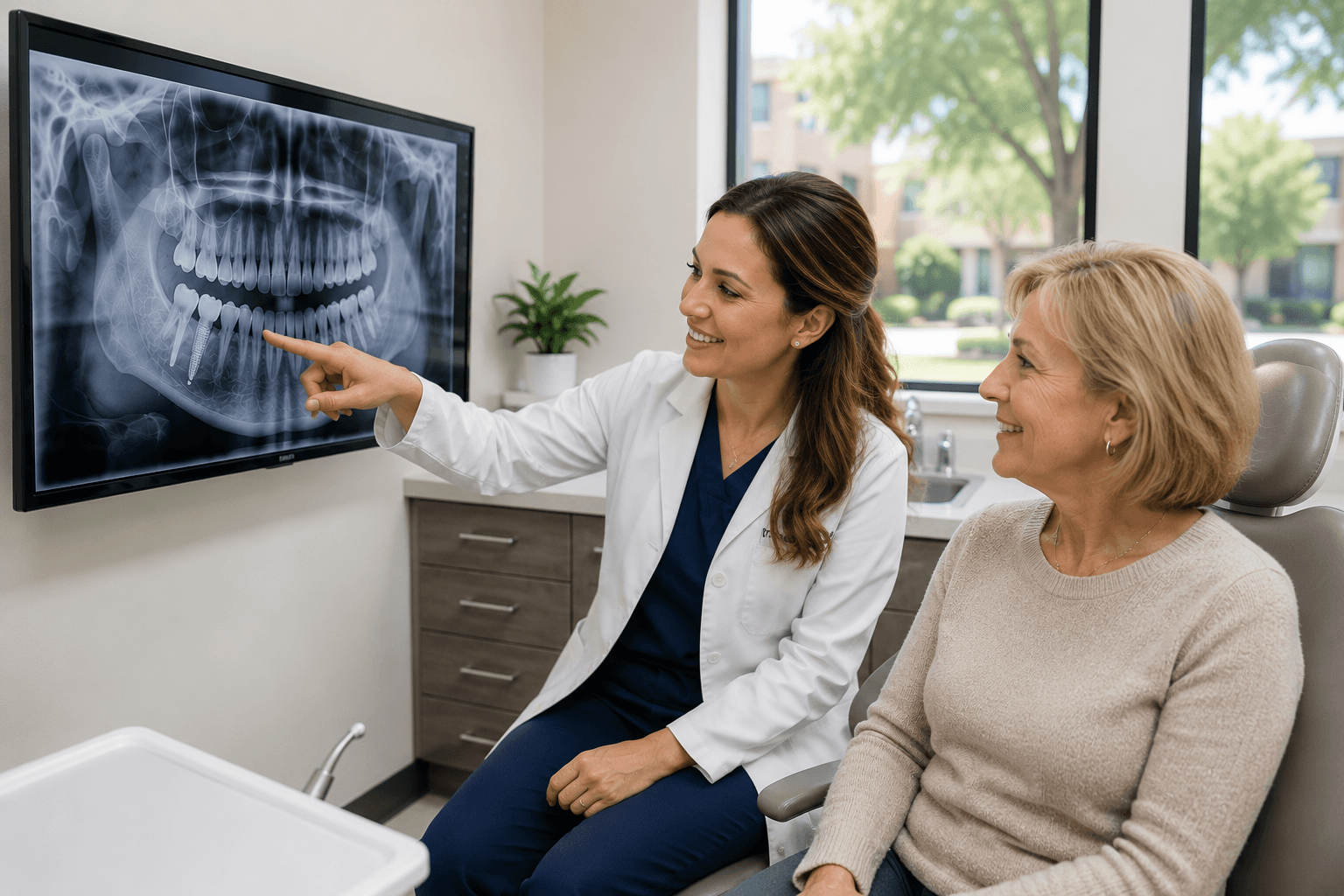
Bone graft recovery is the longest healing process in dental treatment, and the timeline catches patients off guard because most dental procedures heal in days or weeks. A bone graft needs months. The graft material (whether it's your own bone, donor bone, or synthetic material) doesn't just sit there like a filling. It undergoes a biological transformation called osseointegration: your body's own bone cells migrate into the graft scaffold, dissolve the graft material, and replace it with living bone. That process takes 3-6 months and can't be rushed. Understanding the bone graft recovery timeline week by week helps you know what's normal, what's concerning, and why the wait before your dental implant is placed exists.
Dr. Esther Jeong at Willow Family Dentistry in Wylie, TX performs bone grafting as part of her in-house implant workflow, using iCAT 3D imaging to plan graft volume precisely and monitor bone maturation before placing the implant. This guide covers what to expect at each stage so you're never wondering whether your healing is on track.
What Happens During a Dental Bone Graft?
Before covering recovery, a quick overview of the procedure helps the timeline make sense. Dr. Jeong opens the gum tissue at the deficient site, places the graft material into the area where bone is needed (usually an extraction socket or a resorbed ridge), covers it with a collagen membrane that holds the graft in place and guides healing, then closes the gum tissue with sutures. The procedure takes 30-90 minutes depending on the size of the graft. According to the Mayo Clinic, bone grafting is one of the most common procedures in implant dentistry and has a success rate exceeding 90% when performed with proper technique and adequate healing time.
The graft material serves as a scaffold, not a permanent implant. Your body treats it as a framework for building new bone. Over the following months, osteoblasts (bone-building cells) populate the scaffold, lay down new bone matrix, and gradually replace the graft with your own living bone. The membrane prevents soft tissue from growing into the graft space before bone has a chance to fill it. According to clinical research, this guided bone regeneration process is the standard technique for ridge augmentation before implant placement.
Week 1: Acute Healing Phase
The first week is the most uncomfortable and the most critical for protecting the graft. Here's the day-by-day progression.
Days 1-2: Swelling begins several hours after the procedure and increases over the first 48 hours. This is normal inflammatory response, not a complication. Apply ice packs (20 minutes on, 20 minutes off) to the outside of the face over the graft site. Bleeding should reduce to light oozing within 4-6 hours and stop by day 2. Bite gently on gauze as directed. Pain is moderate and managed with prescribed medication (typically ibuprofen 600mg alternating with acetaminophen 500mg, with stronger medication available if needed). According to the ADA, alternating ibuprofen and acetaminophen provides pain control comparable to opioids for most dental surgical procedures.
Days 3-4: Swelling peaks. This is the day patients often worry because swelling is at its maximum, which can look alarming. Bruising may appear on the cheek or jawline. Pain typically stabilizes or begins decreasing. Switch from ice to moist heat (warm washcloth) to promote blood flow and swelling resolution.
Days 5-7: Swelling begins resolving. Pain decreases noticeably. You may see small white granules in the surgical area or in your saliva; these are graft particles that didn't fully integrate and are normal to lose in small quantities. According to post-surgical guidelines, losing a few surface graft particles during the first week doesn't compromise the graft because the bulk of the material is secured beneath the membrane.
Week 1 Restrictions:
No spitting, no straws, no smoking, no rinsing forcefully (all create pressure that dislodges the graft/clot). No exercise or heavy lifting (elevated blood pressure increases bleeding risk). No chewing on the graft side. Soft foods only. Sleep elevated on 2 pillows to reduce swelling.
Related: Full post-surgery diet guide. → What to Eat After Dental Surgery: 14-Day Recovery Menu
Weeks 2-4: Soft Tissue Healing
The gum tissue over the graft closes and strengthens during this period. The internal bone regeneration has barely started, but the external appearance improves significantly.
Week 2: Sutures dissolve or are removed (depending on type). Swelling is mostly resolved. Pain is minimal, managed with OTC ibuprofen as needed. The gum tissue over the graft appears pink and is beginning to tighten. You can resume gentle brushing near (not on) the surgical site. Dr. Jeong typically sees patients at the 10-14 day mark for a post-operative check to confirm the tissue is closing properly and no infection is present.
Weeks 3-4: The gum tissue is essentially healed on the surface. The surgical area looks normal from the outside. Pain should be absent. You can return to normal brushing and flossing around the area (gently). Diet restrictions relax to avoid only hard, crunchy foods directly at the graft site. Most patients feel "back to normal" by week 3-4 and forget they have a graft healing underneath the gums. According to the ADA, the soft tissue closure at 3-4 weeks is an important milestone because it seals the graft from the oral environment, reducing contamination risk during the months of bone maturation that follow.
Months 2-3: Early Bone Maturation
This is the phase where nothing visible happens but everything biological happens. Beneath the healed gum tissue, osteoblasts are migrating through the graft scaffold, depositing new bone matrix, and beginning the mineralization process that converts soft callus into hard bone. You feel nothing during this process. The site looks healed. You eat normally. You exercise normally. The bone is maturing on its own timeline.
Dr. Jeong may take a progress iCAT scan around month 3 to evaluate bone density at the graft site. The scan shows how much new bone has formed and whether the graft volume is sufficient for the planned implant. According to implant planning research, most grafts show adequate bone formation for implant placement by 3-4 months, though larger grafts or grafts in areas with poor blood supply may need 5-6 months.
Months 4-6: Full Maturation and Implant Readiness
By month 4-6, the graft has matured into bone dense enough to support an implant. The graft scaffold has been largely replaced by your own living bone, the collagen membrane has been absorbed, and the site is ready for the next step. Dr. Jeong confirms readiness with the iCAT scan, measuring bone height, width, and density at the planned implant position in millimeters.
Once confirmed, implant placement is scheduled. The implant is placed into the newly formed bone, beginning its own 3-4 month osseointegration period before the final crown is attached. The total timeline from graft to completed implant tooth is typically 8-12 months. According to the Mayo Clinic, this phased approach (graft first, wait for maturation, then implant) produces the highest long-term implant success rates because the implant is placed into mature, dense bone rather than into a still-maturing graft.
| Timeline | What's Happening | How You Feel | Restrictions |
|---|---|---|---|
| Days 1-2 | Clot forming, inflammation starting | Moderate pain, increasing swelling, light bleeding | Liquids/soft foods, ice, no exercise, elevated sleep |
| Days 3-7 | Peak swelling, early clot stabilization | Swelling peaks day 3-4 then decreases, pain stabilizing | Soft foods, warm compresses, no strenuous activity |
| Weeks 2-4 | Soft tissue closing over graft, sutures dissolving | Minimal to no pain, gums look nearly normal | Gentle brushing, avoid hard foods at graft site |
| Months 2-3 | Osteoblasts building new bone inside graft scaffold | Completely normal; no awareness of graft | None (normal activity, normal diet) |
| Months 4-6 | Bone maturing, mineralizing, reaching implant-ready density | Completely normal | None; iCAT scan to confirm readiness for implant |
What Can Go Wrong? Warning Signs to Watch For
Bone graft complications are uncommon (less than 10% of cases) but recognizable. Contact Dr. Jeong's office immediately if you experience any of the following.
Increasing pain after day 4-5 rather than decreasing. Pain should peak around day 2-3 and improve steadily. Pain that worsens after the initial peak may indicate infection or graft exposure.
Fever above 101.5F lasting more than 24 hours. Low-grade fever (99-100.5F) for the first 24-48 hours is normal inflammatory response. Sustained high fever suggests infection requiring antibiotic treatment.
Pus or foul taste/odor from the surgical site. This indicates infection. Early antibiotic intervention usually resolves it without graft loss, but delay can compromise the graft.
Visible graft material exposure through the gum (membrane showing through). Small exposures may heal on their own with meticulous hygiene and chlorhexidine rinse. Larger exposures may require Dr. Jeong to intervene with additional tissue coverage. According to the ADA, membrane exposure is the most common graft complication and doesn't automatically mean graft failure, but it does require professional management.
Heavy bleeding that doesn't stop with pressure after 30 minutes. Some oozing for the first 24 hours is normal. Active bleeding beyond that timeframe needs evaluation.
How to Maximize Your Graft Success
The success rate exceeds 90%, and you can push it higher by supporting the biological process.
Don't smoke. Smoking reduces blood flow to the graft site by 30-40% through nicotine vasoconstriction, starving the graft of the oxygen and nutrients osteoblasts need to build bone. According to the Mayo Clinic, smokers have 2-3 times the graft failure rate of non-smokers. Dr. Jeong strongly recommends cessation for at least 2 weeks before and 8 weeks after grafting. Vaping carries similar risks due to nicotine delivery.
Take prescribed antibiotics as directed through the full course. The graft material is a foreign body until your bone replaces it, making it susceptible to bacterial colonization. The antibiotic coverage during the first week is the primary defense against early infection.
Use chlorhexidine rinse as directed (typically 0.12%, twice daily, starting 24 hours after surgery). Chlorhexidine provides antimicrobial protection to the surgical site during the 2-3 weeks when the gum tissue hasn't fully sealed.
Maintain excellent nutrition. Bone building requires calcium, vitamin D, protein, and vitamin C. Foods that support bone health (dairy, leafy greens, fish, eggs) are the same ones that support graft integration.
Keep all follow-up appointments. Dr. Jeong monitors the graft at 2 weeks, 6-8 weeks, and 3-4 months post-grafting. The progress iCAT scan at month 3-4 determines whether the bone has matured sufficiently for implant placement or needs additional time.
Planning a Bone Graft Before Implants?
Dr. Jeong performs bone grafting and implant placement in-house using iCAT 3D imaging. The graft is planned precisely to build the bone your implant needs, and the entire process is monitored from graft through final crown.
Request a Consultation →The bone graft recovery timeline is longer than any other dental procedure, but the first 2 weeks are the only period with significant discomfort and restrictions. After that, the bone matures silently beneath healed gums while you live normally. The 3-6 month wait before implant placement exists because the science demands it: an implant placed into mature bone succeeds at 95%+ rates, while an implant placed into immature graft has significantly higher failure risk. The wait isn't wasted time. It's the time your body needs to build the foundation your implant will stand on for decades. If you need a bone graft as part of your implant plan, schedule a consultation at Willow Family Dentistry. Dr. Jeong will show you the iCAT scan, explain exactly how much bone needs to be rebuilt, and walk you through the timeline specific to your anatomy.
The Wait Builds the Foundation
Dr. Jeong monitors bone graft maturation with iCAT imaging and places your implant only when the bone is ready. In-house grafting and implant placement, start to finish.
Request a Consultation →Questions about bone graft recovery?
Call (972) 881-0715 →Dr. Esther B. Jeong, DDS
DDS · Willow Family Dentistry
Wylie family dentist with 15+ years of experience providing gentle, judgment-free dental care.
Frequently Asked Questions
Was this article helpful?
You may also like


Have a dental question?
Schedule a consultation and get personalized answers from Dr. Jeong.
Call us
(972) 881-0715
Hours
Mon – Thu: 9am – 5pm
Fri: By Appointment
Location
1125 W FM 544, Wylie
Emergency? Same-day appointments available.