Back to School Dental Checkup: Wylie TX Family Checklist
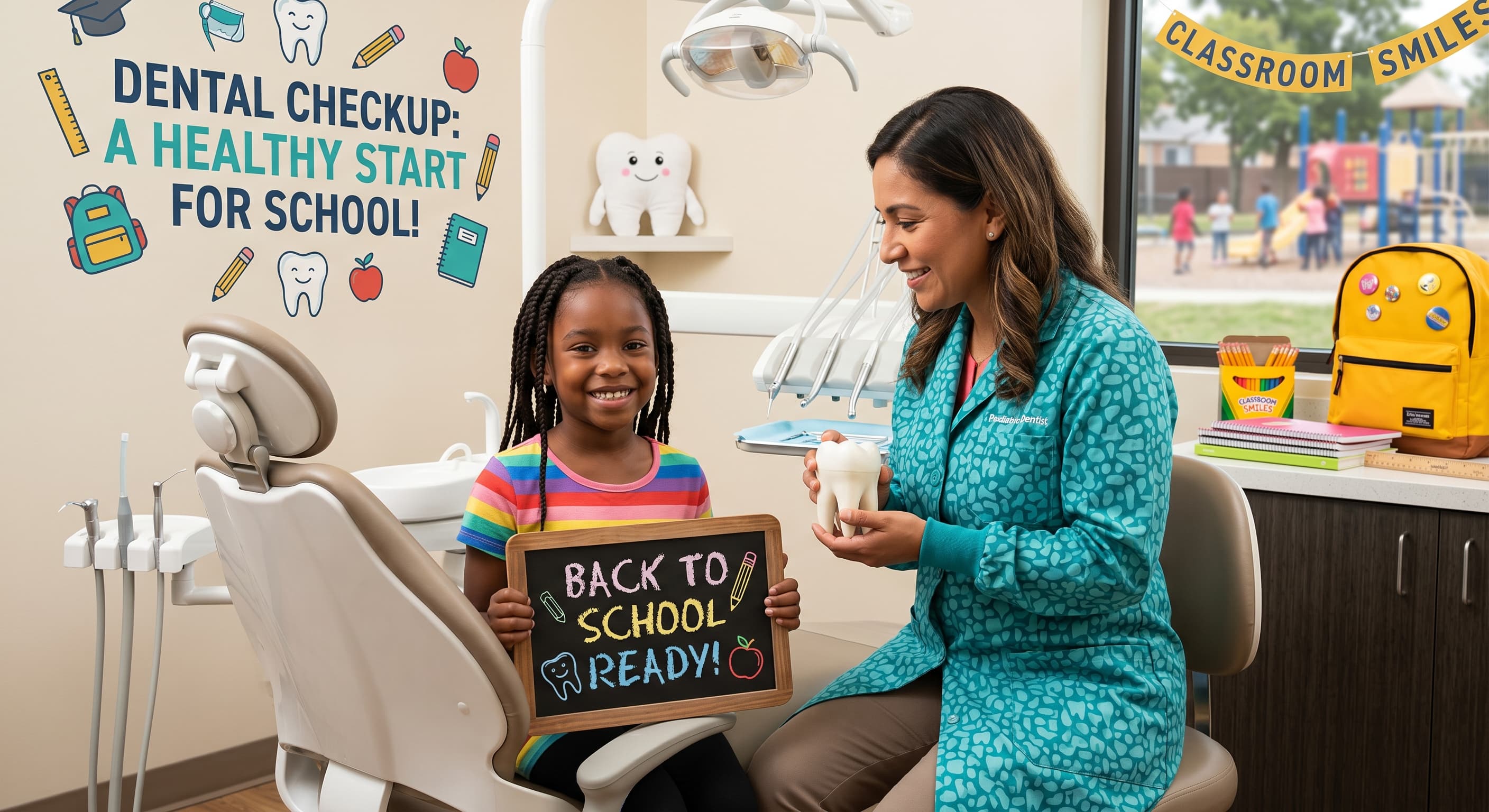
A back to school dental checkup is one of those appointments that's easy to push down the to-do list between school supply shopping, sports physicals, and orientation packets. But here's why it shouldn't wait. The ADA reports that tooth decay is the most common chronic disease in children, five times more common than asthma. And kids with untreated dental problems are three times more likely to miss school due to dental issues than their peers.
At Willow Family Dentistry in Wylie, TX, Dr. Esther Jeong sees the back-to-school season as the best opportunity to catch problems early, update preventive care, and set your child up for a school year free of dental emergencies. This checklist covers everything your family needs to handle before that first bell rings.
Why Does a Back to School Dental Checkup Matter?
A back to school dental checkup matters because six months is a long time in a child's mouth. Teeth erupt, baby teeth loosen, cavities can develop between visits, and bite patterns shift as the jaw grows. Catching these changes before the school year starts means your child isn't sitting in class with a toothache or missing a Tuesday morning for an emergency extraction.
The numbers make the case clearly. According to the CDC, 20% of children ages 5-11 have at least one untreated decayed tooth. That's one in five elementary students walking around with active decay that could have been caught at a routine visit. Many of those kids don't complain because early cavities don't always produce symptoms. They just get bigger.
There's also the focus factor. A child dealing with dental discomfort has a harder time concentrating, eating lunch comfortably, and participating in activities. Research from the American Journal of Public Health found that children with poor oral health were more likely to have lower grades and miss more school days than children with good oral health. A 30-minute checkup in July can prevent weeks of disruption in October.
What Should a Back-to-School Dental Visit Include?
A thorough back-to-school visit covers more than just "open wide and check for cavities." Dr. Jeong tailors the exam to your child's age and developmental stage, checking for issues that are time-sensitive heading into the school year. Here's what to expect at each age.
Ages 5-7: The Transition Years
Baby teeth are falling out and permanent teeth are coming in. Dr. Jeong checks that the first permanent molars (the "six-year molars") are erupting properly. She looks at spacing to predict whether crowding might develop. This is also the age when fluoride treatments and dental sealants have the biggest impact, because those brand-new permanent teeth are most vulnerable to decay in their first two years after eruption.
Ages 8-12: Growth and Development
More permanent teeth arrive, and bite patterns become clearer. Dr. Jeong evaluates whether your child's bite is developing normally or whether early orthodontic intervention might save time and money later. Updated X-rays (typically every 12-18 months at this age) show what's happening beneath the gums: unerupted teeth, missing permanent teeth, or teeth developing in the wrong direction. This is the age window where catching a problem early can mean the difference between simple treatment and something more involved down the road.
Ages 13-17: Teens
Wisdom teeth start showing up on X-rays even if they haven't erupted yet. Dr. Jeong monitors their position and advises if removal will likely be needed. For teens in orthodontic treatment, the back-to-school visit confirms that braces or aligners aren't contributing to hygiene issues. Teens are also at higher risk for sports-related dental injuries and cavity development due to snacking habits. A cleaning and exam reset the baseline before the school year's routine takes over.
Every visit includes a professional cleaning, fluoride application (for children at cavity risk), and an oral cancer screening for teens. If X-rays are due, they're taken and reviewed the same day.
Related: When should kids start visiting the dentist? Earlier than most parents think. → When Should a Child First See the Dentist?
Does Your Child Need Dental Sealants Before School Starts?
If your child's permanent molars have erupted and don't already have sealants, the back-to-school visit is the ideal time to apply them. Dental sealants are thin, protective coatings painted onto the chewing surfaces of back teeth where most childhood cavities develop. The CDC reports that sealants can reduce the risk of cavities in school-age children by nearly 80%.
The timing matters. Sealants work best when applied soon after a permanent molar erupts, before bacteria have a chance to settle into the deep grooves and pits on the tooth's surface. For most kids, that means the first molars around age 6 and the second molars around age 12. The AAPD recommends sealants for all children at cavity risk, and the application takes a few minutes per tooth, requires no numbing, and is completely comfortable. Your child sits in the chair, the tooth is cleaned and dried, the sealant is painted on, and a curing light hardens it in seconds.
Think of it as a raincoat for the tooth. Food particles and bacteria can't reach the grooved surfaces underneath. The sealant lasts 5-10 years with normal wear and is checked at every visit. For a child heading into a school year of cafeteria lunches and after-school snacks, it's one of the most cost-effective preventive measures available.
Related: Full breakdown of sealant costs, safety, and what to expect. → Dental Sealants for Kids: Cost, Safety, and Benefits
Should Your Student Athlete Get a Custom Mouthguard?
If your child plays a contact sport or any sport with collision risk, a custom mouthguard should be on your back-to-school checklist right next to new cleats. The ADA reports that dental injuries are the most common type of facial injury in sports, and a properly fitted mouthguard is the single most effective way to prevent them.
Football, basketball, soccer, wrestling, hockey, lacrosse, martial arts, even baseball and softball: if there's a ball, an elbow, or a hard surface near your child's face, a mouthguard belongs in the equipment bag. Sports physicals don't cover dental protection, so this falls on parents to handle separately.
Custom vs Boil-and-Bite
Boil-and-bite guards from the sporting goods store are better than nothing, but they're bulky, uncomfortable, and often loose enough that kids pull them out mid-game. A custom mouthguard from Dr. Jeong is made from impressions of your child's actual teeth. It fits precisely, stays in place, allows normal breathing and speaking, and provides significantly better impact absorption. The cost difference between a $20 store guard and a custom one is small compared to the $1,000-$5,000 bill for treating a knocked-out or fractured permanent tooth in the ER.
Protect Your Athlete's Smile
Custom mouthguards can be fitted at the same visit as your child's back-to-school checkup. One appointment covers both.
Request an Appointment →Related: Everything parents need to know about custom mouthguards. → Custom Mouthguard for Kids in Wylie TX: A Parent's Guide
How to Build a Dental Routine That Survives the School Year
The best dental routine is the one that actually happens on a Tuesday morning when everyone's running late and the bus is in five minutes. Perfection isn't the goal. Consistency is. Here's what matters most at each part of the day.
Morning Brushing
Two minutes with a fluoride toothpaste before breakfast or after, either works as long as it happens every day. For kids under 6, use a pea-sized amount of toothpaste and supervise to make sure they're not swallowing it. For kids 6 and older, an electric toothbrush with a built-in timer takes the guesswork out of "did I brush long enough?"
Lunchbox Strategy
What your child eats at school matters for their teeth. Water is always the best drink choice, not juice boxes or sports drinks. Cheese, yogurt, and crunchy vegetables are tooth-friendly snacks. Sticky snacks like fruit leather, gummy candy, and dried fruit cling to tooth surfaces and feed the bacteria that cause cavities. You don't need to ban every treat, just be aware that sticky and sugary items need to be followed by water at minimum.
Evening Brushing and Flossing
The bedtime brush is the most important one because saliva flow drops during sleep, which means bacteria have all night to work on anything left on the teeth. Brush for two minutes, then floss. For kids who resist flossing, floss picks are an acceptable alternative. The goal is getting something between those teeth before bed. By age 8-9, most kids can floss independently with some supervision. Before that, parents should be doing it for them.
Start the School Year With a Clean Slate
A checkup, cleaning, and any needed preventive care in one visit. Dr. Jeong makes it easy for the whole family.
Request an Appointment →When Should You Schedule Your Back-to-School Appointment?
June and July. That's the sweet spot. By August, every parent in Wylie has the same idea, and appointment availability shrinks fast. Scheduling in early summer gives you first pick of time slots and plenty of buffer if Dr. Jeong finds something that needs a follow-up visit before school starts.
If you have multiple kids, ask to schedule them back to back or in overlapping appointments. Willow Family Dentistry is set up for family blocks, which means you can bring two or three kids in the same window rather than making separate trips. Less time in the car, less time away from summer activities.
And if something does come up on day one or week one of school, Willow Family Dentistry offers same-day emergency appointments. A chipped tooth at recess, a loose crown from biting something too hard at lunch, a toothache that came out of nowhere. Dr. Jeong's team handles all of it, and they'll fit your child in the same day whenever possible.
One more thing worth mentioning: if your child is anxious about the dentist, the back-to-school visit is a good time to address it in a low-pressure setting. A routine cleaning is far less stressful than an emergency visit, and Dr. Jeong's team has a dedicated approach for nervous kids that includes a kids play area, gentle explanations, and nitrous oxide when needed.
Related: How often should kids really be going to the dentist? → Pediatric Dentist Wylie TX: How Often Kids Need Checkups
Your child's back to school dental checkup is the simplest item on the pre-school-year list, and it's the one that prevents the most disruption once the year is underway. A clean exam means no surprise cavities in November. Sealants mean fewer fillings in the years ahead. A custom mouthguard means your athlete's smile stays intact. And a solid brushing routine means you're not fighting a losing battle against decay all semester.
Book your family's back-to-school visits at Willow Family Dentistry while summer availability is still wide open. Dr. Jeong and her multilingual team (English, Korean, Spanish, and Vietnamese) are ready to take care of every smile in the family.
Book Your Family's Back-to-School Visits
Schedule checkups for the whole family in one visit. We'll handle cleanings, sealants, mouthguards, and anything else your kids need before school starts.
Request an Appointment →Need to schedule multiple kids?
Call (972) 881-0715 →Dr. Esther B. Jeong, DDS
DDS · Willow Family Dentistry
Wylie family dentist with 15+ years of experience providing gentle, judgment-free dental care.
Frequently Asked Questions
Was this article helpful?

Have a dental question?
Schedule a consultation and get personalized answers from Dr. Jeong.
Call us
(972) 881-0715
Hours
Mon – Thu: 9am – 5pm
Fri: By Appointment
Location
1125 W FM 544, Wylie
Emergency? Same-day appointments available.