Teeth Whitening Consultation Wylie TX: Are You a Candidate
A teeth whitening consultation Wylie TX patients book should settle one question before any gel is ordered: will bleaching actually change the color of your teeth?
Sometimes the honest answer is no. Whitening gel works on stain held inside natural enamel and dentin. It does nothing to porcelain, and it behaves unpredictably on white fluorosis marks or grey antibiotic banding. So the assessment comes first. Dr. Esther Jeong checks gum health, enamel thickness, and existing dental work before anyone talks about shade goals, which is how professional teeth whitening in Wylie, TX is meant to start.
Below is what actually gets examined, which stains lift and which resist, how custom trays compare with what is on the shelf at your grocery store, and what your options are if whitening is not the right tool.
What happens at a teeth whitening consultation Wylie TX patients book?
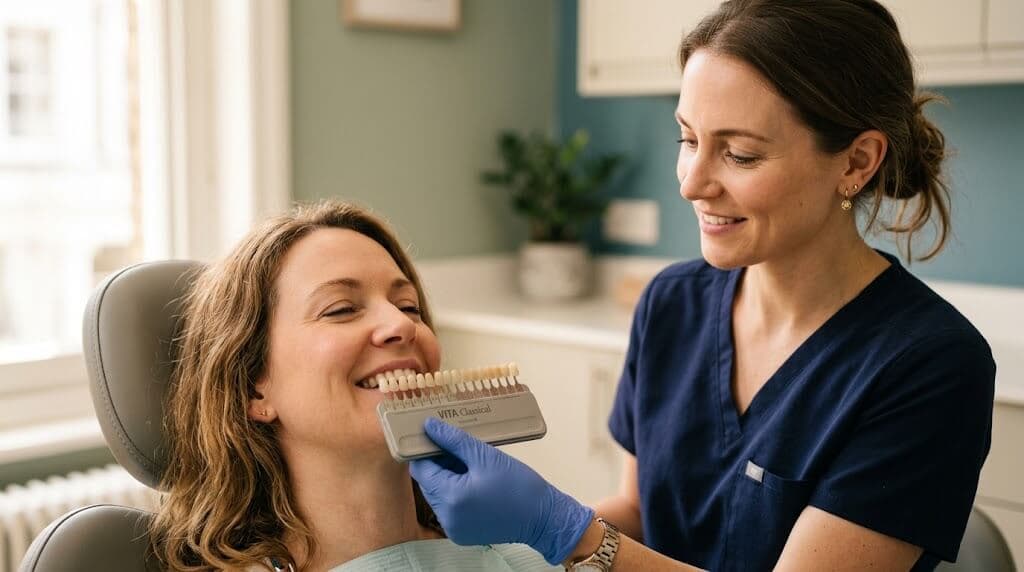
A whitening consultation has four parts: a conversation about the shade you want, an examination of teeth and gums, a record of your starting shade against a standard guide, and a recommendation. Most visits run 20 to 30 minutes. No gel is applied that day.
The order is deliberate. Dr. Jeong asks what is bothering you before looking at your teeth, because "my front teeth look yellow in photos" and "one tooth went dark after I fell off a bike in high school" are different problems with different answers.
Gum and tooth health come before cosmetics in every case. Bleaching gel reaches the tooth through enamel, and it also reaches exposed root surfaces, open margins around old fillings, and inflamed gum tissue. CDC data puts some form of periodontal disease in 42% of adults aged 30 and older, so this check is not a formality.
The four stages of the visit
STAGE 1
Your shade goal
What bothers you, which photos prompted it, and whether there is a date you are working toward.
STAGE 2
Examination
Gums, enamel, exposed roots, old fillings, and any single tooth that is darker than its neighbors.
STAGE 3
Shade record
Your current shade is matched to a guide and photographed, so progress is measured rather than guessed.
STAGE 4
The recommendation
Whether whitening suits you, what change is realistic, and what it costs in writing.
Not sure whether whitening is your answer?
One short visit at Willow Family Dentistry tells you what will lift, what will not, and what a realistic result looks like on your own teeth.
Book a consultation →Who is a good candidate for professional whitening?
Good candidates have healthy gums, no untreated decay, and staining that sits in natural tooth structure rather than in restorations. Yellow and brown discoloration from years of coffee, tea, or tobacco responds best. Grey tones respond least, and porcelain does not respond at all.
Age matters less than people assume. Enamel thins over decades, letting the darker dentin underneath show through, and that kind of yellowing often responds well because the stain is genuinely inside the tooth. What stops treatment is usually something else entirely: an untreated cavity, a cracked filling, or gum recession that leaves root surface exposed.
That last group is larger than most people expect. CDC NCHS figures put untreated tooth decay in nearly 1 in 4 American adults, and bleaching gel finds those openings quickly. The American Academy of Cosmetic Dentistry also reports 99.7% of Americans consider a smile an important social asset, so the demand is real. Assessment first, gel second.
Usually a good fit
General yellowing from food and drink, the most common reason adults ask about whitening in the first place.
Age-related dulling, where thinning enamel lets darker dentin show through the surface.
Tobacco or coffee staining, which sits mostly on and just inside the enamel surface.
Pre-event brightening, for a wedding, graduation, or family photos with a few weeks of lead time.
Needs something else first
Untreated decay or a failing filling, where gel can reach the inner tooth through the gap. Sequencing issue, not a permanent no.
Active gum inflammation or recession, since exposed root surface reacts far more than enamel does.
A single dark tooth after an injury, which usually points to the nerve rather than to surface stain.
Crowns or veneers on the front teeth, because whitening the natural teeth around them changes how well they match.
Pregnant and nursing patients are usually advised to wait, and children are rarely candidates while permanent teeth are still coming through. Both are sequencing conversations rather than refusals.
Which stains respond to whitening, and which do not?
Surface stains respond fastest, stains formed inside the tooth respond slowly and partially, and stains in dental materials do not respond at all. Knowing which category your discoloration falls into is the single most useful thing a consultation produces, because it sets your expectations honestly.
| Type of discoloration | Where it comes from | Response to whitening gel |
|---|---|---|
| Extrinsic (surface) | Coffee, tea, red wine, curry, tobacco | Strong. Often the fastest visible change |
| Intrinsic (inside enamel) | Aging, thinning enamel, genetics | Partial and slower. Needs longer wear time |
| Fluorosis marks | Too much fluoride while teeth were forming | Uneven. White marks can look brighter at first |
| Tetracycline banding | Certain antibiotics during tooth development | Poor. Grey and blue bands rarely lift |
| Single dark tooth | Trauma affecting the nerve inside | Tray gel will not fix it. Needs internal assessment |
| Crowns, veneers, fillings | Manufactured shade, set at the lab | None. Materials keep the shade they were made in |
Fluorosis is the one that catches people out. The white flecks are already lighter than the surrounding enamel, so they can look more obvious during the first week of whitening before the background catches up.
Whitening changes tooth structure. It cannot change porcelain, composite, or the shade of a crown made three years ago.
Related: White marks on enamel have a specific cause and a specific treatment path. How dental fluorosis forms →
How does professional whitening compare with store-bought kits?
The difference is fit and concentration, not magic. Custom trays hold dentist-strength gel against every tooth surface evenly, including the curves that one-size strips bridge over. The American Dental Association reports professional whitening can improve tooth shade by four to eight levels in about two weeks.
| Option | How it works | Realistic result | Main limitation |
|---|---|---|---|
| Custom take-home trays | Trays made from a scan of your own teeth, plus dentist-strength gel | 4 to 8 shade levels in about 2 weeks | Depends on wearing them as directed |
| Over-the-counter strips | One-size adhesive strips at lower gel concentration | Modest change on flat front surfaces | Poor contact on crowded or curved teeth |
| Whitening toothpaste | Mild abrasives that lift surface film | Cleans stain, does not change internal shade | Cannot reach discoloration inside the tooth |
| Charcoal and DIY pastes | Abrasion, sometimes with acidic ingredients | No reliable shade change shown | Abrasive wear on enamel and no ADA Seal |
| In-office bleaching | Higher-concentration gel with the gums isolated, done chairside | Visible change in a single appointment | Higher fee, and home maintenance is still needed |
Willow Family Dentistry provides custom take-home trays, which suit most patients well because the wear schedule is flexible and the trays get reused for touch-ups years later. The ADA's guidance on tooth whitening products and safety is worth reading before you buy anything off a shelf.
One practical note about cost. Whitening is a cosmetic procedure, so dental plans almost never contribute to it. Ask for the fee in writing at the consultation, and ask what replacement gel costs later, because that is the part people forget to budget for.
Ask about your shade goal, not just the price
Willow Family Dentistry records your starting shade, explains what is realistically achievable, and gives you the fee in writing before anything begins.
Request an appointment →What happens to crowns, veneers, and fillings when you whiten?
Nothing at all. Bleaching gel changes natural tooth structure only, so porcelain crowns, veneers, and composite fillings keep the exact shade the lab or dentist made them. Whitening the natural teeth around older restorations can therefore leave those restorations looking darker by contrast.
This is a genuine planning problem, not a small detail. If you have a crown on an upper front tooth and you whiten everything else by four shades, the crown that used to blend in now stands out. The usual solution is to sequence the work: whiten first, wait about two weeks for the shade to settle, then match new porcelain crowns or dental veneers to the brighter result.
Composite fillings on front teeth follow the same logic. They can be polished and sometimes replaced fairly simply, which makes them easier to manage than a crown. Bring up any front-tooth dental work at the consultation, because it changes the order of treatment and occasionally the recommendation itself.
4-8
shade levels of improvement from professional whitening in about two weeks, according to the ADA
10-15 yrs
how long porcelain veneers commonly last with good care, per the Journal of Prosthetic Dentistry
99.7%
of Americans consider a smile an important social asset, reports the American Academy of Cosmetic Dentistry
How can you reduce sensitivity while whitening?
Sensitivity during whitening is common, temporary, and largely manageable. Peroxide moves through enamel toward the nerve, which some teeth notice more than others. Adjusting wear time and using a desensitizing paste usually settles it without stopping treatment altogether.
Teeth that already react to cold or to sweet foods tend to react to gel too, which is one more reason the examination matters. Existing recession, enamel wear, or an unrestored crack changes the plan before it starts.
Worth naming the other reason people quit early. Research published in BMC Oral Health in 2024 found 36% of Americans experience dental anxiety, and an unexpected twinge on night three feels much larger to an already nervous patient. Telling us at that point is the right move. For context, the Journal of Dental Anesthesia reports sedation dentistry has helped 75% of fearful patients keep up with regular visits.
Five adjustments that usually work
- Shorten each session. Two hours instead of overnight, then build back up once your teeth settle.
- Skip a day. Alternating days extends treatment slightly and reduces the cumulative effect considerably.
- Use a potassium nitrate toothpaste. Start it a week before whitening rather than after sensitivity appears.
- Use less gel per tray. A thin ribbon is enough. Excess squeezes onto gum tissue and irritates it.
- Tell the practice early. Gel concentration can be lowered, and a lower strength worn longer often reaches the same shade.
The ADA's patient guidance on sensitive teeth covers the underlying causes in more detail. Persistent sensitivity that lasts beyond a few days after you stop is worth a call rather than a wait.
Related: Teeth that react to sugar are often signaling something structural. Why teeth get sensitive to sweets →
How long do whitening results last?
Most people hold a good result for one to three years, with touch-ups in between. The range is wide because it depends almost entirely on habits rather than on the gel. Coffee, tea, red wine, and tobacco return stain to the same enamel that just released it.
This is where custom trays earn their fee. You keep them, so a two or three night refresh once or twice a year costs only the gel. Store-bought strips have to be repurchased in full every time.
- Rinse with water after staining drinks. Not brushing straight away, since enamel is temporarily softened by acidic drinks.
- Use a straw for iced coffee and tea. Small change, measurable difference over months.
- Keep to your cleaning schedule. Professional cleanings remove the surface film that dulls a whitened result.
- Store the trays properly. Rinsed, dry, and in the case. Warped trays no longer hold gel evenly.
- Refresh before an event, not after. Give yourself two weeks so any temporary sensitivity has time to settle.
Routine preventive care does more for a whitened smile than any product does. The ADA notes regular dental visits catch around 80% of oral health issues before they become serious, and the same visits keep stain from rebuilding unnoticed. The Journal of Dental Research goes further: adults who attend regularly are 60% less likely to lose teeth.
Related: Acid wear thins enamel and changes how teeth look and respond. What causes enamel erosion →
What if whitening is not the right answer for you?
Then the consultation has done its job. Whitening is one tool among several, and it is the least invasive of them. When discoloration sits in the tooth structure itself, or when shape and position are the real concern, other treatments address what gel cannot.
OPTION 1
Composite bonding
Reshapes and re-colors small areas of a single tooth without touching the rest.
OPTION 2
Porcelain veneers
Covers deep intrinsic staining, chips, and small gaps in one treatment.
OPTION 3
Internal treatment
For a single tooth that darkened after trauma, where the nerve is the cause.
OPTION 4
Alignment first
Straighter teeth reflect light differently and are easier to keep clean.
Alignment deserves a mention of its own. The ADA reports straighter teeth are easier to clean, reducing the risk of cavities and gum disease by up to 30%, so correcting position sometimes improves both appearance and health more than shade alone would.
Veneers are a trade-off rather than an upgrade. They involve preparing the tooth surface, and the Journal of Prosthetic Dentistry reports they commonly last 10 to 15 years with good care. For discoloration alone, whitening remains the lighter option, which is exactly why it gets assessed first. A conversation about cosmetic dentistry in Wylie, TX usually starts here and stays there.
Conclusion: the shade goal comes before the gel
A teeth whitening consultation Wylie TX patients book is a short appointment with a specific job: matching what you want to what your teeth will actually do. That is worth 25 minutes before you spend anything.
Book the assessment, get your starting shade recorded, and ask what change is realistic for your particular staining. If the answer is bonding, or treating a filling first, or waiting until after your cleaning, you will still have saved yourself a disappointing result.
Results may vary. Please consult with Dr. Jeong for personalized treatment recommendations.
Find out whether whitening will work on your teeth
Willow Family Dentistry records your shade, checks your gums and existing dental work, and explains what is realistic before you commit to anything. Wylie, Murphy, Sachse, and Lucas families welcome.
Book your consultation →Dr. Esther B. Jeong, DDS
DDS · Willow Family Dentistry
Wylie family dentist with 15+ years of experience providing gentle, judgment-free dental care.
Frequently Asked Questions
Was this article helpful?
You may also like


Have a dental question?
Schedule a consultation and get personalized answers from Dr. Jeong.
Call us
(972) 881-0715
Hours
Mon – Thu: 9am – 5pm
Fri: By Appointment
Location
1125 W FM 544, Wylie
Emergency? Same-day appointments available.