Payment Plans for Dental Work: A Wylie Family Guide

Most families researching payment plans for dental work are not looking for a loan. They are looking for a way to say yes to treatment this month instead of postponing it into next year, when the tooth will cost more to fix.
That is a reasonable thing to want, and it is a normal conversation at Willow Family Dentistry. Dr. Esther Jeong will tell you what is urgent, what can wait, and what it costs, before anyone asks you to decide. That applies to a single filling and to a full restorative dentistry plan.
This guide walks through the options a family in Wylie actually has: what the practice accepts, how CareCredit and Cherry differ, where HSA and FSA dollars fit, and how to sequence treatment so one benefit year does not have to absorb everything.
What are payment plans for dental work, and how do they work?
Payment plans for dental work split the cost of treatment into scheduled monthly payments instead of one payment at the appointment. Some run through the dental office directly, most run through a third-party provider such as CareCredit or Cherry, and the practice receives payment while you pay the provider.
IN-OFFICE ARRANGEMENT
Between you and the practice. Simpler, and handled by the people you already see.
THIRD-PARTY PLAN
A credit product with its own approval process, terms, and consequences for a missed payment.
The distinction matters because the two structures behave differently if life gets complicated. An in-office arrangement is between you and the practice. A third-party plan is a credit product, with its own approval process, terms, and consequences for a missed payment.
Neither is better in the abstract. What decides it is the size of the treatment, how quickly you can clear it, and whether the plan charges interest from day one or only after a promotional window closes.
Three ways dental cost usually gets managed
Option three is the one people forget, and it is often the least expensive. A tooth that needs a crown does not always need it this quarter.
Want the numbers before you decide anything?
Willow Family Dentistry provides a written estimate first, with your insurance share and your out-of-pocket cost listed separately. No pressure, no upselling.
Request an appointment →Which payment options does Willow Family Dentistry offer families?
Willow Family Dentistry accepts cash, check, Visa, MasterCard, American Express, and Discover, along with HSA and FSA funds and third-party financing through CareCredit and Cherry. Insurance claims are filed for you, so financing only ever applies to the balance your plan does not cover.
WHAT WE ACCEPT
Insurance claims are filed for you, so financing only ever applies to the balance your plan does not cover.
Because this is a private practice rather than a corporate office, Dr. Jeong has the authority to sequence treatment around a family's budget. There is no regional policy dictating that everything on the treatment plan must be scheduled within 30 days.
What each option is genuinely good for
HSA and FSA funds
The most economical route, because you are spending pre-tax dollars. FSA balances usually expire at year end.
Cherry
Pre-qualification does not affect your credit score, and you see a fixed monthly figure before committing.
CareCredit
Useful for larger treatment when you can clear the balance inside the promotional period.
Cards or check at each visit
Often the simplest choice for a filling or a cleaning, where financing paperwork adds nothing.
The ADA's patient guidance on dental financing plans is worth reading before you apply for anything, because it explains the questions that decide whether a plan is a good fit.
How do CareCredit and Cherry compare for dental treatment?
CareCredit works like a health care credit card with promotional financing periods, while Cherry offers fixed monthly payment plans with pre-qualification that leaves your credit score untouched. Both are widely used in dentistry, and both approve treatment quickly, often during your appointment.
CareCredit
Excellent value if you clear the balance in time. Considerably less so if you do not, because interest can then apply to the original amount.
Cherry
Predictability: one figure, one end date, no promotional cliff to track.
Here's the honest difference. CareCredit's promotional periods can be excellent value if you clear the balance in time, and considerably less so if you do not, because interest can then apply to the original amount. Cherry's appeal is predictability: one figure, one end date, no promotional cliff to track.
| Option | How it works | Best suited to |
|---|---|---|
| CareCredit | A health care credit card with promotional periods; interest may be charged retroactively if the balance is not cleared in time | Families confident they can clear the balance inside the promotional window |
| Cherry | Fixed monthly payment plan with pre-qualification that does not affect your credit score | People who want one predictable monthly figure and a fixed end date |
| HSA or FSA | Pre-tax dollars you already set aside, used directly at the appointment | Anyone with funds available, especially before an FSA year-end deadline |
| Insurance plus staged treatment | Treatment sequenced across two benefit years so two annual maximums apply | Larger treatment plans that are safe to complete in phases |
| Card or cash at time of service | Visa, MasterCard, Amex, Discover, check, or cash, paid per visit | Smaller treatment where financing paperwork is not worth the effort |
Terms for both providers change, so confirm the current rate and length directly with them before you sign. Our team can start either application at the front desk, but the agreement is between you and the provider.
Related: Curious how the appointment itself works before you plan the budget? Our first visit guide covers the sequence. Read the first visit guide →
How do HSA and FSA dollars change what a family pays?
Dental treatment is an eligible expense for both HSA and FSA accounts, which means you pay with pre-tax dollars. For a household in a 22% bracket, that effectively reduces the real cost of a $1,200 crown by roughly a quarter, with no application and no interest involved.
HSA
Funds roll over indefinitely and belong to you.
FSA
Funds usually expire at the end of the plan year, with only a short grace period or small carryover if your employer allows one.
The two accounts behave differently in one important way. HSA funds roll over indefinitely and belong to you. FSA funds usually expire at the end of the plan year, with only a short grace period or a small carryover if your employer allows one.
December 31
FSA DEADLINE
Money left in an FSA on December 31 is simply gone. A cleaning, a filling, or a night guard is a far better outcome than forfeiting it.
That deadline is the reason our schedule fills in November and December. Money left in an FSA on December 31 is simply gone, and a cleaning, a filling, or a night guard is a far better outcome than forfeiting it.
What HSA and FSA funds usually cover
✓ ELIGIBLE
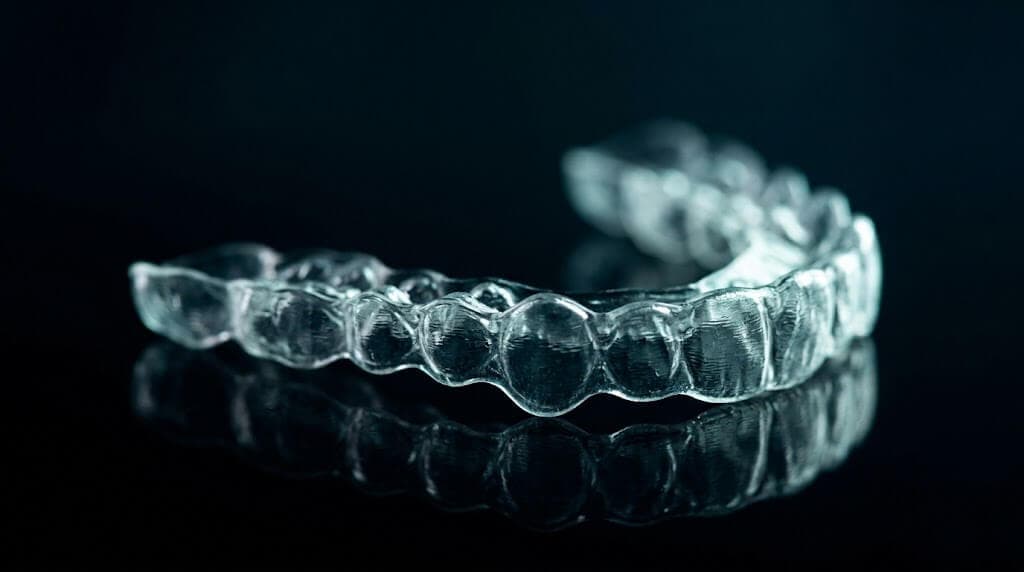
Exams, cleanings, X-rays, fillings, crowns, extractions, root canal treatment, clear aligner therapy in most cases, and night guards.
× USUALLY NOT ELIGIBLE
Whitening and other purely cosmetic treatment.
? CHECK FIRST
Veneers, which may qualify when they serve a restorative purpose rather than a cosmetic one.
How can a family spread treatment across two benefit years?
Most dental plans cap what they pay each year at $1,000 to $2,000, and unused benefits rarely roll over. Completing part of a treatment plan in December and the rest in January draws on two separate annual maximums, which can nearly double what insurance contributes.
DECEMBER
First annual maximum
Complete one part of the plan while this year's benefit is still available.
JANUARY
Second annual maximum
A fresh cap applies, so the remainder draws on new benefit.
RESULT
Nearly double the contribution
Two maximums of $1,000 to $2,000 each instead of one.
This works only when the delay is clinically safe, and that judgment has to come first. An active infection or a cracked tooth is not something to schedule around a calendar. A second crown on a stable tooth usually is.
For families, the sequencing question multiplies. Two parents and two children on one plan share a household maximum in some cases and hold individual maximums in others. Knowing which applies changes the order in which you should book.
A workable sequence for a large family treatment plan
Map the treatment, then map the payments
Bring your whole family in and Dr. Jeong will lay out what is urgent, what can wait, and how to phase the rest across your benefit year.
Plan your family visits →What should you ask before signing a payment plan?
Ask four things: the total you will repay including interest, the monthly payment, the exact end date, and what happens if a payment is late. A plan that looks affordable at $89 a month can cost considerably more than the treatment did once a promotional period lapses.
ASK 01
The total you will repay, including interest
ASK 02
The monthly payment
ASK 03
The exact end date
ASK 04
What happens if a payment is late
Reputable providers answer all four in writing without hesitation. If an answer arrives as a reassurance rather than a number, treat that as information about the product.
Questions worth asking the dental office too
Is any of this treatment optional right now? A good answer separates urgent work from elective work honestly.
What happens if I only do part of it this year? There is usually a sensible partial plan.
Will the estimate change once treatment starts? Ask what would cause it to change, and by roughly how much.
Can you request a pre-treatment estimate from my insurer? For anything substantial, carriers will confirm their share in writing first.
Postponing indefinitely carries its own cost. About 1 in 4 adults in the United States has untreated tooth decay, according to CDC figures, and the ADA Health Policy Institute counts roughly 2 million emergency room visits a year for dental problems that a dentist could have handled sooner and for less.
Do payment plans work for larger treatment like implants or aligners?
Yes, and this is where financing earns its place. Treatment such as dental implants or full arch restoration runs across several appointments and several months, which fits a monthly payment structure far better than a single invoice ever will.
The longevity argument matters here too. Research in the Journal of Oral and Maxillofacial Surgery puts implant success at 95 to 98 percent over ten years, and porcelain veneers commonly last 10 to 15 years with good care, according to the Journal of Prosthetic Dentistry. Spreading payment over 24 months for something measured in decades is reasonable arithmetic.
95-98%
implant success over ten years (Journal of Oral and Maxillofacial Surgery)
10-15 yrs
typical lifespan of porcelain veneers with good care (Journal of Prosthetic Dentistry)
6-18 mo
typical aligner treatment, against 18 to 36 months for braces (AAO)
Clear aligners follow a similar pattern. The AAO notes typical aligner treatment runs 6 to 18 months against 18 to 36 months for traditional braces, and monthly payments often line up neatly with the treatment timeline itself.
Related: Considering tooth replacement and weighing the sequence? Same-day denture options are worth understanding first. Read about immediate dentures →
How do you keep family dental costs predictable over time?
Prevention is the only reliable cost control in dentistry. Regular exams catch roughly 80% of oral health issues before they become serious, according to the ADA, and a filling costs a fraction of the crown or root canal treatment it prevents. Nothing about financing beats not needing the treatment.
80%
of oral health issues caught by regular exams before they turn serious (ADA)
60%
lower chance of losing teeth among regular dental visitors (Journal of Dental Research)
80%
fewer cavities in school-age children with sealants (CDC)
The numbers back this up over a lifetime. People who visit a dentist regularly are 60% less likely to lose teeth, per research in the Journal of Dental Research, and CDC data shows dental sealants can reduce cavities in school-age children by nearly 80%. Sealants sit in the preventive tier on most plans.
Three habits keep a family's dental budget stable. Keep the twice-yearly preventive visits even when nothing feels wrong. Start children's dental visits early, since the ADA recommends a first visit by age one. And mention small changes at the appointment you already have, rather than waiting for them to become the reason for an urgent one.
Affordable care starts with a plan you agreed to
Willow Family Dentistry will show you the full estimate, the insurance share, and the monthly options, then let you choose the pace.
Request an appointment →Conclusion: the right plan is the one you can finish
Payment plans for dental work are worth using when they let you treat a real problem now instead of watching it grow. They are worth avoiding when the monthly figure only looks manageable because nobody mentioned the end date.
Bring your treatment plan and your insurance card to Willow Family Dentistry, and we will put the whole picture on one page: what your plan covers, what you owe, and which parts can reasonably wait. Then you decide, at (972) 881-0715 or online.
Results may vary. Please consult with Dr. Jeong for personalized treatment recommendations.
Flexible payment options for family dental care in Wylie, TX
Willow Family Dentistry accepts HSA and FSA funds, all major cards, and CareCredit and Cherry financing, with a written estimate before treatment starts.
Request an appointment →Dr. Esther B. Jeong, DDS
DDS · Willow Family Dentistry
Wylie family dentist with 15+ years of experience providing gentle, judgment-free dental care.
Frequently Asked Questions
Was this article helpful?
You may also like


Have a dental question?
Schedule a consultation and get personalized answers from Dr. Jeong.
Call us
(972) 881-0715
Hours
Mon – Thu: 9am – 5pm
Fri: By Appointment
Location
1125 W FM 544, Wylie
Emergency? Same-day appointments available.