Child First Dental Visit What to Expect at Kindergarten
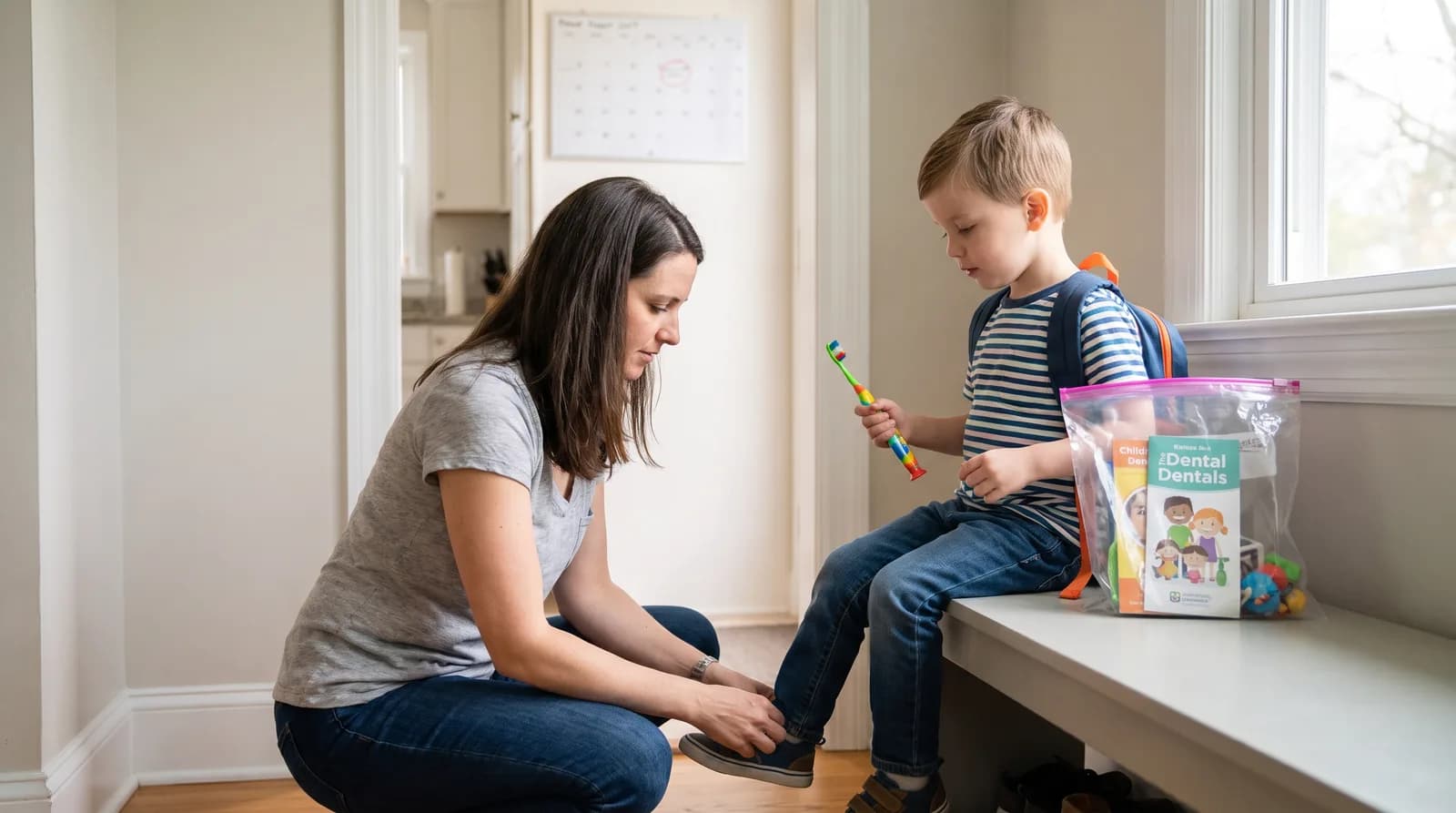
Starting kindergarten often means a first real pediatric dental visit lands around the same busy season, and it's normal for a child first dental visit what to expect question to come with some genuine nervousness, for the child and the parent both. The good news is a first visit is built specifically around easing a child in gently.
New families moving to the area, or first-time parents navigating this for the first time themselves, often have the least context for what a modern first visit actually looks like. It's rarely anything like what an adult remembers from their own childhood.
This guide covers what actually happens, the language that helps at home, and what happens if a child simply won't open up that day. For pediatric care generally, see this practice's pediatric dentistry services.
Child First Dental Visit What to Expect at Kindergarten Age
A child's first dental visit typically involves a gentle introduction to the office, a tooth count, a light cleaning if the child cooperates, and a simple conversation with the parent, without any pressure to complete everything in one sitting.
The visit moves at the child's pace, not a fixed script. Some kids sit calmly through a full exam on the first try. Others need a shorter, lighter version, with more done at a follow-up visit once they're more comfortable.
The ADA recommends a child's first dental visit by age 1 or when the first tooth appears, so a kindergarten-age visit is often not technically the very first one, but it's frequently the first one a child actually remembers.
That memory matters more than the clinical content of the visit itself. A calm, positive first memorable experience tends to shape how a child feels about dental visits for years afterward, regardless of how many prior visits happened before it. Regular dental visits can catch about 80% of oral health issues before they become serious, according to the ADA, which is part of why establishing this pattern early carries real long-term value.
Families who moved recently sometimes worry that switching providers mid-childhood will confuse or upset a child. In practice, kids adapt quickly to a new office as long as the new team takes the same patient, unhurried approach. Tooth decay remains the most common chronic disease in children, roughly five times more common than asthma, according to the ADA, which is part of why establishing a comfortable dental relationship early matters so much.
Ready to Schedule a First Visit?
Let us know your child is nervous or new, and we'll plan the visit accordingly.
Schedule a Visit →What Actually Happens During a Kindergarten First Visit?
During a kindergarten first visit, the dentist counts and checks each tooth, looks for early signs of decay, may polish teeth lightly, and talks with the parent about brushing habits and any specific concerns.
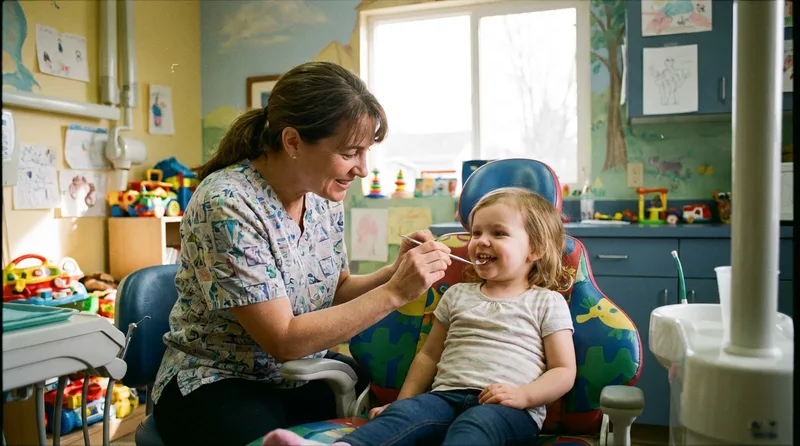
Everything is framed in simple, kid-friendly terms throughout. Counting teeth becomes a game rather than an exam. A gentle polish becomes "giving your teeth a bath." The clinical purpose stays the same, but the language stays approachable.
- Tooth count and check: a visual look at each tooth for early decay or spacing issues.
- Light cleaning: a gentle polish, if the child is comfortable with it that day.
- Parent conversation: brushing habits, diet, and any specific worries get discussed directly.
X-rays usually aren't part of a first visit unless there's a specific reason to take one. Most first visits stay entirely visual and hands-on, without any additional equipment involved.
According to ADA guidance, early dental visits focus primarily on establishing comfort and familiarity rather than completing every possible diagnostic step in one sitting.
What Words Should I Use (and Avoid) at Home?
At home before the visit, use words like 'count your teeth' and 'give your teeth a cleaning' instead of clinical or alarming terms, since even well-meaning warnings can plant a worry that wasn't there before.
Kids pick up on tone more than specific vocabulary, but certain words carry baggage that's hard to undo once introduced. A parent reassuring a child that something won't be uncomfortable often plants the idea that discomfort was even a possibility in the first place.
Neutral, simple language works better. "The dentist is going to count your teeth and make sure they're healthy" gives a child accurate information without introducing any worry that wasn't already there.
Siblings and grandparents sometimes unintentionally introduce alarming language too, often from their own childhood memories of dentistry decades ago. A quick heads-up to family members beforehand can prevent an offhand comment from undoing careful preparation at home.
Books and shows designed specifically for this age group tend to use exactly this kind of neutral, friendly language already, which makes them a genuinely useful supplement rather than just a distraction before the visit.
| Skip This | Try This Instead |
|---|---|
| Reassurances that nothing bad will happen | "The dentist will count your teeth" |
| Clinical words for local anesthetic | "Sleepy juice for your tooth" |
| Clinical words for the dental handpiece | "Special toothbrush" or "tooth tickler" |
| "Don't be nervous" | "You can ask questions any time" |
What Is the Tell-Show-Do Method?
Tell-show-do is a technique where the dentist first tells a child what's about to happen in simple words, then shows the tool or step at a safe distance, and only then actually does it, building trust one small step at a time.

This approach removes the surprise factor almost entirely. A child who knows exactly what a tool looks and sounds like before it touches their mouth is far less likely to feel ambushed by it mid-visit.
Each step gets repeated as needed. If a child needs to see and touch a tool three times before feeling ready, that's a normal part of the process, not a sign the visit is going poorly.
The technique works because it hands a measure of control back to the child. Instead of things simply happening to them, they get to observe, ask questions, and signal readiness before each new step begins.
Dr. Jeong and the team use this approach consistently with young patients, not just for a single nervous visit but as the default way pediatric appointments are structured from the start. Patients who keep up with routine dental care are roughly 60% less likely to lose teeth over time, according to the Journal of Dental Research, a pattern that starts with exactly this kind of positive early experience.
A Judgment-Free Approach for Nervous Kids
Dr. Jeong uses tell-show-do with every young patient, not just the anxious ones.
Meet Dr. Jeong →What If My Child Won't Open Their Mouth?
If a child won't open their mouth, the team doesn't force the issue; instead, they slow down, return to tell-show-do at an earlier step, or reschedule a portion of the exam for another visit once trust is built.
Pushing a scared child to comply usually backfires, making the next visit harder rather than easier. A calmer, slower approach that respects the child's pace tends to produce a much better long-term relationship with dental visits.
It's genuinely fine if a first visit doesn't cover everything. A short, positive experience that ends on good terms sets up a much better second visit than a longer one that ends in tears.
Parents sometimes feel embarrassed if a visit doesn't go smoothly, but this is an extremely common part of pediatric dentistry, not a reflection of parenting or a child's temperament. The team has seen this pattern many times before.
A follow-up visit scheduled soon after, rather than months later, tends to work best when a first attempt didn't go as planned. The shorter gap keeps the momentum from the first visit rather than starting over from scratch. 20% of children ages 5 to 11 have at least one untreated decayed tooth, according to the CDC, which underscores why persisting through a rocky first visit matters more than getting it perfect on the first try.
When Does Nitrous Oxide Make Sense for a Nervous Child?
Nitrous oxide makes sense for a genuinely anxious child who can't settle even with tell-show-do and a patient pace, offering mild, safe relaxation that helps a nervous kid get through an exam or simple treatment more comfortably.
Nitrous oxide isn't the starting point for a typical first visit. It's an option held in reserve for kids whose anxiety doesn't respond to a slower, gentler approach on its own.
It wears off within minutes and involves no injections, which makes it a reasonable option even for a young, nervous child. For more on how it works specifically, see this practice's nitrous oxide sedation services.
Dental anxiety affects a meaningful share of both kids and adults, and there's nothing unusual about a child needing this extra layer of support to get through an exam comfortably. It's a normal part of the toolkit, not a last resort reserved for extreme cases.
Deciding whether nitrous oxide makes sense for a specific child is a conversation, not a predetermined checklist. Dr. Jeong discusses it directly with parents once it's clear tell-show-do alone isn't going to be enough for that particular visit.
How Can I Prepare My Child at Home?
Preparing a child at home involves reading a simple book about visiting the dentist, using neutral language, avoiding your own dental anxiety in front of them, and framing the visit as routine rather than a big event.

Kids absorb a parent's anxiety more than most parents realize. A parent who's visibly nervous about their own dental history, even without saying much, often transfers some of that unease to the child.
Treating the visit as an unremarkable part of the week, similar to a haircut, tends to set the right tone better than building it up as something unusual in either direction.
According to Mayo Clinic's general guidance on dental care, a calm, matter-of-fact approach from caregivers tends to produce more relaxed children during medical and dental visits alike.
How Do I Book My Child's First Visit?
Booking a first visit involves calling or requesting an appointment, mentioning the child's age and that it's a first or early visit, and asking any specific questions about what to expect ahead of time.
Letting the front desk know in advance that a child is nervous or that it's an early visit helps the team plan appropriately, whether that means extra time or a specific approach for that child.
- Call or request an appointment and mention the child's age.
- Note if the child has any specific fears or past negative experiences.
- Ask about tell-show-do or nitrous oxide if relevant beforehand.
- Bring a comfort item if it helps the child feel more at ease.
New families to the area or first-time parents often have extra logistical questions too, like what to bring or how long to expect the visit to take. Asking these directly at booking tends to smooth out the actual day considerably.
For a fuller walkthrough of what booking and a first visit generally involve, see this practice's guide on how to book a dentist appointment in Wylie, TX.
The short version: a kindergarten first visit is built to move at a child's pace, using simple language and a tell-show-do approach that builds trust rather than forcing compliance. Nitrous oxide is there as a backup for genuinely anxious kids, not a default.
Results may vary. Please consult with Dr. Jeong for personalized treatment recommendations.
If a first visit is coming up and nerves are already showing at home, that's normal, and a quick call ahead of time can help the team prepare accordingly. Most families find the actual visit goes more smoothly than the anticipation beforehand.
Have a question about your child's first visit?
Contact Us →Dr. Esther B. Jeong, DDS
DDS · Willow Family Dentistry
Wylie family dentist with 15+ years of experience providing gentle, judgment-free dental care.
Frequently Asked Questions
Was this article helpful?
You may also like

Have a dental question?
Schedule a consultation and get personalized answers from Dr. Jeong.
Call us
(972) 881-0715
Hours
Mon – Thu: 9am – 5pm
Fri: By Appointment
Location
1125 W FM 544, Wylie
Emergency? Same-day appointments available.