
Dental Sealants for Kids: Cost, Safety & Benefits | Wylie TX
8 min read
Dental implants are one of the most significant advances in modern dentistry, offering a permanent solution for missing teeth that looks, feels, and functions like natural teeth. But the success of a dental implant depends heavily on precise planning, and that is where 3D imaging technology makes all the difference.
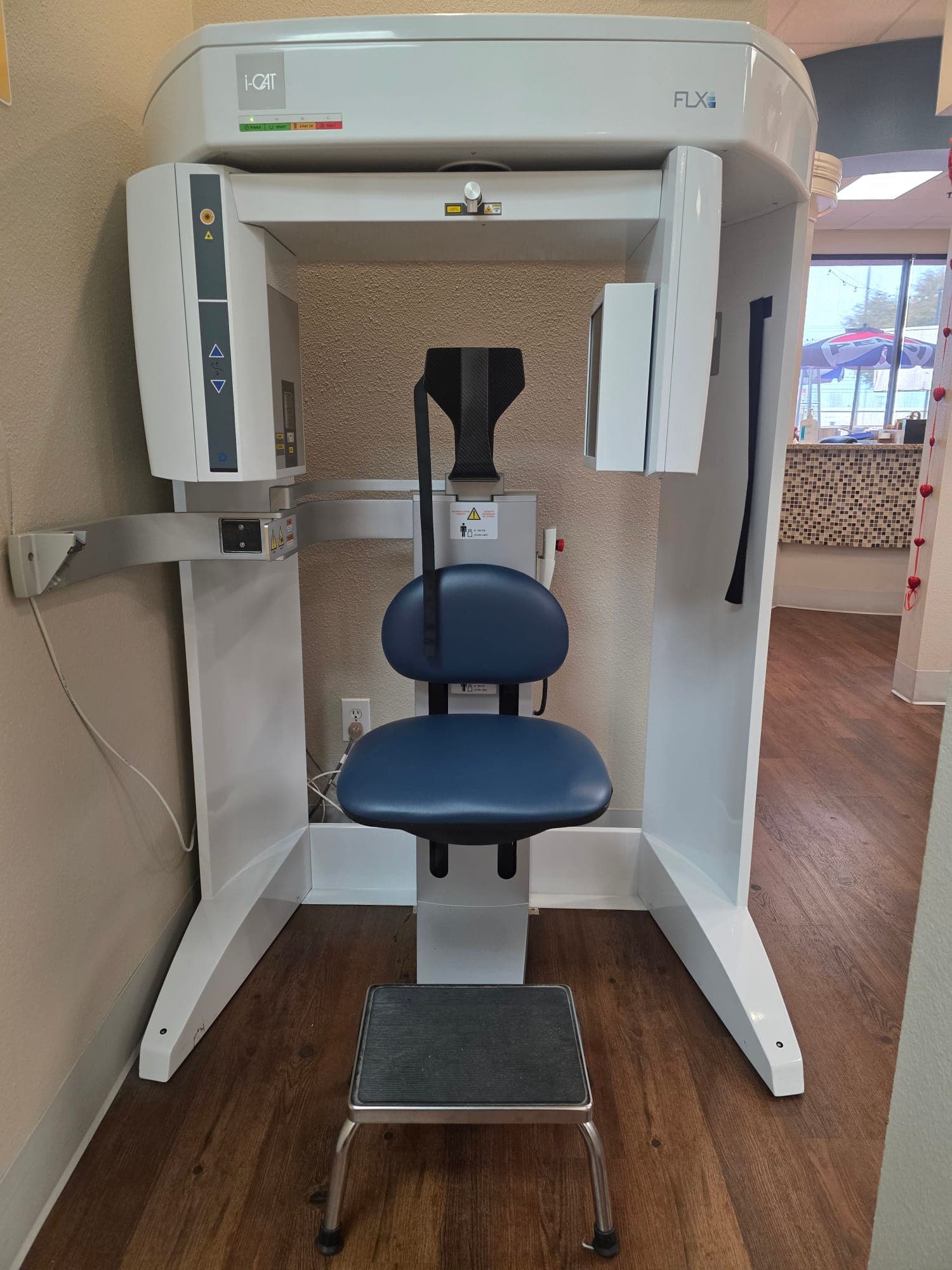
At Willow Family Dentistry, we use the iCAT FLX 3D imaging system to provide the most accurate, detailed views of your jaw, teeth, and surrounding structures. Here is how this technology transforms the implant process.
The iCAT FLX is a cone beam computed tomography (CBCT) scanner that creates detailed 3D images of your entire oral and maxillofacial area. Unlike traditional 2D X-rays, which show a flat image, CBCT scans produce a three-dimensional view that Dr. Jeong can rotate, zoom, and examine from every angle.
The most critical factor in implant success is having enough healthy bone to support the implant. 3D imaging allows Dr. Jeong to:
The lower jaw contains the inferior alveolar nerve, and the upper jaw is close to the sinus cavities. Damage to these structures during implant placement can cause serious complications. 3D imaging reveals:
Using the 3D scan data, Dr. Jeong can virtually place the implant before surgery. This means:
The scan itself is quick and painless. It takes just 8-20 seconds. You will stand comfortably while the scanner rotates around your head. There is no claustrophobic tube like an MRI.
Dr. Jeong reviews your 3D images and creates a detailed treatment plan. She can show you exactly where the implant will be placed and explain the entire process using your own images.
Using data from the 3D scan, a custom surgical guide is created. This guide fits over your teeth and directs the implant placement to the exact planned location, depth, and angle.
Once the implant has integrated with your bone (typically 3-6 months), a custom crown is placed to complete your new tooth.
Yes. The iCAT FLX uses significantly less radiation than a traditional medical CT scan, comparable to the exposure from a short airplane flight. The diagnostic benefits far outweigh the minimal radiation exposure.
If you are considering dental implants, schedule a consultation at Willow Family Dentistry. Dr. Jeong will use our advanced iCAT 3D imaging to assess your candidacy and create a personalized treatment plan.
Book a consultation or call (972) 881-0715.
Dr. Esther Jeong
DDS
Was this article helpful?
Schedule a consultation and get personalized answers from Dr. Jeong.
Call us
(972) 881-0715
Hours
Mon – Thu: 9am – 5pm
Fri: By Appointment
Location
1125 W FM 544, Wylie
Emergency? Same-day appointments available.