
Dental Sealants for Kids: Cost, Safety & Benefits | Wylie TX
8 min read
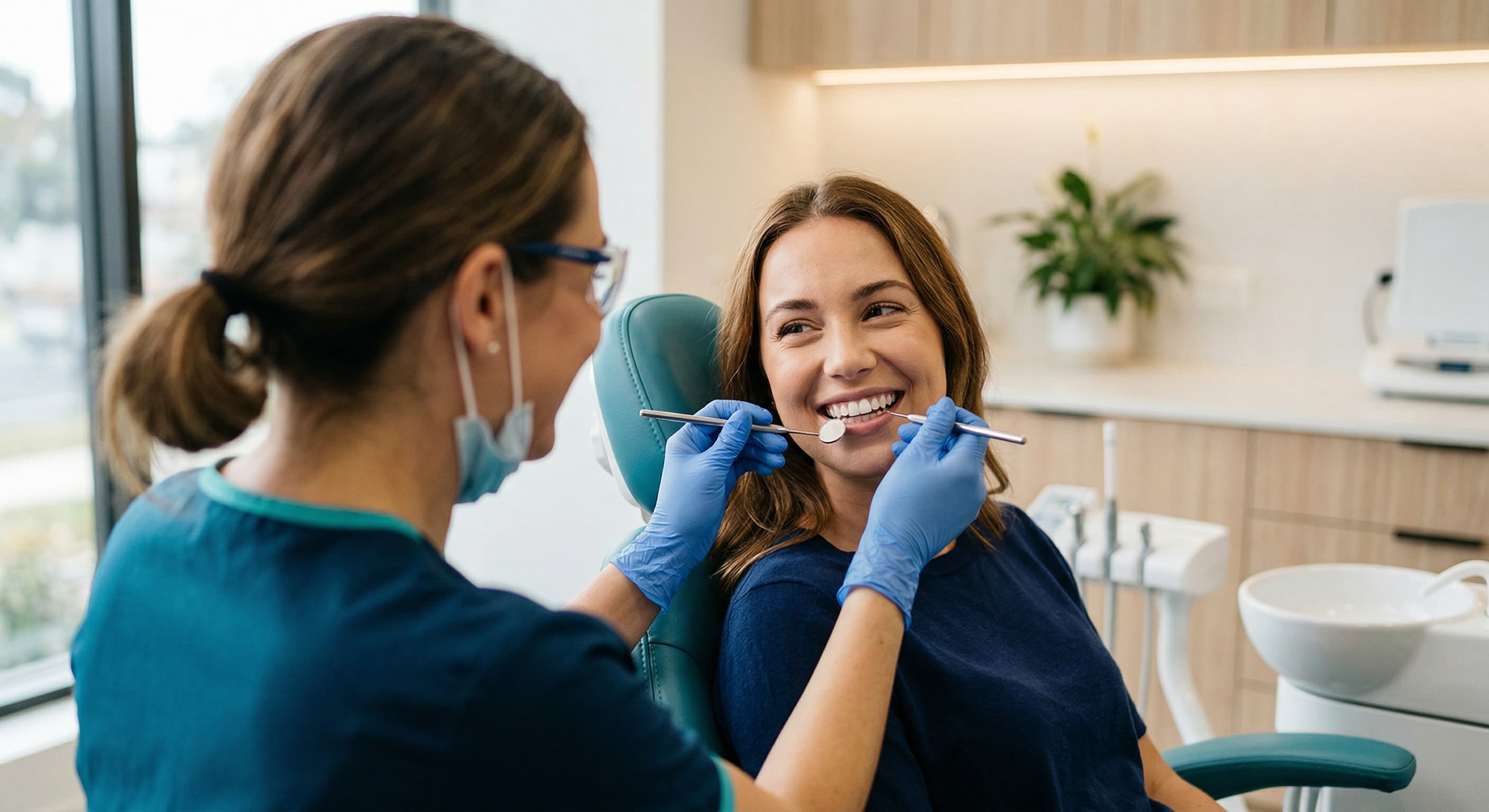
A toothache that flares when you bite down on your lunch. A visible crack you keep running your tongue over. These aren't problems that fix themselves, and for many adults in Wylie, Texas, they're the first clue that a dental crown belongs in the conversation. Nearly 1 in 4 adults in the United States has untreated tooth decay, according to the CDC. Left alone, that decay often progresses to a point where a simple filling won't do the job.
If you've been searching for "tooth crown near me" or wondering whether your dentist will recommend one at your next visit, this guide is for you. Below, you'll learn the five most common signs that a crown may be the right treatment, how the process works at a modern private practice, and why families across Wylie, Murphy, and Sachse trust Willow Family Dentistry for dental crown care.
A cracked tooth needs a crown when the fracture extends below the enamel surface or causes sharp discomfort during chewing. Small chips might only need bonding, but deeper cracks threaten the inner pulp of the tooth and require full-coverage protection to prevent further splitting.
You might feel it before you see it. A crack that runs vertically through a molar doesn't always show up on a standard X-ray. That's one reason iCAT 3D imaging matters. At Willow Family Dentistry on W FM 544, Dr. Esther Jeong uses cone beam technology to see fracture lines that traditional images miss. The difference between catching a crack early and waiting until the tooth splits in half? Months of treatment and a much bigger bill.
Here's what to watch for:
If any of these sound familiar, don't wait. According to the ADA's MouthHealthy resource on cracked teeth, an untreated crack can travel into the root and make the tooth impossible to save. A crown placed early can protect what's left and restore your normal bite. That matters.
A filling works when decay affects a small portion of the tooth's structure. Once more than half the chewing surface is compromised, or the cavity wraps around multiple sides, a filling alone can't provide the strength the tooth needs to function without breaking apart.
Think of it this way. A filling replaces lost material inside a tooth. A crown wraps the entire visible portion above the gumline, acting like a helmet. When there isn't enough healthy tooth left to anchor a filling, the filling itself becomes a weak point. One hard bite on a piece of ice or a popcorn kernel and the remaining wall gives way.
The CDC reports that 42% of adults aged 30 and older have some form of periodontal disease, which often compounds the damage decay causes. Gum recession exposes root surfaces. Bacteria move faster. And the window for a conservative filling closes.
Your dentist will evaluate the ratio of healthy tooth structure to damaged tissue. If a dental filling would cover more than 60% of the biting surface, a crown is usually the safer long-term choice. It distributes chewing force evenly and lowers the odds you'll lose the tooth altogether. Americans who keep up with regular dental visits are 60% less likely to lose teeth over their lifetime, according to a study published in the Journal of Dental Research.
Wondering If Your Tooth Needs a Crown or a Filling?
Dr. Jeong will walk you through every option, with no pressure and no upselling. See what sets our approach apart.
Learn About Dental Crowns →A root canal removes infected tissue from inside the tooth, but it also removes the blood supply that kept the tooth flexible and strong. Without a crown, the now-brittle tooth structure is far more likely to fracture under everyday chewing pressure, especially on molars and premolars.
This is one of the most common reasons people end up needing dental crowns Wylie TX families ask us about. The root canal itself saves the tooth from extraction. The crown saves it from cracking later. Skipping the crown after a root canal is a bit like replacing the engine in your car but never putting the hood back on. Technically the car runs. Practically, it won't last.
Research supports this approach. According to the ADA's endodontic research overview, teeth that receive a crown after root canal therapy have significantly higher survival rates over a 10-year period compared to those left unrestored. Back teeth handle the most force, so they carry the greatest risk.
At our restorative dentistry practice, we typically place the crown within a few weeks of your root canal. The process involves shaping the remaining tooth, taking a precise impression or digital scan, and bonding a custom-made cap into place. Most patients describe the process as far easier than the root canal itself.
Related: Curious about the technology we use for precise crown placement? → How iCAT 3D Imaging Makes Treatment More Precise
Old restorations fail gradually. Signs include a dark line at the gum margin of an existing crown, food getting trapped around a large filling that used to fit snugly, recurring sensitivity in a previously treated tooth, or a visible gap between the restoration and your natural tooth structure.
Nothing lasts forever. Not even high-quality dental work. Silver amalgam fillings placed decades ago expand and contract with temperature changes, and over time those micro-movements create tiny gaps where bacteria settle in. Older porcelain-fused-to-metal crowns can develop wear at the margin where the metal meets the tooth. You might not feel anything wrong for months while decay quietly builds underneath.
Regular preventive dental exams catch these problems before they become emergencies. The ADA notes that routine visits can identify 80% of oral health issues before they become serious. That's a strong case for keeping your six-month appointments, especially if you have older restorations.
Here's what replacement typically looks like:
| Scenario | Typical Solution | Timeline |
|---|---|---|
| Large old filling with new decay around it | Remove old filling, place a full crown | 1-2 visits over 2-3 weeks |
| Crown with visible margin gap | Remove and replace with new, better-fitting crown | 1-2 visits over 2-3 weeks |
| Chipped or cracked existing crown | Assess underlying tooth, replace crown | 1-2 visits, possibly same day |
If you've had dental work done more than 10-15 years ago, ask your dentist to take a close look at your next checkup. Early detection saves you time, money, and the tooth itself.
Due for a Checkup? Let's Take a Look.
Whether it's been six months or six years, there's no judgment here. Schedule a visit and we'll evaluate any old restorations that may need attention.
Request an Appointment →Yes, and it happens more often than patients expect. A tooth that has lost structure from grinding, acid erosion, or repeated fractures sits lower in the arch than it should, forcing neighboring teeth and your jaw joint to compensate. Over time, this leads to uneven wear, jaw tension, and sometimes headaches.
Bruxism is a big contributor here. If you grind your teeth at night, the constant pressure flattens cusps and weakens enamel to the point where the tooth can't do its job. Your dentist might notice the wear pattern before you feel symptoms. That's another reason consistent exams matter so much for families in Allen, Lucas, and the greater Wylie area.
A crown restores the tooth to its original height and shape. Think of it as resetting the architecture of your bite so every tooth shares the load again. For patients who grind, Dr. Jeong often recommends a custom night guard alongside the crown to protect the investment.
Cosmetic concerns matter too. A worn or chipped front tooth changes how your smile looks and how confident you feel showing it. According to a survey by the American Academy of Cosmetic Dentistry, 99.7% of Americans believe a smile is an important social asset. A single crown on a visible tooth can make a meaningful difference in appearance without requiring a full cosmetic treatment plan.
Nervous About Dental Work?
We offer both nitrous oxide and IV sedation so you can stay relaxed through every step of crown placement.
Explore Sedation Options →Families searching for dental crowns Wylie TX can find personalized, judgment-free care at Willow Family Dentistry, located at 1125 W FM 544, Suite 700. As a private practice, we set our own standards for materials, appointment time, and follow-up, with none of the assembly-line approach of corporate dental chains.
So what actually sets one dental office apart from another when it comes to crowns? A few things worth asking about.
Technology. Our iCAT 3D imaging system gives Dr. Jeong a full view of the tooth, the surrounding bone, and the bite relationship before she picks up a single instrument. That level of detail means fewer surprises during treatment and a better-fitting crown. Standard 2D X-rays can miss issues that show up clearly on a cone beam scan.
Communication. Our team speaks English, Korean, Spanish, and Vietnamese. Wylie's community is diverse, and being able to discuss treatment options in your preferred language reduces confusion and builds trust. Dental decisions are personal. You deserve to fully understand your options.
Comfort. About 36% of Americans experience dental anxiety, according to a 2024 study published in BMC Oral Health. That's more than one in three people. Willow Family Dentistry offers both nitrous oxide and IV sedation for patients who need extra support during crown procedures or any other treatment.
Whether you're coming from Sachse, Plano, McKinney, or right down the road near Wylie High School, getting dental crowns Wylie TX shouldn't feel like an ordeal. It should feel like your dental team actually knows you.
The most important step? Booking that first visit. If something feels off with a tooth, trust that instinct. Early treatment almost always means simpler treatment. And if it turns out you don't need a crown after all, you'll leave with peace of mind and a clear picture of your oral health.
Your teeth do a lot for you. Returning the favor starts with one appointment.
Ready to Find Out If You Need a Crown?
Schedule a visit with Dr. Jeong at Willow Family Dentistry. No lectures, no pressure, just honest answers and a plan that fits your life.
Request an Appointment →Have a question before you book?
Contact Us →Reviewed by Dr. Esther B. Jeong, DDS, owner and lead dentist at Willow Family Dentistry. Dr. Jeong has over 15 years of experience providing gentle, judgment-free dental care to families in Wylie, TX and surrounding communities.
Dr. Esther B. Jeong, DDS
Owner & Lead Dentist
Was this article helpful?
Schedule a consultation and get personalized answers from Dr. Jeong.
Call us
(972) 881-0715
Hours
Mon – Thu: 9am – 5pm
Fri: By Appointment
Location
1125 W FM 544, Wylie
Emergency? Same-day appointments available.